Can Dogs Eat Chicken Nuggets? Labels, Sauces, Fat, and Packaging
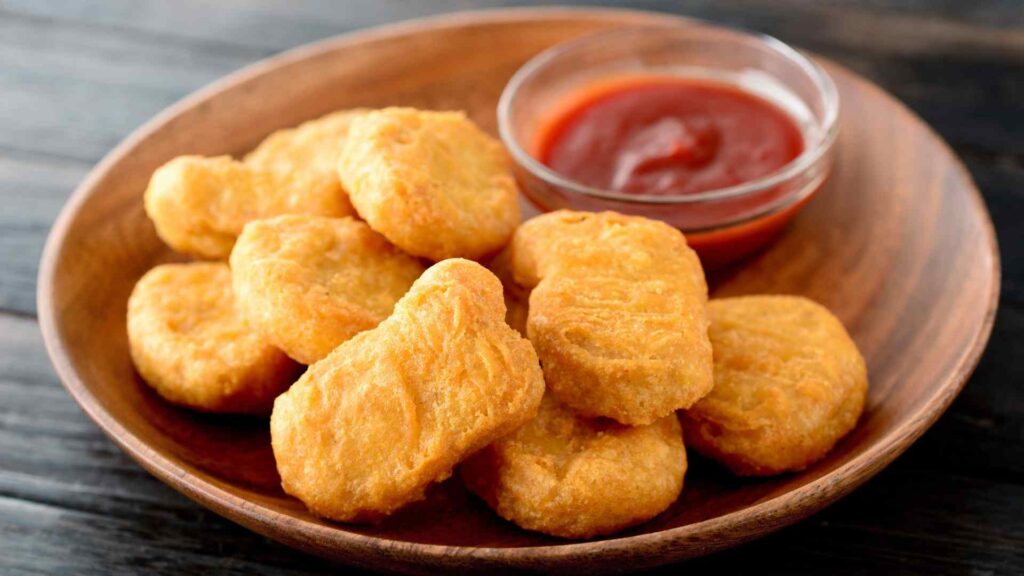
One fully cooked plain chicken nugget is unlikely to poison most healthy medium or large dogs, but it is fatty, salty breaded fast food, not a useful protein treat. Brand, size, seasonings, sauce, rawness, bones, medical history, amount, and swallowed packaging can change the answer quickly.
Sort the exposure before counting calories
- One small fully cooked nugget with no sauce: usually monitor for stomach upset, especially in a healthy larger dog.
- Several nuggets, a family-size order, or an unknown amount: call for a small dog, symptoms, or relevant disease.
- Raw, frozen, or undercooked homemade nugget: address poultry handling and possible pathogens.
- Garlic, onion, xylitol, grape products, chocolate, or alcohol in sauce: contact a veterinarian or animal poison service promptly.
- Bones, skewers, foil, bag pieces, tubs, lids, or absorbent pads missing: report the foreign-object risk.
Save the box, restaurant receipt, frozen-food bag, sauce lid, or recipe and record the product, count missing, time, dog weight, symptoms, conditions, and medications. “Chicken nugget” can mean a small restaurant piece, a plant-based imitation, or a raw homemade chunk with completely different ingredients.
A current label beats a generic nugget rule
Formulas vary by restaurant, country, frozen-food brand, flavor, and reformulation. Some nuggets contain chicken, water, flour or starch, oil, salt, leavening, and seasonings, while others add dairy, egg, soy, onion, garlic, sugar, or preservatives.
The current United States McDonald’s four-piece Chicken McNuggets page reports 170 calories for that serving and warns that formulations and preparation can vary. That page is one product example, not a nutrition label for every nugget.
Use the exact restaurant nutrition tool or frozen package in front of you. Do not borrow an ingredient list from a blog, an older screenshot, another country, or a different flavor after a real exposure.
A nugget marketed as white meat, natural, gluten-free, air-fried, organic, or preservative-free can still be salty, calorie dense, seasoned, or unsuitable for a specific dog. Front-of-package claims do not replace the full panel.
Restaurant, frozen, homemade, and plant-based nuggets differ
Restaurant nuggets arrive fully cooked but may be served very hot, share frying oil, and come with sauces and small packaging pieces. Ask the restaurant for the current local ingredient and allergen information because online pages can differ by country.
Frozen retail nuggets may be fully cooked, partially cooked, or raw, and the same brand can sell all three. Keep the handling statement with the bag so a veterinary professional can distinguish a rich-food theft from a raw-poultry exposure.
Homemade nuggets can include minced chicken, egg, milk, flour, breadcrumbs, cheese, garlic, onion, salt, and frying oil. A family recipe deserves the same ingredient inventory as a packaged product, including the oil and any marinade.
Plant-based nuggets are not automatically simpler for dogs because they may use concentrated pea or soy protein, wheat, oils, salt, flavor blends, onion, or garlic. They also do not provide a reason to feed a dog a human meat substitute.
Stuffed, spicy, barbecue, breakfast, and cheese-flavored nuggets need their own labels. A visible chicken center does not tell you what is in the breading, filling, injected solution, or seasoning dust.
Leftover nuggets are perishable food, especially after time in a warm car, lunch bag, or party tray. Spoiled food adds vomiting and diarrhea concerns, while mold, trash, foil, and scavenged bones can create a more urgent mixed exposure.
The main routine concerns are fat, salt, and calories
Breading absorbs cooking oil and makes a nugget richer than plain cooked chicken. One small piece may cause no sign, but a large theft can trigger vomiting, diarrhea, abdominal discomfort, reduced appetite, or lethargy.
Dogs with previous pancreatitis, high blood fat, obesity, diabetes, gastrointestinal disease, or a prescribed low-fat diet need more conservative advice. Even a modest restaurant portion can be meaningful for a very small dog.
The Merck Veterinary Manual pancreatitis overview describes vomiting, abdominal pain, weakness, dehydration, and diarrhea among possible signs. A nugget raid does not prove pancreatitis, but those signs after a rich meal deserve a call.
Sodium varies among products and sauces, so estimate exposure from the label rather than taste. A healthy dog stealing one ordinary nugget is not the same case as a tiny dog eating a heavily salted party tray.
Do not promote nuggets as a protein boost, training staple, recovery food, or weight-gain method. The calories, breading, oil, and salt come with the chicken, and frequent extras can displace a complete diet.
Garlic and onion are label-specific concerns
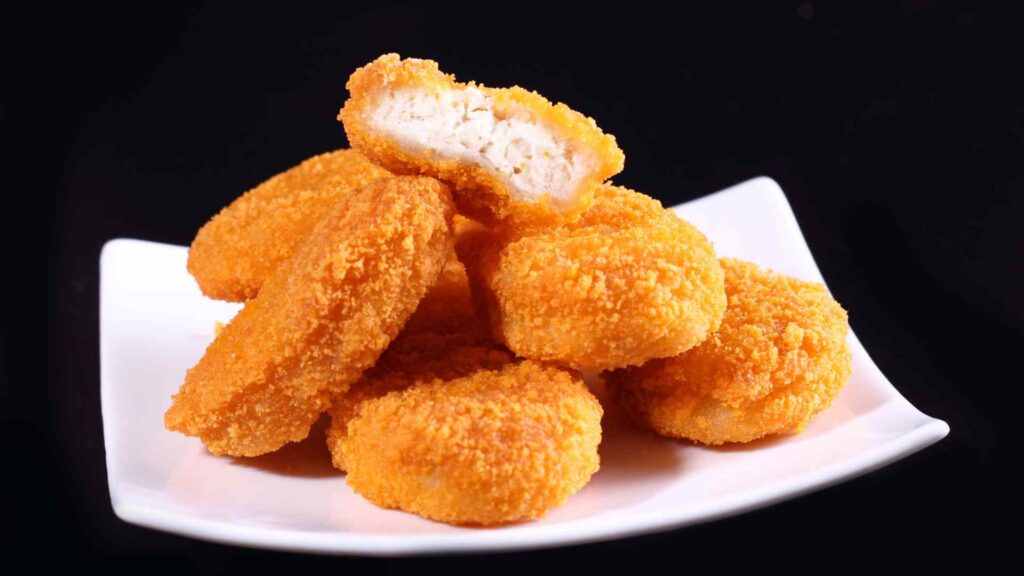
Seasoned breading, spicy nuggets, restaurant coatings, frozen varieties, and dipping sauces may contain garlic or onion powder. Do not assume every plain commercial nugget contains them, and do not assume a mild-tasting one is free of them.
The Merck Veterinary Manual Allium review explains that cooked and concentrated forms can damage canine red blood cells. Signs of anemia may take several days to become obvious.
Call promptly when a meaningful or uncertain amount of an Allium-containing product is missing. Possible delayed signs include weakness, pale gums, faster breathing, dark urine, reduced appetite, and collapse.
Our garlic-powder guide helps interpret seasoning blends without inventing a universal safe dose. Bring the package weight and ingredient order to the call.
Sauce may be the most important ingredient
Barbecue, ranch, honey mustard, sweet-and-sour, buffalo, teriyaki, and specialty sauces differ widely. They can add garlic, onion, salt, fat, dairy, chile, alcohol, chocolate, fruit concentrates, or unusual sweeteners.
Sugar-free or reduced-sugar sauce needs an exact sweetener check. The FDA xylitol warning advises immediate veterinary contact because xylitol can cause dangerous low blood sugar and liver injury in dogs.
Do not assume “sweet and sour” means grapes, and do not assume a purple sauce contains grape. If an actual sauce, jelly glaze, or mixed dish lists grapes, raisins, or Zante currants, contact a veterinarian or poison service promptly.
Our ranch guide covers Allium powders, dairy, fat, sodium, packets, tubs, and proportionate one-lick triage. Inventory every sauce cup rather than focusing only on the breaded chicken.
Raw and undercooked nuggets are a food-safety problem
Frozen nuggets may be fully cooked, partially cooked, or raw despite a browned exterior. Read the handling statement and cooking directions rather than using appearance as proof.
The United States Department of Agriculture safe-temperature chart lists 165°F for poultry, including ground poultry and chicken. That human food-safety endpoint helps prevent serving an undercooked homemade product.
Raw poultry can contaminate mouths, bowls, floors, counters, hands, and other food even when the dog never becomes ill. Wash hands and food-contact surfaces, keep raw packages away from children and vulnerable people, and do not reuse a contaminated sauce.
Call for repeated vomiting, severe or bloody diarrhea, fever, marked weakness, or inability to keep water down. Puppies, seniors, pregnant dogs, and dogs with immune or gastrointestinal disease may need attention sooner.
Bones are not expected, but check the actual food
Standard formed commercial nuggets are sold as boneless, yet homemade “nuggets,” chopped fried chicken, or mixed takeout can include bone fragments. Never assume the name guarantees that a stolen piece was boneless.
Do not induce vomiting after a suspected sharp bone or skewer unless a veterinarian directs it. Gagging, repeated retching, painful swallowing, abdominal pain, blood, or breathing trouble needs urgent assessment.
Our chicken-broth guide explains why chicken-based foods still require recipe checks for Alliums, sodium, fat, bones, storage, and diet restrictions.
Packaging can outrank the food
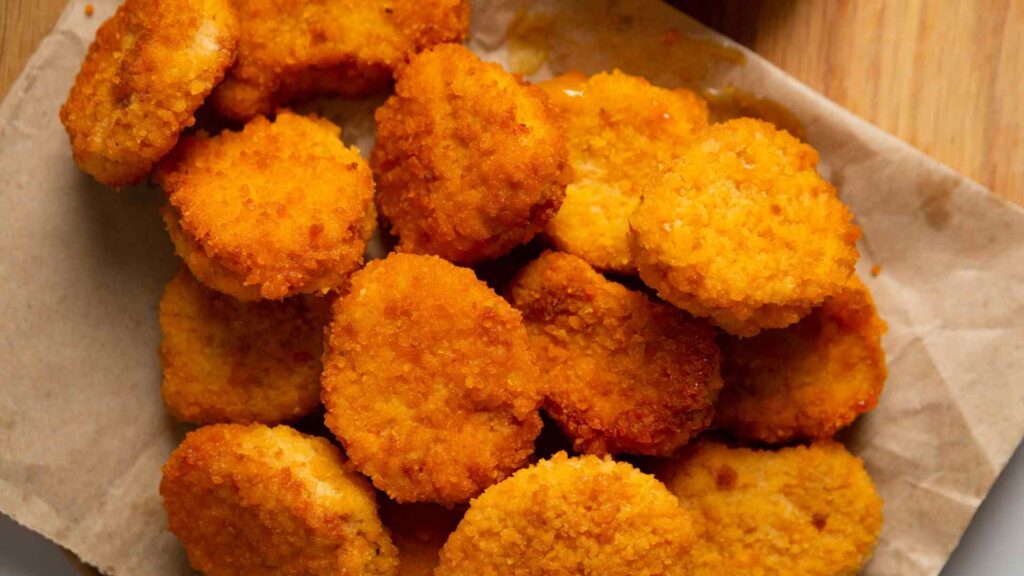
Paper cartons, plastic bags, foil-lined wrappers, sauce tubs, lids, napkins, skewers, and absorbent pads can choke or obstruct. A flexible food bag can also seal around the muzzle and cause suffocation.
Count containers and inspect an identical package if available. Report material, size, sharp edges, and whether a packet or clip was attached, but do not wait for plastic to pass before calling about symptoms.
Repeated vomiting, belly pain, refusal to eat, straining, or inability to keep water down after missing packaging requires prompt care. Do not pull visible string or plastic from the mouth or rectum.
What to do after a nugget theft
Secure the remaining food, photograph the label, count nuggets and sauce cups, and estimate a minimum and maximum amount. Note whether pieces were hot, frozen, raw, fully cooked, spicy, plant-based, or bone-in.
Call for a large or uncertain amount, significant Allium seasoning, confirmed xylitol or grape ingredients, raw poultry in a vulnerable dog, bones, packaging, serious symptoms, or a relevant medical diet. One plain fully cooked nugget in a healthy larger dog often calls for monitoring, not panic.
Do not give peroxide, salt, oil, milk, bread, antacids, or human pain medicine unless a veterinary professional gives case-specific instructions. Keep ordinary water available and follow the dog’s usual diet unless the clinician advises otherwise.
Choose a simpler reward
Use part of the dog’s measured complete food or a veterinary-approved treat. If plain chicken is appropriate, offer a tiny fully cooked unseasoned boneless piece without skin, breading, sauce, or frying oil.
Treat calories should stay limited, and a dog with a prescription diet may need no outside food at all. Nuggets provide no special protein benefit that cannot be obtained more predictably from the complete diet.
Bottom line
One fully cooked plain chicken nugget is usually a monitoring question for a healthy larger dog, but it is not a good routine treat. Check the exact label, count, fat, sodium, Alliums, sauce, cooking status, bones, medical history, symptoms, and every missing package piece.