Can Dogs Eat Cabbage? Safe Portions and Preparation
Yes, dogs can eat plain cabbage in small amounts. Green, red, Savoy, Napa, and bok choy are generally safe when washed, chopped, and served without butter or seasoning, but this famously gassy vegetable is better as an occasional nibble than a regular heap.
Cabbage for dogs at a glance
- Safest serving: steamed or boiled until tender, cooled, and cut into small pieces.
- Also possible: a tiny amount of finely chopped raw cabbage for a dog who chews comfortably.
- Leave out: onion, garlic, butter, heavy oil, salt, sauces, bacon, and spicy seasoning.
- Main downside: gas, cramping, loose stool, or vomiting after too much.
- Extra caution: dogs with a history of bloat, chronic digestive disease, thyroid disease, or a prescription diet.
Cabbage is not poisonous to dogs, but “safe” does not mean unlimited or right for every animal. The American Kennel Club’s veterinarian-informed cabbage guide recommends small quantities and specifically notes the vegetable’s talent for producing gas.
Does cabbage offer meaningful benefits?
Cabbage contains water, fiber, vitamins, and plant compounds, and it is relatively low in calories when served plain. A few pieces can add texture and variety, especially for a dog who thinks the sound of the refrigerator opening is a personal invitation.
Still, the best reason to share cabbage is that your dog enjoys it and tolerates it, not that it acts like medicine. A complete and balanced dog food is formulated to cover essential nutrient needs, while cabbage is a treat or topper that should occupy only a small corner of the menu.
Fiber can influence stool bulk and gut movement, but it can also cause flatulence and diarrhea when introduced too quickly. If your dog has ongoing constipation or diarrhea, find the cause with a veterinarian instead of trying to solve the mystery with a salad bowl.
Owners looking for other crisp, low-calorie options can compare cabbage with carrots or plain green beans. Individual tolerance matters more than a vegetable’s reputation.
Which kinds of cabbage can dogs eat?
Green cabbage, red or purple cabbage, Savoy cabbage, Napa cabbage, and bok choy all belong to the broader brassica group and can be offered plainly in small portions. Color and leaf shape change the kitchen experience more than the basic safety answer.
Green cabbage
Green cabbage is dense and crunchy, so remove the tough core and cut the leaves into pieces appropriate for your dog. Cooking softens the texture and may make a first introduction gentler on the stomach.
Red or purple cabbage
Red cabbage is also suitable when plain, although its pigments can sometimes make leftovers, saliva, or stool look a little colorful. A color change without illness is less concerning than vomiting, pain, weakness, or repeated diarrhea.
Savoy and Napa cabbage
These softer-leafed cabbages are easy to chop, but they can still produce gas. Introduce them with the same restraint you would use for the sturdier green variety.
Bok choy
Bok choy can be shared plain, with the fibrous base sliced into small pieces. Do not hand over a long stalk to a small dog or enthusiastic gulper and hope the chewing department handles the details.
Raw or cooked: which is better?
Dogs can eat a little raw cabbage, but cooked cabbage is softer, easier to portion, and generally less likely to challenge a sensitive digestive system. Steaming or boiling in plain water is the cleanest method.
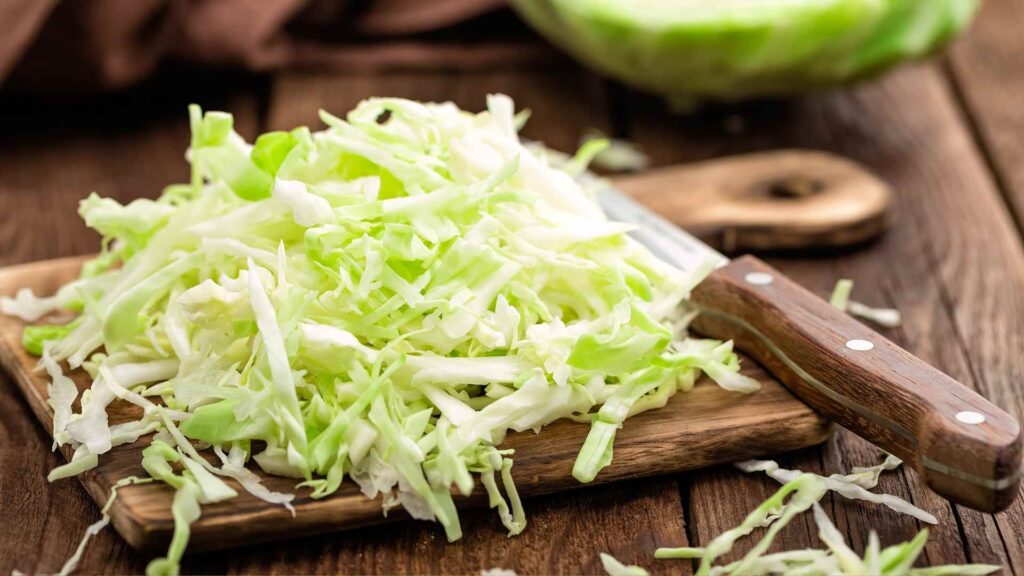
Wash the leaves, remove wilted or spoiled areas, trim the hard core, and chop everything into manageable bites. Let cooked cabbage cool fully before it reaches the bowl.
Raw shreds should be very small, especially for toy breeds, seniors with dental trouble, and dogs who swallow first and negotiate later. Chopping reduces choking risk, but supervision still matters.
A five-minute dog-safe preparation
- Rinse a cabbage leaf under running water.
- Cut away the tough core and thickest stem.
- Steam or boil the leaf until tender, using no seasoning.
- Cool it, chop it finely, and offer one small taste.
- Refrigerate leftovers promptly and discard anything spoiled or slimy.
Mixing a few cooled pieces into regular food is easier to control than serving a separate mound. If your dog picks out every green fleck with surgical precision, take the hint and choose another treat.
How much cabbage should you give a dog?
No responsible portion chart can account for every dog’s size, calorie requirement, medical history, and regular diet. Begin with one small bite for a small dog or a few bite-size pieces for a larger dog, then wait to see whether gas or loose stool follows.
That is an introduction, not a fixed daily dose. Keep cabbage and all other extras within the dog’s overall treat allowance, and reduce other treats rather than quietly adding calories to the day.
The World Small Animal Veterinary Association nutrition toolkit emphasizes individualized nutritional assessment, including body condition, diet history, and health. Those factors are why your veterinarian can give a more useful portion than an online tablespoon rule.
The gas question, because cabbage has a reputation
Some burping or flatulence after a new vegetable is usually a digestive-tolerance problem, not poisoning. Stop serving cabbage and call your veterinarian if gas comes with repeated vomiting, diarrhea, marked pain, a hard or enlarging abdomen, weakness, or trouble breathing.
Large, deep-chested breeds and dogs with a personal or family history of gastric dilatation-volvulus deserve particular caution. Cabbage has not been proven to cause GDV, but deliberately giving a gas-prone food to a high-risk dog is not a clever experiment.
The Merck Veterinary Manual describes GDV as a life-threatening emergency, with signs that can include restless pacing, drooling, repeated unproductive retching, and a progressively enlarged abdomen. Those signs warrant immediate emergency care, not a wait-and-see night on the couch.
Cabbage, goitrogens, and thyroid disease
Cabbage contains compounds that can affect thyroid-hormone production under certain conditions, which is the origin of the familiar “goitrogen” warning. The practical risk from an occasional small serving in a healthy dog is not the same as the risk from feeding large quantities repeatedly.
There is no good reason to make cabbage a daily supplement, and there is also no need to panic over one small piece. If your dog has diagnosed hypothyroidism, takes thyroid medication, or eats a veterinarian-directed diet, ask that veterinarian before making cabbage a routine.
Cooking may reduce some goitrogenic activity, but it does not transform cabbage into a thyroid treatment or guarantee compatibility with every medical plan. Keep the claim modest and the portion smaller.
Seasonings and cabbage dishes to keep off the menu
Plain cabbage is the easy question, while coleslaw, stir-fry, sauerkraut, corned beef and cabbage, and buttery braised cabbage are complicated recipes. Evaluate the whole dish, not the vegetable hiding inside it.
- Onion, garlic, and chives: Allium ingredients can damage red blood cells and cause anemia in dogs.
- Butter, bacon fat, and creamy dressings: These add fat and calories and may cause significant gastrointestinal upset.
- Salt and salty meats: These are unnecessary for dogs and may be especially unsuitable for animals with heart or kidney disease.
- Spicy sauces: Chili heat and rich seasoning can irritate the mouth and gut.
- Sugar-free dressing: Check for xylitol and call immediately if the label lists it.
The ASPCA’s people-food hazard list explains that onion, garlic, and chives can cause gastrointestinal irritation and red-blood-cell damage. Our own guides to onions and garlic cover those risks in more detail.
Special cases that deserve a veterinary answer
Puppies: Growing dogs need a complete and balanced puppy diet, and bulky extras can displace more useful calories. A tiny cooked piece is a taste, not a side dish.
Dogs with digestive disease: Chronic vomiting, inflammatory bowel disease, food-responsive disease, constipation, and recurring diarrhea require individualized nutrition. Even harmless-looking fiber can complicate symptoms.
Dogs on an elimination diet: Unapproved cabbage can invalidate a carefully controlled food trial. Follow the prescribed ingredient list exactly.
Dogs with kidney, heart, thyroid, or pancreatic disease: The cabbage itself may not be the only issue, since portion, sodium, fat, medications, and the whole diet all matter. Ask before adding routine extras.
Dogs prone to bloat: Discuss gas-producing treats with the veterinary team, particularly for large or deep-chested breeds. If the dog is retching without producing vomit or has a swollen painful belly, seek emergency care.
What to do if your dog raids the cabbage
A healthy dog who eats a few pieces of plain cabbage will most likely need observation and perhaps a gracious response to extra gas. Remove the remaining food, offer fresh water, and note the amount and time.
Call your veterinarian if a large amount was eaten, the dog is very small, there is a relevant medical condition, or vomiting, diarrhea, pain, weakness, or abdominal enlargement develops. Repeated dry heaving, collapse, pale gums, or difficulty breathing is an emergency.
If the cabbage dish contained onion, garlic, xylitol, excessive salt, or another hazardous ingredient, contact a veterinarian or animal poison-control service rather than waiting for symptoms. Keep the recipe, package, or ingredient list available for the call.
Cabbage questions people actually ask
Can dogs eat coleslaw?
Skip it, because coleslaw often contains a fatty dressing, sugar, salt, onion, or other seasonings. A small piece of plain cabbage is the cleaner choice.
Can dogs eat sauerkraut?
Commercial sauerkraut may be very salty and may include seasonings, so it is not a smart routine treat. “Fermented” is not a free pass when the rest of the label does not suit your dog.
Is cabbage better than broccoli?
Neither is universally better, and both can cause gas when overfed. Compare preparation and precautions in our broccoli guide, then let tolerance and calorie needs decide.
Can cabbage replace vegetables in homemade dog food?
No single vegetable makes a homemade diet complete and balanced. If you want to cook the main diet at home, use a recipe formulated for your dog by a board-certified veterinary nutritionist rather than assembling ingredients by instinct.
The sensible verdict
A few small pieces of plain, tender cabbage are safe for many dogs, and cooking makes the texture easier to manage. Keep portions modest, avoid seasoned dishes, respect the gas factor, and call promptly when symptoms look more serious than an ordinary rumbly belly.