Can Dogs Eat Sauerkraut? Salt, Seasonings, Fermentation, and Safety
A tiny taste of plain sauerkraut is unlikely to harm most healthy adult dogs, but it is usually too salty and acidic to be a sensible treat. Garlic, onion, caraway and other seasonings, sausage, alcohol, spoilage, unsafe home canning, glass jars, lids, and large portions can change the answer, and sauerkraut is not a probiotic cure.
Read the jar before judging the cabbage
- A tiny taste of plain refrigerated cabbage-and-salt sauerkraut: usually monitor.
- A large amount or brine: assess sodium, water access, and medical conditions.
- Garlic, onion, chile, wine, or seasoned kraut: save the label and call as appropriate.
- Homemade product with uncertain process or signs of spoilage: do not taste it.
- Missing glass, lid, ring, bag, or container: treat as a foreign-object concern.
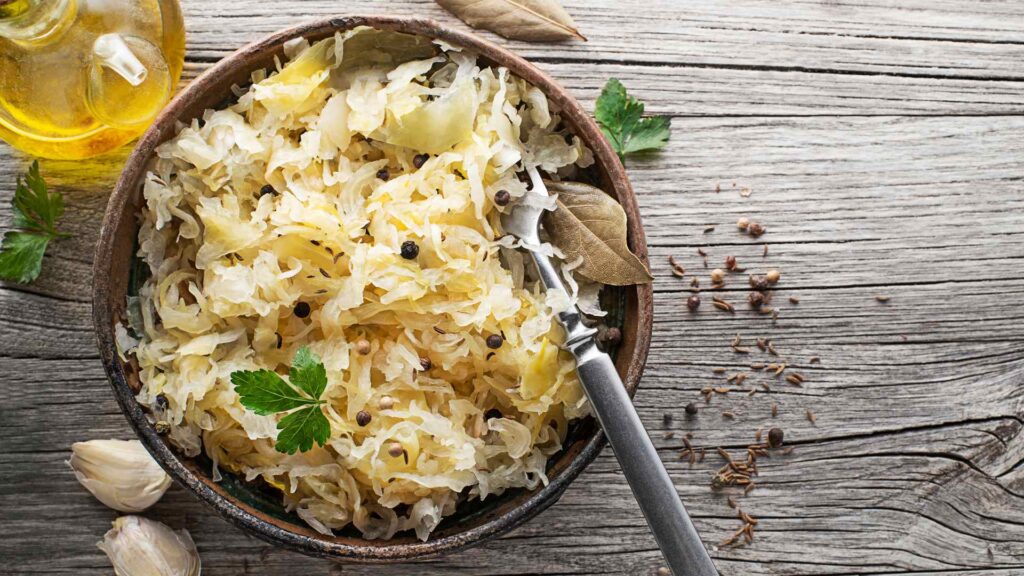
Sauerkraut is fermented cabbage, but commercial products differ in salt, acidity, heat treatment, preservatives, cultures, and seasoning. Fermented does not automatically mean probiotic, safe, or suitable for dogs.
Sodium is the main everyday limitation
Salt draws water from cabbage and helps control fermentation, so sodium is part of the process rather than just a surface garnish. Rinsing may reduce surface brine but does not turn a salty product into a medical-diet food.
The Merck Veterinary Manual salt-toxicosis review explains that excessive sodium, especially with limited water, can cause vomiting, weakness, incoordination, tremors, and seizures. One tiny taste is not equivalent to drinking brine or emptying a jar.
Keep fresh water available after a minor exposure, but do not force large amounts. Call for a substantial salty meal, limited water access, kidney or heart disease, repeated vomiting, wobbliness, tremors, seizures, or collapse.
Dogs with heart, kidney, urinary, or blood-pressure concerns may have precise sodium instructions. Ask the managing veterinarian before adding any fermented or canned food.
Acidity and fermentation can upset digestion
Lactic acid gives sauerkraut its tang, and the fiber plus sudden diet change can cause gas, bloating, loose stool, vomiting, or discomfort. A dog with active digestive disease should not be used to test tolerance.
A swollen painful abdomen, repeated unproductive retching, weakness, collapse, or breathing difficulty is an emergency. Do not dismiss dramatic bloating as cabbage gas.
Persistent vomiting, blood, marked lethargy, dehydration, appetite loss, or inability to keep water down also needs veterinary advice. Stop feeding rather than adding more fermented food to settle the stomach.
Garlic and onion change the call
Some sauerkraut recipes include garlic, onion, leeks, chives, or seasoning powders. Fermentation and cooking do not make Alliums harmless.
The Merck Veterinary Manual Allium review explains that these plants can damage red blood cells and signs may be delayed. Weakness, pale gums, fast breathing, dark urine, vomiting, or collapse can develop later.
Our garlic guide and onion guide cover raw, cooked, dried, and powdered forms. Save the label or recipe instead of relying on visible pieces.
Caraway and other seasonings
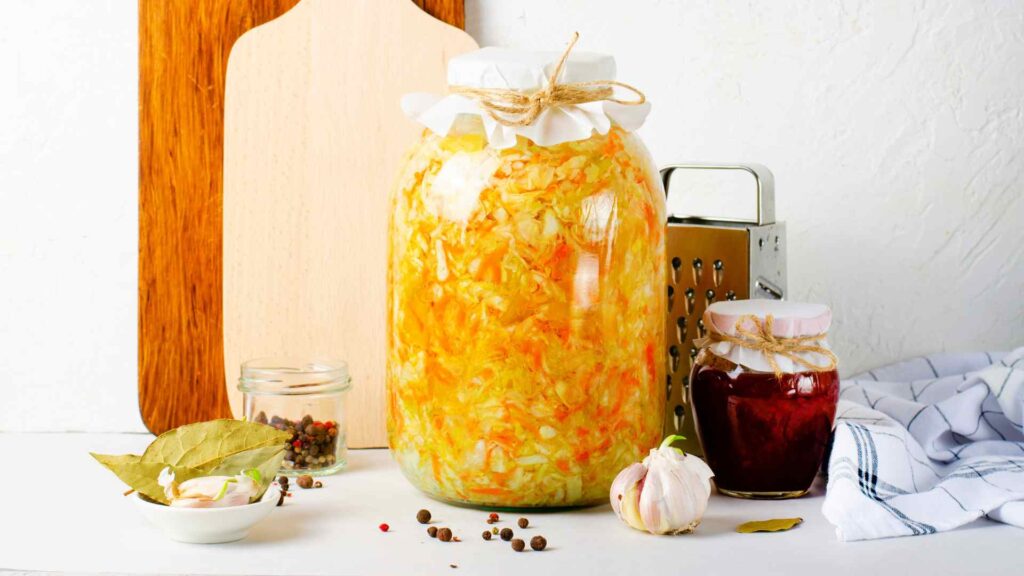
Caraway is a common sauerkraut seasoning, and one culinary seed in a tiny taste is less concerning than essential oil or a concentrated supplement. The recipe may also contain juniper, mustard, pepper, chile, sugar, apple, wine, or broth.
Do not give caraway oil, bitters, herbal extracts, or concentrated digestive products to imitate a traditional recipe. Product-specific ingredients and dosing matter.
Mustard and hot pepper can irritate, while broth may add onion, garlic, and salt. A flavor name is not a complete ingredient list.
Sausage, pork, and prepared dishes
Sauerkraut is often served with bratwurst, kielbasa, hot dogs, bacon, pork, or corned meat. These foods add fat, sodium, spices, casings, bones, and packaging.
Our pork guide separates plain lean cooked meat from bones, fat, cured products, sausage, and seasoning. A dropped cabbage strand and a missing dinner platter are different events.
Dogs with pancreatitis history, high triglycerides, obesity, heart disease, or kidney disease should avoid rich salty combinations. Repeated vomiting, marked pain, appetite loss, weakness, or dehydration warrants a call.
Beer, wine, and alcohol
Some recipes cook sauerkraut with beer, wine, cider, or spirits, and homemade ferments can develop unexpected alcohol when the process goes wrong. Alcohol exposure can cause incoordination, depression, low temperature, low blood sugar, breathing problems, coma, or seizures.
Call after an alcohol-containing dish or a dog acting drunk. Cooking may reduce alcohol but does not guarantee zero, especially when it is added late.
Probiotic claims outrun the product
Some unpasteurized refrigerated sauerkraut contains live microbes, while shelf-stable or heat-treated products may not. Neither form is a standardized canine probiotic with known strains, viable counts, dose, purity, and clinical evidence.
Do not use sauerkraut to treat diarrhea, constipation, inflammatory disease, allergies, immunity, or antibiotic side effects. A salty acidic food is not interchangeable with a veterinarian-selected probiotic product.
Cornell veterinary guidance on choosing probiotics emphasizes product-specific strain information, evidence, and quality. The word fermented does not provide those details.
Home fermentation and canning safety
Successful sauerkraut fermentation depends on correct salt concentration, clean equipment, temperature, keeping cabbage submerged, and following a tested process. Improvising can allow spoilage or unsafe growth.
The National Center for Home Food Preservation sauerkraut guidance provides a tested human-food process and warns against changing proportions casually. It is not a dog recipe, but it supports using validated methods rather than guessing.
Discard product with mold, slime, putrid odor, abnormal color, leaking or bulging containers, or uncertain storage. Do not taste-test suspect kraut and do not let a dog eat it.
Home canning adds glass, rings, seals, sharp lids, and possible vacuum failures. A dog who breaks into a pantry can have lacerations or foreign-object exposure beyond the food.
Plain cabbage is not the same food
Fresh or plainly cooked cabbage has not been fermented in salt and therefore does not share sauerkraut’s sodium and acidity profile. It can still cause gas or loose stool when a dog eats a large amount.
Do not swap raw cabbage into a medical plan merely to avoid salt. A dog with digestive disease, thyroid concerns, or a prescription diet still needs individualized advice.
Rinsing and draining have limits
Draining brine and briefly rinsing may remove some surface sodium and acidity, but the cabbage has already fermented in salt. Rinsing cannot remove garlic, onion, alcohol, spices, or microbial hazards from a flawed batch.
A no-salt-added label is uncommon and still needs a full ingredient review. Serving more because a product tastes less salty defeats the goal of keeping extras small.
Puppies, seniors, and medically fragile dogs
Puppies have little room for nutritionally incomplete extras and can swallow lids, glass, sausage casings, or forks during a raid. Senior dogs may have kidney, heart, dental, or digestive restrictions that make sauerkraut especially unsuitable.
Pregnant, immunocompromised, or seriously ill dogs should not be offered unpasteurized homemade ferments without veterinary approval. Product handling and the animal’s health both influence risk.
What normal fermentation should not excuse
A sour smell and bubbles can be part of active fermentation, but putrid odor, fuzzy mold, pink or orange discoloration, slime, or a failed seal should not be rationalized as healthy culture. Follow the tested recipe’s discard guidance.
When uncertain, throw the product away without tasting it. Keep the discarded batch and its brine inaccessible to pets and wildlife.
Commercial storage and packaging
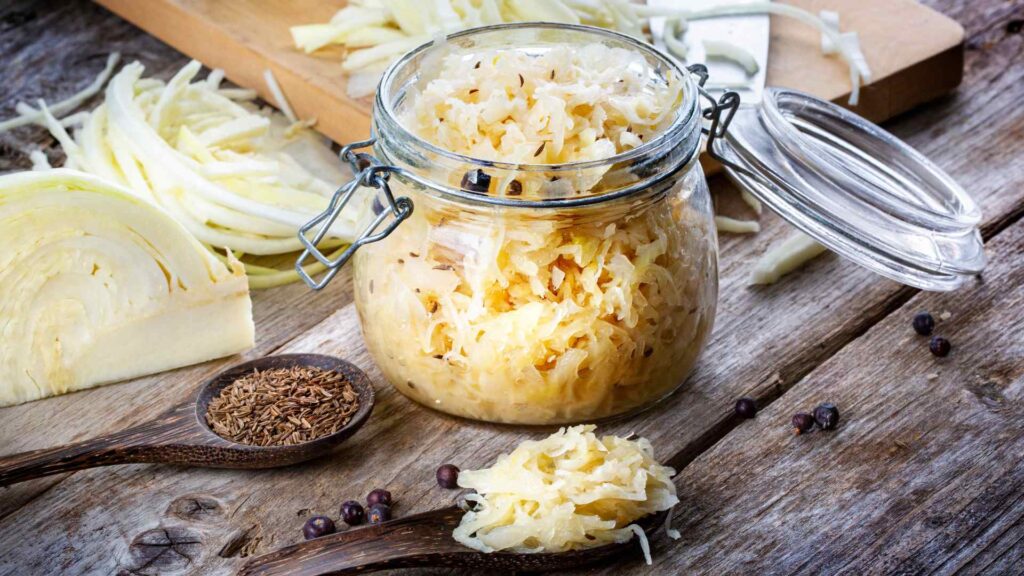
Follow refrigeration instructions before and after opening. Use clean utensils and do not return a licked spoon to the jar.
Glass shards, metal lids, pull tabs, plastic pouches, clips, oxygen absorbers, and labels can be swallowed. Missing packaging plus vomiting, drooling, pain, or reduced stool needs prompt assessment.
Treat limits and diet displacement
The UC Davis veterinary treat guideline recommends keeping extras below 10 percent of daily calories. Sodium and medical-diet restrictions can matter even when calories are modest.
Sauerkraut does not balance homemade food, provide every vitamin, or make a meat-heavy diet complete. A dog-safe taste is too small to serve as nutrition therapy.
What to do after a sauerkraut raid
- Identify plain, seasoned, homemade, canned, spoiled, alcohol-cooked, sausage-mixed, or supplement product.
- Record amount, brine, time, dog weight, symptoms, conditions, medications, and water access.
- Save labels and recipes for sodium, garlic, onion, caraway, chile, alcohol, broth, meat, and preservatives.
- Count jars, glass, lids, rings, bags, clips, pouches, forks, and desiccant packets.
- Call promptly for a large salty amount, Alliums, alcohol, spoilage, unsafe home product, packaging, or significant symptoms.
A healthy adult dog that tastes one tiny strand of plain sauerkraut and remains normal can usually be monitored with fresh water available. Return to the normal complete diet.
Do not induce vomiting or give salt, charcoal, oil, antacid, or human probiotic medicine unless a veterinarian directs it. Ingredients and symptoms determine the response.
Frequently asked questions
Is plain sauerkraut toxic to dogs?
One tiny plain taste is not a recognized canine poison, but sodium, acidity, fiber, and portion make routine feeding unnecessary.
Is sauerkraut a probiotic for dogs?
It is not a standardized canine probiotic. Live microbes, strains, dose, storage, and evidence vary by product.
Can dogs eat sauerkraut with caraway?
A tiny culinary amount is different from oil or extract, but the product may also contain salt, garlic, onion, alcohol, or spice. Read the full label.
What if my dog drank sauerkraut brine?
Brine can be very salty. Provide fresh water and call with the amount, dog size, medical conditions, water access, and symptoms.
The bottom line
One tiny taste of plain sauerkraut is usually a minor exposure for a healthy adult dog, but sodium and acidity make it a poor planned treat. It is not probiotic treatment.
Garlic, onion, seasonings, sausage, alcohol, spoilage, unsafe home fermentation, glass, lids, and other packaging change the answer. Let the exact jar and recipe lead.