Can Dogs Eat Potato Skins? Green Potatoes, Sprouts, and Toppings
A tiny piece of fully cooked, non-green potato skin is usually low risk, but peeled plain flesh is the simpler choice. Raw, green, bitter, damaged, or sprouted skins raise glycoalkaloid concerns, while loaded skins add fat, salt, garlic, onion, choking hazards, and foil.
The answer changes with the potato
- Small, soft, fully cooked, non-green skin: usually monitor for digestive upset.
- Peeled, plain cooked flesh: easier to chew and the lower-risk form when a taste is appropriate.
- Raw, green, bitter, damaged, old, or sprouted potato: prevent access and call for a meaningful or uncertain exposure.
- Loaded or fried skins: assess fat, salt, cheese, bacon, garlic, onion, chile, and portion size.
- Foil, skewer, plastic, or bag missing: contact a veterinarian about foreign-material risk.
Save the remaining potato or dish and photograph green areas, sprouts, damage, and packaging. Record raw versus cooked, amount, time, dog weight, symptoms, conditions, medications, prescribed diet, and every topping.

Why green and sprouted tissue gets special caution
Potatoes naturally contain steroidal glycoalkaloids, especially alpha-solanine and alpha-chaconine. Concentrations are not uniform across every tuber or every part of one potato.
The FDA potato food-safety guidance identifies solanine and chaconine as the main glycoalkaloids and notes that high levels can cause illness. Plant variety, light, damage, aging, and sprouting can affect accumulation.
Sprouts, peel, eyes, and sun-greened areas can hold higher concentrations than ordinary inner flesh. The green color is chlorophyll rather than the toxin itself, but it is a useful warning that the potato has been exposed to conditions associated with increased glycoalkaloids.
Do not feed green or sprouted potatoes to test whether one looks safe inside. Discard them where pets cannot raid the bin, including sprouts and peelings.
No universal toxin threshold belongs in a kitchen guide
A household cannot measure glycoalkaloid concentration by potato size, skin color, bitterness, or number of sprouts. Dog weight, amount, plant condition, distribution of compounds, and individual response add more uncertainty.
The National Capital Poison Center overview explains that solanine and chaconine concentrate in leaves, flowers, eyes, green skin, and sprouts. Its human-food context supports avoidance, not a do-it-yourself canine safe-dose table.
Report the maximum plausible amount and all visible potato features to a veterinarian or animal poison service. Do not wait for a precise gram estimate when a large green-skin or sprout exposure is possible.
Possible signs can include drooling, vomiting, diarrhea, abdominal discomfort, weakness, abnormal behavior, tremors, or other neurologic changes. Severe, persistent, or progressive signs need urgent evaluation.
Cooking does not rescue a green potato
Cooking softens potato and improves ordinary starch digestibility, but standard home cooking should not be treated as a dependable way to eliminate glycoalkaloids from green or sprouted tissue. A questionable potato belongs in a secured trash bin.
For an intentional taste, start with a firm potato that has no green color, sprouts, decay, bitter taste, or substantial damage. Wash it, peel it, cook it fully without seasoning, cool it, and offer only a small soft piece of flesh.
Our potato guide covers cooked, raw, green, and sprouted forms across the whole tuber. This article stays focused on peel and skin-based dishes.
Never let a dog decide whether a potato is bitter. Taste is an unreliable safety test and exposes the dog before the owner has an answer.
Raw skins add texture and starch problems
Raw potato skin is tough, while raw flesh is dense and starchy. Large pieces can lodge in the throat, be swallowed with little chewing, or create vomiting, gas, abdominal discomfort, or diarrhea.
Raw does not automatically mean a severe poisoning because a fresh non-green peel and a pile of green sprouted peelings are not equivalent. It does mean the owner should identify amount and condition rather than offering more.
Our raw-potato guide covers whole-tuber raids in more detail. Call for a large or unknown amount, green or sprouted material, repeated vomiting, marked pain, weakness, tremors, or inability to keep water down.
Do not induce vomiting or force bread, oil, milk, or fiber to push raw potato through. A professional should account for toxin and obstruction questions before recommending a response.
Cooked skin can still choke
A crisp baked skin, leathery peel strip, or curled fried piece may be difficult for a small dog to chew. Softness, piece size, and eating speed matter independently of glycoalkaloids.
Cut any permitted plain cooked potato into small soft pieces and remove tough edges. Dogs with dental disease, swallowing disorders, prior obstruction, or fast-eating behavior are better served without skin.
Breathing trouble, blue or gray gums, continuous gagging, or collapse is an emergency. Repeated vomiting, a painful belly, refusal to eat, straining, or inability to keep water down can indicate obstruction and warrants prompt care.
Loaded potato skins are a different food
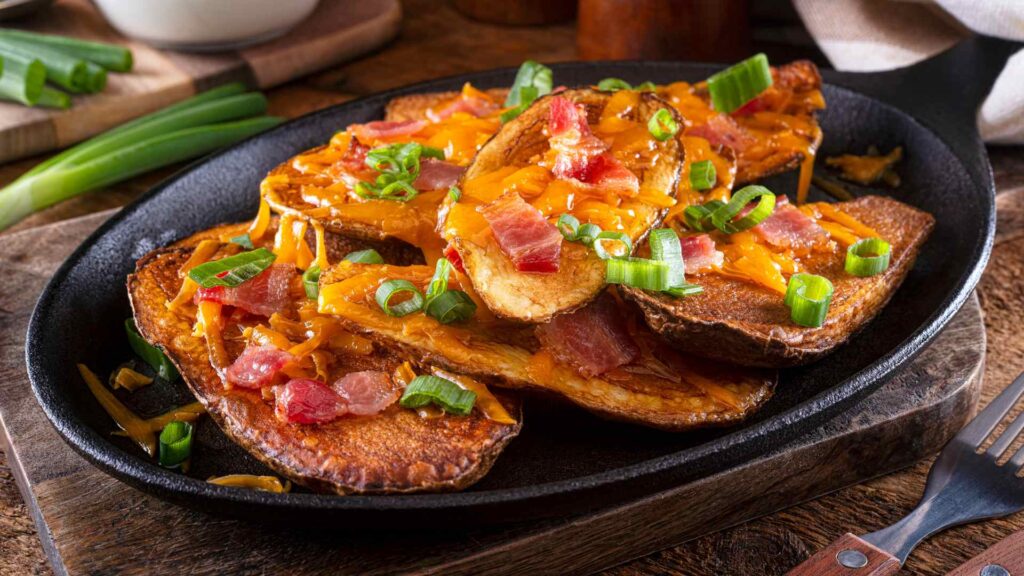
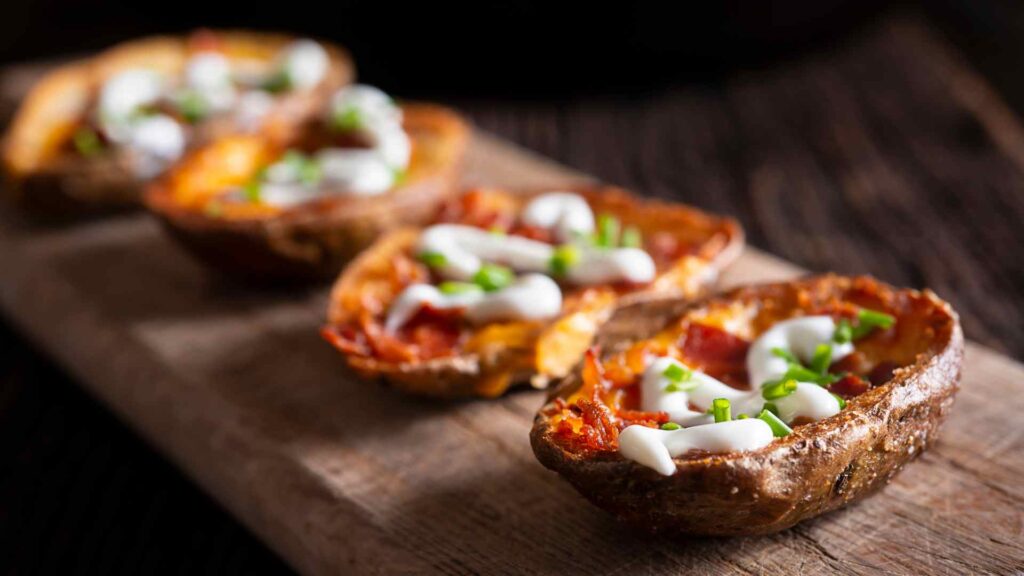
Restaurant potato skins may be fried or brushed with oil, then filled with cheese, bacon, sour cream, butter, salt, chives, onion, garlic, and hot sauce. The potato becomes only one part of a rich mixed exposure.
A lick of filling and a whole platter require different responses. Save the menu description, ask for ingredient information, and estimate the maximum number of pieces missing.
Sour cream adds fat and dairy questions, while bacon and cheese add more sodium and fat. Do not describe a loaded skin as a vegetable snack.
Chile and hot sauce can irritate the mouth and gut. Do not force milk or another fatty food as a home remedy.
Garlic, onion, and chives can cause delayed injury
Allium ingredients can damage canine red blood cells whether fresh, cooked, or powdered. Butter blends, seasoning salt, cheese sauce, bacon toppings, and restaurant spice mixes may distribute them across the dish.
The Merck Veterinary Manual Allium review notes that anemia may take several days to develop. Call promptly with the recipe, amount, time, and dog weight rather than waiting for signs.
Vomiting, weakness, pale gums, fast breathing, rapid heart rate, dark urine, jaundice, or collapse needs urgent attention. Repeated small exposures also belong in the history.
Do not assume visible chives are decorative and harmless. Remove the plate, save the recipe, and let the professional assess the combined Allium amount.
Fat, salt, and pancreatitis
Oil, butter, cheese, bacon, and sour cream can make loaded or fried skins very fatty. A large rich meal can cause digestive upset and may contribute to pancreatitis in susceptible dogs.
The Merck Veterinary Manual pancreatitis overview includes vomiting, appetite loss, weakness, abdominal pain, dehydration, and diarrhea among possible signs. Those signs after a platter raid warrant veterinary assessment.
Dogs with prior pancreatitis, high blood fats, obesity, endocrine disease, or a low-fat prescription plan should skip loaded skins. A small dog can receive a large fat exposure from one restaurant portion.
Salt also accumulates across cheese, bacon, seasoning, and sauce. Dogs with heart, kidney, blood-pressure, or fluid-balance concerns need case-specific advice.
French fries, chips, and peel snacks
Skin-on fries and potato chips are usually fried, salted, and sometimes flavored with garlic, onion, cheese, barbecue seasoning, or chile. Crispness and small size do not make repeated handfuls appropriate.
Our French-fry guide separates one plain fry from large, salty, seasoned servings. Check snack bags for serving count and inventory missing packaging.
Peel snacks marketed as upcycled or natural are still products with calories and possible oil or salt. Read the complete label rather than treating the word skin as proof of fiber value.
Foil and packaging can become the emergency
Baked potatoes may be wrapped in aluminum foil that carries grease and food odor. Foil, plastic wrap, takeout trays, skewers, toothpicks, bags, clips, and condiment cups can choke, cut, or obstruct.
Report every missing item and do not induce vomiting when sharp or bulky material may be present. Do not pull foil, string, or plastic from the rectum.
Greasy snack and produce bags can seal around the face and cause suffocation. Cut or secure empty bags and store food waste in a lidded pet-proof bin.
No fiber or potassium prescription
Potato skin contains nutrients, but it should not be used to treat constipation, diarrhea, anal-gland problems, low potassium, weakness, or heart disease. Nutrient presence does not establish a therapeutic dose or suitable food for a particular diagnosis.
Abnormal potassium can reflect kidney, adrenal, gastrointestinal, urinary, medication, or sampling issues. Giving potato skin can be inappropriate in a diet that controls potassium, calories, carbohydrate, sodium, or ingredients.
Different fibers have different effects, and added skin can worsen gas or stool problems. Persistent diarrhea, constipation with vomiting or pain, blood, dehydration, weakness, or an unwell dog needs assessment rather than a kitchen fiber trial.
Our sweet-potato-skin guide covers a different plant with its own preparation and texture questions. Similar cooking uses do not make the two skins nutritionally or toxicologically identical.
What to do after a skin raid
- Secure potatoes, sprouts, peelings, dishes, trash, and packaging.
- Photograph green color, eyes, sprouts, damage, mold, labels, and toppings.
- Record raw or cooked form, amount, time, weight, conditions, medicines, diet, and signs.
- Call for green or sprouted tissue, a large unknown amount, Alliums, rich food, packaging, vulnerability, or symptoms.
- Follow professional monitoring, feeding, and transport instructions.
For one tiny soft piece of cooked non-green skin in a healthy dog, removal and digestive monitoring are usually proportionate. Do not offer more to prove tolerance.
Bottom line
A small soft piece of cooked non-green skin is usually low risk, but peeled plain flesh is simpler. Green, sprouted, raw, tough, fried, loaded, or foil-wrapped skins create toxin, digestive, choking, diet, and foreign-material concerns.