Can Dogs Eat Cheez-Its? Crackers, Flavors, Salt, and Packaging
A healthy adult dog that steals one or two Original Cheez-It crackers will usually be fine, but Cheez-Its are not a useful dog treat. Salt, fat, calories, dairy and wheat, flavored-product ingredients, portion size, and the missing bag or box matter far more than the fact that the crackers contain cheese.

Original crackers are not the whole product line
The current Cheez-It Original product page lists enriched wheat flour, vegetable oil, cheese made with skim milk, salt, and other flavor and color ingredients. The manufacturer also tells shoppers to use the package for current information.
That last instruction matters because recipes, sizes, limited editions, and regional products can change. Read the exact box your dog reached rather than relying on a remembered ingredient list or a photo online.
Original Cheez-Its are not formulated with a canine toxin in every cracker. The sensible objection is that they are a salty, calorie-dense human snack that can quickly displace better food, especially when the serving becomes a handful or an open box.
A few crackers and a whole box are different events
One or two plain Original crackers in a healthy medium or large adult dog usually call for label checking and observation, not an emergency declaration. A tiny dog eating the same number gets more calories and sodium relative to body size.
A torn family-size bag or missing box deserves a closer calculation. Find the serving size, servings per container, sodium per serving, calories, fat, flavor, and estimated amount left.
Do not assume every crumb went into one dog if several had access. Record a realistic range for each animal and tell the veterinarian what is uncertain.
Salt is a dose and water-access question
The manufacturer currently lists 200 milligrams of sodium per serving of Original crackers, but package values can change. Merck’s salt-toxicosis guide notes that excessive sodium is more dangerous when fresh water is restricted.
One salty cracker may make a dog thirsty without causing salt poisoning. A very large amount, a small dog, concurrent salty foods, vomiting that limits water retention, or lack of water raises concern.
Signs that warrant urgent advice include repeated vomiting, marked thirst, weakness, wobbliness, tremors, confusion, collapse, or seizures. Leave normal fresh water available, but do not force water rapidly into a nauseated or neurologically abnormal dog.
Fat and calories add up quietly
Crackers are easy to count badly because a few disappear between handfuls. Repeated sharing can add a meaningful number of calories to a small dog’s day while contributing little to a balanced canine diet.
All extras share one calorie allowance; the WSAVA treat guide recommends keeping them below 10 percent of daily calories. That includes crackers, chews, table scraps, training rewards, and toppers together.
A greasy snack raid may cause vomiting or diarrhea. Dogs with pancreatitis, high blood lipids, obesity, diabetes, or a prescribed low-fat diet need stricter rules than a general healthy-dog answer.
Merck’s pancreatitis review describes dietary indiscretion, vomiting, abdominal pain, and the importance of fat restriction in affected dogs. It does not mean one cracker inevitably causes pancreatitis.
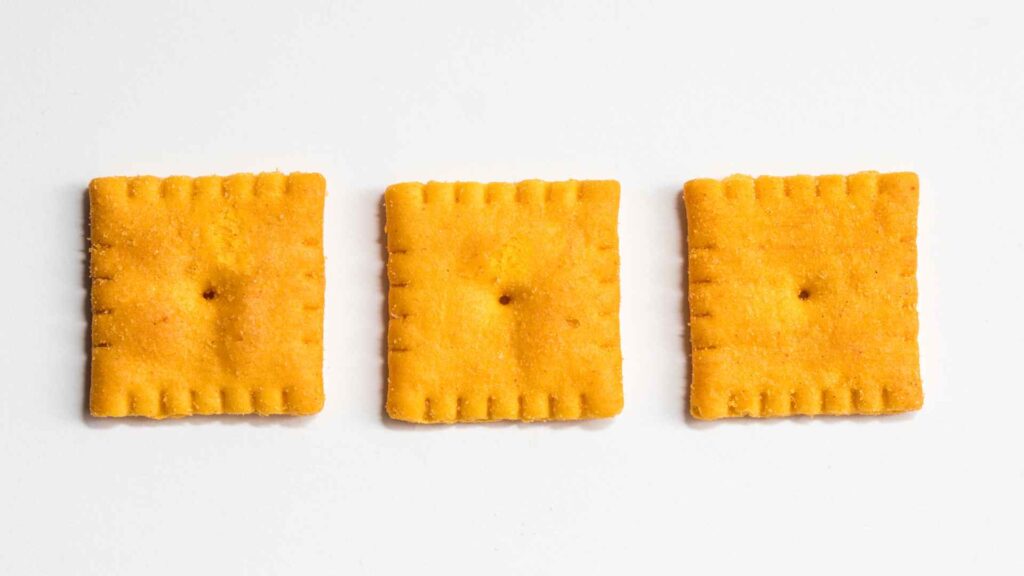
Cheese flavor is not a nutrition benefit
The cheese ingredient adds flavor and contributes dairy protein, fat, and sodium, but Cheez-Its are not an efficient protein or calcium supplement for dogs. Complete dog food already balances nutrients for the intended life stage.
Dairy can cause digestive upset in dogs that handle lactose poorly, although the exact lactose in a baked cheese cracker is not established by its name. The ASPCA’s people-food guidance notes that dairy products can cause diarrhea or other digestive upset.
Wheat or dairy allergy cannot be diagnosed from one episode of loose stool. Recurrent itching, ear disease, skin infection, vomiting, or diarrhea needs a veterinary workup and, when appropriate, a controlled elimination trial.
Merck explains that elimination and rechallenge are the reliable diagnostic approach in its food-allergy guide. Dogs on such a trial should not receive cheesy crackers, even in tiny amounts.
Flavor names can change the answer
Cheez-It varieties and related snack mixes may add seasoning powders, hot spices, extra cheese, sweet coatings, nuts, pretzels, or other crackers. Onion and garlic can appear in a flavor blend without being visible as pieces.
Do not declare every flavored cracker toxic, and do not declare the whole product family safe. Scan the ingredient list for onion, garlic, chives, chocolate or cocoa, coffee, raisins, macadamias, xylitol, alcohol flavorings, and unusually salty seasoning.
Chocolate is more likely to enter through a chocolate-dipped cracker, dessert mix, party mix, or homemade snack than through the current Original formula. If cocoa or chocolate is present, report the type, amount, package, time, and dog weight promptly.
Hot and spicy varieties
Chile heat can irritate the mouth and stomach, while spicy formulas may also be salty and fatty. Do not treat a dog with milk or make it drink a large volume; call for repeated vomiting, pain, coughing, eye exposure, or breathing trouble.
Snack mixes
A party mix may contain raisins, chocolate pieces, macadamias, onion-seasoned cereal, peanuts, pretzels, candy, or xylitol-sweetened components. Separate and count the ingredients instead of using the Cheez-It name as the risk assessment.
TBHQ and other food additives
The current Original label lists TBHQ for freshness in the vegetable oil. Its permitted presence in a commercial food is not a reason to invent a canine poisoning syndrome after one cracker.
For an ordinary raid, sodium, fat, calories, flavorings, portion, and packaging are more actionable than vague fear of chemicals. If a dog consumed a concentrated ingredient or nonfood additive rather than finished crackers, save that label and call separately.
Crunch and packaging bring physical hazards
Most standard crackers crumble, but a dog can cough or choke while gulping a fistful. Puppies, flat-faced dogs, dogs with swallowing disorders, and dogs eating through a narrow bag opening deserve extra attention.
The inner plastic bag, box liner, cardboard, clip, multipack wrapper, and desiccant or freshness packet may disappear during a raid. Missing packaging changes the concern from nutrition to possible choking or intestinal obstruction.
Retching, repeated vomiting, drooling, abdominal pain, a swollen belly, refusal of food, inability to keep water down, or failure to pass stool needs veterinary assessment. Do not wait for a wrapper to pass when the dog is symptomatic.
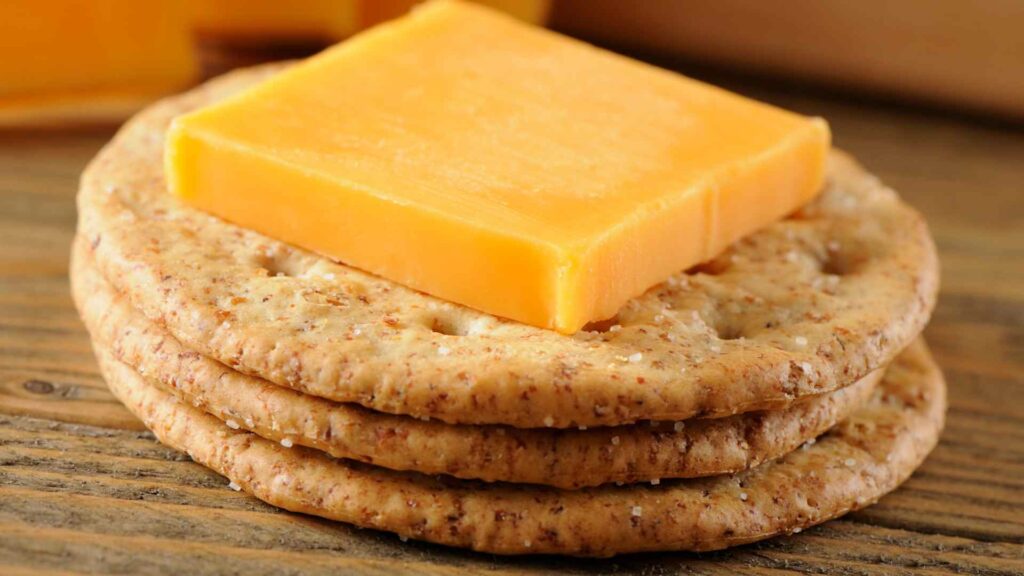
What to do after a cracker raid
- Remove the snack and separate all pets from the area.
- Photograph the exact flavor, ingredient list, nutrition panel, serving size, and package weight.
- Estimate crackers missing, earliest and latest possible time, and each dog’s weight and share.
- Record symptoms, water access, conditions, medications, prescription diet, and other foods eaten.
- Account for the bag, liner, box, clips, wrappers, and any ingredients from a homemade snack mix.
For one or two Original crackers in a healthy adult dog that remains comfortable, provide ordinary fresh water and monitor. Skip extra salty or fatty treats and return to the normal complete meal schedule.
Call promptly after a large amount, a high-risk flavored product, a mixed snack with hazardous ingredients, missing packaging, or symptoms. Puppies and dogs with heart disease, kidney disease, pancreatitis, diabetes, swallowing problems, or sodium restriction merit a lower threshold.
Do not induce vomiting or give salt, oil, milk, charcoal, antacids, or human stomach medicine unless a veterinarian directs it. The ingredients, amount, time, and dog’s condition determine whether decontamination is appropriate.
Better reward ideas
The easiest replacement is part of the dog’s measured kibble allowance. A small commercial dog treat with clear calories also makes portion tracking easier than a stream of crackers.
Plain produce can suit some dogs, but preparation still matters. The site’s apple guide explains cores and seeds, while the strawberry guide covers fresh fruit versus sweetened products.
If the appeal is crunch, compare the same salt and packaging questions in the pretzel guide and French fry guide. Neither human snack is needed for dental care or enrichment.
Frequently asked questions
Are Cheez-Its toxic to dogs?
Current Original crackers are not a recognized canine poison in a one-cracker exposure. Large quantities, flavored ingredients, medical restrictions, and packaging can still make an incident important.
How many Cheez-Its can a dog eat?
There is no recommended canine serving because they are optional human snacks. Dog size, package calories, sodium, health, and every other treat decide what fits.
Can puppies have Cheez-Its?
Puppies need calorie room for complete growth food and are more likely to gulp food or packaging. Choose a measured puppy-appropriate reward instead.
Are extra-toasty crackers safer?
Browning does not remove sodium, fat, calories, dairy, wheat, or packaging. Read that exact label because product details can differ.
What if my dog ate a whole box?
Call with package size, remaining amount, sodium and calories per serving, time, dog weight, water access, symptoms, and missing packaging. Do not wait for neurologic or abdominal signs.
The bottom line
One or two Original Cheez-Its are usually a minor event for a healthy adult dog, but they are a poor planned treat. They add salt, fat, and calories without offering a useful cheese or protein benefit.
A whole box, tiny dog, flavored product, hazardous snack mix, medical restriction, or missing bag changes the answer. Read the current package and respond to the real exposure, not the brand name alone.