Can Dogs Eat Beef Jerky? Salt, Garlic, Texture, and Packet Risks
One tiny piece of plain, fully cooked, low-sodium beef jerky is usually low risk for a healthy dog, but human jerky is a poor routine treat. Commercial salt, garlic, onion, spices, sugar, xylitol, fat, tough strips, unsafe home drying, and packaging change the answer.
The quick decision guide
- One small plain piece: check the label, cut it safely, and monitor for digestive upset.
- Several strips or an unknown amount: calculate servings and call for medical vulnerability or symptoms.
- Garlic or onion listed: contact a veterinarian for a dose-based assessment, especially after a packet raid.
- Sugar-free or specialty jerky: check xylitol and unusual marinades immediately.
- Bag, clip, oxygen absorber, desiccant, or plastic missing: report every nonfood item.
Save the package and note brand, style, meat type, ingredients, nutrition facts, amount left, time, dog weight, conditions, medications, prescribed diet, and symptoms. A soft dog treat, dry human snack, meat stick, biltong, and homemade strip are not interchangeable.
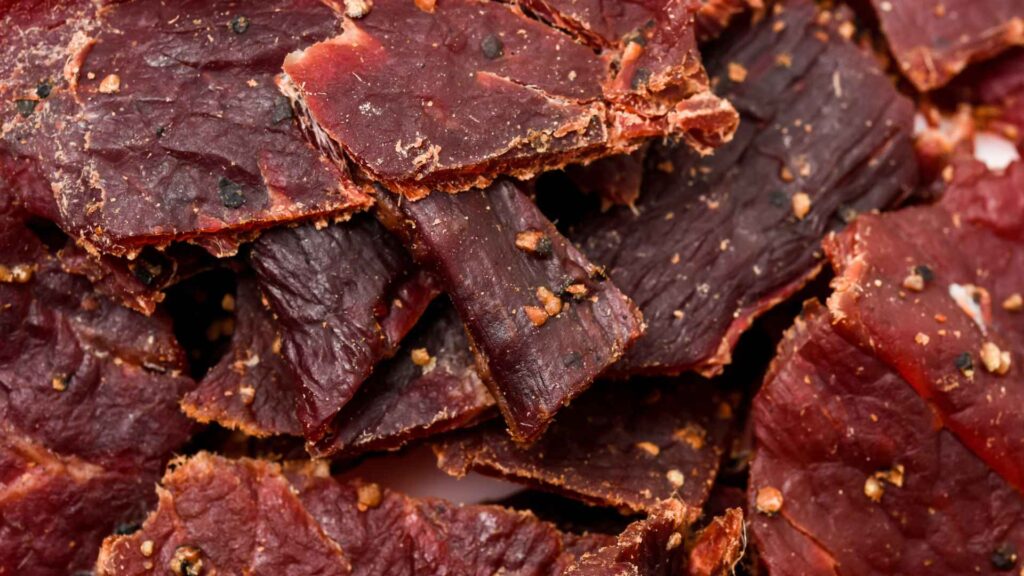
Beef is not the problem by itself
Plain cooked beef can fit some dogs’ diets, but jerky is processed to be concentrated, flavorful, and shelf-stable. Removing water concentrates calories and can make salt, seasonings, and portion size easy to underestimate.
A thumb-sized strip may have started as a much larger piece of meat. That density is useful for hikers, not evidence that it is an efficient canine protein supplement.
Our plain beef guide covers cooked unseasoned beef and fat trimming. Jerky adds curing, dehydration, marinades, toughness, and storage questions.
Sodium is the most common everyday concern
Salt improves flavor and preservation, and commercial jerky can contain substantial sodium per serving. Check the serving size and calculate how many servings disappeared rather than reading one milligram number in isolation.
Reduced sodium means less than a comparison product, not necessarily little enough for a particular dog. Teriyaki, soy sauce, barbecue, peppered, smoked, and meat-stick formulas may add salty marinades or seasoning.
Dogs with heart disease, kidney disease, high blood pressure, fluid-balance problems, or prescribed sodium restrictions need case-specific advice. One tiny taste and an emptied family-size bag deserve different responses.
Keep normal access to fresh water unless a veterinarian says otherwise, but never force water. Marked thirst, repeated vomiting, weakness, wobbliness, tremors, seizures, or abnormal dullness after a large salty-food raid warrants urgent care.
Garlic and onion can cause delayed anemia
Garlic powder, onion powder, onion juice, and spice blends appear in many marinades. Dry powders are concentrated and spread across the meat, so removing a visible flake does not remove the exposure.
The Merck Veterinary Manual Allium review explains that raw, cooked, dehydrated, and granulated forms can damage red blood cells. Clinical anemia may not appear for several days.
Call with the ingredient list, amount, time, and dog weight after a meaningful exposure, especially from concentrated jerky or seasoning powder. Possible signs include vomiting, weakness, pale gums, fast breathing, rapid heart rate, dark urine, jaundice, or collapse.
Our garlic powder guide provides a delayed-sign checklist. Do not wait for pale gums and do not induce vomiting without veterinary direction.
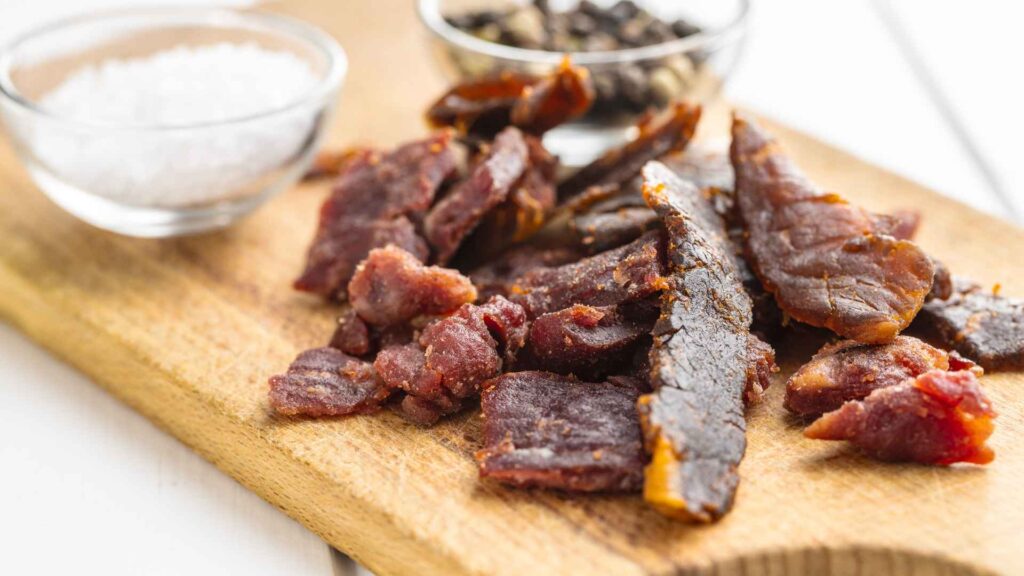
Sugar, xylitol, and sweet marinades
Brown sugar, honey, maple syrup, molasses, fruit concentrate, or ordinary sugar may appear in jerky. In a small taste these are mainly calorie concerns, while sticky sweet jerky can worsen dental residue and digestive upset.
Sugar-free, keto, dental, supplement-style, or homemade products need an immediate xylitol check. The sweetener may also be called birch sugar, wood sugar, or birch bark extract.
The FDA xylitol warning recommends prompt veterinary or poison-control contact because dogs can develop dangerous low blood sugar and liver injury. Do not wait for vomiting, weakness, stumbling, collapse, tremors, or seizures.
Save the full recipe for homemade jerky, including sweetener brands. No added sugar does not mean xylitol-free, and natural does not resolve the label question.
Pepper, chile, smoke, and other flavors
Black pepper and chile can irritate the mouth, nose, and digestive tract, while hot sauce may add salt, garlic, and onion. Smoke flavor is not a reason to call after one bite by itself, but it confirms the food is not plain beef.
Teriyaki may add soy sauce, sugar, garlic, and onion, while barbecue formulas can include similar seasonings. Alcohol-containing marinades and cannabis-infused specialty products require separate assessment.
Do not give milk, oil, bread, or another rich food to neutralize spicy jerky. Move the food away, offer normal water access if allowed, and call for persistent mouth pain, vomiting, or breathing signs.
Fat and pancreatitis still matter
Jerky can be made from lean cuts, but marbling, ground-and-formed products, meat sticks, and added oils vary. An oily surface or the word beef cannot quantify total fat.
A large fatty theft can cause vomiting or diarrhea and may contribute to pancreatitis in susceptible dogs. Call for abdominal pain, repeated vomiting, appetite loss, weakness, dehydration, or worsening lethargy.
Dogs with prior pancreatitis, high blood fats, obesity, endocrine disease, or a low-fat prescription diet should skip human jerky. Our salami guide covers similar processed-meat fat and sodium concerns.
Tough strips can choke or obstruct
Long leathery strips can lodge across the throat or be swallowed as a dense rope, especially by small dogs and gulpers. Hard pieces can also damage teeth or gums.
If a veterinarian-approved taste is offered, cut a soft low-sodium plain piece smaller than the dog’s thumbnail and supervise chewing. Do not hand over a full strip for entertainment.
Breathing trouble, blue or gray gums, continuous gagging, or collapse is an emergency. Repeated vomiting, belly pain, refusal to eat, or inability to keep water down can signal obstruction.
Homemade dehydration requires food-safety controls
Drying raw beef at a low temperature does not automatically kill pathogens. The USDA jerky safety guide explains that bacteria can survive warm-oven or dehydrator conditions and provides validated heating and drying guidance.
Marinating alone does not make raw meat safe, and visual dryness does not prove a safe internal process. Follow a tested human-food method, use clean equipment, refrigerate marinades, prevent cross-contamination, and store the finished product correctly.
Dogs can become ill from contaminated meat and may shed organisms that expose people. Repeated vomiting, bloody diarrhea, feverish behavior, marked weakness, or illness in a vulnerable household member deserves medical advice.
Do not feed a questionable batch to avoid waste. Discard moldy, slimy, unusually odorous, damp, or improperly stored jerky in a secured bin.
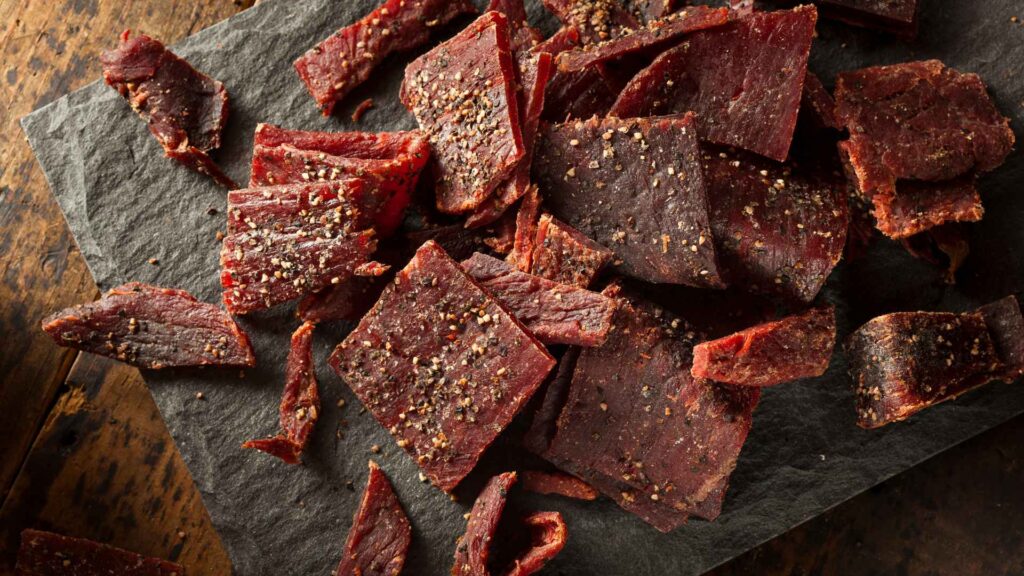
Oxygen absorbers and packaging
Jerky bags may contain oxygen absorbers or desiccants that look alike but contain different materials. Keep the packet and its printing, and call for product-specific advice rather than declaring it harmless or poisonous by appearance.
Bags, zippers, clips, plastic trays, labels, and packet wrappers can choke or obstruct. Inventory every missing item and do not induce vomiting when packaging or sharp material may have been swallowed.
Food bags can seal around a dog’s face and cause suffocation. Cut or secure empty bags and place jerky waste in a lidded pet-proof bin.
Jerky is not needed protein
Beef jerky contains protein, but it should not be used to build muscle, correct weight loss, support recovery, or balance a homemade diet. Those goals depend on total energy, amino acids, disease, and the complete recipe.
The World Small Animal Veterinary Association treat guide recommends keeping treats below 10 percent of daily calories. Concentrated meat can spend that allowance quickly while adding sodium.
Use measured regular food for frequent rewards or choose a veterinarian-approved dog treat with suitable texture and nutrients. Human jerky is not improved by becoming the daily medication wrapper.
Human jerky and dog jerky need separate labels
A product sold for dogs may avoid some human seasonings, but it is still a treat with calories, texture, storage instructions, and a serving size. Pet labeling does not make unlimited strips appropriate.
Single-ingredient dog jerky should name the animal tissue clearly and come from a manufacturer with contact information and lot tracking. Stop using it and contact the veterinarian if several dogs become ill or the product smells, looks, or feels abnormal.
Human jerky may be labeled uncured, natural, organic, grass-fed, or high protein, but those claims do not remove sodium, seasonings, toughness, or calories. Compare the back panel rather than choosing by a front-label halo.
Storage after opening
Follow the package instructions for refrigeration, resealing, and use after opening because moisture can re-enter a bag. Homemade jerky has a different storage life from federally inspected commercial jerky.
Discard strips with mold, slime, dampness, insect activity, a rancid odor, or uncertain storage. Do not rinse spoiled jerky or bake it again for a dog.
Keep jerky in its original labeled package inside a closed cabinet rather than an unmarked jar on the counter. That preserves ingredient, lot, expiration, and packet information if a raid occurs.
What to do after a raid
Secure remaining food and packaging, then identify amount, sodium, fat, Alliums, sweeteners, spice level, cooking process, storage, and every missing object. Record time, weight, conditions, medications, diet, and symptoms.
Call for a large or unknown amount, garlic or onion, xylitol, unsafe homemade processing, mold, packaging, medical vulnerability, or significant signs. For one tiny plain low-sodium cooked piece in a healthy dog, label review and monitoring are usually proportionate.
Bottom line
A tiny plain low-sodium cooked piece is usually low risk, but human beef jerky is not a useful protein treat. Salt, Alliums, spices, sugar, xylitol, fat, toughness, home processing, storage, packets, and packaging deserve closer attention.