Can Dogs Have Bone Broth? Labels, Bones, Sodium, and Claims
A small amount of truly plain bone broth may be acceptable when a veterinarian approves it, but the name does not make a recipe safe or therapeutic. Onion, garlic, sodium, rendered fat, bone fragments, raw handling, spoilage, veterinary-diet conflicts, and unsupported joint or gut claims matter more than whether the broth gels.
Read the label before offering a spoonful
- Veterinary product used as directed: follow the clinic’s amount, timing, storage, and purpose.
- Plain homemade broth: use cooked meat, bones, and water only during preparation, then remove every bone and excess fat before serving liquid.
- Store-bought broth or bouillon: check onion, garlic, sodium, yeast extract, flavorings, and serving concentration.
- Human bone broth: assess the full recipe, final concentration, sodium, fat, Alliums, and serving instructions.
- Broth from a cooked carcass: strain carefully and keep every cooked bone away from the dog.
Save the carton, can, cube wrapper, recipe, and nutrition panel, then note the amount, time, dog’s weight, conditions, medications, and symptoms. Ready-to-serve and concentrate are not interchangeable descriptions.
Onion and garlic are the first high-stakes check
Bone broth, stock, bouillon, soup base, gravy granules, and flavor concentrates commonly contain onion or garlic even when no pieces are visible. These Allium ingredients can damage canine red blood cells in raw, cooked, dried, and powdered forms.
The Merck Veterinary Manual Allium review explains that anemia can take several days to appear and that concentrated powders are frequent sources of exposure. A dog looking normal after drinking broth is not proof that an Allium-containing product was harmless.
Possible signs include vomiting, weakness, pale gums, rapid breathing, fast heart rate, dark urine, jaundice, or collapse. Call promptly with the product, ingredient list, concentration, amount, time, and dog’s weight rather than waiting for symptoms.
Our guides to onions and garlic powder explain why cooking and dilution do not erase the concern. Do not use smell or flavor intensity to estimate dose.
Low sodium is relative, not a free pass
Reduced-sodium, low-sodium, and unsalted products are different label claims, and the serving size may be much smaller than the amount poured into a bowl. Compare sodium per serving, servings consumed, and whether the product required dilution.
One lick of ordinary broth is unlikely to cause salt poisoning in a healthy dog, but a pot or concentrate raid can be much more significant. Dogs with heart disease, kidney disease, high blood pressure, or a prescribed sodium restriction may have little room for extras.
Keep normal access to fresh water unless a veterinarian has given different instructions, but do not force water into the mouth. Marked thirst, repeated vomiting, wobbliness, weakness, tremors, seizures, or unusual dullness warrants urgent advice.
Bouillon cubes, powders, pastes, and soup bases are designed to season a larger volume and can be highly concentrated. Report whether the dog ate the concentrate itself or finished broth made according to directions.
Fat rises, cools, and still counts
Homemade stock can collect a thick fat layer from skin and drippings, while commercial products may deliberately retain fat. Chilling allows fat to solidify for removal, but the remaining liquid is not necessarily low-fat enough for every dog.
A large fatty meal can cause vomiting or diarrhea and may contribute to pancreatitis in susceptible dogs. Repeated vomiting, abdominal pain, weakness, refusal to eat, or inability to keep water down deserves veterinary assessment.
Dogs with previous pancreatitis, high blood fats, obesity, or a prescribed low-fat diet should receive broth only with veterinary approval. A clear-looking liquid can still carry meaningful fat.
Do not skim a rich roasting pan and call the remainder plain broth if it contains butter, oil, gravy, seasoning, wine, onion, or garlic. The source recipe matters.
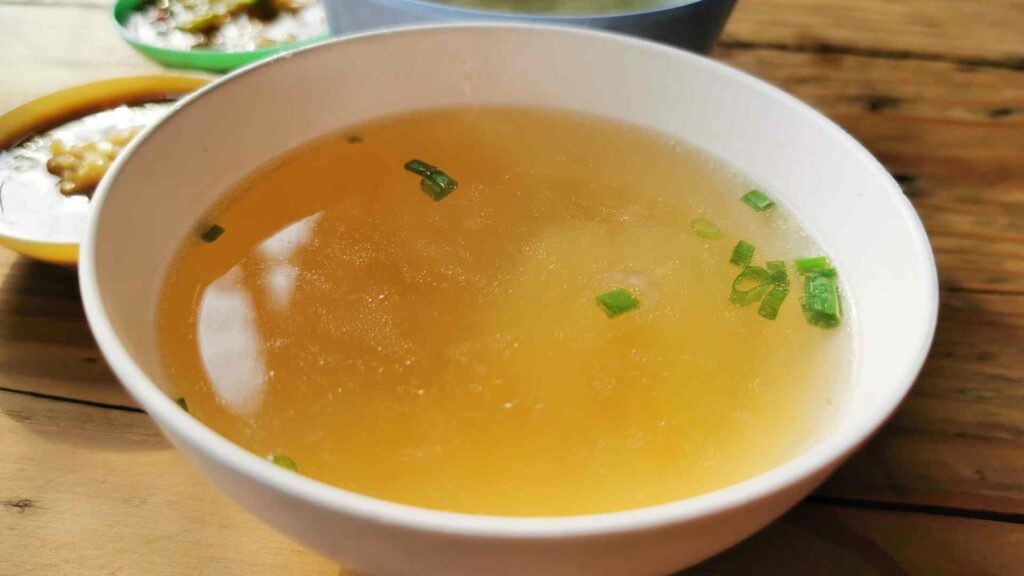
Bones never belong in the bowl
Bone broth may be made with bones, but every bone fragment must be removed before the liquid reaches a dog. Cooked bones can splinter, injure the mouth or digestive tract, choke, or obstruct.
Strain broth through a fine sieve and inspect the meat by hand under good light, then discard bones in a secured bin. Do not rely on a slotted spoon to catch tiny sharp fragments.
If a bone may have been swallowed, call for advice and do not induce vomiting. Report gagging, drooling, repeated swallowing, vomiting, abdominal pain, blood, straining, or appetite loss promptly.
Our chicken-broth guide covers a closely related product with the same concentration, sodium, Allium, and bone questions. The name refers to preparation, not permission to feed the bones.
Raw chicken handling can contaminate the kitchen
Making bone broth often begins with raw meat and bones, which can carry disease-causing bacteria and spread them to hands, counters, utensils, sinks, bowls, and other food. Keep the dog away from raw scraps, bones, and cleanup water.
The USDA leftovers and food-safety guide recommends clean, separate, cook, and chill practices and warns against placing cooked food on unwashed surfaces that held raw meat. Use an appropriate food thermometer for the meat used and wash hands and tools with hot soapy water.
Do not rinse raw meat in a way that splashes nearby surfaces, and do not offer raw necks, backs, joints, skin, or bones while the pot cooks. Our raw-bacon guide explains why raw animal products require household contamination control even before their fat and salt are considered.
People in the home can be exposed by contaminated pet bowls and dog saliva after raw food. Food safety is a household issue, not just a question of whether the dog vomits.
Homemade does not guarantee plain
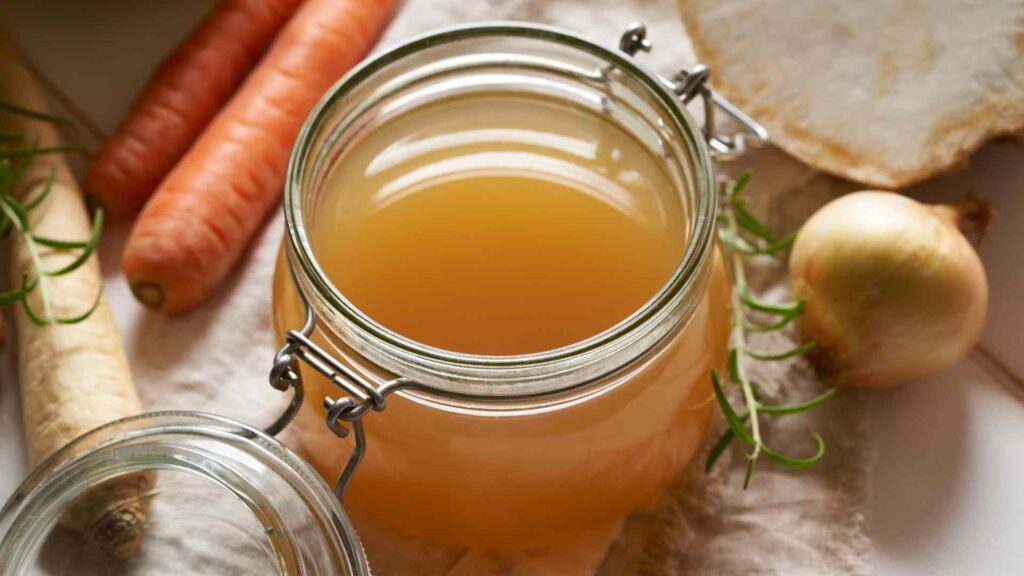
Family recipes often add onion, garlic, leeks, chives, celery, carrots, herbs, peppercorns, salt, wine, vinegar, or seasoning blends. Ask every cook what entered the pot, including scraps and a last-minute cube.
Celery and carrot in food amounts are not usually the urgent concern, but fibrous pieces and large vegetables can add choking or digestive issues. Wine and cooking alcohol need separate assessment when the amount is meaningful or uncertain.
A simple batch uses bones, plain meat, and water during cooking, with no seasoning, then careful straining, fat removal, rapid cooling, and prompt storage. Even that broth is an optional extra unless a veterinarian gave a specific reason and amount.
Shelf life and storage matter
Broth is perishable after opening or cooking, and homemade versions lack commercial preservation. Refrigerate promptly in shallow containers, follow the product’s after-opening instructions, and freeze portions you will not use soon.
Discard broth that is moldy, slimy, swollen, leaking, fizzy when it should not be, or smells spoiled. Do not taste a suspect product to decide whether the dog can have it.
A dog that drinks spoiled broth may develop vomiting, diarrhea, pain, appetite loss, or weakness. Save the container and lot code, then call based on the amount and signs.
Cartons, can lids, pull tabs, foil seals, plastic caps, and freshness packets can cut, choke, or obstruct. Report every missing piece and do not induce vomiting if sharp material may be present.
Once broth has been served, discard what the dog does not finish within a sensible meal window rather than pouring saliva-contaminated liquid back into the carton. Wash the bowl with hot soapy water, especially in homes with young children, older adults, or immunocompromised people.
Broth is not a complete food
Broth does not supply the complete protein, calories, essential fats, vitamins, and minerals a dog needs, even if it gels or contains visible meat. Replacing meals with broth can dilute nutrition and delay diagnosis of poor appetite.
The FDA complete-and-balanced pet food guide explains that too many table scraps can unbalance a diet and points owners to the nutritional adequacy statement. Broth is an extra, not a sole diet.
Dogs on elimination, renal, cardiac, urinary, gastrointestinal, or weight-loss diets may need to avoid even plain broth. Animal protein, sodium, phosphorus, fat, or extra calories may conflict with the therapeutic plan.
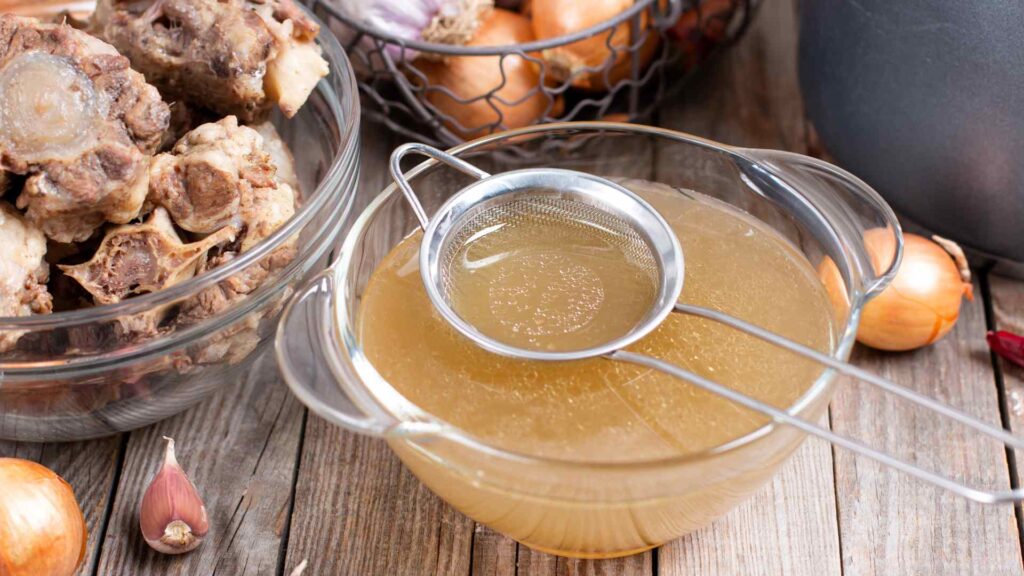
Collagen and gelatin do not prove a joint treatment
Bone broth may contain gelatin, collagen-derived peptides, amino acids, and minerals, but composition varies with bones, water, acidity, cooking time, skimming, and dilution. A product description cannot predict a clinical dose.
There is no reason to replace arthritis diagnosis, weight management, rehabilitation, pain control, or veterinarian-recommended joint products with homemade broth. A dog limping, struggling to rise, or avoiding stairs needs an examination rather than a longer simmer time.
Likewise, “gut healing” is a marketing phrase, not a diagnosis. Vomiting, diarrhea, blood, abdominal pain, weight loss, appetite change, or recurrent gas can have many causes that broth does not identify or correct.
Ask what outcome a commercial product actually demonstrated in dogs, at what dose, and with what complete formula. Ingredient presence and testimonials are not the same as patient evidence.
Do not use broth as home fluid therapy
Broth should not be used to diagnose or treat dehydration, vomiting, diarrhea, kidney disease, pancreatitis, poisoning, heat illness, or surgical recovery without veterinary direction. A dog needing fluid therapy may require examination, laboratory testing, anti-nausea care, and precisely chosen fluids.
Adding broth can make some dogs drink, but it can also add sodium, fat, allergens, or dangerous seasonings and may delay care. Water should remain available unless a veterinarian gives different instructions.
If a veterinarian recommends broth, ask for the exact product or recipe, amount, frequency, duration, storage plan, and when to stop. That turns a vague home remedy into a defined part of the medical plan.
What to do after a broth theft
- Secure the remaining broth, bones, packaging, and raw ingredients.
- Identify onion, garlic, sodium, concentration, fat, alcohol, bones, and spoilage.
- Estimate amount and time, then note dog weight, conditions, medications, diet, and symptoms.
- Call promptly for Alliums, concentrate, large or unknown amounts, bones, packaging, medical vulnerability, or symptoms.
- Follow the clinic’s monitoring or treatment plan and keep the product available.
Do not induce vomiting or give salt, peroxide, mustard, oil, milk, food, or medication unless a veterinarian directs you. The correct response depends on ingredients, timing, signs, bones, and aspiration or obstruction risk.
Bottom line
A small amount of veterinarian-approved or truly plain low-sodium bone broth may be acceptable, but ordinary broth needs a full label check. Onion, garlic, salt, fat, bones, raw handling, spoilage, packaging, and diet displacement are the real decision points.