Can Dogs Eat Butter? Fat, Pancreatitis, and Wrapper Risks
One lick of plain butter is usually a monitor-at-home event for a healthy adult dog, but a missing stick is a much bigger fat and packaging exposure. Butter is calorie-dense, may trigger digestive upset or pancreatitis in susceptible dogs, and compound varieties can hide garlic, onion, xylitol, or other hazards.
The practical answer
- One lick or tiny smear of plain butter: usually low risk for a healthy dog, though loose stool or vomiting is possible.
- Several tablespoons or a stick: call for advice because the fat load and dog-specific pancreatitis risk matter.
- Garlic, herb, restaurant, or flavored butter: inventory onion, garlic, salt, alcohol, sweeteners, and every seasoning.
- Missing wrapper, tub lid, or foil: treat as a possible foreign-body exposure.
- Dog with pancreatitis, diabetes, obesity, high blood fats, or a prescription diet: call even when the amount seems modest.
Save the package, count what remains, and note salted or unsalted, amount, time, wrapper status, dog’s weight, and current signs. Do not assume a cheerful dog is guaranteed to stay comfortable after a large fat raid.
Butter is mostly a fat-and-calorie question
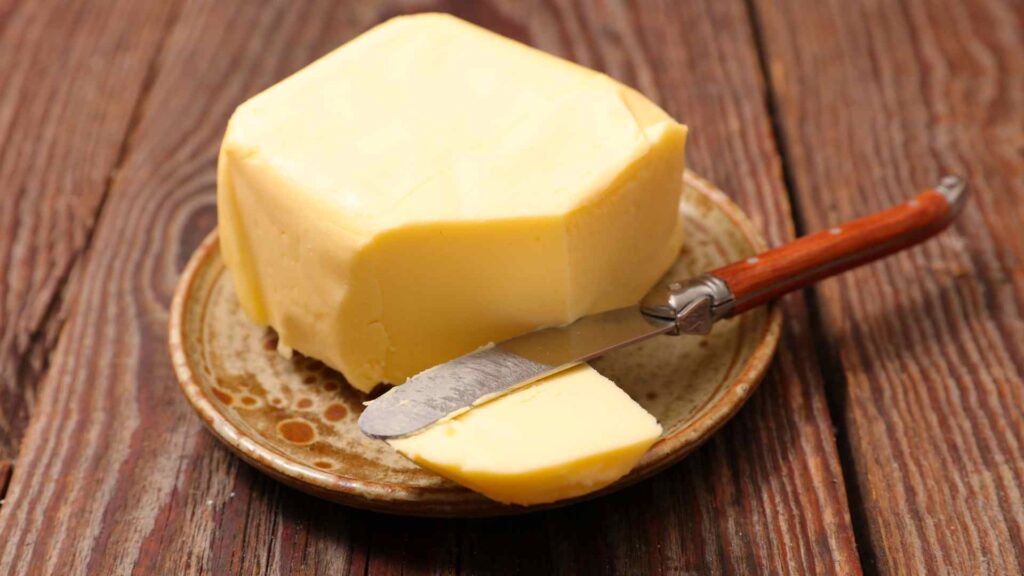
Butter is made by concentrating milk fat, which means a small volume carries many calories. It does not provide a dog with a balanced snack, and repeated spoonfuls can displace complete food or undermine weight management.
The trace lactose remaining in butter is usually much lower than in milk, so lactose is not always the main issue. Some dogs may still experience gas, soft stool, diarrhea, or vomiting after dairy fat, and our dairy guide explains individual tolerance.
Salted butter adds sodium, but one lick rarely creates salt poisoning by itself. A whole salted stick, an extremely small dog, kidney or heart disease, fluid-balance problems, or other salty foods deserve individualized advice.
Unsalted does not mean low-fat, low-calorie, or appropriate for pancreatitis. Clarified butter and ghee remove most milk solids and water but remain concentrated fat.
Why pancreatitis is the main medical concern
Pancreatitis is inflammation of the pancreas and can range from mild illness to a severe emergency. Dietary indiscretion is considered a common risk factor in dogs, although not every fatty meal causes pancreatitis and many cases have no single proven trigger.
The Merck Veterinary Manual pancreatitis review notes that vomiting and abdominal pain after dietary indiscretion may suggest pancreatitis. Diagnosis requires the full clinical picture rather than assuming every upset stomach after butter is the disease.
Possible signs include nausea, repeated vomiting, diarrhea, reduced appetite, lethargy, fever, abdominal pain, or the prayer position with front end lowered and rear end raised. Collapse, severe weakness, a swollen painful abdomen, or inability to keep water down needs urgent veterinary care.
Dogs with previous pancreatitis, hypertriglyceridemia, diabetes, obesity, certain endocrine disorders, or a prescribed low-fat diet should not receive butter. Call their veterinarian after an accidental meaningful exposure rather than waiting for recurrence signs.
A lick, a tablespoon, and a stick are different events
A healthy medium or large dog that licks a trace from a plate may remain completely normal. The same amount represents a larger calorie and fat dose for a toy dog, puppy, or dog with a medical condition.
A missing stick is not a wait-and-see equivalent of a lick because the fat load is substantial and the wrapper may be gone too. Call with the butter size, amount remaining, salted status, time, dog weight, medical history, and wrapper details.
Do not feed bread, rice, pumpkin, charcoal, or another food to soak up the fat. Keep ordinary water available unless the dog is vomiting repeatedly, then follow veterinary instructions.
Compound butter requires a full ingredient audit
Garlic butter and steakhouse butter may contain fresh garlic, garlic powder, onion powder, chives, shallots, salt, pepper, alcohol, or rich meat drippings. Allium ingredients can damage red blood cells, and anemia signs may be delayed for several days.
Our garlic powder guide explains the concentrated and delayed nature of that exposure. Do not dismiss garlic because the dog looks normal immediately after stealing the butter.
Honey butter, maple butter, cinnamon butter, cannabis butter, truffle butter, and flavored spreads have unrelated ingredient profiles. Cannabis, xylitol, chocolate, raisins, macadamia nuts, or alcohol can make the case more urgent than plain dairy fat.
Plant-based products marketed as butter may be made from oils, nuts, soy, coconut, salt, flavorings, and stabilizers. Use their own label and do not assume dairy-free means low-fat or dog-safe.
The wrapper can become a separate emergency
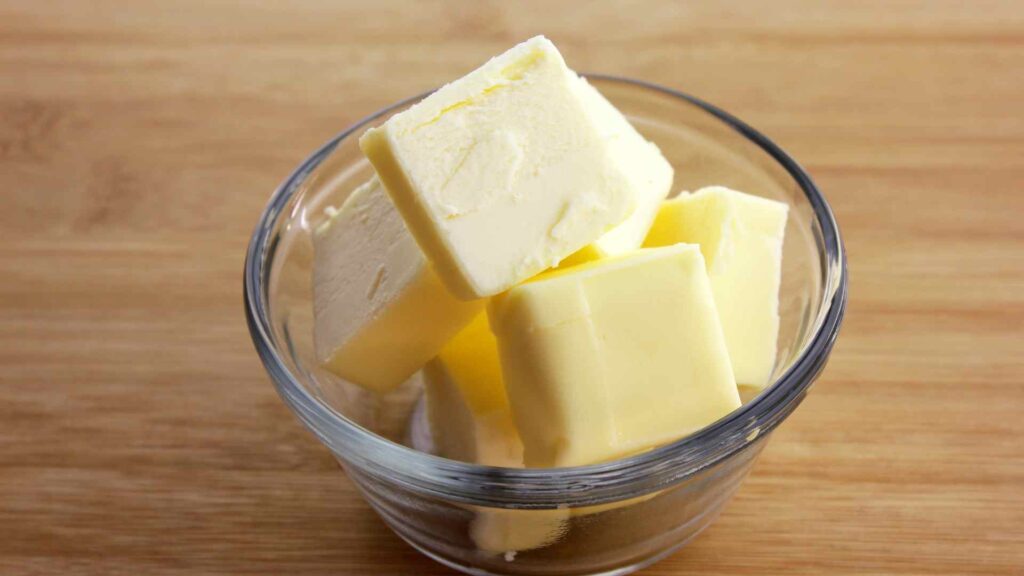
Paper, waxed paper, foil, plastic film, tub lids, and seal liners can lodge in the digestive tract. Butter makes packaging slippery and appealing, so a dog may swallow it before anyone notices.
Watch for repeated vomiting, poor appetite, abdominal pain, lethargy, straining, reduced stool, or inability to keep water down, but do not wait for those signs when a large wrapper or lid is known to be missing. Early imaging or retrieval options may change with time and material.
Do not pull material protruding from the mouth or rectum without veterinary direction. A linear or anchored foreign body can damage tissue when tugged.
Butter is not a coat supplement or weight-gain plan
Adding butter for a shiny coat supplies calories and saturated fat without diagnosing the reason for dry skin, hair loss, or itching. Parasites, allergy, infection, endocrine disease, nutrition, and grooming all require different responses.
An underweight dog needs a veterinary assessment and a measured nutrition plan, not spoonfuls of butter. Unexplained weight loss can reflect dental pain, parasites, gastrointestinal disease, diabetes, kidney disease, cancer, or inadequate intake.
Butter should not be used as a routine medication-delivery food because dosing reliability, fat restriction, and drug instructions vary. Ask the prescribing clinic for an appropriate low-volume option that does not interfere with the medication.
Toast, baking, and table scraps
Buttered toast adds bread, and toppings may introduce cinnamon sugar, raisins, chocolate spread, xylitol-containing nut butter, avocado, or garlic. Our bread guide covers plain slices, raw dough, and hidden ingredients.
Cookies, cakes, mashed potatoes, popcorn, sauces, and pastries can contain much more butter than the surface suggests. Recipe risks may include chocolate, xylitol, raisins, macadamia nuts, alcohol, raw dough, onion, or garlic.
A greasy pan or tray may also contain meat drippings, bones, skewers, foil, and cleaners. Assess the complete raid, not the most recognizable ingredient.
What to do after your dog eats butter
- Remove access and save the package, wrapper, tub, recipe, and ingredient label.
- Estimate the amount, time, salted status, dog’s weight, and whether packaging is missing.
- Check for garlic, onion, chives, xylitol, chocolate, raisins, macadamia nuts, cannabis, alcohol, and bones.
- Note previous pancreatitis, high blood fats, diabetes, obesity, kidney or heart disease, and prescription diets.
- Call for a large or unknown amount, flavored product, missing package, vulnerable dog, or any symptoms.
Do not induce vomiting unless a veterinarian or poison specialist directs you for the exact exposure. Fatty material and wrapper ingestion can complicate that decision, especially if the dog is already vomiting or lethargic.
For a known tiny lick of plain butter in a healthy adult dog, monitor and continue the normal diet without extra treats. Call if vomiting, diarrhea, pain, poor appetite, or lethargy appears.
If you are choosing routine treats
The World Small Animal Veterinary Association treat guide recommends that treats stay within a limited share of daily calories. Butter uses that allowance remarkably fast without providing a practical chew or training reward.
Measured pieces of the dog’s complete kibble are usually easier to budget. Dogs with medical conditions or veterinary diets need the healthcare team’s guidance before any conventional treat is added.
For a soft high-value reward, ask the veterinary team which food already fits the dog’s calorie and fat plan. The best alternative is not automatically another oily spread, cheese, or nut butter.
The VCA pancreatic nutrition guide explains why treats and people foods must be included when evaluating total dietary fat. A small topper is not invisible to the pancreas or calorie count.
Frequently asked questions
Can dogs eat unsalted butter?
Unsalted butter removes the added-sodium question but remains concentrated fat and calories. It is not a recommended treat.
Can dogs have ghee?
Ghee contains very little lactose or milk protein but is still concentrated milk fat. The digestive, calorie, and pancreatitis concerns remain.
Will one lick cause pancreatitis?
Most healthy dogs will not develop pancreatitis from one tiny lick, but no guide can guarantee an individual response. Prior pancreatitis and other risk factors lower the threshold for calling.
Can puppies eat butter?
Do not offer it. Puppies need nearly all calories from complete growth food and are small enough that a stolen serving becomes significant quickly.
The bottom line
A lick of plain butter is usually minor for a healthy adult dog, but butter is not a healthy routine treat. A stick, flavored compound butter, vulnerable dog, or missing wrapper deserves a much more cautious response.
Think beyond lactose and assess fat, calories, sodium, pancreatitis history, seasonings, and packaging. Save the label, avoid home emesis, and call promptly for large amounts, symptoms, or any ingredient that changes the risk.