Can Dogs Eat Scallops? Cooked Pieces, Shells, and Seasonings
One small piece of fully cooked, plain scallop muscle is usually low risk for a healthy dog. Raw seafood, shells, butter, garlic, salt, frying oil, allergy, spoilage, and packaging matter more than the word “scallop.”
Make a quick exposure inventory
- Small, plain, fully cooked piece: usually monitor for digestive upset.
- Raw or undercooked scallops: call if the amount is significant, the dog is vulnerable, or symptoms appear.
- Shell-on or shell pieces missing: assess choking, cuts, and obstruction promptly.
- Garlic, onion, heavy butter, frying oil, or salty sauce: evaluate the complete recipe.
- Facial swelling, breathing trouble, collapse, repeated vomiting, or severe pain: seek urgent care.
Save the package, restaurant menu, recipe, and leftovers, then record amount, time, dog weight, conditions, medications, diet, symptoms, and missing objects. Bay scallops, sea scallops, breaded products, stuffed shells, and restaurant dishes are not interchangeable.

Plain cooked muscle versus the whole shellfish
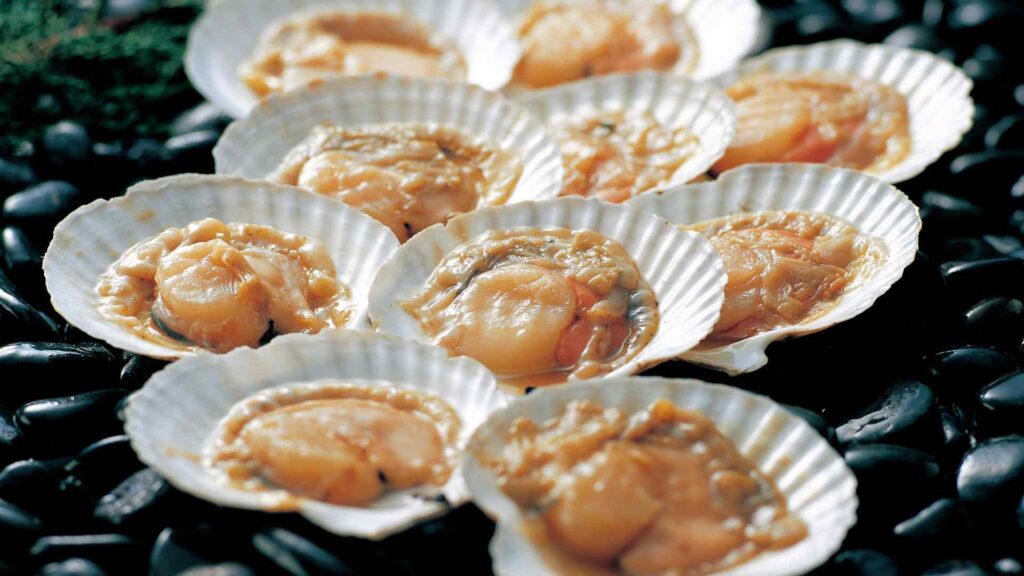
The familiar white round portion is the adductor muscle, but some preparations include roe or other tissue. Ask what part was served and whether shell fragments, grit, sauce, batter, or garnish remained.
A single plain piece does not improve a complete diet enough to justify making scallops a routine supplement. Protein, minerals, and fatty acids are already balanced in food labeled complete for the dog’s life stage.
Scallops should not be used as an omega-3 treatment, recovery meal, allergy cure, heart food, or muscle-building aid. Therapeutic nutrition depends on controlled amounts and the patient’s diagnosis, not the reputation of one ingredient.
Cook raw scallops thoroughly
Raw and undercooked shellfish can carry harmful germs, and spoilage risk increases when seafood is held too warm. The FDA seafood safety guide recommends cooking most seafood to 145°F and notes that scallop flesh should become firm, pearly, and opaque.
The same FDA guidance recommends refrigeration at 40°F or below and careful separation of raw seafood from ready-to-eat foods. Wash hands, knives, boards, bowls, counters, and floors after a dog gets into a raw package.
Vomiting, diarrhea, appetite loss, abdominal pain, fever, weakness, or unusual lethargy can follow foodborne illness, but those signs have many causes. Puppies, seniors, pregnant dogs, and dogs with immune or gastrointestinal disease deserve earlier veterinary advice.
Do not rely on searing the outside while leaving the center translucent when preparing a piece for a dog. Frozen does not mean sterile, and smell alone cannot rule out every pathogen.
Shells are not chews
Scallop shells are hard, sharp-edged, and shaped to cut, not bend. They can fracture teeth, lodge in the throat, scrape the mouth or esophagus, and obstruct or perforate the digestive tract.
Breathing trouble, blue or gray gums, continuous gagging, or collapse is an emergency. Drooling, repeated swallowing, vomiting, belly pain, refusal to eat, straining, or inability to keep water down also needs prompt assessment.
Do not induce vomiting when shell fragments or another sharp object may have been swallowed. Do not reach blindly into the throat, and do not feed bread or bulky food to “cushion” a shell.

Butter, garlic, and salt change the answer
Restaurant scallops are commonly seared in butter or oil and finished with salt, garlic, shallot, wine, bacon, cheese, or sauce. A lick of residue is different from eating the pan sauce or an entire rich entrée.
A fatty meal can cause vomiting and diarrhea and may contribute to pancreatitis, especially in susceptible dogs. Our butter guide explains why one lick and a missing stick call for different responses.
Garlic, onion, shallots, leeks, and chives are Alliums that can damage canine red blood cells, and powders are concentrated. Our garlic-powder guide covers cumulative exposure and signs of delayed anemia.
High-sodium broths, soy sauce, cured meat, and seasoning packets can add more salt than the scallop itself. Keep ordinary water available unless medically restricted, but do not force water or prepare a homemade electrolyte drink.
Fried, breaded, and wrapped scallops
Fried scallops add batter, oil, salt, and often seasoning powders, making digestive upset and excess calories more likely. Onion and garlic may appear in the breading even when the dish does not taste strongly seasoned.
Bacon-wrapped scallops add concentrated sodium and fat, while toothpicks or skewers create a sharp foreign-object hazard. Count every fastener before deciding the plate is accounted for.
Stuffed scallops may contain breadcrumbs, cheese, crab, wine, herbs, Alliums, or imitation seafood. Save the ingredient panel and assess the complete dish instead of focusing on the visible shellfish.
Portion depends on the dog and the meal
There is no universal number of scallops that fits every dog because body size, calorie needs, medical history, preparation, and the rest of the day’s food differ. A tiny training-size piece is enough to test tolerance if the veterinarian has no dietary objection.
The World Small Animal Veterinary Association treat guide recommends keeping treats to no more than 10 percent of daily calories. Butter, breading, and sauce can consume that allowance faster than plain seafood.
Dogs with pancreatitis history, heart or kidney restrictions, food allergy, obesity, or a veterinary elimination diet should not receive an improvised seafood treat without approval. “Low fat” on a raw ingredient does not describe the finished restaurant plate.
Food allergy is possible but not predictable by breed
A dog can react to any dietary protein, including shellfish, but one episode of soft stool does not prove an immune allergy. Food intolerance, fat, seasoning, spoilage, rapid eating, and unrelated illness can look similar at home.
Possible allergic signs include itching, recurrent ear or skin trouble, vomiting, or diarrhea, while an immediate severe reaction can cause facial swelling, hives, breathing difficulty, weakness, or collapse. Emergency signs need immediate care.
Do not deliberately challenge a dog with a known shellfish reaction, and do not add scallops during a veterinary elimination-diet trial. Diagnosis requires a controlled veterinary plan rather than rotating novel foods at random.
Storage and spoilage
Buy seafood from a reliable cold case and reject packages that are open, damaged, flexible when meant to be frozen, or strongly sour, rancid, fishy, or ammonia-like. Put fresh scallops on ice or into the refrigerator or freezer promptly.
Perishable seafood left at room temperature for hours should be discarded securely, not repurposed as dog food. Cooking spoiled food does not guarantee that every hazard created during poor storage becomes harmless.
Secure trash containing raw pads, shells, cooking twine, labels, and wrappers. Absorbent pads and plastic film can obstruct, and a seafood-scented bag can seal over a dog’s face.
Canned, frozen, and pre-seasoned scallops
Frozen plain scallops can be cooked safely after thawing in the refrigerator, but check for added brine or sodium solutions on the label. Do not thaw seafood on a warm counter or let a dog drink the thawing liquid.
Canned or shelf-stable seafood may contain salt, oil, broth, smoke flavor, or seasonings that make it a different product from plain muscle. Draining does not remove every dissolved ingredient, so the label still controls the decision.
Pre-marinated scallops may contain garlic, onion, wine, citrus, butter flavor, or concentrated sodium before they reach the pan. “Ready to cook” describes convenience, not suitability for a dog.
Monitoring a small cooked taste
After one small plain cooked piece, continue the dog’s normal complete food and routine unless a veterinarian advises differently. Watch appetite, energy, comfort, vomiting, stool, skin, and breathing rather than offering more seafood as a test.
Do not add rice, milk, oil, antacids, or human diarrhea medicine to prevent a reaction. An unnecessary home remedy can add calories, obscure symptoms, or create a separate medication risk.
Repeated vomiting, a painful or tense abdomen, a hunched posture, appetite loss, diarrhea, weakness, or dehydration can occur with pancreatitis and other serious disorders. The Merck Veterinary Manual pancreatitis overview supports veterinary assessment when significant signs follow a rich seafood meal.
A normal first hour does not rule out every foodborne, allergic, foreign-object, or high-fat problem. Ask the veterinarian how long to watch based on the preparation, amount, dog’s history, and current signs.
Scallops inside sushi
Raw scallop sashimi, spicy scallop rolls, and baked scallop rolls require an ingredient-by-ingredient check for raw seafood, mayonnaise, chili, rice seasoning, soy sauce, roe, avocado, and Alliums. Our sushi guide provides the full decision tree.
Imitation scallop products may use fish paste, starch, flavoring, sugar, and salt, so the name on a menu may not identify the formula. Ask the restaurant or check the retail ingredient list.
What to do after an exposure
Remove the remaining food and record whether it was raw, cooked, fried, shell-on, seasoned, wrapped, or skewered. Estimate the maximum amount and inventory shells, toothpicks, packaging, absorbent pads, and sauce containers.
Call promptly for shell ingestion, significant raw seafood, a large fatty or salty meal, meaningful garlic or onion, a vulnerable dog, or symptoms. For one small fully cooked plain muscle piece, observation is usually proportionate.
Do not induce vomiting, give peroxide, administer human stomach medicine, or start antibiotics left over from another pet. Product form, timing, amount, symptoms, and foreign-object risk determine the safest next step.
Bottom line
A small fully cooked plain scallop can be an occasional taste, but it is not a health treatment or balanced snack. Raw seafood, shells, butter, garlic, salt, frying oil, allergy, spoilage, skewers, and packaging deserve separate attention.