Can Dogs Drink Milk? Intolerance, Allergies, and Puppy Safety
Most adult dogs do not need milk, and many cannot digest much lactose without gas or diarrhea. A small lick of plain cow’s milk is usually not an emergency, but puppies, dairy-allergic dogs, rich products, and flavored or sugar-free drinks need different handling.

The short answer: water wins
Plain milk is not inherently poisonous to dogs, so a healthy adult that laps a small spill may have no problem at all. Still, milk adds lactose, fat, and calories without filling a nutritional gap in a complete dog diet.
Fresh water should be the everyday drink. Milk is neither a hydration strategy nor a reliable way to “boost” calcium, and adding it routinely can unbalance calories or upset the gut.
If your dog loves creamy flavors, that enthusiasm does not prove good tolerance. The most useful evidence is what happens after the dairy is swallowed, not how quickly the bowl gets polished.
Lactose intolerance is not a dairy allergy
Lactose is the natural sugar in milk, and lactase is the intestinal enzyme that breaks it down. When a dog has too little lactase for the amount consumed, undigested lactose draws water into the bowel and is fermented by gut bacteria.
That process can produce gas, bloating, abdominal noise, loose stool, diarrhea, or vomiting. Signs may be uncomfortable, but they are not an immune reaction.
The Merck Veterinary Manual notes that lactase activity can decline after weaning and that dairy should be avoided in animals already experiencing diarrhea. Intestinal disease can also temporarily reduce lactase activity, so a dog that once tolerated milk may handle it poorly during or after a gastrointestinal illness.
A dairy allergy involves the immune system reacting to milk proteins rather than difficulty digesting lactose. Possible food-allergy patterns include persistent itch, recurrent ear or skin trouble, and sometimes vomiting or diarrhea.
Dairy is among the more common reported food allergen sources in dogs, but symptoms alone cannot identify the guilty ingredient. The Merck veterinary food-allergy review explains that a strict elimination diet followed by controlled reintroduction is the reliable diagnostic approach.
Do not diagnose a milk allergy from one loose stool, and do not diagnose lactose intolerance from itchy paws. Your veterinarian can separate a one-off dietary upset from a repeatable adverse food reaction and decide whether a structured diet trial is appropriate.
Can puppies drink cow’s milk?
Newborn puppies need their mother’s milk or a commercial canine milk replacer chosen with veterinary guidance. Cow’s milk and goat’s milk do not match canine milk and are inadequate as sole nutrition for an orphaned puppy.
The VCA guide to feeding orphaned puppies explains that cow’s milk is lower in calories, protein, fat, and certain minerals than mother’s milk while containing more carbohydrate, including lactose. Commercial puppy milk replacers are formulated to meet growing puppies’ needs more closely.
A chilled, weak, dehydrated, or poorly nursing newborn needs prompt veterinary help, not an improvised bowl of dairy. Bottle or tube feeding can cause aspiration when technique, nipple flow, position, temperature, or volume is wrong.
Weaning usually begins around three to four weeks, but the plan depends on the puppy’s health and circumstances. Use puppy food and milk replacer as directed rather than pouring grocery-store milk over adult dog food.
An older puppy that steals a sip is assessed like any other dog, with extra attention to small body size and dehydration risk if diarrhea develops. A playful puppy does not need cow’s milk for growth, bones, or hydration when eating a complete puppy diet and drinking water.

Fat and calories matter too
Even a dog that digests lactose can gain unnecessary calories from regular milk. Whole milk, cream, half-and-half, condensed milk, and rich dairy desserts pack more fat or sugar into a small volume.
A sudden rich serving can trigger vomiting or diarrhea, and dietary indiscretion is a recognized pancreatitis risk factor in dogs. That does not mean every splash causes pancreatitis, but dogs with a previous episode or a prescribed low-fat diet should avoid casual dairy experiments.
Repeated treats can also interfere with weight management because liquid calories disappear quickly and may not reduce begging. Count milk as a treat, not as free hydration.
The World Small Animal Veterinary Association treat guide recommends keeping treats below 10 percent of daily calories. For a small dog, a human-sized pour can use that allowance with surprising speed.
Different milk products, different questions
Skim, reduced-fat, and whole cow’s milk
Lower-fat milk contains less fat than whole milk, but it still contains lactose and calories. Skim milk is not automatically comfortable for a lactose-intolerant dog.
Lactose-free milk
Removing or breaking down lactose may reduce lactose-related digestive trouble, but it does not remove milk proteins or make the drink calorie-free. A dog with a confirmed dairy allergy should not receive lactose-free cow’s milk.
Goat’s milk
Goat’s milk still contains lactose and can cause digestive upset, despite its reputation as a gentle alternative. Raw goat’s milk also adds foodborne pathogen risk, so it is not a universal fix for dogs that react to cow’s milk.
Plant-based drinks
Oat, almond, coconut, pea, and soy drinks vary widely in calories, fat, sweeteners, gums, flavorings, and fortification. They are not canine milk replacers, and a harmless base ingredient does not guarantee a safe finished product.
Check the entire label, particularly on sugar-free, protein, or flavored drinks, and read our guides to oats and nuts for ingredient-specific context. Avoid macadamia-containing drinks and products with xylitol.
Yogurt, cheese, and cultured dairy
Some cultured or aged products contain less lactose than milk, but tolerance remains individual and fat, sodium, sugar, and flavorings still count. “Probiotic” on a human product does not guarantee an appropriate strain, dose, or benefit for a particular dog.
If a veterinarian wants your dog to receive a probiotic, use the recommended product rather than assuming yogurt performs the same job. Dogs on elimination diets should receive no dairy unless it is explicitly part of the plan.
Flavored milk can change a mild spill into an urgent call
Chocolate milk contains cocoa methylxanthines, and risk depends on the product, amount, and dog’s weight. Use our dog and chocolate emergency guide, but call a veterinarian or animal poison service before waiting for symptoms.
Coffee milk, mocha drinks, and some protein shakes may add caffeine. Strawberry or vanilla flavor alone is usually less concerning, but sugar, fat, and sweeteners can still cause trouble.
Sugar-free milk drinks, shakes, powders, and flavored creamers may contain xylitol, also called birch sugar or wood sugar. The FDA warns that xylitol can cause a rapid, dangerous blood-sugar drop in dogs and advises immediate contact with a veterinarian, emergency clinic, or animal poison control.
Protein shakes may also contain caffeine, chocolate, raisins, macadamia ingredients, supplements, or very high vitamin and mineral concentrations. Keep the tub or bottle so a professional can assess the actual formula.
Peanut-butter milkshakes need the same sweetener check because some nut butters contain xylitol. Our peanut butter guide explains what to find on the label.
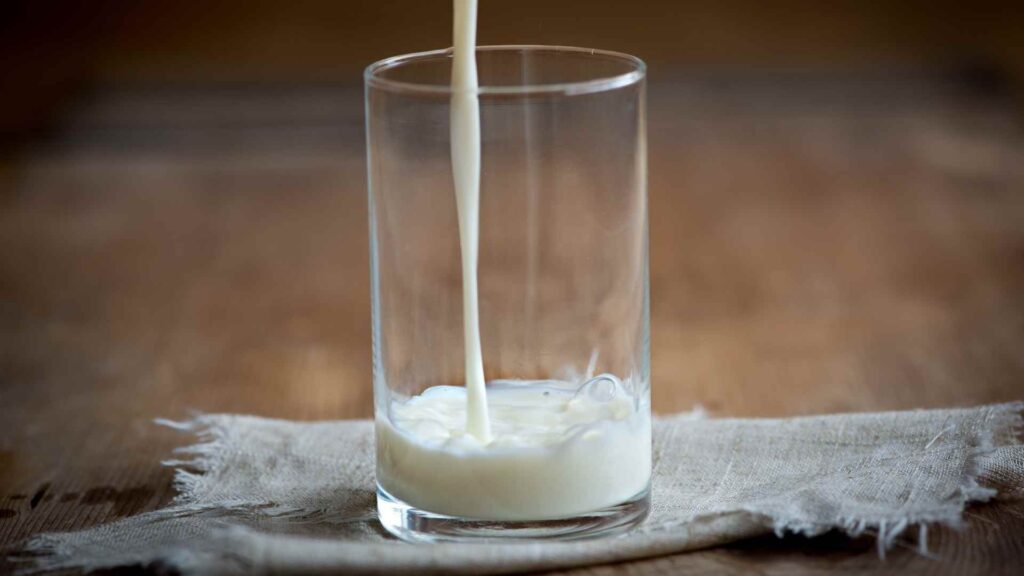
If you choose to offer plain milk
First ask whether there is any reason to offer it, because water and the regular complete diet already cover the basics for a healthy dog. Do not test milk tolerance during diarrhea, after pancreatitis, during an elimination diet, or when a prescription diet excludes extras.
For a healthy adult with no known dairy reaction, start with a lick or teaspoon rather than a bowl. A small trial limits the lactose, fat, and calorie load while you watch for gas, bloating, vomiting, or loose stool.
Do not dilute milk and assume the lactose disappears. Adding water lowers the concentration in each sip, but the total lactose stays the same if the dog drinks the entire mixture.
Stop if any adverse sign appears, and do not keep retesting a dog that has reacted more than once. A treat should make life more pleasant, not turn the next walk into an urgent sprint.
My dog drank milk: what should I do?
Identify the product, approximate amount, time, ingredients, dog’s weight, medical history, and current symptoms. Save the carton or take a photo of the label, especially for flavored, sugar-free, fortified, or powdered products.
A healthy adult that drank a small amount of plain pasteurized milk and remains comfortable can often be observed at home. Provide normal access to fresh water, avoid more dairy, and keep the dog’s usual diet steady.
Call your veterinarian if vomiting or diarrhea repeats, the dog cannot keep water down, the belly looks painful or swollen, the dog becomes unusually weak, or signs last beyond a brief mild episode. Small dogs, puppies, seniors, and dogs with diabetes, kidney disease, pancreatitis history, or an existing gastrointestinal condition deserve an earlier call.
Seek urgent advice immediately if the product contains xylitol, chocolate, coffee, raisins, macadamia nuts, alcohol, cannabis, or an unknown supplement blend. Do not induce vomiting or give human diarrhea medicine unless a veterinarian directs you.
Frequently asked questions
Does milk help a constipated dog?
Milk may cause diarrhea in a lactose-intolerant dog, but side effects are not safe constipation therapy. Constipation can have several causes, including obstruction or dehydration, so call your veterinarian if your dog is straining, painful, vomiting, or not passing stool.
Can dogs drink milk for calcium?
A complete and balanced dog food already supplies calcium in an appropriate overall nutrient profile. Adding milk or calcium supplements without a veterinary reason can disturb the diet, especially in growing puppies.
Can dogs drink milk every day?
Daily milk is unnecessary and may add persistent digestive trouble or excess calories. If a veterinarian has included a dairy product in a specific feeding plan, follow that plan rather than a general internet serving chart.
Is evaporated or condensed milk safe?
Evaporated milk is concentrated, while sweetened condensed milk contains a large amount of added sugar. Neither is a suitable regular drink or puppy formula, and both can create a larger digestive and calorie load than a small amount of ordinary milk.
Can milk settle a dog’s stomach?
No reliable rule says milk soothes canine nausea, and lactose or fat may make gastrointestinal signs worse. Repeated vomiting, abdominal pain, marked lethargy, blood, or inability to keep water down calls for veterinary advice.
The bottom line
Plain milk is not toxic, but many adult dogs digest lactose poorly and no dog needs grocery-store milk for hydration or calcium. If you offer a taste to a healthy adult, keep it tiny and stop at the first sign of digestive trouble.
Use canine milk replacer and veterinary guidance for orphaned puppies, and treat flavored or sugar-free dairy as an ingredient-list problem. Dairy allergy, lactose intolerance, fat sensitivity, and hidden toxins are different issues, and telling them apart leads to much better decisions.