Can Dogs Eat Freeze-Dried Strawberries? Labels and Portions
Many healthy dogs can eat one small piece of plain, single-ingredient freeze-dried strawberry. Sweeteners, yogurt or chocolate coating, xylitol, hard pieces, choking, concentrated calories, moisture damage, mold, medical diets, and packaging change the answer, and the product does not clean teeth or provide antioxidant treatment.
A fresh berry is the simple version
Strawberry flesh is not considered toxic to dogs, and a small ripe piece can be an occasional treat. The useful safety work is ordinary kitchen work: inspect, wash, hull, cut, supervise, and stop if the dog’s stomach disagrees.
The American Kennel Club strawberry guide also recommends washed, cut fruit in moderation and flags whole berries, leafy tops, natural sugar, and processed strawberry products. It is a sensible preparation framework, not proof of sweeping health benefits.
Other berries have their own details, so use the separate guides for blueberries and raspberries. Blackberries follow their own preparation and portion rules too.
Freeze-dried is not the same texture as fresh
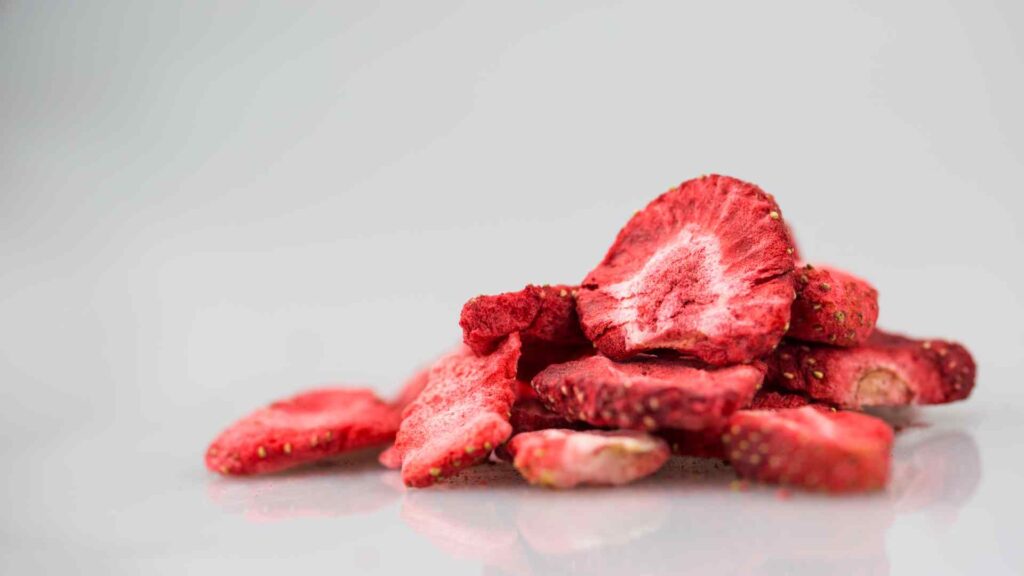
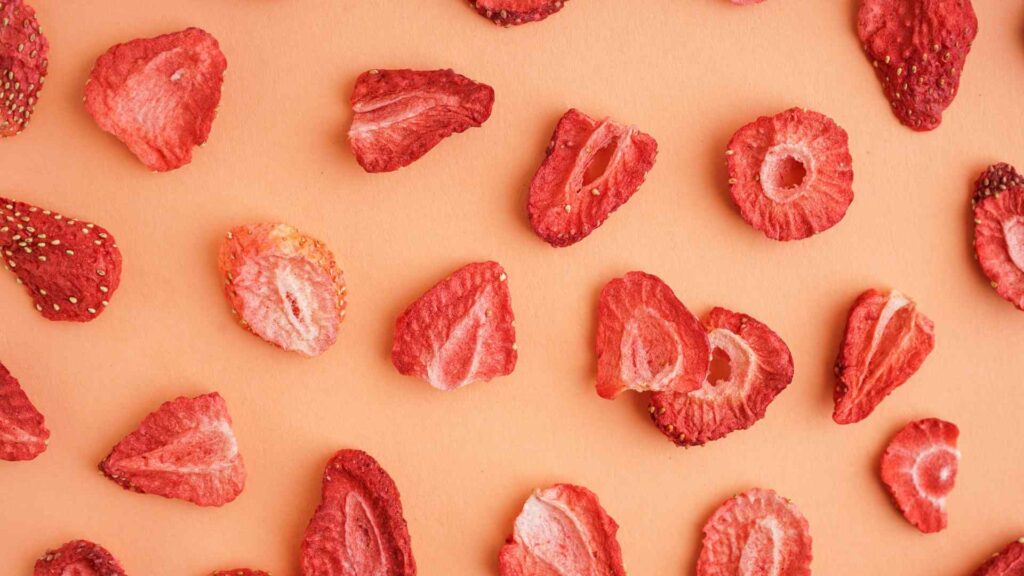
Freeze-drying removes much of the water while leaving a light, crisp, porous piece. The fruit is still strawberry, but weight, volume, hardness, and calorie density are easier to misjudge.
One fresh berry may collapse into several dry pieces, so counting pieces is not the same as comparing fresh weight. Read the serving information and keep extras small.
Start with a one-ingredient label
The simplest bag lists strawberries and nothing else. Avoid assuming that a red crunchy snack is plain fruit because cereal pieces, candy inclusions, flavor dust, and sweeteners can look similar.
Check every new package because brands reformulate and varieties differ. Organic, natural, toddler snack, and wellness language do not answer the ingredient question.
Sweetened and coated products are different
Added sugar and syrup increase calories without making the snack necessary. Yogurt coating often includes sugar, fat, dairy ingredients, oils, and stabilizers rather than plain yogurt alone.
Chocolate coating creates a methylxanthine question covered in the chocolate guide. Dark chocolate and cocoa powder can be more concentrated than milk chocolate.
Sugar-free or low-sugar coating requires an immediate xylitol check. Call promptly if xylitol appears, rather than waiting for weakness, poor coordination, collapse, or seizures.
Hard pieces and choking
A dry whole berry can be surprisingly firm, especially straight from a cold package. Break or crush a permitted piece for a small dog, dental patient, puppy, flat-faced dog, or known gulper.
Coughing, gagging, frantic pawing, breathing difficulty, blue or pale gums, or collapse is an emergency. Do not reach blindly into the throat.
Once moistened, dry fruit can become sticky and cling to teeth without cleaning them. It is not a dental chew and does not replace brushing or veterinary dental care.
Moisture absorption and storage
Freeze-dried food readily pulls moisture from humid air after opening. Reseal it promptly, follow the label, and keep wet hands or dog saliva out of the bag.
Discard pieces that are damp, clumped, unusually soft, discolored, musty, or moldy. Do not dry them again in an oven and assume the product has been rescued.
FDA produce guidance supports clean handling and preventing cross-contamination. Storage instructions for the finished dry product still come from its manufacturer.
Calories and complete-diet displacement
Removing water does not remove fruit sugar or calories, so a dry handful can represent much more fruit than it appears. Dogs with diabetes, obesity, intestinal disease, or prescription diets need individualized advice.
UC Davis veterinary treat guidance recommends that extras remain below 10 percent of daily calories. A single crumbled piece can provide several training rewards.
Freeze-dried strawberries are not antioxidant, immune, vitamin, hydration, or weight-loss therapy. Complete dog food is designed to deliver nutrients in appropriate amounts.
Powders, cereals, and trail mixes
Strawberry powder can be concentrated and easy to inhale or spill into eyes. Smoothie powders may add caffeine, protein supplements, sweeteners, vitamins, or other fruit.
Breakfast cereal and granola can add raisins, chocolate, macadamias, xylitol, salt, fat, and hard nuts. Trail mix needs a complete inventory, not a strawberry-only answer.
After a package raid
- Identify single-ingredient fruit, sweetened product, yogurt or chocolate coating, powder, cereal, trail mix, moisture-damaged food, or packaging.
- Save the label and estimate amount, time, dog weight, symptoms, medical conditions, medications, and normal diet.
- Flag xylitol, chocolate or cocoa, raisins, macadamias, caffeine, mold, hard choking pieces, and missing bags or desiccant packets.
- Call promptly for any flagged hazard, symptoms, large or unknown amount, medical restriction, or swallowed packaging. Do not induce vomiting unless directed.
Prepare strawberries in six small steps
- Choose fresh berries without mold, leaking juice, fermentation, or spoiled areas.
- Rinse them under plain running water before cutting or removing the top.
- Remove the green calyx and tough stem rather than treating them as bonus fiber.
- Cut the flesh into small pieces, quarter thinly, or mash it for a dog that gulps.
- Offer one small bite and supervise the swallow.
- Wait for digestive tolerance before offering strawberry again on another day.
The FDA produce-safety guidance recommends washing produce under running water, even if part will be removed. It advises against soap, detergent, and commercial produce wash.
Stems and leaves are not the same as toxic fruit tops
The leafy cap and short stem are not known as major canine toxins, but they are fibrous, harder to digest, and unnecessary. Removing them makes the piece easier to inspect, cut, and tolerate.
A dog that steals one clean strawberry with the top attached is more likely to have no problem or mild digestive upset than a poisoning emergency. Concern rises with a large plant raid, garden chemicals, mold, packaging, or symptoms.
Garden strawberries introduce questions about fertilizer, pesticide, slug bait, mulch, stakes, and plastic netting. Identify what else the dog accessed rather than assuming every sign came from the berry.
Whole strawberries can be a choking problem
A whole large berry is rounded, slippery, and easy for a food-motivated dog to gulp. Small dogs, flat-faced dogs, dogs with swallowing disorders, and fast eaters deserve especially careful cutting.
Difficulty breathing, blue or pale gums, collapse, frantic pawing at the mouth, or severe distress is an emergency. Do not sweep blindly inside a panicked dog’s mouth, because you may push material deeper or be bitten.
Repeated vomiting, inability to keep water down, abdominal pain, marked lethargy, or appetite loss after swallowed packaging also needs prompt care. Check clamshells, bags, absorbent pads, produce stickers, skewers, and toothpicks.
Natural sugar matters without turning one berry into a villain
Strawberries contain natural sugar, but one dog-sized piece does not create diabetes in a healthy dog. The realistic concern is a repeated calorie surplus, a large fruit raid, or a snack that conflicts with an individual diabetes or weight plan.
Fruit can also cause loose stool, gas, vomiting, or abdominal discomfort when too much is offered at once. A dog with sensitive digestion should start with a tiny piece, and a dog with active gastrointestinal signs should not become a fruit experiment.
The UC Davis veterinary treat guideline says treats and extra foods should remain below 10 percent of daily calories. Strawberry shares that allowance with every training treat, chew, table scrap, and pill food.
Ten percent is a ceiling, not a fruit target. A small piece supplies the experience, and measured regular food is often the cleanest reward for a dog on a precise calorie plan.
Strawberries are not antioxidant treatment
Strawberries contain vitamin C and plant compounds, but the tiny amount suitable as a treat is not a standardized therapeutic dose. Complete dog food already supplies nutrients based on canine requirements.
The Merck Veterinary Manual nutrition review explains that dogs synthesize vitamin C in the liver and have no AAFCO dietary requirement for it. A strawberry therefore should not be marketed as immune, cancer, aging, or joint therapy.
Foods can be enjoyable without needing a medical halo. A dog with weight loss, weakness, chronic inflammation, skin disease, or another health problem needs diagnosis and an evidence-based plan, not a promise built from human nutrition headlines.
Strawberries do not whiten a dog’s teeth
A soft fruit does not brush plaque away, repair periodontal disease, or replace professional dental assessment. Strawberry sugar and acidity are not a dental-care strategy.
The Veterinary Oral Health Council identifies regular brushing as the gold standard and evaluates products for evidence of plaque or tartar control. Strawberry is not a substitute for brushing, a veterinary dental exam, or an accepted dental product.
Fresh, frozen, dried, canned, and blended forms
Fresh strawberries
Fresh, ripe, washed, hulled, and cut fruit is the easiest form to control. Serve it plain, without sugar, cream, chocolate, or glaze.
Frozen strawberries
A hard frozen whole berry can be a choking or tooth risk. Thaw it, cut it, or mash a small piece, and remember that freezing does not remove natural sugar or unsafe added ingredients.
Dried and freeze-dried strawberries
Drying concentrates the fruit into a smaller volume and makes it easy to overfeed. Commercial versions may add sugar, oil, flavoring, preservatives, chocolate, or xylitol-containing coating.
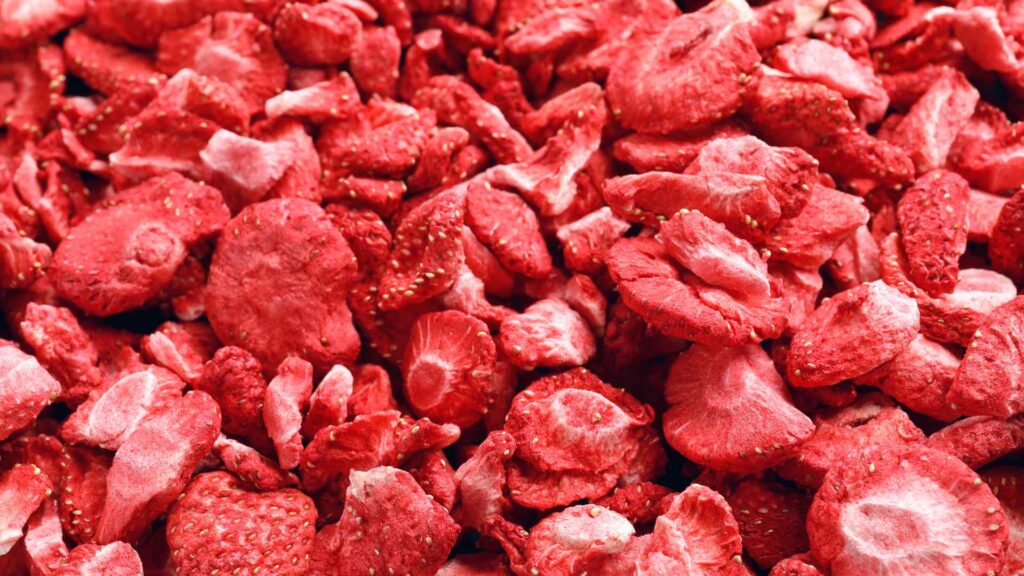
A single-ingredient freeze-dried piece can still be calorie-dense by handful and may be hard or crumbly. Check the label, break it small, and count it within the treat budget.
Canned strawberries and fruit in syrup
Canned or jarred strawberries commonly sit in syrup or sweetened juice and offer no advantage for a dog. Sugar-free syrup creates an additional xylitol check.
Jam, jelly, and strawberry sauce
These products are concentrated and often high in added sugar. Sugar-free versions may contain xylitol, while mixed preserves can include grapes, raisins, alcohol, or other ingredients that change the exposure.
Juice and smoothies
Juice is easy to consume quickly and strips away the physical portion cues of whole fruit. Smoothies can hide yogurt, sweetener, protein powder, chocolate, supplements, grapes, or caffeine.
A spoonful of yogurt does not automatically make a smoothie dog-safe, because lactose, fat, xylitol, flavors, and other ingredients still require review.
Chocolate-covered strawberries and desserts
Chocolate-covered berries require a chocolate assessment based on chocolate type, quantity, and dog weight. Cocoa powder and dark or baking chocolate are more concentrated sources of methylxanthines than white chocolate.
Strawberry shortcake, cheesecake, ice cream, pastries, and whipped toppings add fat, sugar, dairy, sweeteners, and sometimes alcohol or chocolate. A toothpick, skewer, wrapper, or baking liner may be more urgent than the fruit.
Do not scrape off a coating and feed the remaining berry. Residue remains, and a plain fresh piece is easier than trying to reverse-engineer a dessert.
Fruit salad is only as safe as every ingredient
A strawberry can share a bowl with unsafe fruit. Grapes and raisins can cause serious kidney injury in dogs, so any mixed-fruit raid needs a full ingredient inventory.
Banana is a different, non-toxic fruit with its own peel and portion questions, covered in our banana guide. Never assume every fruit follows strawberry rules.
Who should skip casual strawberry treats
- Dogs with diabetes unless the treating team approves the amount and timing.
- Dogs on a veterinary elimination diet or another prescription diet.
- Dogs with active vomiting, diarrhea, abdominal pain, or poor appetite.
- Dogs that gulp food or have swallowing difficulties.
- Dogs with painful, loose, or fractured teeth when fruit is frozen.
- Puppies whose complete growth diet and limited calorie allowance should not be displaced.
Age alone does not make strawberries toxic, but seniors more often have diabetes, dental disease, kidney disease, swallowing trouble, or strict calorie targets. Ask before using fruit to tempt a senior dog with new appetite loss.
What to do after a strawberry raid
- Remove access and identify fresh fruit, dried fruit, syrup, jam, chocolate, dessert, smoothie, or garden exposure.
- Estimate the amount and save every ingredient label or recipe.
- Check for xylitol, chocolate, grapes, raisins, alcohol, medication, pesticides, slug bait, and fertilizers.
- Inspect for missing plastic, absorbent pads, stickers, skewers, toothpicks, wrappers, and containers.
- Call promptly for toxic additions, missing objects, a large raid, a medically restricted dog, or concerning symptoms.
A healthy dog who ate one small plain strawberry and feels normal can usually be monitored. Keep normal water available, skip other new foods, and call if vomiting, diarrhea, swelling, breathing trouble, pain, lethargy, or appetite loss develops.
Frequently asked questions
Can puppies eat strawberries?
A tiny washed, hulled, mashed piece may be tolerated, but puppies do not need fruit and should receive nearly all calories from a complete growth diet. Ask before making it routine.
Are strawberry leaves toxic to dogs?
The leafy top is not considered a major canine toxin, but it is fibrous and can upset digestion. Remove it for a more predictable bite.
Can dogs eat frozen strawberries?
Yes, if they are plain and softened or cut small. Avoid handing over a hard whole berry that can be gulped or stress a painful tooth.
Can strawberries clean a dog’s teeth?
No. Use regular brushing, veterinary dental care, and products with evidence for plaque or tartar control rather than fruit-based whitening claims.
Can dogs eat strawberries every day?
Most dogs have no need for daily fruit. Any regular extra should be measured, tolerated, counted by calories, and approved when a medical diet is involved.
The bottom line
A small amount of washed, hulled, bite-sized fresh strawberry can be an occasional treat for many healthy adult dogs. Whole berries, too much fruit, and the wrong form can bring choking, digestive upset, or excess calories.
Skip antioxidant and dental-treatment promises, and inspect processed products for syrup, xylitol, chocolate, and mixed ingredients. Call a veterinary professional for unsafe additions, missing packaging, medical conflicts, or more than mild symptoms.