Can Dogs Eat Brown Rice? Cooking, Portions, and Arsenic Context
Dogs can eat a small amount of fully cooked, plain brown rice if it suits their diet. Serve it soft and unseasoned, keep extras modest, and skip it when a veterinarian has prescribed a different feeding plan because raw or undercooked grains, rich fried rice, unsafe seasonings, oversized portions, and poorly stored leftovers create more useful questions than the word brown.
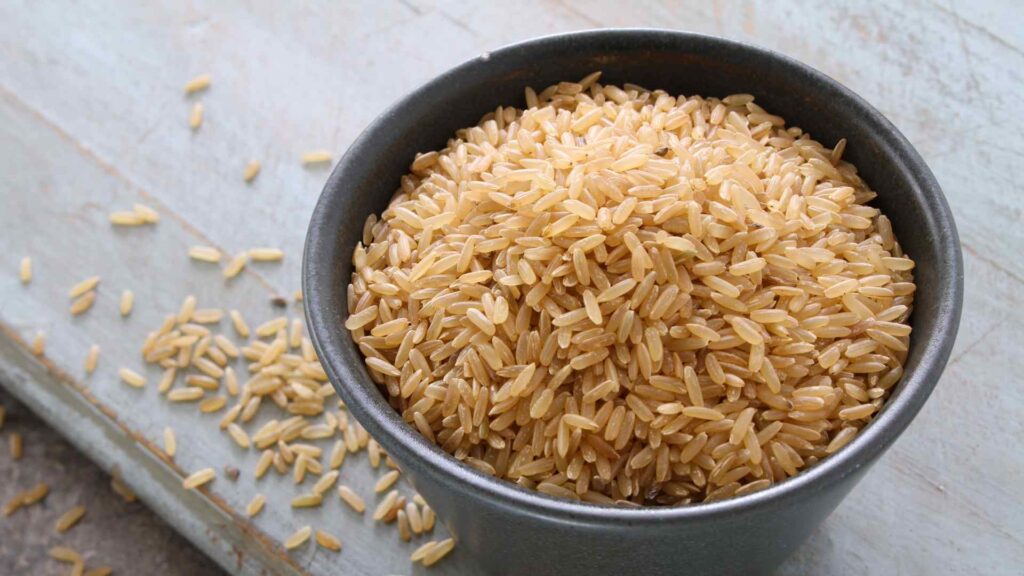
Brown rice is food, not a canine requirement
Brown rice keeps the bran and germ layers that white rice loses during milling. That gives it a different texture and nutrient profile, but it does not make it automatically better for every dog.
Many complete dog foods include rice or other grains as part of a formulated recipe. A dog does not need a homemade scoop on top when the main food already meets nutritional needs.
Brown rice can work as an occasional extra for a healthy dog that tolerates it. It is not a detox, gut reset, weight-loss aid, or treatment for diarrhea, and it should not displace a complete diet.
The UC Davis veterinary treat guide recommends that at least 90 percent of calories come from complete and balanced food. Rice, toppers, chews, and table scraps all share the small remaining allowance.
How to prepare brown rice for a dog
Cook the rice in plain water until it is fully tender, following the package directions. Do not serve hard dry grains or chewy undercooked rice because the texture is difficult to eat and may worsen stomach upset.
Let it cool to a comfortable temperature, then offer a small spoonful mixed into the usual food or by itself. Break up dense clumps so a fast eater does not swallow a sticky lump whole.
Skip salt, butter, oil, broth, stock cubes, onion, garlic, pepper, spice blends, and sauce. Plain is not culinary punishment here; it is how you keep the ingredient question simple.
For a first taste, offer less than the dog could comfortably swallow in one gulp and watch for vomiting, loose stool, gas, itching, or appetite changes. There is no universal cup-per-body-weight schedule for a food the dog does not need.
Fiber can help one dog and bother another
Brown rice generally contains more fiber and has a firmer texture than white rice. Some dogs handle that easily, while others develop gas, softer stool, urgency, or abdominal discomfort after a sudden addition.
Fiber is not automatically a constipation or diarrhea remedy. The right type and amount depend on the cause of the stool problem, hydration, the rest of the diet, and any underlying gastrointestinal disease.
A dog with chronic enteropathy, pancreatitis, food-responsive disease, or a veterinary elimination trial should not receive an improvised rice topper. It can confuse a carefully controlled plan even when rice itself is not toxic.
If a dog repeatedly reacts after eating rice, stop offering it and discuss the pattern with the veterinarian. Do not keep increasing the portion because an online guide called it gentle.
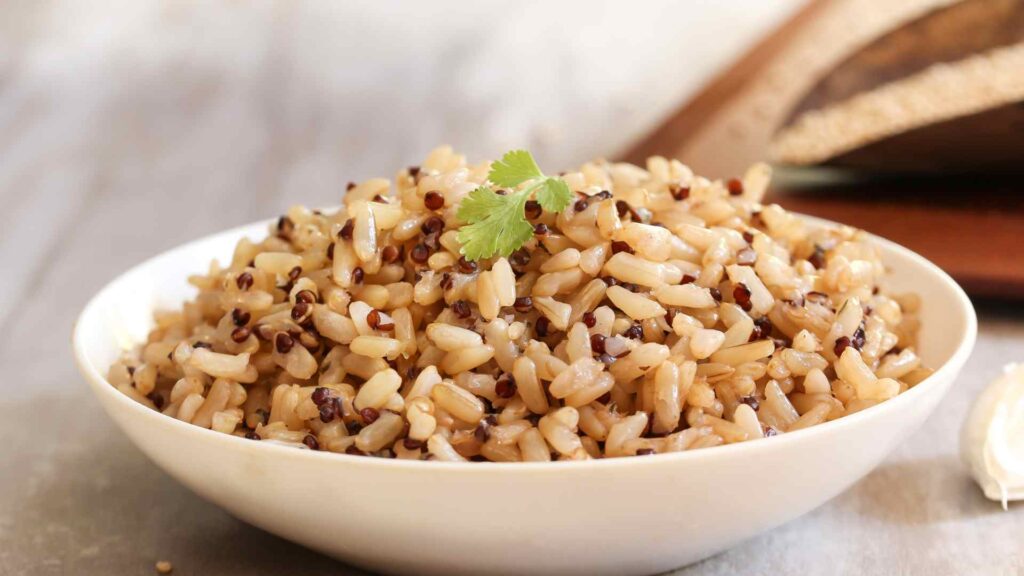
Brown, jasmine, and general rice are not identical labels
Brown describes the milling level, while jasmine describes a fragrant rice variety. Jasmine rice can be sold as white or brown, so those words may describe two different features of the same grain.
The jasmine rice guide focuses on that variety, aroma, plain preparation, and recipe risks. The same basic rule applies here: fully cooked and unseasoned is the useful baseline.
White rice is lower in bran and usually softer and less fibrous when cooked. That difference can affect tolerance, but neither color deserves a universal health halo.
Oatmeal is another cooked grain with its own texture and product traps, covered in the oatmeal guide. Switching among grains is not a substitute for finding the cause of ongoing digestive signs.
Calories and meal displacement add up quietly
Cooked rice looks light, but repeated scoops can contribute meaningful calories. A tablespoon for a small dog and a generous bowl for a large dog are not equivalent habits.
Toppers also change the balance of the meal when they become a substantial share of intake. The dog may fill up on rice and leave behind food that supplies carefully formulated protein, minerals, vitamins, and essential fats.
Dogs with obesity, diabetes, or calorie-controlled plans need measured extras rather than free pouring. The treating team can decide whether rice fits the plan and how it affects the daily food amount.
Use a real measuring spoon at first, not a serving spoon or handful. If several people feed the dog, write the allowance down so “just a little” does not happen four times.
Brown rice and arsenic without the panic
Rice plants can take up arsenic from soil and water, and levels vary by product and growing conditions. This is a long-term exposure and food-supply issue, not evidence that one spoonful of brown rice poisons a dog.
The FDA arsenic overview explains that arsenic can enter food from the environment and that the agency monitors food products. Its consumer advice emphasizes a varied, balanced diet rather than eliminating rice for the general population.
FDA human-food research found that cooking rice like pasta in excess water and draining it can lower inorganic arsenic, while also removing some nutrients. Rinsing alone had a smaller effect in that research, as the FDA preparation guidance explains.
Those data were not a canine serving study and should not be turned into a dog-toxicity table. The practical veterinary response is to avoid making one unbalanced food a huge daily staple and to use complete products from manufacturers with sound quality control.
Seasoned rice is a recipe audit
Fried rice, pilaf, restaurant rice, boxed mixes, and rice casseroles may contain onion, garlic, butter, oil, salt, soy sauce, raisins, nuts, cheese, or meat drippings. The rice itself may be the least concerning part of the bowl.
Onion and garlic can damage canine red blood cells, and powders are still relevant ingredients. Check the garlic guide when the label or recipe includes it.
Soy sauce can deliver substantial sodium in a small volume, so use the soy sauce guide for a splash, packet, or bowl raid. Low-sodium sauce is not the same as plain rice.
A rice bowl may also contain avocado, grapes, raisins, macadamia nuts, chocolate mole, skewers, foil, or takeout packaging. Inventory everything missing before deciding how urgent the incident is.
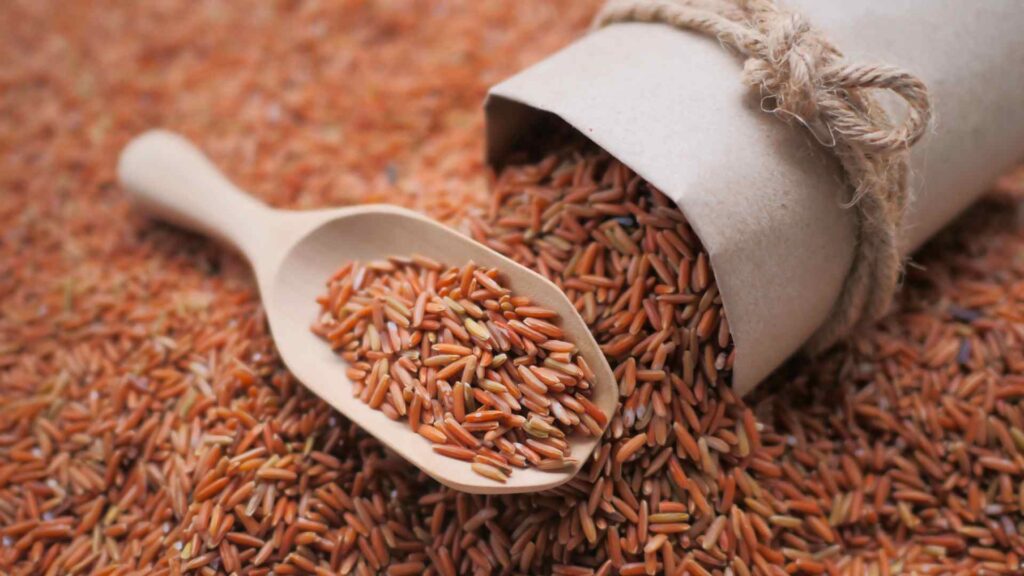
Cooked rice needs ordinary food-safety care
Cooked rice can support growth of Bacillus cereus when it sits in the temperature danger zone. The problem is storage time and temperature, not a special toxin created because the rice is brown.
The federal food-safety guidance identifies rice and leftovers left too long at room temperature as common sources and recommends prompt chilling in shallow containers. Do not leave a dog bowl of moist rice on the floor all afternoon.
Refrigerate leftovers promptly in a clean covered container, follow conservative leftover timelines, and discard rice that smells off, looks moldy, or has an uncertain history. Reheating does not reliably undo every problem caused by poor storage.
Keep the dog away from the trash because spoiled rice may arrive with plastic wrap, foil, skewers, or the container. A swallowed lid or film creates a foreign-body concern separate from food poisoning.
Brown rice is not a DIY bland-diet cure
Chicken and rice is often repeated online as a universal answer to vomiting or diarrhea, but the cause might be a foreign body, toxin, infection, pancreatitis, endocrine disease, or another condition. A homemade mix is also incomplete when fed beyond a short veterinarian-directed period.
Brown rice may be less appealing than white rice for a dog with active gastrointestinal signs because its fiber and texture differ. That does not mean white rice is appropriate in every case either.
Call before improvising when the dog is very young, elderly, diabetic, medically fragile, repeatedly vomiting, passing blood, painful, markedly lethargic, or unable to keep water down. Withholding food or forcing a bland meal can delay needed care.
If the veterinarian recommends a temporary diet, ask for exact ingredients, amounts, duration, transition steps, and warning signs. “Until better” is too vague for a plan that may need reassessment.
Dogs who should wait for individual advice
Dogs on kidney, urinary, cardiac, diabetic, allergy, gastrointestinal, or weight-management diets should not receive brown rice automatically. The relevant issue is how the extra fits the therapeutic goal, not whether rice is generally dog-safe.
Puppies need nearly all calories from complete growth food, and giant-breed puppies have especially little room for mineral imbalance. A rice-heavy homemade meal is not suitable puppy nutrition.
Dogs with swallowing problems or a history of inhaling food need texture guidance. Even soft rice can form a sticky mass if offered in a large compact clump.
A suspected rice allergy should be diagnosed through a veterinarian-directed elimination and challenge process. Itching after one meal can have many causes, and random ingredient switching makes patterns harder to interpret.
What to do after a rice raid
If the dog ate a modest amount of plain, fully cooked rice and is comfortable, remove access, provide normal water, and monitor for gas, vomiting, diarrhea, or reduced appetite. Skip more toppers that day.
For seasoned rice, save the package or recipe and check onion, garlic, raisins, grapes, xylitol, alcohol, high sodium, fat, and missing packaging. Report dog weight, amount, time, ingredients, and symptoms when calling.
Seek prompt care for repeated vomiting, a painful or swollen abdomen, collapse, trouble breathing, bloody stool, marked weakness, or inability to keep water down. Known ingestion of a dangerous co-ingredient deserves advice before symptoms.
Do not induce vomiting or give peroxide, salt, oil, milk, antacids, or human anti-diarrheal medicine unless a veterinary professional directs it for that exact exposure.
The bottom line
A little soft, fully cooked, plain brown rice can be an occasional extra for many healthy dogs. It is not required, it can add calories and fiber-related upset, and it should not replace complete food or veterinary care.
Cook it simply, store it promptly, and treat seasoned dishes as the full recipes they are. Arsenic deserves proportionate sourcing and dietary-variety context, not fear about one spoonful.