Can Dogs Eat Papaya? Ripe Flesh, Seeds, Skin, and Supplements
Most healthy adult dogs can eat a few small pieces of ripe papaya flesh, but the fruit should be peeled and deseeded first. Do not feed skin, leaves, stem, milky latex, unripe fruit, seed extracts, or papain supplements, and treat dried, canned, sweetened, or blended products as separate foods.
The quick papaya checklist
- Ripe orange flesh, peeled and deseeded: a small occasional taste is usually reasonable.
- Green or unripe fruit with milky sap: do not offer it.
- Skin, stem, leaves, or a large seed mass: remove access and assess what was swallowed.
- Dried, candied, canned, juice, smoothie, or dessert papaya: read every ingredient.
- Papaya-seed remedy or papain enzyme supplement: do not improvise a canine dose.
Papaya is soft when ripe, but a large cube can still be gulped. Cut the flesh into pieces that match the dog rather than handing over a wedge with skin and seeds attached.
How to prepare fresh papaya
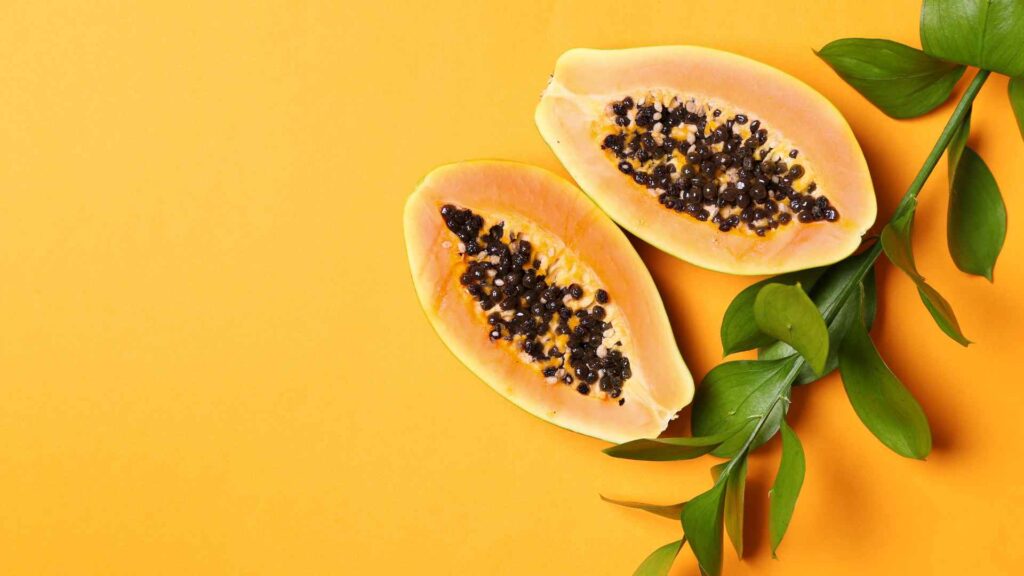
Choose ripe fruit with orange or salmon-colored flesh and no mold, fermenting odor, or severe decay. Wash the intact exterior before cutting so the knife does not drag surface contamination into the flesh.
The FDA produce-safety guidance recommends rinsing produce under running water and cutting away damaged areas. Soap, detergent, bleach, and commercial produce wash should not be used on food.
Peel away the skin, scoop out the black seeds and slippery seed lining, then cut the soft flesh into small bites. Serve it plain, cool, and fresh rather than frozen into a rock-hard chunk.
Offer one piece the first time and wait. Stop if the dog develops vomiting, diarrhea, itching, discomfort, or simply refuses the flavor.
How much papaya can a dog have?
Papaya contains natural sugar and still contributes calories, so there is no reason to fill a bowl. One or two appropriately sized pieces is a cautious introduction, not a dose or a promise that every dog should receive the same volume.
The UC Davis veterinary treat guideline recommends keeping all treats and extras below 10 percent of daily calories. At least 90 percent should come from complete and balanced food.
Dogs with diabetes, obesity, calorie restriction, active gastrointestinal disease, or a prescription diet need individual guidance. Even plain fruit can interfere with carefully measured feeding or a strict elimination trial.
Why remove papaya skin?
Papaya peel is tougher and more fibrous than the ripe flesh. A strip or folded sheet can choke, irritate the stomach, or behave like swallowed plant material instead of breaking apart easily.
Skin is not usefully described as a universal chemical poison, but that does not make it worth feeding. The safer choice is to discard it where a dog cannot pull it from the compost or trash.
Repeated vomiting, retching, drooling, appetite loss, abdominal pain, lethargy, bloating, or reduced stool after a large peel exposure needs veterinary assessment. Active choking, breathing trouble, blue gums, or collapse is an emergency.
Papaya seeds are not a home parasite treatment
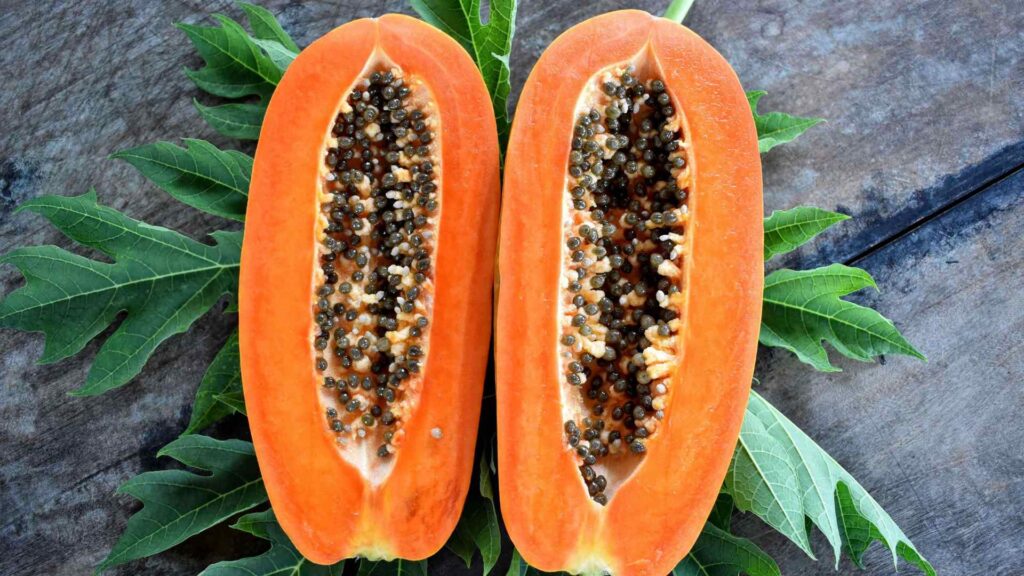
One accidentally swallowed seed is unlikely to create the same exposure as a spoonful, ground seed powder, oil, or extract. Removing all seeds avoids a concentrated plant product, a slippery gulping hazard, and unsupported dosing.
Papaya seeds contain biologically active compounds, including benzyl isothiocyanate. A peer-reviewed papaya-seed study indexed by PubMed linked that compound with activity against a laboratory nematode, but it did not establish a safe or effective parasite treatment for pet dogs.
Laboratory activity is not permission to feed seed extracts. Parasite species, diagnosis, dose, formulation, drug interactions, and toxicity all require veterinary consideration.
If a dog eats a large scoop of seeds or a concentrated seed supplement, save the product and call. Report the amount, time, dog’s weight, medications, and any vomiting, diarrhea, pain, weakness, or unusual behavior.
Unripe papaya and milky latex
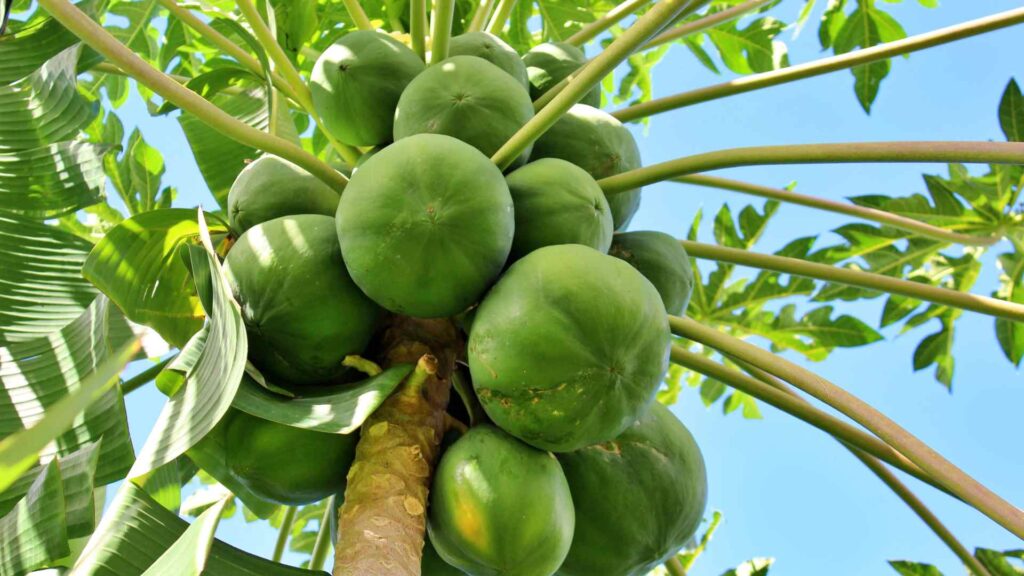
Unripe papaya fruit and injured plant tissues can release a milky latex that contains proteolytic enzymes, including papain-related enzymes. That concentrated sap is different from a clean bite of soft ripe flesh.
A 2026 EFSA safety assessment indexed by PubMed describes commercial papain food enzyme as a complex obtained from the latex of unripe papaya. It evaluated defined manufacturing uses, not homemade latex, raw leaves, or dosing dogs with supplements.
Avoid unripe fruit, latex, stems, and leaves because their composition is less predictable and contact may irritate the mouth, skin, or digestive tract. Rinse visible sap from skin or fur with water and call if there is mouth pain, drooling, swelling, vomiting, eye exposure, or breathing trouble.
Leaves and plant material do not belong in the bowl
Papaya leaf tea, powder, juice, and garden clippings are not equivalent to ripe fruit flesh. They may contain concentrated plant constituents, variable contaminants, and supplement claims that have not been tested for the individual dog.
Do not use papaya leaves to treat low platelets, parasites, cancer, appetite loss, or digestive disease. A dog with those problems needs diagnosis and treatment with known dosing and monitoring.
Papain supplements are not fruit treats
Papain is a protein-digesting enzyme sold alone and in digestive, meat-tenderizing, or multi-enzyme products. Concentration, coating, co-ingredients, and dose make a capsule or powder fundamentally different from ripe papaya flesh.
Supplements may include other enzymes, herbs, minerals, flavorings, sweeteners, or human-dose combinations. They can also interact with a medical plan or cause digestive irritation or an allergic response.
Do not sprinkle meat tenderizer or human digestive enzyme onto dog food to improve digestion, dissolve hairballs, treat coprophagia, or clear an obstruction. Call the veterinarian after a significant supplement exposure and keep the label.
Dried and candied papaya
Drying removes water and makes sugar and calories easier to eat quickly. Commercial pieces may add cane sugar, syrup, oil, sulfites, color, or flavoring, while their chewy texture can stick in the mouth or be gulped.
A tiny unsweetened piece is not automatically toxic, but fresh flesh is easier to portion. Avoid candied fruit and trail mixes that add raisins, chocolate, macadamias, salted nuts, or sugar-free sweeteners.
Our raisin guide explains why dried grapes in fruit mixes deserve prompt attention. Never assume every orange cube in a mix is papaya.
Canned papaya, juice, and syrup
Canned papaya in water or its own juice still needs a label check, while heavy syrup adds substantial sugar. Drain the liquid and use a tiny plain piece only if the ingredients fit the dog’s needs.
Fruit juice removes much of the chewing and makes sugar easy to consume without the whole fruit’s structure. It is not needed for hydration, constipation, vitamins, or recovery from illness.
Smoothies, bowls, salsa, and desserts
A papaya smoothie may contain dairy, sweetener, protein powder, chocolate, caffeine, supplements, or xylitol. Smoothie bowls can add granola, raisins, macadamias, coconut, honey, and large calorie loads.
Fruit salsa may include onion, hot pepper, garlic, salt, lime, or avocado. Our onion guide covers cooked, raw, and powdered forms that remain relevant after mixing.
Desserts add cake, cream, pastry, ice cream, sugar, and sometimes alcohol. Judge the full recipe rather than letting papaya’s presence create a health halo.
Papaya does not need a wellness job
Papaya contains nutrients and fiber, but a modest canine treat does not cure constipation, improve immunity, dissolve intestinal parasites, prevent cancer, or correct a vitamin deficiency. Increasing the amount does not turn a food into a controlled therapy.
Our pineapple guide applies the same reality check to another tropical fruit. Pleasant fruit variety is optional, while complete nutrition and veterinary treatment are not.
If a dog has chronic gas, loose stool, weight loss, poor appetite, or suspected maldigestion, adding papaya can delay the useful workup. Bring a diet history and stool sample plan to the veterinarian instead.
Allergy and latex cross-reactivity
Papaya proteins and latex-derived enzymes can cause allergic reactions in susceptible individuals, but canine frequency is not established by human allergy data. Do not label a dog allergic based on one vague symptom.
Stop the product after itching, hives, vomiting, or diarrhea and discuss recurring signs with a veterinarian. Facial swelling, breathing difficulty, weakness, or collapse is an emergency.
Our kiwi guide is useful when several unfamiliar fruits were served together. Separate ingredient histories make reactions easier to investigate.
Puppies and medically complex dogs
Puppies need nearly all calories for complete growth nutrition and can choke on pieces sized casually for an adult. Keep any taste tiny and skip fruit during vomiting or diarrhea unless the puppy’s veterinarian directs otherwise.
Dogs with diabetes, obesity, pancreatitis history, swallowing disease, allergies, kidney disease, or prescription diets may need stricter rules. The condition and treatment plan matter more than a general safe-food list.
What to do after a papaya raid
- Identify ripe flesh, unripe fruit, peel, seeds, leaf, stem, latex, dried fruit, canned product, dessert, or supplement.
- Estimate the amount and record time, dog weight, symptoms, medical conditions, and medications.
- Save labels for enzyme products, dried fruit, smoothies, trail mix, syrup, or sweeteners.
- Check for missing rind, lids, wrappers, pits from other fruit, skewers, or packaging.
- Call promptly for latex, leaves, supplements, a large seed or peel exposure, unsafe co-ingredients, packaging, or significant symptoms.
A healthy adult dog that ate a few peeled, deseeded pieces of ripe flesh and remains normal can usually be monitored. Keep water available and return to the normal complete diet.
Do not induce vomiting or give oil, milk, charcoal, enzyme products, or human medicine unless a veterinary professional directs it. Form, timing, symptoms, and aspiration risk determine the safe response.
Frequently asked questions
Can dogs eat ripe papaya?
Yes, many healthy dogs can have a few small pieces of plain ripe flesh after the skin and seeds are removed. It is an optional treat, not a supplement.
Are papaya seeds poisonous to dogs?
One stray seed is not equivalent to an extract, but seeds contain active compounds and no useful canine serving has been established. Remove them and do not use seed products as dewormers.
Can dogs eat papaya skin?
Do not feed the tough peel because it is difficult to chew and can create choking or gastrointestinal problems. Call after a large swallowed strip or any obstruction signs.
Does papaya help a dog digest food?
Ripe fruit is not a treatment for chronic digestive signs. Papain supplements are concentrated products that require product-specific veterinary review.
The bottom line
A few peeled, deseeded bites of ripe papaya flesh can be an occasional treat for many healthy adult dogs. Keep it plain, cut it small, and count it with every other extra.
Skin, large seed amounts, unripe fruit, latex, leaves, enzyme supplements, dried products, syrup, smoothies, and desserts each change the assessment. Identify the exact form before deciding whether monitoring or a veterinary call is appropriate.