Can Dogs Eat Dates? Pits, Sugar, Sticky Texture, and Products
Dogs can eat a tiny piece of plain, pitted date flesh, but dates are sticky, sugar-dense dried fruit and are not a useful routine treat. Remove the hard pit every time, cut the flesh for the dog’s size, and check stuffed dates, bars, syrups, baked goods, and mixed dried fruit ingredient by ingredient.
Dates are not raisins
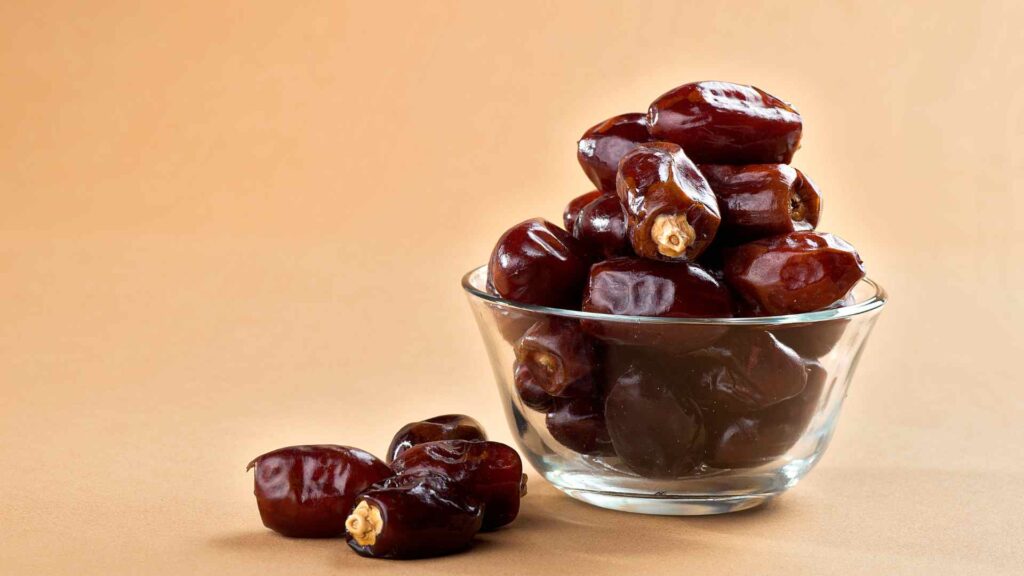
A date is the fruit of the date palm, while a raisin is a dried grape. Their similar brown, wrinkled appearance does not give them the same canine risk profile.
Grapes and raisins are associated with acute kidney injury in dogs, so an uncertain piece from a trail mix should not be guessed at. Use our grape and raisin guide and call promptly if dried grapes may be involved.
Keep the package or photograph the remaining fruit for identification. Do not wait for symptoms when the product could be a raisin, currant, or mixed-fruit piece.

What a plain date actually offers
Dates are harvested as sweet fruit and usually sold with relatively little water, so sugar and calories are easy to consume quickly. Their natural origin does not make a whole date an appropriate dog-size portion.
Fiber in a small taste does not make dates a constipation cure, and sugar does not make them a sports fuel for dogs. Complete food already supplies planned energy and nutrients without a sticky sugar bonus.
The UC Davis veterinary treat guideline recommends keeping all extras below 10 percent of daily calories. Dates must share that small allowance with every chew, training reward, table scrap, and pill food.
A tiny dog can use its treat budget on a surprisingly small sliver. Dogs with diabetes, obesity, calorie restriction, dental disease, or a prescribed diet may need to skip dates entirely.
The pit is the main immediate hazard
A date pit is hard, smooth, and large enough to choke or lodge in the gastrointestinal tract, especially in a small dog. It can also damage teeth when bitten.
The pit is not usefully treated as a predictable cyanide-poisoning dose like people sometimes fear after reading about other stone fruits. The practical concern is a swallowed foreign object with risk shaped by pit size, dog size, symptoms, and time.
The Merck Veterinary Manual obstruction review explains that foreign bodies can cause partial or complete blockage. Vomiting and appetite loss are common signs, while abdominal pain, lethargy, diarrhea, dehydration, or shock may also occur.
Call after a swallowed pit instead of waiting to see it in stool, particularly for a small dog, puppy, or dog with prior gastrointestinal surgery. One normal bowel movement does not prove the pit has passed.
Do not induce vomiting or try to push the pit through with bread, oil, pumpkin, or a larger meal. A veterinarian can weigh the object, timing, dog, and safest monitoring or removal plan.
Sticky flesh is a texture problem
Date flesh can cling to teeth, the roof of the mouth, fur, wrappers, and other food. A whole date may be gulped, while a dense wad can cause coughing or gagging in a small or hurried eater.
Remove the pit yourself even when the package says pitted because fragments and occasional whole pits can remain. Flatten a tiny piece and inspect it before cutting it into smaller bits.
Active choking, trouble breathing, blue or gray gums, or collapse is an emergency. Repeated gagging, drooling, pawing at the mouth, or difficulty swallowing also needs urgent assessment.

Too many dates usually means digestive trouble
A large date raid brings concentrated sugar, fiber, calories, and a sudden diet change. Vomiting, gas, loose stool, abdominal discomfort, and reduced appetite are more plausible than a special date toxicosis.
A bagful also raises the chance of pits and packaging. Count the fruit, inspect every remaining piece, and look for a missing bag, zip seal, clip, cardboard, desiccant packet, or plastic tray.
Call for repeated vomiting, marked pain, severe lethargy, weakness, dehydration, blood, a swollen abdomen, or inability to keep water down. Puppies, seniors, and medically fragile dogs deserve a lower threshold.
Dates do not treat low energy or constipation
A sluggish dog may be painful, overheated, hypoglycemic, anemic, infected, obstructed, or ill in another way. Feeding sugary fruit can delay the assessment and does not identify the cause.
Constipation also has many causes, including dehydration, pain, medication, pelvic narrowing, neurologic disease, or a swallowed object. Straining, vomiting, appetite loss, pain, or persistent stool changes needs veterinary advice.
Do not increase dates until diarrhea appears and call that a fiber solution. A treatment amount should come from a veterinarian who knows the dog’s diagnosis and full diet.
Fresh dates, dried dates, and date paste
Most supermarket dates are partially or fully dried even when they feel soft. Fresher varieties contain more moisture, but the pit, sugar, sticky texture, and portion issues remain.
Date paste makes it easy to swallow several fruits at once and may be blended with syrup or preservatives. Do not use it as a binder for routine homemade treats merely because its sugar is naturally occurring.
Date syrup is concentrated sweetener with none of the portion control provided by a visible piece. It is not needed on dog food, medication, frozen treats, or a lick mat.
Stuffed dates can hide the real problem
Party dates may be stuffed with cheese, bacon, sausage, butter, nuts, nut butter, chocolate, or sweetened cream. Toothpicks and decorative picks are easy to miss and can cause serious internal injury.
Our peanut guide covers plain nuts, shells, coatings, fat, and mold. Peanut butter also requires a xylitol label check, particularly in sugar-free or specialty products.
Our fig guide helps distinguish another sweet fruit that appears on boards and in bars. Fig stems, leaves, sap, and products create questions that a date guide cannot answer.
Date bars, energy bites, and baked goods
A date bar may combine oats, cocoa, chocolate, coffee, protein powder, raisins, macadamias, nut butter, coconut, salt, or supplements. Sugar-free versions can use xylitol or other sweeteners.
Energy bite is a marketing description, not a canine safety category. Save the wrapper and ingredient list and report the missing amount rather than assuming dates were the only food.
Cakes, cookies, sticky toffee pudding, and date bread add flour, butter, sugar, dairy, eggs, spices, and possible raisins or nuts. Raw dough introduces separate flour, egg, yeast, or packaging concerns.
Trail mix and chopped dried fruit
Trail mixes can contain raisins, currants, chocolate, macadamias, salty nuts, xylitol-sweetened pieces, and hard seeds. Similar color makes sorting unreliable once fruit has been chopped or coated.
If the mix includes grapes or raisins, call promptly even if only a small number may be missing. Do not pick out visible raisins and feed the remaining date pieces because residues and identification errors remain.
Washing, storage, and spoilage
The FDA produce-safety guidance recommends clean hands and rinsing produce under running water. Follow the package for ready-to-eat dried fruit and discard moldy, fermented, insect-infested, or unusually damaged dates.
Keep opened dates in a closed container and follow storage directions. A dog should not finish food that people rejected as rancid, moldy, or spoiled.
Food allergy is possible but not the default
Vomiting or itching after a date snack does not prove date allergy because the pit, portion, nuts, dairy, grain, flavoring, and environmental allergens may be involved. Recurring signs need a controlled diagnostic plan.
The Merck Veterinary Manual food-allergy review describes a strict elimination diet and rechallenge as the reference method. Hair and saliva panels do not reliably identify a date allergy.
Facial swelling, widespread hives, breathing difficulty, weakness, or collapse is an emergency. Milder repeated digestive or skin signs should be recorded and discussed with the veterinarian.
Who should skip dates?
Dogs with diabetes, obesity, calorie restriction, dental disease, swallowing trouble, active stomach upset, or a prescription diet may have no sensible place for dates. A strict elimination diet also means no unapproved fruit.
Puppies need nearly all calories for complete growth nutrition and can choke on adult-size pieces. There is no six-month milestone that suddenly makes dates necessary.
A dog taking medication should not receive dates as a pill disguise without considering calories and treatment instructions. Some pills must be given with a specific meal or on an empty stomach.
What to do after a date raid
- Determine whether the fruit was definitely a date and whether it was pitted.
- Count missing dates and pits, and record time, dog weight, symptoms, conditions, and medications.
- Save labels for trail mix, bars, stuffed dates, syrups, nut butter, chocolate, and sweeteners.
- Check for toothpicks, skewers, wrappers, bags, clips, trays, and desiccant packets.
- Call promptly for a swallowed pit, uncertain raisin exposure, unsafe ingredients, packaging, a large amount, or significant symptoms.
A healthy adult dog that eats one tiny piece of plain pitted date flesh and stays normal can usually be monitored. Keep water available, brush or wipe sticky residue from reachable teeth if the dog cooperates, and return to the normal diet.
Do not induce vomiting or give laxatives, oil, salt, or human medicine unless a veterinary professional directs it. Pit shape, timing, symptoms, and aspiration risk determine the safe response.
Frequently asked questions
Are dates toxic to dogs?
Plain pitted date flesh is not a recognized canine toxin, but it is sugar-dense and sticky. Pits, portions, mixed products, and packaging create the practical risks.
What if my dog swallowed a date pit?
Call the veterinarian with the dog’s size, pit size, time, and symptoms. Do not induce vomiting or force food to push it through.
Can dates help a constipated dog?
Do not use dates as a constipation treatment. Persistent straining, pain, vomiting, appetite loss, or a possible foreign object needs veterinary assessment.
Can diabetic dogs eat dates?
Dates are concentrated in sugar, so a dog with diabetes should follow the veterinarian’s measured diet and treat plan. Do not improvise with fruit.
The bottom line
A tiny chopped piece of plain, pitted date flesh is unlikely to harm most healthy adult dogs, but dates offer no benefit that demands feeding. Their sugar, sticky texture, and easy-to-miss pits make simpler treats more practical.
A swallowed pit, uncertain raisin, trail mix, stuffed date, sweetened product, unsafe ingredient, or missing package changes the answer. Identify the item first, then act on the actual risk.