Can Dogs Eat Dried Mango? Labels, Texture, and Risks
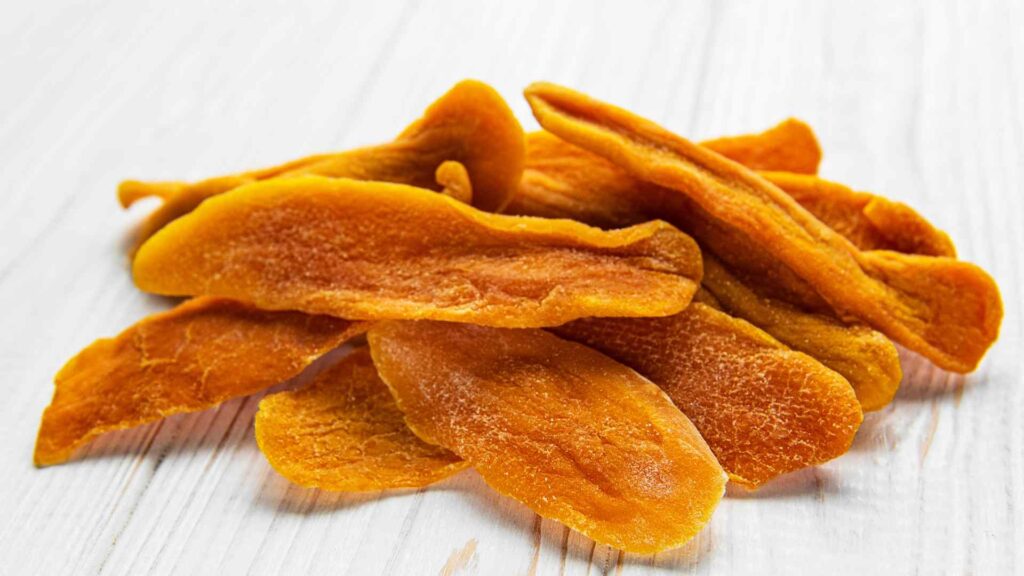
Dogs can have a tiny piece of plain, unsweetened dried mango, but it is not an ideal everyday treat. Drying concentrates sugar and calories, the leathery texture can be hard to chew, and flavored bags or trail mix may contain xylitol, raisins, chocolate, macadamia nuts, or other hazards.

The quick decision
If a healthy dog ate one small, clearly identified piece of plain dried mango and feels normal, remove the bag, provide normal fresh water, and observe. Call promptly after a large or unknown amount, a mixed product, xylitol, raisins, swallowed packaging, choking, repeated vomiting, marked lethargy, pain, tremors, or poor coordination.
Keep the package because “dried mango” can mean soft sweetened slices, freeze-dried cubes, chili-coated strips, fruit leather, candy, or a mixed snack. The ingredient list and missing quantity are far more useful than the front label.
Plain mango flesh versus the pit
Ripe mango flesh is not generally considered toxic to dogs, but the large flat pit is a choking and obstruction hazard. Commercial dried slices normally exclude it, yet home-dried pieces can include tough skin or accidental pit fragments.
A swallowed mango pit warrants veterinary advice even if the dog seems comfortable because obstruction signs may develop later. Our mango guide covers fresh flesh, skin, pit, and whole-fruit accidents.
Drying changes portion size
Removing water makes fruit smaller and more calorie-dense by weight, so several dried strips represent much more mango than they appear to. A dog can gulp a day’s worth of extras while a person is still thinking in “little pieces.”
That concentration is why dried mango should be cut into tiny bits rather than handed over as a whole strip. The goal is a taste, not a serving borrowed from the human Nutrition Facts panel.
Added sugar is common
Many brands dust or infuse mango with sugar to create a candy-like snack. Sugar is not a canine toxin in the same way xylitol is, but it adds calories and can worsen gastrointestinal upset or complicate diets for diabetes, obesity, and dental disease.
“No added sugar” does not necessarily mean low sugar because mango naturally contains sugar, and it does not identify every alternative sweetener. Read the complete ingredient list every time the package changes.
Repeat the xylitol check
Xylitol may be labeled birch sugar, wood sugar, or birch bark extract in sugar-free and specialty foods. The FDA warns that xylitol can cause rapid, profound hypoglycemia in dogs and may also cause liver injury.
If xylitol is listed or the sweetener is unknown, call a veterinarian or emergency clinic immediately. Do not wait for vomiting, weakness, staggering, collapse, or seizures, and do not rely on a generic dose table when the product concentration may be unknown.

Sulfur dioxide and sulfites
Some dried fruit uses sulfur dioxide or sulfites to preserve color and shelf life. Their presence does not automatically make one mango piece a canine poisoning emergency, but the exact label still belongs in any veterinary risk assessment.
Evidence for a universal toxic threshold in dogs is not established, so avoid dramatic claims and do not invent a serving allowance. A dog with a known sensitivity, respiratory disease, or symptoms after a preserved product should be assessed by a veterinarian with the exact label.
Unsulfured does not mean sugar-free, xylitol-free, soft, or safe from every co-ingredient. It answers one label question and leaves the others open.
Texture, choking, and teeth
Dried mango can be leathery, stringy, or stiff, and a long strip may fold into a wad when swallowed. Small dogs, puppies, seniors, fast gulpers, and dogs with dental pain are more likely to struggle with the texture.
Cut a plain strip across the fibers into a piece small enough for the dog’s chewing style, then supervise. Freeze-dried mango can crumble but still becomes sticky when wet, so small size and observation remain useful.
Coughing, gagging, pawing at the mouth, blue or gray gums, collapse, or difficulty breathing is an emergency. Do not blindly sweep fingers deep into a conscious dog’s mouth because that can push material farther back or cause a bite.
Trail mix changes the answer
Trail mix may combine mango with raisins, chocolate, macadamia nuts, caffeinated pieces, salty nuts, or sugar-free candy. The mango can be the least important ingredient in the bag.
The ASPCA food-hazard guide explains the concerns with grapes and raisins, chocolate, macadamias, xylitol, and excessively salty foods. Call with the entire ingredient list, not just the fruit your dog prefers.
Possible raisins deserve immediate advice because grape toxicity is unpredictable in dogs. Our raisin guide explains the focused response without pretending there is a reliable safe count.
Seasoned, spicy, and coated mango
Chili-lime mango can irritate the mouth and stomach, while salt, citric acid, and spice blends add variables. Chocolate-coated mango introduces theobromine, and yogurt-style coatings often add sugar and fat without making the snack nutritionally necessary.
Fruit leather and gummy mango may contain syrups, gelatin, acids, colors, cannabis ingredients, or alternative sweeteners. Treat these as formulated products and use the current label rather than assuming they behave like dried fruit.
Likely stomach effects
Too much dried mango may cause gas, soft stool, diarrhea, vomiting, or reduced appetite because of its sugar, fiber, and concentrated portion. One mild sign after a known modest amount differs from repeated vomiting, severe pain, weakness, or inability to keep water down.
Do not use dried mango as a diarrhea, constipation, or fiber treatment. Persistent digestive signs need a cause and a plan, not an escalating handful of fruit.
No vitamin or immune-system mission
Mango contains nutrients, but a complete and balanced dog food is designed to meet canine requirements. A nutrient in fruit does not prove that dried mango improves immunity, vision, skin, digestion, or disease outcomes.
The UC Davis veterinary nutrition service recommends keeping treats and extras at no more than 10 percent of daily calories. Dried fruit can use that budget quickly, especially in a small dog.
Who should skip it?
Dogs with diabetes, obesity, pancreatitis, chronic gastrointestinal disease, dental problems, food allergies, or a therapeutic diet should receive extras only with veterinary approval. Puppies also need a growth diet to supply nearly all of their calories.
An elimination-diet trial can be spoiled by one unapproved snack. “Just fruit” still counts as an ingredient exposure.
A safe preparation checklist
- Choose a plain product with mango as the only ingredient and no xylitol, raisins, chocolate, nuts, spice coating, or added sugar.
- Inspect for pit fragments, hard skin, mold, moisture damage, insects, or an unusual odor.
- Cut one small piece across the fibers and supervise chewing.
- Keep all treats combined within the veterinary treat allowance and stop if digestive signs occur.
- Store the resealed bag and oxygen absorber inside a closed cabinet.
After a snack-bag raid
Photograph the full label, estimate the amount and time, and note the dog’s weight, health conditions, medicines, and symptoms. Check whether plastic, a zipper strip, clip, oxygen absorber, or other nonfood item is missing.
Do not induce vomiting or give salt, mustard, oil, milk, or charcoal without professional direction. Call immediately for xylitol, raisins, a dangerous mixed ingredient, choking, significant symptoms, a large unknown amount, or swallowed packaging.
Frequently asked questions
Is unsweetened dried mango safe?
A tiny, soft, plain piece is generally low risk for a healthy dog, but the natural sugar and concentrated calories still call for restraint. Verify the label and cut it to suit the dog.
Can dogs eat freeze-dried mango?
Plain freeze-dried mango avoids added sugar when the label lists only fruit, but it is still concentrated and may be brittle or sticky after chewing. Offer only a tiny piece and supervise.
Does dried mango help constipation?
Do not use it as treatment. Too much may cause diarrhea or discomfort, while constipation can reflect dehydration, pain, obstruction, medication effects, or disease.
Dried mango compared with other dried fruit
The same drying process does not make every fruit equally safe because the original plant and the mixed ingredients still matter. Dried grapes remain raisins and warrant urgent advice, while plain dried cranberry has its own sugar, texture, and product-label questions covered in our dried cranberry guide.
Do not create a homemade fruit blend until each ingredient has been checked separately. Remove pits, seeds, stems, hard peels, chocolate, nuts, sweeteners, and seasonings before deciding whether any tiny piece belongs in the dog’s treat budget.
Storage is part of safe preparation
Dried mango should stay sealed, dry, and within the manufacturer’s storage directions. A bag that collected condensation, pantry pests, mold, cleaning residue, or an unknown powder should be discarded rather than inspected by the dog.
Oxygen absorbers and desiccant packets are not snacks, even when they sit beside edible fruit. If a packet is torn or missing, identify its printed contents and contact a veterinarian or poison-control service with the package details.
What a veterinarian needs from you
Useful triage details include the dog’s current weight, exact product, full ingredients, package size, amount remaining, time of exposure, medical conditions, medicines, and symptoms. Photos of the label and remaining pieces can be more reliable than guessing how many strips were originally inside.
Do not delay an urgent call while trying to reach perfect arithmetic. A reasonable range, such as one strip versus most of a twelve-ounce bag, is enough to begin a professional risk assessment.
Bottom line
A small verified piece of plain dried mango is usually an optional treat, not a toxin or therapy. The real decision points are xylitol, raisins and trail-mix hazards, added sugar, tough texture, amount, symptoms, the pit, and missing packaging.