Can Cats Eat Butter? Fat, Dairy, and Wrapper Risks
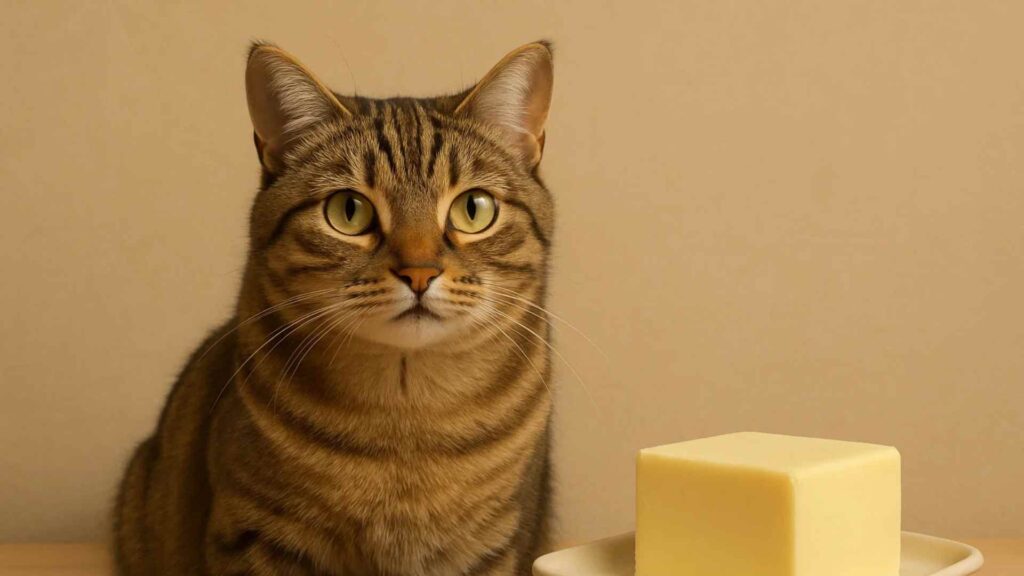
One tiny lick of plain butter is unlikely to poison most healthy cats, but butter is concentrated fat and calories rather than a useful treat. A larger amount can cause gastrointestinal upset, and salted or compound butter, dairy sensitivity, pancreatitis history, wrappers, and medical diets can change the response.

A lick and a stick are different events
A cat tasting a smear from a plate is not equivalent to chewing a butter dish or swallowing half a stick with its wrapper. Record the amount, time, type, cat’s weight, symptoms, medical history, and packaging.
Butter is mostly milk fat with small amounts of water and milk solids. Whipped, cultured, salted, clarified, plant-blended, flavored, and spreadable tubs can have different ingredients and calorie density.
There is no reason to feed butter for energy, weight gain, coat shine, hairballs, constipation, or medication delivery. A complete feline diet or a veterinary plan handles those goals without an uncontrolled fat dose.
Lactose intolerance and milk allergy differ
Butter generally contains less lactose than milk, but it is not guaranteed lactose-free and can still upset an individual cat. Gas, loose stool, vomiting, and abdominal discomfort can follow dairy exposure.
Lactose intolerance is difficulty digesting milk sugar, while milk-protein allergy is an immune reaction. Clarified butter may reduce some milk solids but does not create a safe home challenge for a cat with a diagnosed dairy allergy.
The Merck malabsorption review notes that lactose intolerance can develop after intestinal brush-border injury and recommends avoiding dairy during diarrhea. Do not test butter on an already sick stomach.
Calories accumulate fast
A teaspoon looks tiny beside a dinner plate but is substantial for a cat’s daily calorie needs. Repeated licks from toast, pans, baking bowls, and pill routines can quietly contribute to weight gain.
Obesity can worsen mobility, grooming, diabetes risk, and other health problems. Adding fat to make food more tempting may also unbalance a therapeutic diet or hide an illness causing poor appetite.
If a cat is losing weight or refusing food, call a veterinarian rather than starting butter. Cats that eat too little can develop serious metabolic complications, and the underlying cause needs attention.
Pancreatitis in cats needs careful wording
Feline pancreatitis is real, but its causes are often unknown and the simple dog-style claim that one fatty meal directly causes every feline case is not accurate. A rich butter raid can still produce vomiting, diarrhea, appetite loss, and clinically important calories.
The Merck cat pancreatitis guide lists lethargy, appetite loss, dehydration, weight loss, vomiting, jaundice, fever, and abdominal pain among possible signs. Some affected cats show few obvious signs.
A cat with previous pancreatitis, diabetes, inflammatory bowel disease, liver disease, obesity, or a prescribed low-fat plan should receive individualized advice after a meaningful exposure. Do not impose canine serving or fat thresholds.

Salted and compound butter
Salted butter adds sodium, and several stolen sticks differ from one lick. Cats with kidney, heart, blood-pressure, or fluid-balance conditions may have prescribed sodium restrictions.
Garlic butter, herb butter, steak butter, and flavored spreads can contain garlic, onion, chives, shallot, leek, alcohol, hot pepper, or concentrated oils. Cats are highly susceptible to Allium-related red-blood-cell damage.
The Merck Allium review identifies cats as the most susceptible species and warns about fresh, cooked, dried, and powdered forms. Weakness, pale or yellow gums, fast breathing, dark urine, and collapse may be delayed.
Use our cat garlic guide and cat onion guide when compound butter contains either ingredient.

Plant-based spreads are label-specific
A tub called buttery spread may use vegetable oils, salt, emulsifiers, flavors, and milk ingredients. Vegan does not mean feline-safe, and some products can still contain garlic, onion, avocado oil, coconut oil, or unusual sweeteners.
Check sugar-free or specialty products for xylitol only when the label supports the concern. Do not imply that ordinary butter commonly contains it.
Baking mixtures can add chocolate, raw yeast dough, raisins, macadamia nuts, alcohol, caffeine, or sweetener. Inventory the complete bowl rather than focusing on butter.
Wrappers and dishes
Foil-paper wrappers, parchment, plastic film, tub lids, wax paper, and silicone covers can be swallowed because they smell fatty. Folded material can choke or obstruct the intestine.
Do not induce vomiting or pull film or string from the mouth or rectum. Repeated vomiting, appetite loss, drooling, abdominal pain, lethargy, straining, or reduced stool after a wrapper disappears needs veterinary care.
A dropped glass butter dish adds cuts and invisible shards. Keep the cat out of the area, check paws carefully, and call for cleaning and injury guidance.

What to do after a raid
- Remove butter, dishes, baking ingredients, and wrappers, then save the package and ingredient list.
- Estimate the amount, timing, cat’s weight, symptoms, medical history, and every missing piece of foil, paper, glass, or plastic.
- Check for garlic, onion, chives, salt, chocolate, raw dough, raisins, nuts, alcohol, caffeine, and sweeteners.
- Call for a large amount, compound butter, symptoms, a relevant medical diet or illness, or swallowed packaging.
- Seek emergency care for breathing trouble, collapse, seizures, severe weakness, repeated vomiting, marked pain, or very pale gums.
Do not give hydrogen peroxide, salt, oil, milk, bread, antacids, or human medicine without veterinary direction. Cats require species-appropriate decontamination and medication.
Butter is a poor pill tool
A butter-coated pill can slip from the mouth or be licked clean while the medication is left behind. Some drugs need food, others require an empty stomach, and some cannot be crushed or altered.
Ask the prescriber about the cat’s regular wet food, a compatible commercial pill wrap, a flavored veterinary liquid, or another method. Use only the smallest approved amount and verify that the dose was swallowed.
Do not use butter to force medication into a struggling cat because aspiration and injury are possible. A calmer formulation or technique is safer for both cat and person.

Balanced feline nutrition
The Cornell Feline Health Center explains that cats are obligate carnivores and that complete foods supply their specific nutrient balance. Butter is fat without the amino acids, vitamins, and minerals a cat requires.
Treats should remain occasional and not displace the complete diet. A piece of regular kibble or a veterinarian-approved feline treat is easier to budget than a calorie-dense smear.
For other dairy context, see our cat cheese guide. Cheese and butter share some milk concerns but differ in lactose, protein, salt, and texture.
Estimate the exposure without inventing precision
A film left on a butter knife, a teaspoon missing from a dish, and an opened one-pound baking package are different calls. Weigh the remaining package when practical, photograph it, and note whether the cat had access alone or alongside other pets.
Do not rely on a universal spoonful-per-pound chart because the relevant decision also includes salt, flavorings, wrapper loss, the cat’s current symptoms, and medical history. A veterinarian can interpret the complete event instead of pretending that fat has one feline toxic dose.
Cultured, clarified, and whipped products
Cultured butter is made with bacterial cultures, but that does not turn it into a feline probiotic. Clarified butter or ghee contains less water and many milk solids have been removed, yet it remains concentrated fat and is not a lactose-intolerance treatment.
Whipped butter contains incorporated air, so a spoonful does not weigh the same as a spoonful of a dense stick. Spreadable butter may include vegetable oil, and restaurant butter may arrive salted or seasoned even when the menu simply says butter.
Medical diets and appetite clues
Cats receiving calorie-controlled, kidney, heart, gastrointestinal, diabetes, or food-elimination diets should not get routine butter without approval from the clinician managing them. A small rich extra can distort a diet trial or make it harder to know what triggered a symptom.
Butter should never be used to conceal an ongoing appetite problem. A cat that refuses its normal food but licks only butter is still showing selective or reduced intake and may need prompt assessment.
Practical monitoring after a small plain lick
If the amount was truly tiny, the product was plain, no packaging is missing, and the cat feels normal, remove access and continue the usual food and water. Watch for vomiting, diarrhea, drooling, unusual hiding, lethargy, abdominal discomfort, and reduced appetite.
Call if symptoms appear or the cat has a relevant diagnosis, and seek urgent help for repeated vomiting, marked weakness, breathing trouble, collapse, or severe pain. Do not fast a cat for a prolonged period or improvise a bland diet without veterinary advice.
Frequently asked questions
Can cats eat unsalted butter?
Unsalted butter avoids added sodium but remains concentrated fat and calories with possible milk solids. A tiny accidental lick is different from a planned serving.
Can butter help a cat pass a hairball?
Do not use it as a hairball remedy. Recurrent vomiting, gagging, constipation, or suspected hairballs need veterinary guidance and a feline-appropriate plan.
My cat ate a butter wrapper. What now?
Call with the material, amount, time, cat’s size, and symptoms. Do not induce vomiting or wait for it to appear in stool without advice.
The bottom line
A tiny plain butter lick is usually a monitoring question, not a toxin crisis, but a large amount, compound Alliums, medical history, and wrappers deserve attention. Feline pancreatitis should be assessed clinically rather than predicted from a dog rule.
Skip coat, weight, constipation, hairball, and pill-delivery promises. The cat’s complete food and veterinary care offer much more value than a greasy spoonful.