Can Dogs Eat Berries? Safe Types, Grapes, Wild Fruit, and Mold
“Berries” is too broad for a safe yes or no. A few washed blueberries, strawberries, blackberries, or raspberries are usually low risk for a healthy dog, while grapes, raisins, Zante currants, unknown wild fruit, pits, xylitol products, mold, and mixed desserts require different decisions.
Identify the fruit before counting it
- Verified common blueberry, strawberry, raspberry, or blackberry: a few plain pieces are usually a monitoring issue.
- Grape, raisin, or Zante currant: contact a veterinarian or animal poison service promptly, even if the dog looks normal.
- Unknown yard, trail, hedge, or decorative berry: photograph the whole plant and seek identification before assuming it is edible.
- Cherry, stone fruit, or berry with a large hard pit: assess choking, obstruction, and damaged-seed exposure.
- Jam, yogurt, smoothie, pie, trail mix, gummy, or sugar-free product: read every ingredient and account for packaging.
Save the package or plant photographs and record species, fresh or dried form, amount range, time, dog weight, symptoms, health conditions, medicines, and missing objects. Color is not an identification method because many unrelated fruits are red, purple, blue, or black.
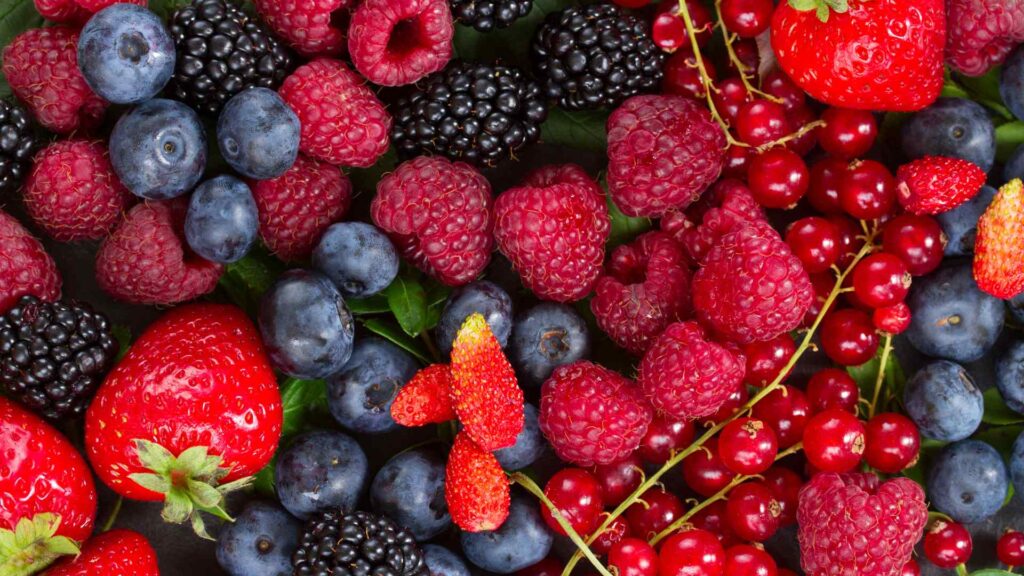
Common grocery berries are not one-size-fits-all treats
Blueberries, strawberries, raspberries, and blackberries are not considered classic canine poisons in ordinary food form. A few clean plain berries may cause no sign, but larger portions can lead to gas, vomiting, loose stool, or appetite change.
Strawberries should have the leafy cap and long stem removed, while large berries should be cut for small dogs. Raspberries and blackberries can contain tiny hard drupelets that are usually swallowed but still add texture and seeds.
There is no need to rotate berries for antioxidant coverage or feed a daily superfood blend. A complete dog food already provides required nutrients in balanced amounts, and laboratory antioxidant language does not prove a clinical benefit for an individual dog.
The World Small Animal Veterinary Association treat guide recommends keeping all treats below 10 percent of daily calories. Fruit shares that allowance with training rewards, chews, table scraps, and foods used to give medicine.
Grapes and raisins are the urgent look-alikes
Grapes are botanically berries, but they do not belong in a casual safe-berry list for dogs. Raisins are dried grapes, and drying does not remove the kidney-injury concern.
The Merck Veterinary Manual Vitis review links grapes, raisins, and Zante currants with acute kidney injury in some dogs. Tartaric acid content varies, so exposure effects can be unpredictable.
Contact a veterinarian or animal poison service promptly for any known or possible grape, raisin, or Zante currant ingestion. Do not wait for vomiting, diarrhea, lethargy, appetite loss, thirst changes, weakness, or reduced urine production.
Our raisin guide explains the information to collect and why there is no dependable home safe-dose table. Do not induce vomiting unless a veterinary professional gives case-specific instructions.
Currant is an especially confusing word
Zante currants are tiny dried grapes from the genus Vitis, so they share the grape concern. True red, black, and white currants belong to the genus Ribes and are botanically different.
A package simply labeled currants may not make that distinction obvious. Check the scientific or ingredient name, country labeling, shape, and manufacturer information rather than guessing from size.
When identity remains uncertain after a dog eats dried currants, call and describe the exact product. Treating a possible dried grape as harmless while searching for reassurance can lose useful time.
Wild berries require plant identification
A dog eating fruit from a hedge, woodland edge, park, or decorative planting has not necessarily found a food berry. Toxic plants can carry attractive fruit, and common names vary by region.
Photograph the entire plant, leaf arrangement, stems, bark, flowers, fruit clusters, and growing location. Keep a sample away from pets and children, but do not taste it or rely on a phone image match as the final answer.
Report whether leaves, stems, seeds, roots, soil, fertilizer, pesticide, slug bait, or mulch were also accessible. A yard raid can involve more than the visible fruit.
Call promptly for unknown fruit, repeated vomiting, marked drooling, weakness, abnormal walking, tremors, seizures, breathing trouble, collapse, or unusual heart rate. The plant identity and clinical signs determine the next steps.
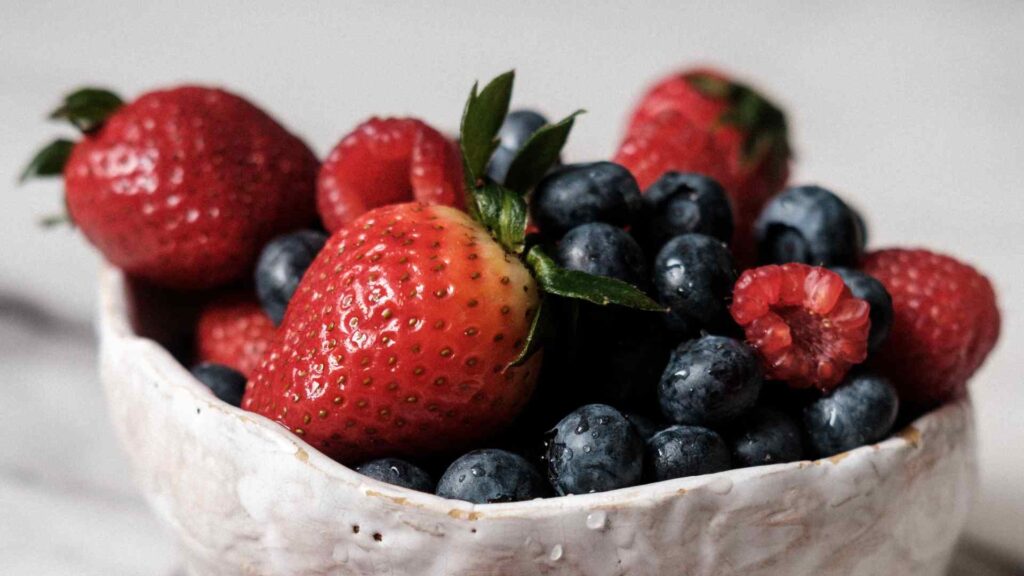
Pits, stones, and seeds are not interchangeable
Blueberry, raspberry, blackberry, and strawberry seeds are tiny and generally eaten with the fruit. A cherry, chokecherry, plum, peach, or other stone fruit has a large hard pit with separate choking and obstruction risks.
Some stone-fruit pits and plant parts contain cyanogenic compounds, particularly when chewed or damaged. The pit can remain dangerous as a foreign object even when it passes through the mouth intact.
Our prune guide explains why pitted dried plum flesh and a plum stone require different responses. Do not crack a pit open to identify it or induce vomiting around a hard object without professional advice.
Continuous gagging, frantic pawing, blue or gray gums, breathing difficulty, or collapse is an emergency. Repeated vomiting, abdominal pain, refusal to eat, or inability to keep water down can signal an obstruction.
Wash, cut, and store fresh berries safely
Fresh produce can carry dirt and microbes from growing, handling, or storage. The FDA produce-safety guide recommends washing produce under running water and avoiding soap, detergent, or commercial produce wash.
Wash hands and use a clean cutting surface, then remove stems, caps, damaged areas, and foreign debris. Cut round or large berries into dog-appropriate pieces and supervise.
Refrigerate perishable berries and pre-cut fruit promptly, and keep them separate from raw meat. Frozen berries are not sterile, and freezing does not reliably inactivate every virus or other contaminant.
Discard berries that are moldy, slimy, fermented, leaking, or unusually soft. Do not rinse visible mold away and feed the remaining clump to avoid waste.
Frozen berries can be hard choking pieces
A frozen blueberry can be a small marble, and a cluster of frozen fruit can be rock hard. Thaw and cut any permitted serving rather than tossing frozen berries for a small or fast-eating dog.
Frozen fruit in smoothies may be blended with grapes, raisins, xylitol, chocolate, coffee, protein powders, supplements, or alcohol. Save the full recipe after a spill.
Dogs with damaged teeth, swallowing disorders, short muzzles, or a history of choking should avoid hard frozen pieces. Softness after thawing does not erase the need for a small portion.
Jam, syrup, pie, and yogurt change the exposure
Jam and pie filling concentrate sugar and may add sweeteners, spices, butter, or other fruits. Ordinary sugar is not xylitol, but a large sweet serving can still upset the stomach and add many calories.
Sugar-free jam, berry syrup, gummies, yogurt, and supplement chews require an immediate xylitol check. The FDA xylitol warning advises immediate veterinary contact because dogs can develop dangerous low blood sugar and liver injury.
Do not wait for vomiting, weakness, staggering, tremors, collapse, or seizures after confirmed xylitol. Bring the label, package size, amount missing, dog weight, and time.
Yogurt can add dairy, fat, sweeteners, chocolate, granola, or raisins, while pie can add a fatty crust, nutmeg, macadamias, raw dough, and foil. Identify the complete dish rather than stopping at berry.
Trail mix and dried-berry products deserve caution
Dried cranberries, blueberries, cherries, and mixed berries are smaller and more calorie dense than fresh fruit. Commercial mixes may be sweetened and may include raisins or grape-derived ingredients.
Trail mix can add macadamia nuts, chocolate, xylitol candy, coffee beans, hard nuts, and oxygen absorbers. Count every component and do not assume the visible red fruit is the only missing ingredient.
Our apple-skin guide uses the same whole-fruit versus mixed-product approach. Fruit in a snack bar does not clear the bar’s sweeteners, nuts, coatings, or wrapper.
Cranberry and elderberry labels still need detail
Plain fresh cranberry is tart and may cause stomach upset if a dog eats many, while dried cranberry products often add sugar, oil, or other fruit. Check carefully for raisins because mixed dried-fruit bags can make the two difficult to separate after a raid.
Elderberry products may use cooked fruit, extract, syrup, alcohol, sweeteners, or a mixed herbal formula, while wild elder plant parts are a plant-identification question. Do not use an elderberry gummy or syrup as immune treatment for a dog, and report the full label after exposure.
Canned berries and pie fillings may sit in heavy syrup and include preservatives, spices, or artificial sweeteners. A small lick of ordinary syrup is not the same as xylitol, but neither is a reason to offer the product intentionally.
Choking and packaging can outrank the fruit
Whole large strawberries, frozen berries, dense dried fruit, and fruit skewers can choke. Toothpicks, skewers, plastic clamshells, film, produce bands, pouches, caps, and desiccants create separate risks.
Food bags can seal around the muzzle and cause suffocation. Store fruit in a closed refrigerator or rigid container and cut bag loops before disposal where practical.
Take a photo before cleaning, estimate the maximum amount, and account for every package part. Do not wait for a missing skewer or plastic wad to appear in stool before calling about symptoms.
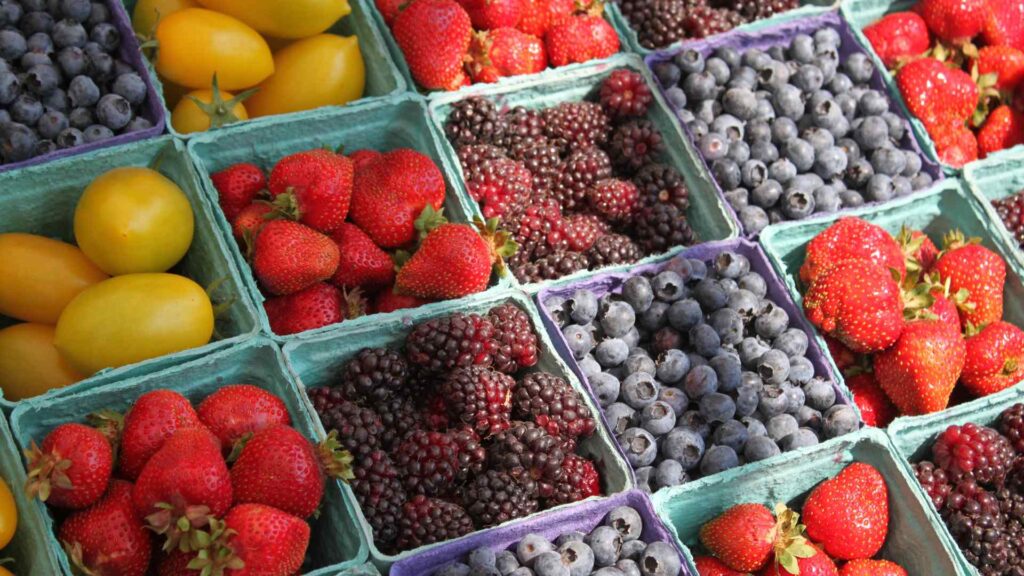
When a small serving is reasonable
For a healthy adult dog, start with one or two washed, thawed, cut pieces of a verified common berry. Stop for vomiting, loose stool, gas, itching, swelling, or discomfort.
Skip berries for dogs on elimination trials, prescription diets, strict diabetic plans, or other clinician-set restrictions unless approved. The dog’s own measured food is the simplest reward.
Bottom line
A few prepared common grocery berries are generally low risk, but “berries” is not a safe universal category. Grapes, raisins, Zante currants, unknown plants, pits, mold, xylitol foods, mixed recipes, choking, symptoms, and packaging each need their own response.