Can Dogs Eat Hot Dogs? One Bite, Whole Links, and Labels
Dogs should not receive hot dogs as a routine treat. One small bite of a fully cooked plain hot dog is unlikely to poison most healthy dogs, but the product can be high in sodium and fat, may contain onion or garlic flavoring, and has a shape that can cause choking when swallowed in rounds or long sections.
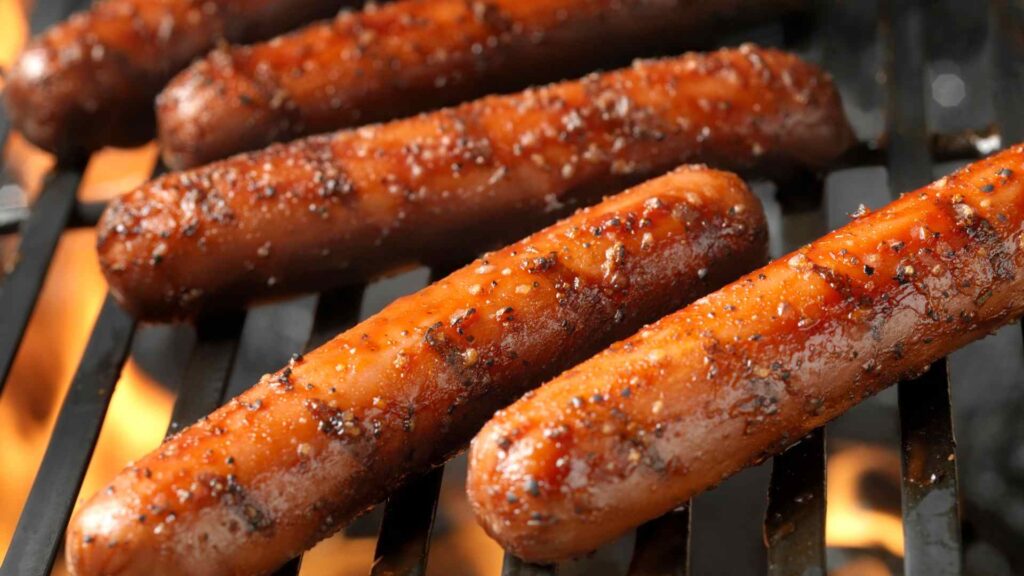
A hot dog is a recipe, not just meat
Hot dogs are cooked or smoked sausages made from beef, pork, poultry, or a combination, with curing and flavoring ingredients. The USDA Food Safety and Inspection Service explains that the meat species and ingredients must appear on the label.
That label matters because “beef,” “turkey,” or “plant-based” does not predict sodium, fat, seasonings, allergens, or calorie content. Two packages sitting side by side can require different advice after a dog raids them.
A plain bite is not a balanced meat supplement or useful protein hack. Complete dog food already supplies protein and other nutrients in appropriate proportions, while processed sausage adds extras the dog does not need.
Why veterinarians worry about the shape
A whole hot dog is a smooth cylinder, and thick coin-shaped slices can plug an airway. Dogs that gulp may swallow either shape with almost no chewing.
If a tiny amount must be used for training or medication after veterinary approval, quarter the hot dog lengthwise and then cut very small pieces. Never offer a whole link, a long section, or a thick round.
Supervise every piece and do not toss slippery chunks toward the mouth. Puppies, toy breeds, senior dogs, flat-faced dogs, and dogs with swallowing disease have even less room for error.
Breathing difficulty, frantic pawing at the mouth, blue or gray gums, collapse, or inability to make sound is an immediate emergency. Do not spend time searching online while the dog cannot move air.
Sodium: amount and medical history matter
Many hot dogs are salty because curing and flavoring are part of the product. A small bite is unlikely to cause salt poisoning in a healthy dog with water access, but it can still be inappropriate for a dog on a sodium-restricted plan.
A package-level theft is different from one dropped crumb, especially for a small dog. The FDA’s pet-hazard guide includes salt among potentially dangerous items and emphasizes that risk depends on the animal and amount eaten.
After a salty-food raid, do not force water or allow frantic consumption of an enormous volume. Provide normal access unless a veterinarian says otherwise, record the nutrition label and amount missing, and call for case-specific guidance.
Vomiting, diarrhea, unusual thirst or urination, weakness, tremors, seizures, or altered behavior after a major salty exposure needs prompt professional attention. Those signs are not a home diagnosis, and waiting for all of them is unnecessary.

Fat and pancreatitis without scare tactics
Hot dogs can contain substantial fat, but fat content varies by brand and style. One bite does not guarantee pancreatitis, and it is inaccurate to promise that every hot dog causes it.
Still, greasy processed meat is a poor choice for dogs with previous pancreatitis, high blood triglycerides, recurring digestive trouble, obesity, or a prescribed low-fat diet. A larger theft can also trigger vomiting or diarrhea in a dog without those diagnoses.
The veterinarian-authored VCA pancreatic nutrition guide explains why low-fat therapeutic food is commonly used for canine pancreatitis and recommends assessing treats and people food too. That is a reason for restraint, not proof that one crumb creates disease.
Repeated vomiting, a painful abdomen, a hunched or prayer-like posture, marked lethargy, or refusal of food warrants veterinary care. Pancreatitis cannot be confirmed by posture, recipe, or guesswork alone.
Onion, garlic, and the limits of label reading
Some hot dogs contain onion powder, garlic powder, or seasoning blends, while many do not. Read the ingredient list each time rather than assigning every hot dog the same formula.
The USDA notes that onion powder, garlic powder, onion juice, and garlic juice may sometimes be declared as “natural flavor,” “flavor,” or “flavoring” on meat and poultry labels. Its natural-flavor labeling explanation is a useful reminder that an ambiguous label may not answer every ingredient question.
Do not panic over one tiny bite merely because a label says “flavoring,” but do not assume the phrase proves an onion-free product either. For a large exposure or a dog with symptoms, give the exact product and label to the veterinarian or poison service.
Allium-related red blood cell injury can be delayed. Review the focused guides to onions and garlic when either is named or strongly suspected.
Xylitol is unlikely in an ordinary hot dog, but labels still win
Xylitol is not a typical hot dog ingredient, so it should not be presented as the standard risk. Check the complete label anyway, especially for unusual low-sugar products, homemade glazes, condiments, relishes, baked goods, or combination snacks.
Xylitol may also be called birch sugar, wood sugar, or birch bark extract. If any of those appears, contact a veterinarian, emergency clinic, or animal poison service immediately rather than waiting for weakness or seizures.
Raw, cold, cooked, grilled, and burned
Commercial hot dogs are generally fully cooked, but they remain perishable and must be stored correctly. Follow the package directions and USDA refrigeration guidance rather than leaving an open pack on the counter for the dog to finish later.
A cold piece is not toxic merely because it is cold, but heating can improve human food-safety control and makes it easier to inspect the product. Cool any dog-sized piece before offering it so hot fat does not burn the mouth.
Grilling adds the possibility of char, dripping fat, skewers, foil, and heavily seasoned toppings. Burned or spoiled links belong in the trash, not in a pet bowl.
Plant-based hot dogs still require the same label check and shape correction. They may contain onion, garlic, concentrated sodium, oils, binders, wheat, soy, or other ingredients that matter to a particular dog.
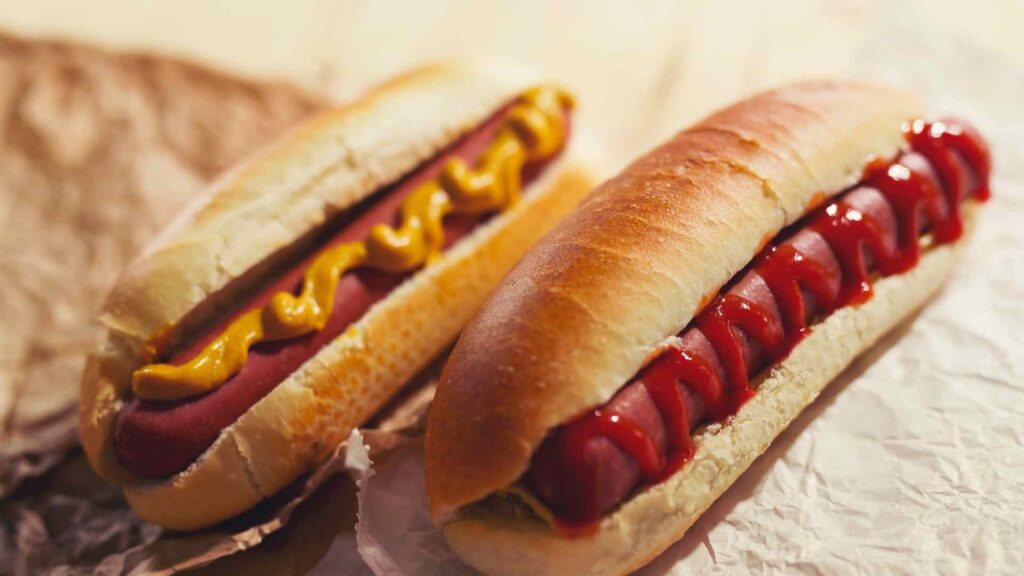
Buns, cheese, chili, and condiments change the case
Bun: A bite of plain bun may only add calories, but raisin bread, mold, toothpicks, and raw yeast dough are different hazards. Sugar-free specialty buns also deserve a sweetener check.
Cheese: It adds fat, sodium, and sometimes digestive trouble from lactose or individual intolerance. The guide to cheese for dogs explains why type and portion matter.
Chili: Recipes commonly include onion, garlic, chili powder, salt, fatty meat, and beans. A chili dog is not simply a plain hot dog with a harmless garnish.
Ketchup and mustard: A lick of ordinary condiment is often a monitoring event, but sodium, spice, sugar, and specialty sweeteners vary. Save the bottle and read it before deciding.
Relish and pickles: These can bring brine, garlic, onion, sugar, hot peppers, or sweetener. Check the detailed pickle guide after a substantial exposure.
Bacon-wrapped hot dogs: Wrapping processed meat in more fatty, salty processed meat does not improve the canine nutrition story. Compare the site’s bacon safety guide for proportionate next steps.
Wrappers, casings, sticks, and bags
Edible casing is part of some hot dogs, while plastic packaging, absorbent pads, clips, and non-edible casings are not. Do not assume a transparent film is edible simply because it clings to the sausage.
Corn-dog and party-food sticks can puncture or obstruct the digestive tract. Never pull a visible object from deep in the throat, and do not wait for symptoms after a skewer disappears.
Food bags can also suffocate a dog that puts its head inside, a hazard highlighted by the FDA. Empty packages belong in a closed bin immediately, not on a counter or picnic blanket.
The Merck Veterinary Manual notes that foreign-body obstruction may cause vomiting, appetite loss, abdominal pain, dehydration, and lethargy. Packaging and skewers can be more urgent than the sausage itself.
Is a low-fat or low-sodium hot dog a good dog treat?
“Lower” is a comparison to another product, not a veterinary endorsement. The item can still be calorie-dense, seasoned, processed, and dangerously shaped.
A dog with heart, kidney, pancreatic, gastrointestinal, or weight-management needs should use treats selected with its veterinary team. Do not reverse-engineer a medical diet from front-of-package claims intended for people.
If a veterinarian approves hot dog as an unusually high-value reward, use crumbs rather than coins and subtract the calories from other treats. A small number of tiny pieces can do more training work than one conspicuous chunk.
What to do after a hot dog theft
For one small plain bite in a healthy dog, remove the remainder, provide normal water, and monitor. A mild soft stool may be the only consequence, but persistent vomiting, pain, or lethargy needs a call.
For one or more whole links, a small dog, a known medical condition, or a seasoned product, contact a veterinarian with the exact brand, ingredient panel, nutrition label, amount, time, dog weight, and current signs. Do not rely on the product name alone.
Seek emergency care for choking, breathing difficulty, blue or gray gums, collapse, repeated unproductive retching, repeated vomiting, a painful swollen abdomen, tremors, seizures, or profound weakness. Bring the packaging and any remaining food.
After a missing wrapper, skewer, clip, or absorbent pad, call promptly even if the dog seems normal. Do not induce vomiting or give bread, oil, salt, peroxide, milk, or charcoal unless a veterinary professional directs it for that exact case.
Better high-value rewards
The dog’s regular kibble, a compatible commercial training treat, or tiny pieces of a veterinary-approved lower-fat food can deliver frequent rewards with more predictable nutrition. For medication, ask about a purpose-made pill treat or a small amount of approved food.
Hot dogs are appealing because their smell does the persuasive work, but that does not make them uniquely necessary. The best reward is safe for the individual dog, easy to portion, and boring enough that the human can keep track of it.
The bottom line
Do not make hot dogs a routine dog treat. One tiny bite of a fully cooked plain link is unlikely to poison most healthy dogs, but sodium, fat, ambiguous seasonings, and a choking-prone shape make better options easy to find.
A large theft, medical vulnerability, onion or garlic ingredient, concerning symptom, or missing wrapper or skewer changes the response. Cut any approved piece lengthwise and tiny, read the full label, and let the actual exposure determine the urgency.