Can Dogs Eat Parsley? Culinary Herbs, Lookalikes, and Extracts
A tiny culinary amount of correctly identified grocery-store parsley is unlikely to harm most healthy adult dogs, but parsley should not be used as a supplement or remedy. Large amounts can contribute to photosensitization, concentrated oils and extracts are different exposures, and wild plants called spring parsley or mistaken for parsley can be far more dangerous.
Start with the label, not the leaf shape
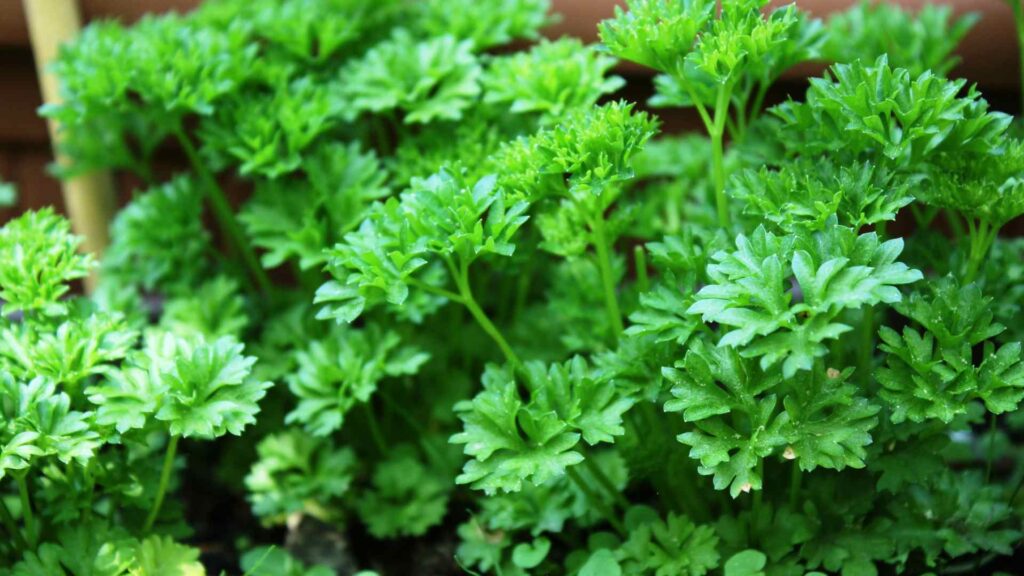
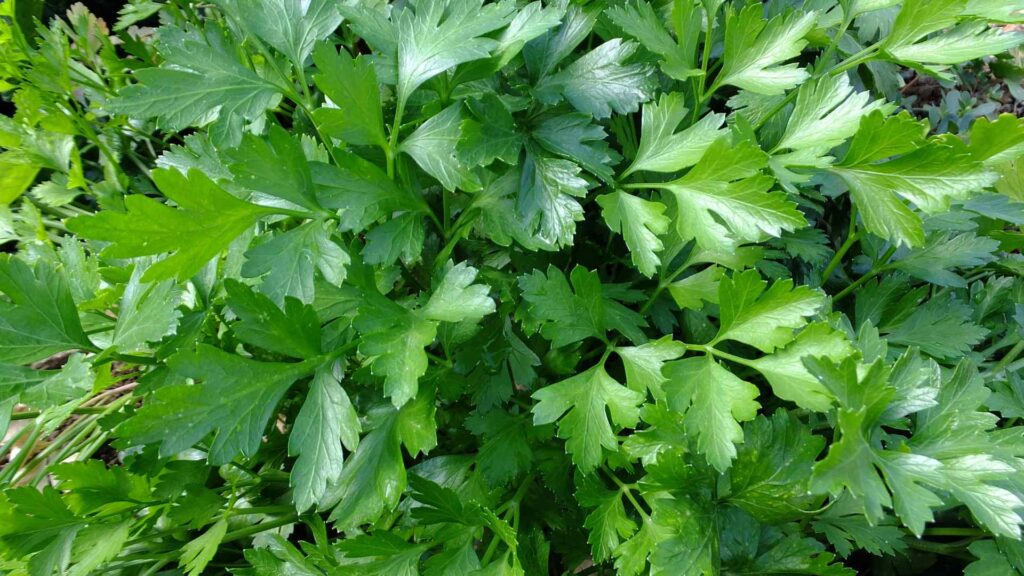
Culinary parsley is usually flat-leaf Italian parsley or curly parsley, both sold as Petroselinum crispum. A few flecks on plain food are a very different exposure from a bunch, a garden bed, an essential oil, or an unidentified roadside plant.
- Known grocery-store culinary parsley: a tiny chopped garnish is a low-dose food exposure.
- Large bunch or repeated concentrated feeding: call for advice because dose and sunlight exposure matter.
- Essential oil, tincture, extract, capsule, powder, or concentrated juice: contact a veterinarian or animal poison-control service.
- Unknown wild parsley-like plant: treat identification as urgent and do not wait for symptoms.
- Parsley sauce, stuffing, pesto, or seasoning blend: assess onion, garlic, salt, fat, and every other ingredient.
If the goal is simply a green treat, there is no need to choose a herb with lookalikes and concentrated products. A small piece of the dog’s normal food is easier to identify, count, and tolerate.
Culinary parsley contains furanocoumarins
The ASPCA culinary parsley entry identifies furanocoumarins as the toxic principle and lists photosensitization, meaning abnormal skin sensitivity to light. It also states that large amounts are needed for this effect.
That final detail matters. A few chopped leaves are not equivalent to a dog eating a large quantity, receiving parsley concentrate, or repeatedly consuming the herb.
The Merck Veterinary Manual dog guide to photosensitization explains that photodynamic compounds in skin can react to light and damage tissue. Photosensitization is not ordinary sunburn and can also be associated with liver disease or other exposures.
What photosensitization can look like
Redness, swelling, pain, rubbing, scratching, blistering, crusting, or sores on lightly pigmented and sun-exposed skin deserves veterinary attention after a relevant exposure. The ears, eyelids, muzzle, nose, and sparsely haired areas can be easier to notice.
Move the dog out of direct sunlight while arranging professional advice, but do not apply human sunscreen, essential oil, bleach, vinegar, or a home salve. The underlying cause still needs assessment.
Spring parsley is not kitchen parsley
The name spring parsley can refer to wild Cymopterus species, and the Merck Veterinary Manual photosensitization review lists spring parsley as a cause of photosensitization in livestock. A shared common name does not make the plant interchangeable with Petroselinum crispum.
Do not gather a lacy-leaved wild plant for a dog because an app called it parsley. Common names vary by region, photographs omit scale and stem details, and members of the carrot family include dangerous species.
Poison hemlock can resemble edible relatives
The University of Minnesota Extension poison-hemlock guide describes smooth hollow green stems with purple spots, fern-like divided leaves, and white umbrella-shaped flower clusters. It classifies the entire plant as highly poisonous.
Those clues help professionals confirm a plant, but they are not permission to taste or handle an unknown specimen casually. Poison hemlock, water hemlock, wild carrot, and other relatives can be confused, especially before flowering.
- Keep the dog away and prevent people from touching sap or broken plant parts.
- Photograph the whole plant, stem, leaf attachment, flowers, and location from a safe distance.
- Bag a sample only if a poison expert or veterinarian asks and gives safe handling instructions.
- Call immediately after ingestion or chewing, even if the dog still looks normal.
- Go to emergency care for tremors, seizures, weakness, collapse, drooling, vomiting, or breathing difficulty.
Essential oil and extract are not garnish
Parsley essential oil, seed oil, tincture, liquid extract, capsules, and concentrated powders can deliver far more plant chemistry per swallow than a leaf. Product purity, carrier oils, alcohol, and unlabeled blends add uncertainty.
Do not apply parsley oil to a dog’s skin, gums, coat, bedding, or collar and do not add it to food or water. Essential oils can irritate skin and mucous membranes, be swallowed during grooming, and create inhalation exposure.
If a concentrated product spills, remove the dog from the area, prevent licking, save the container, and call. Do not induce vomiting or apply a solvent unless a veterinary toxicology professional instructs you.
Parsley does not treat bad breath
A green-smelling garnish may briefly change odor, but it does not remove disease below the gumline or treat a broken tooth, oral infection, kidney disease, diabetes, or gastrointestinal illness. Breath is a clue, not a cosmetic problem.
Persistent bad breath, drooling, mouth pain, bleeding gums, dropping food, facial swelling, or reluctance to eat needs a veterinary dental examination. Toothbrushing and products with evidence for plaque or tartar control are better conversations than herb masking.
It is not a kidney, urine, or UTI remedy
Parsley is sometimes marketed as a diuretic, kidney cleanser, or urinary tonic, but those claims do not establish safe or effective treatment for dogs. Increasing urine is not automatically beneficial and can complicate dehydration, kidney disease, obstruction, or medication use.
Straining to urinate, passing only drops, crying while urinating, blood in urine, vomiting, weakness, or inability to urinate can be an emergency. Do not delay diagnosis with tea, juice, powder, or a supplement.
A bacterial urinary infection requires confirmation and treatment selected for the patient. Parsley cannot dissolve every stone, clear an obstruction, replace antibiotics when indicated, or repair kidney damage.
Culinary use still needs recipe inspection
A tiny sprinkle of known fresh parsley on plain cooked food is not the same as parsley sauce, pesto, chimichurri, compound butter, stuffing, soup, or seasoned meat. Those dishes commonly contain garlic, onion, shallot, salt, oil, butter, cheese, nuts, or alcohol.
Our garlic guide and onion guide explain why Allium ingredients deserve their own dose assessment. Dry powders can be concentrated, and clinical effects may be delayed.
A dog licking one plate smear may only develop mild stomach upset, while a missing container of sauce can be a much larger exposure. Keep the recipe, package, amount, dog’s weight, and time for the veterinary call.
Fresh, dried, frozen, and cooked parsley
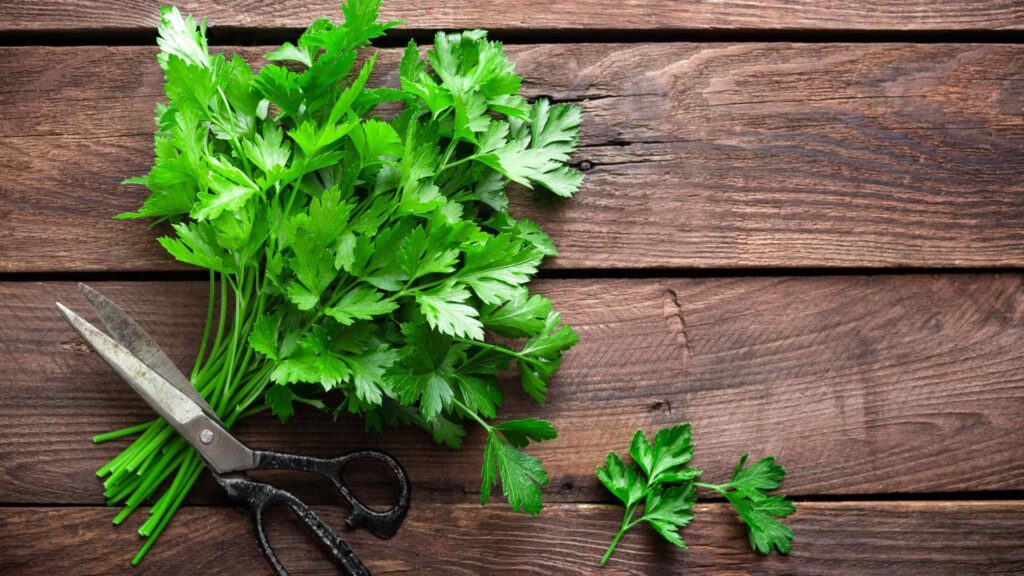
Fresh parsley
Use only correctly identified grocery-store culinary parsley, wash it under running water, and chop a tiny amount. Discard slimy, moldy, chemically treated, or composted herbs.
Dried parsley
Drying reduces volume, so a teaspoon of flakes represents more plant material than a few fresh flecks. Seasoning blends may also contain onion, garlic, salt, and flavor enhancers.
Frozen parsley
Plain frozen herbs may be concentrated into cubes and sometimes include oil, butter, garlic, or broth. Read the label and do not hand a dog a hard frozen herb cube.
Cooked parsley
Cooking does not make an unsafe recipe safe and should not be relied on to neutralize all plant compounds. Assess the entire dish, including drippings and seasonings.
Portions and dogs who should skip it
The UC Davis veterinary treat guideline recommends keeping all treats and extras below 10 percent of daily calories. Parsley contributes few calories in garnish amounts, but low calorie does not equal therapeutic, unlimited, or suitable for every dog.
Avoid purposeful parsley feeding in pregnant or nursing dogs, dogs with liver or kidney disease, dogs taking medication, and dogs with current skin photosensitivity unless the veterinarian approves it. Concentrated supplements should never be improvised around medical conditions.
If a dog simply enjoys vegetables, our celery guide covers a food that is easier to identify, though it still requires chopping and plain preparation. Our spinach guide explains why green color alone says little about medical suitability.
What to do after a parsley exposure
- Remove access and identify culinary parsley, spring parsley, poison hemlock, another wild plant, or a concentrated product.
- Save the label and photograph the plant, recipe, package, amount, and location.
- Record the dog’s weight, time, symptoms, sunlight exposure, medications, and medical conditions.
- Call promptly for wild plants, large amounts, oils, extracts, supplements, or any symptoms.
- Move a dog with suspected photosensitization out of direct sunlight while seeking veterinary instructions.
A healthy adult dog that ate a few flakes of correctly identified fresh culinary parsley and remains normal can often be monitored after professional guidance. Do not add more to test tolerance.
Unknown plant identity is a reason to call, not a reason to average conflicting websites. With poison hemlock and other lookalikes, early expert identification can be lifesaving.
Frequently asked questions
Can dogs eat curly and Italian parsley?
A tiny culinary amount of correctly identified grocery-store parsley is unlikely to harm most healthy adult dogs, but large amounts can cause photosensitization. It is optional and should not be used as a supplement.
Is parsley good for dog breath?
It may briefly alter odor but does not treat dental or systemic disease. Persistent bad breath warrants a veterinary dental evaluation.
Can parsley treat a urinary infection?
No. Urinary signs need diagnosis, and difficulty passing urine can be an emergency.
Is spring parsley the same herb?
No. Spring parsley is a common name used for wild Cymopterus plants associated with photosensitization, not the grocery herb Petroselinum crispum.
Can dogs have parsley essential oil?
Do not give or apply it without direct veterinary instruction. Concentrated oil is not comparable to a leaf garnish.
The bottom line
A few flecks of known culinary parsley are a low-dose exposure, not a wellness program. Large amounts, concentrated products, sun-related skin signs, and wild parsley-like plants deserve much more caution.
Buy the herb, read the Latin name, inspect the full recipe, and skip wild foraging. Parsley cannot freshen away dental disease or treat kidneys, urine problems, or infection.