Can Dogs Eat Licorice? Candy, Root, and Xylitol
Licorice is a label-reading problem, not one single food. A tiny piece of ordinary xylitol-free candy is usually a sugar, stomach, and choking issue, while true licorice root, concentrated glycyrrhizin, xylitol, chocolate, medication, large amounts, and swallowed wrappers need separate decisions.
Start with the exact product
“Licorice” can mean red candy with no licorice plant, black candy flavored with anise, candy containing true Glycyrrhiza root extract, herbal tea, chew sticks, tincture, powder, capsules, cough products, or a veterinary supplement. Color and shape do not identify the exposure.
Save the full package and record the amount, time, dog’s weight, medical conditions, medicines, symptoms, and missing wrappers. Photograph the ingredient and supplement panels because a product name alone leaves the most important question unanswered.
A tiny conventional candy piece
A healthy dog that ate one small piece of ordinary xylitol-free candy and remains comfortable can often be observed after every ingredient is checked. The candy is still unnecessary because it supplies sugar and calories without improving the diet.
A bag raid, a sticky rope swallowed whole, repeated vomiting, severe weakness, a known dangerous ingredient, or missing plastic calls for advice. One bite and one package are not the same exposure.
Red candy often is not licorice root
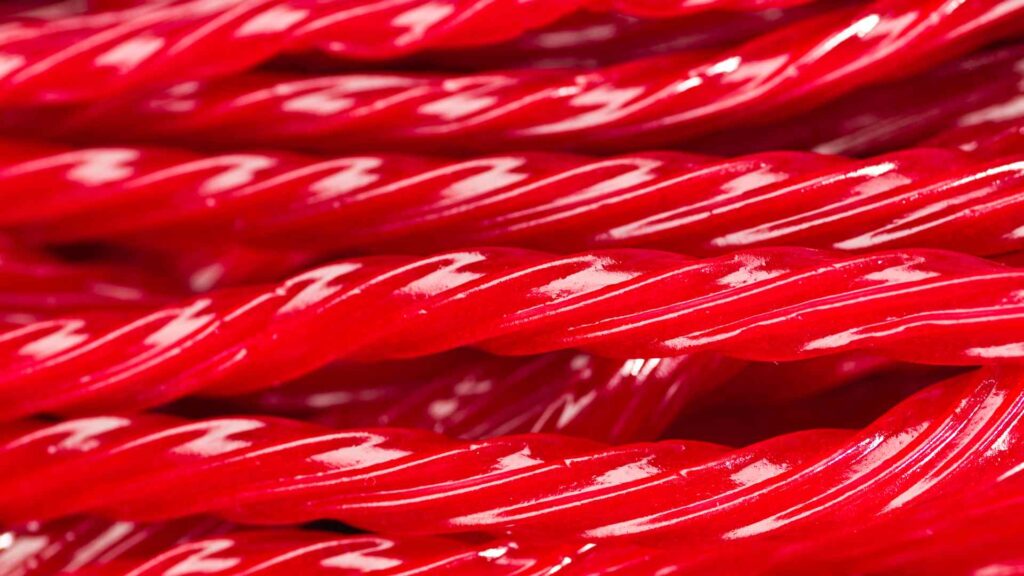
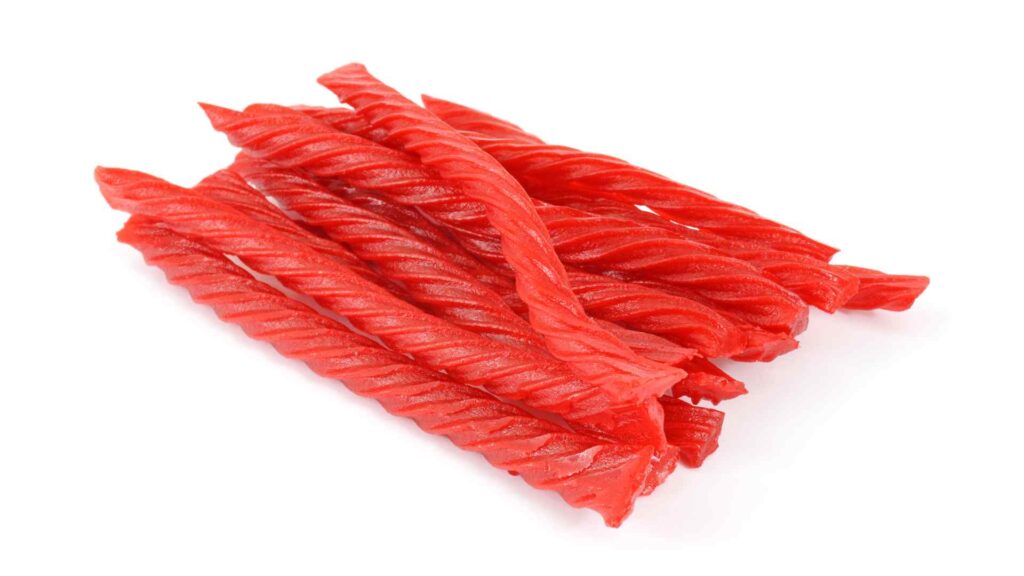
Many red twists use wheat flour, sugar, syrup, flavor, color, oil, and acid without true licorice extract. That makes them candy exposures, not glycyrrhizin exposures, but recipes differ and the current label wins.
Do not conclude that red means safe. Sugar-free sweeteners, allergens, gelatin, fruit concentrates, medication-like additives, and packaging still matter.
Black candy may use anise
Some black candies get their familiar flavor partly or entirely from anise or other flavoring rather than Glycyrrhiza glabra. Others contain licorice extract, molasses, salt, ammonium chloride, or multiple botanicals.
Check for “licorice extract,” “licorice root,” “Glycyrrhiza,” and “glycyrrhizin” rather than guessing from taste. Keep the country and exact variety because salty licorice and imported products can differ markedly.

What true licorice root contains
True licorice root contains glycyrrhizin, also called glycyrrhizic acid. The NIH National Center for Complementary and Integrative Health notes that large or long-term intake can cause serious effects in people, including irregular heartbeat, and that heart, kidney, and blood-pressure conditions can increase concern.
Those human findings establish a plausible pharmacologic hazard, not a universal dog dose. A 2024 controlled canine study found no blood-pressure or electrolyte changes at its tested glycyrrhizin doses over 28 days, while also noting that reliable species-specific guidance is limited.
Why the canine study needs context
The study used measured doses under controlled conditions, not unknown candy, bulk root, concentrated tincture, or a dog with heart or kidney disease. It should prevent alarmist claims that every trace is poisonous, not justify unsupervised supplements.
For a meaningful or uncertain amount of true root or extract, call with the stated milligrams, serving size, and concentration. Avoid copying a human candy limit or inventing a dog threshold.
Repeated root exposure
Glycyrrhizin-related effects are especially associated with repeated or concentrated exposure and can involve sodium retention, potassium loss, weakness, blood-pressure changes, and abnormal heart rhythm. Dogs receiving diuretics, corticosteroids, heart drugs, or kidney treatment deserve extra caution.
Do not give potassium, change medication, or measure blood pressure at home as a substitute for advice. Bring every supplement and medicine to the veterinary conversation so interactions are considered.
Deglycyrrhizinated licorice is different
DGL products have much of the glycyrrhizin removed, but “deglycyrrhizinated” does not mean appropriate for a dog. The product can still contain sweeteners, flavors, herbs, tablets, binders, or human dosing instructions.
Do not use DGL to treat reflux, ulcers, cough, inflammation, allergies, or digestive disease without veterinary direction. Removing one constituent does not prove effectiveness or safety for the whole product.
Sugar-free candy and xylitol
Sugar-free does not identify the sweetener, so check for xylitol, birch sugar, wood sugar, and birch bark extract. Candy formulas can change, and different flavors under one brand may use different sweeteners.
The FDA advises immediate veterinary contact after possible xylitol ingestion. Vomiting, weakness, wobbliness, collapse, seizures, or unusual bleeding can follow, but a dog may look normal early.
Ordinary sugar is not xylitol
Conventional sugar does not cause the same rapid insulin crisis, but a large candy theft can trigger vomiting, diarrhea, and substantial calorie intake. Dogs with diabetes or a tightly controlled diet need individualized advice.
Our sugar guide explains the difference. Do not change insulin, skip a meal, or give extra sugar unless the treating veterinary team directs it.
Chocolate-coated licorice
Chocolate-covered twists and mixed candy bags add methylxanthine risk. Dark chocolate and cocoa powder are more concentrated than white chocolate, and risk depends on product type, amount, and dog size.
The Merck Veterinary Manual details chocolate toxicosis. Save cocoa percentage and package weight, and call promptly for vomiting, restlessness, rapid heartbeat, tremors, overheating, or seizures.
Mixed candy bags
Licorice may share a bag with chocolate, raisins, macadamias, cannabis edibles, caffeine candy, gum, or sugar-free sweets. Count every missing item rather than focusing on the easiest piece to identify.
Our gummy-bear guide covers sugar-free candy, supplement gummies, and sticky choking risks. A mixed bag needs the complete inventory.
Sticky ropes and choking
Long twists, wheels, plugs, and chewy ropes can be gulped and lodge in the throat, especially in small dogs or dogs with swallowing, dental, or neurologic disease. A sticky mass can also be difficult to remove safely.
Coughing, gagging, repeated swallowing, drooling, pawing at the mouth, noisy breathing, blue gums, or collapse is an emergency. Do not push the candy down with bread or sweep blindly inside the mouth.
Wrappers, bags, and tubs
Individual film, foil, paper, twist ties, tub lids, and large candy bags can disappear during a raid. Plastic may obstruct, and a flexible bag can seal around a dog’s muzzle.
The FDA warns about snack-bag suffocation and foreign-body hazards. Do not induce vomiting after sharp or uncertain packaging unless a veterinarian specifically directs it.
Herbal tea and drink concentrates
Licorice-root tea, chai, botanical blends, and drink syrups may combine multiple herbs, caffeine, chocolate, alcohol, essential oils, or sweeteners. Tea-bag strings, staples, pods, and sachets add physical hazards.
Report the brewed amount and the dry product amount separately. A lick of cooled dilute tea is not equivalent to swallowing concentrated powder, extract, or several bags.
Tinctures and alcohol extracts
Some liquid herbal products contain ethanol or concentrated glycyrrhizin. Freezing, mixing with water, or adding food does not erase the active ingredients.
Wobbliness, unusual sleepiness, vomiting, slow breathing, low body temperature, tremors, collapse, or seizures after an alcohol-containing tincture is urgent. Do not try coffee, exercise, or a cold shower.
Cough drops and syrups
Licorice-flavored cough products may contain xylitol, acetaminophen, decongestants, antihistamines, alcohol, menthol, or other drugs. The medicine can matter far more than the flavor.
Count missing doses and save the Drug Facts panel. Never wait for a dog to sleep off an unknown cough product.
Supplements and veterinary products
A supplement marketed for adrenal, liver, digestive, skin, or respiratory support is still pharmacologically active. Human and animal products can vary in extract standardization, added herbs, and dosing precision.
Do not combine a licorice product with prescribed medication without the veterinarian’s approval. A marketing claim is not evidence that the product treats the dog’s condition.
Allergy and wheat ingredients
Many licorice-style candies use wheat flour, while others contain gelatin, dairy, soy, corn, sesame, or flavor blends. One episode of loose stool after a candy raid does not diagnose a food allergy.
Facial swelling, widespread hives, breathing trouble, weakness, or collapse is an emergency. Recurring skin or digestive signs need a structured veterinary workup, not repeated candy trials.
Salt and salty licorice
Nordic-style salty licorice may contain substantial sodium or ammonium chloride. Check the Nutrition Facts panel and multiply by the servings missing rather than judging salt by taste.
Marked thirst, vomiting, weakness, wobbliness, tremors, unusual behavior, or seizures after a large salty exposure is urgent. Keep normal water available but do not force large volumes.
No treatment claims
Licorice root should not be used at home for ulcers, coughing, arthritis, inflammation, Addison’s disease, allergies, or immunity. The presence of a biologically active compound creates interaction questions, not a reason to self-prescribe.
Our caramel guide covers another sticky candy whose risk comes largely from co-ingredients and packaging. Neither candy belongs in a therapeutic plan.
What to do after a licorice exposure
- Remove remaining candy, roots, tea, supplements, medicines, wrappers, and bags.
- Identify true licorice root or glycyrrhizin, anise flavor, xylitol, chocolate, alcohol, drugs, and salt.
- Estimate the amount and time, then record the dog’s weight, conditions, medicines, and symptoms.
- Count wrappers, tea bags, strings, staples, lids, and mixed candies.
- Call promptly for xylitol, medication, concentrated root, serious signs, large amounts, or missing packaging.
Do not induce vomiting or give salt, oil, milk, charcoal, potassium, or another remedy without veterinary direction. Sticky candy, packaging, and fast-acting co-ingredients can make improvised care dangerous.
Bottom line
A tiny piece of ordinary xylitol-free licorice-style candy is usually low risk for a healthy dog, but it offers no benefit. Separate candy flavor from true Glycyrrhiza root, treat concentrated or repeated glycyrrhizin exposure cautiously, check every sugar-free label, and never overlook chocolate, medicine, salt, choking, or wrappers.