Can Dogs Eat Nutmeg? Baked Crumbs, Powder, Oil, and Toxic Signs
A crumb of ordinary baked food containing nutmeg is unlikely to poison a healthy dog. A meaningful amount of powder, a whole nut, essential oil, extract, supplement, or unknown spill is different because nutmeg’s myristicin can affect the nervous and cardiovascular systems.
Match the response to the exposure
- One baked-food crumb: check co-ingredients and monitor for digestive upset.
- Spilled powder or unknown amount: call with the container size, amount left, and dog weight.
- Whole nut, oil, extract, tincture, or supplement: contact a veterinarian or animal poison service promptly.
- Eye, nose, skin, or inhalation exposure: move away from dust and get product-specific cleaning advice.
- Pie, eggnog, cookies, or spice blend: assess alcohol, chocolate, xylitol, raisins, fat, and packaging too.
Save the product and record powder, whole seed, oil, extract, food, or blend; amount range; time; dog weight; conditions; medications; and symptoms. Do not turn an unknown shaker raid into a guessed teaspoon.
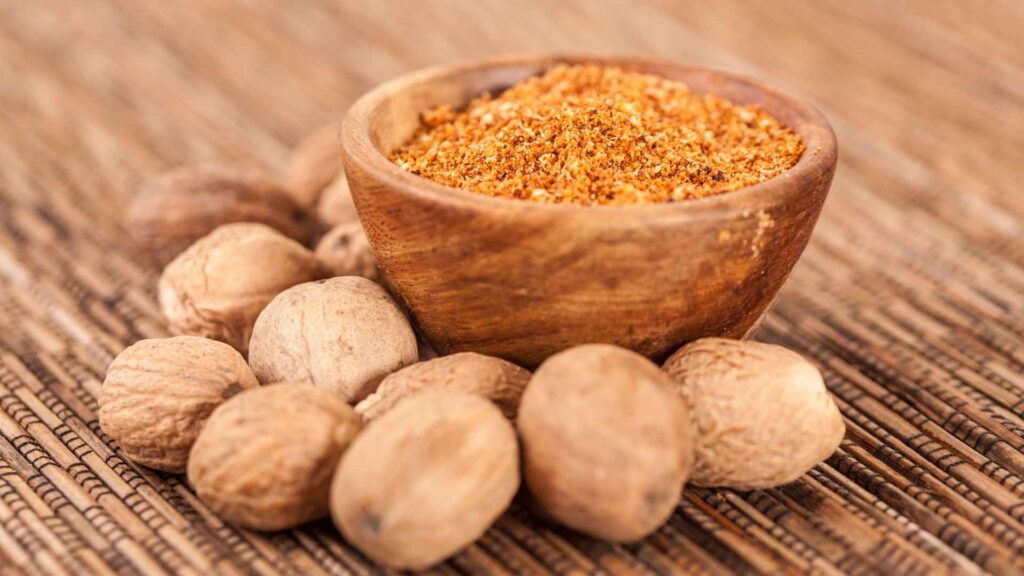
Why myristicin matters
Nutmeg is the seed of Myristica fragrans, and myristicin is one compound associated with intoxication after large exposure. Product potency, form, amount, dog weight, and individual response make a universal household threshold inappropriate.
Pet Poison Helpline’s veterinary toxicology guidance describes disorientation, increased heart rate, high blood pressure, dry mouth, abdominal pain, and possible seizures after very large nutmeg amounts. It also notes that the small quantity in ordinary food is unlikely to cause this syndrome.
Possible signs can include vomiting, agitation, unusual behavior, disorientation, tremors, weakness, abnormal heart rate, or seizures. Call urgently for severe neurologic signs, collapse, breathing trouble, or a dog that cannot be safely handled.
A baked crumb is not a shaker raid
Recipes usually distribute a small measure of spice through many servings, leaving very little in one crumb. The more immediate crumb questions may be chocolate, raisins, xylitol, alcohol, fat, sugar, or a wrapper.
That reassurance does not extend to a missing tablespoon of powder, broken spice jar, whole nut, or concentrated product. Call with the maximum plausible exposure before symptoms when the amount is meaningful or uncertain.
Our pumpkin-pie guide shows how nutmeg fits into a rich mixed dessert. Triage the whole recipe rather than assigning every risk to the spice.
Powder can expose the eyes and airway
A dropped jar can create airborne dust that irritates eyes, nose, throat, and lungs before the dog licks the floor. Move the dog to fresh air, prevent grooming, ventilate the space, and avoid sweeping dust toward the face.
For eye exposure, call for flushing instructions and seek care for squinting, redness, cloudiness, pawing, or persistent tearing. Do not put milk, oil, ointment, or another spice in the eye.
Coughing, wheezing, labored breathing, blue or gray gums, or collapse needs urgent evaluation. Dogs with existing airway or lung disease deserve earlier advice after a dusty spill.

Whole nutmeg adds a foreign-object problem
A whole nutmeg seed is dense and large enough to choke a small dog, damage a tooth, or obstruct after swallowing. Chewing can also release more spice material than briefly mouthing an intact seed.
Report gagging, repeated swallowing, drooling, vomiting, belly pain, refusal to eat, straining, or inability to keep water down. Do not induce vomiting when a whole nut or glass from a broken jar may be present.
Breathing trouble, continuous choking, blue or gray gums, or collapse is an emergency. Do not reach blindly into the throat.
Oil, extract, tincture, and supplements
Nutmeg essential oil or concentrated extract cannot be compared with grocery-store powder by spoon volume. Oils can be absorbed through the mouth, digestive tract, skin, lungs, and mucous membranes.
The Merck Veterinary Manual essential-oil review explains that risk rises with concentration and concentrated oils should not be applied directly to pets. Vomiting, drooling, lethargy, abnormal walking, tremors, skin irritation, breathing signs, and organ injury are possible across oils.
Do not induce vomiting after an oil exposure because aspiration can injure the lungs. Prevent licking, move away from fumes, save the label, and call for decontamination instructions.
Tinctures may contain alcohol, while capsules and blends may add herbs, vitamins, carrier oils, or xylitol. Report the concentration per unit, number missing, bottle size, cap, dropper, and every ingredient.
Skin and coat exposure
Products placed on fur or paws become oral exposures when dogs groom. Do not use nutmeg oil for fleas, skin infection, pain, dental disease, or scent control.
Prevent licking and call before bathing because cleaning depends on the formulation and body area. Seek care for blistering, marked redness, pain, weakness, tremors, or breathing changes.
Spice blends hide other ingredients
Pumpkin-pie spice, chai mix, garam masala, curry blends, seasoning packets, and holiday drink powders can combine nutmeg with cinnamon, cloves, allspice, ginger, pepper, sugar, caffeine, or sweetener. The blend name does not reveal each concentration.
Some savory blends add garlic and onion powders that can damage canine red blood cells. Our garlic-powder guide explains why delayed anemia changes monitoring.
Save the ingredient panel and amount rather than relying on smell. Do not assume organic, natural, homemade, or warming means safe.
Foods containing nutmeg
Nutmeg can appear in pies, cookies, cakes, doughnuts, custard, eggnog, béchamel, sausage, potato dishes, and cocktails. Chocolate, coffee, alcohol, raisins, macadamias, xylitol, rich dairy, raw dough, and packaging may control urgency.
Eggnog deserves special attention because it may contain alcohol, rich dairy, sugar, and raw egg in addition to spice. Our milk guide covers dairy intolerance and allergy, but the alcohol and full drink recipe still need separate assessment.
Save the carton or recipe and estimate the maximum drink amount. Do not treat a holiday beverage as harmless milk when spirits, sweeteners, or raw ingredients may be present.

Timing and monitoring
Do not clear an uncertain concentrated exposure simply because the dog looks normal immediately. Ask the veterinarian or poison service how long to monitor behavior, coordination, heart-related signs, vomiting, temperature, and appetite for that product.
Keep a symptomatic dog quiet, block stairs, and avoid exercise tests. Record videos of abnormal movement only when it does not delay transport or put anyone at risk.
Do not give human sedatives, pain medicines, activated charcoal, or food to absorb the spice unless directed. Treatment depends on timing, form, amount, signs, and co-exposures.
No digestion or parasite remedy
Nutmeg should not be used to treat gas, diarrhea, nausea, pain, anxiety, worms, fleas, inflammation, or poor appetite. Traditional human use and laboratory chemistry do not establish a safe effective canine dose.
A sick dog needs a diagnosis before a strong spice obscures symptoms or irritates the gut. Use only veterinary treatments prescribed or approved for that patient.
How to describe the product accurately
Ground culinary nutmeg, a whole nutmeg seed, mace, fragrance oil, essential oil, extract, tincture, and a multi-ingredient supplement are not interchangeable forms. Read the exact product name, concentration, carrier ingredients, bottle volume, and directions to the professional taking the call.
Mace is the lacy outer covering of the same fruit’s seed and is sold as a separate spice, so do not report it simply as nutmeg if the package says mace. A product sold only with a marketing name may require a manufacturer ingredient list or safety sheet.
Estimate a range when the amount cannot be known, such as one teaspoon at minimum and the shaker’s entire missing contents at maximum. Honest uncertainty gives a clinician more useful information than a precise-looking guess.
What a veterinary call may cover
A veterinarian or animal poison specialist may ask about time, route, concentration, amount missing, dog weight, current behavior, existing disease, medications, and possible co-exposures. Keep the dog nearby for observation but do not force walking or activity to test coordination.
Advice may differ for a recent powder ingestion, an oil on the coat, a dusty inhalation, or a dog already showing neurologic signs. That is why a single online dose table or homemade cleanup recipe cannot safely cover every nutmeg event.
If transport is recommended, bring the original container in a sealed bag and call the clinic while leaving so it can prepare. Keep a disoriented dog away from stairs, water, children, and other animals, and use a leash or carrier only if handling is safe.
Prevention without banning every holiday crumb
Store spice jars, grinders, whole nuts, oils, diffusers, and supplements in a closed cabinet rather than on a counter or open rack. Clean spills with the dog in another room, then check the floor, baseboards, paws, and broken-glass area before allowing access.
At gatherings, keep mugs, cocktails, baked goods, potpourri, diffusers, and spice-heavy dishes above nose level and clear them promptly. A small piece of ordinary baked food is usually a label-check situation, while access to the concentrated ingredient deserves a different response.
What to do after exposure
Secure food, powder, nuts, oils, supplements, blends, broken glass, and packaging, then record route, amount, concentration, and time. Add dog weight, conditions, medicines, symptoms, and every co-ingredient.
Call for a meaningful or unknown powder amount, whole nut, oil, extract, supplement, significant inhalation or eye exposure, broken glass, or symptoms. For one ordinary baked crumb in a healthy dog, recipe review and monitoring are usually proportionate.
Bottom line
A baked crumb with a dusting of nutmeg rarely creates myristicin poisoning, so blanket emergency claims are unhelpful. Powder raids, whole nuts, oils, extracts, supplements, spice blends, eye or airway exposure, and symptoms deserve prompt product-specific advice.