Dog Ate Raisins? Kidney Risk and What to Do Right Now
If your dog ate even one raisin, call a veterinarian, emergency clinic, or animal poison-control service now. Raisin toxicity is unpredictable, no do-it-yourself safe dose can rule out kidney injury, and useful treatment decisions depend on how recently the exposure happened.
What to do right now
- Move the remaining raisins and food out of reach, then separate pets so the amount is easier to reconstruct.
- Call a veterinary professional immediately, even if the dog looks normal and even if only one raisin may be missing.
- Bring the package or recipe and record amount, earliest and latest possible time, dog weight, symptoms, conditions, and medications.
- Count wrappers, bags, clips, boxes, foil, skewers, and every co-ingredient in a mixed food.
- Follow the professional’s transport, decontamination, testing, fluid, and monitoring instructions without substituting a home remedy.
Do not wait for vomiting, diarrhea, weakness, appetite loss, or urination changes before calling. A normal first few hours do not guarantee that the kidneys are safe.
Why raisins can injure canine kidneys
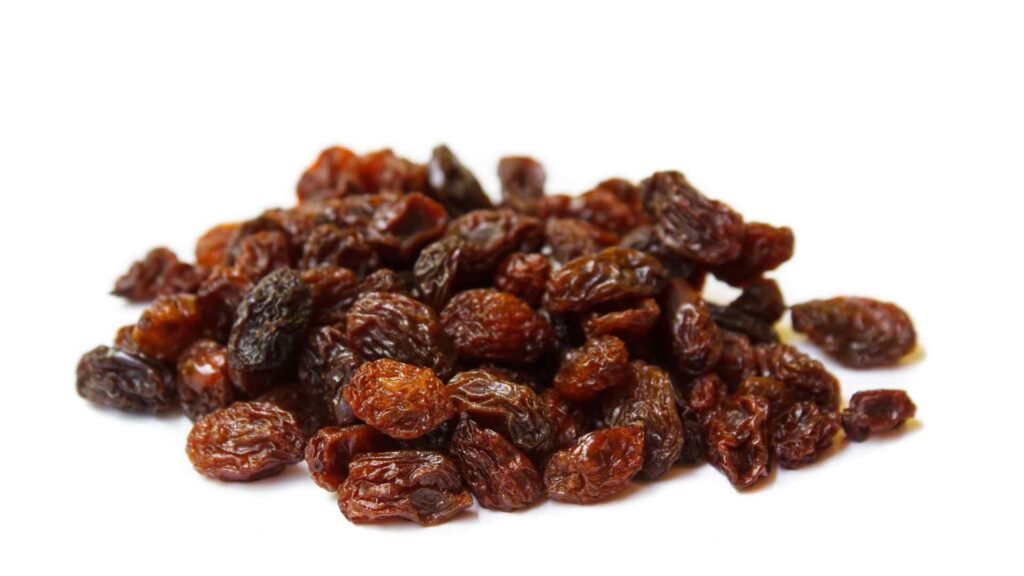
Raisins are dried grapes from plants in the Vitis genus, and exposures in dogs have been associated with acute kidney injury. Tartaric acid is the leading proposed toxic principle, but its concentration varies among grapes and dried products.
The Merck Veterinary Manual raisin toxicosis review describes vomiting or diarrhea within hours and possible progression to low or absent urine production and renal failure over the following days. Once a dog stops producing urine, prognosis becomes much worse.
Not every exposed dog develops kidney injury, and that inconsistency is exactly why a past uneventful exposure does not predict the next one. Variety, fruit chemistry, amount, individual susceptibility, and timing all introduce uncertainty.
Our grape emergency guide covers fresh grapes, while this article focuses on concentrated dried fruit and foods where individual raisins are hard to count. Both exposures warrant prompt professional contact.
There is no useful home safe-dose table
Published veterinary references discuss amounts associated with renal effects, but turning those observations into a safe cutoff is risky because tartaric acid content and canine response vary. A dog below a quoted threshold has not been medically cleared.
Raisins are small, sticky, and easy to miscount, especially from a torn bag, cookie, cereal, or trail mix. Report uncertainty as a range and let the clinician use the dog’s weight, timing, and product information.
Do not subtract raisins because some may still be in the carpet or because another dog was nearby. Separate pets and give the clinic the maximum plausible amount for each animal.
The FDA pet hazard guide includes grapes and raisins among dangerous foods and advises gathering the animal type, item, amount, and exposure time. Those details speed a useful risk assessment.
Do not induce vomiting on your own
Early professional decontamination may be considered for some dogs, but the method and setting depend on timing, symptoms, medical history, aspiration risk, and swallowed packaging. A veterinarian has safer prescription options and can manage complications.
Do not give hydrogen peroxide, salt, mustard, oil, fingers, charcoal, food, or milk unless the treating professional specifically directs you. Improvised emesis can cause aspiration, severe stomach irritation, sodium poisoning, delayed transport, or failure to remove the fruit.
If the dog is already weak, trembling, vomiting repeatedly, having trouble breathing, or not fully alert, attempting to make the dog vomit is especially dangerous. Leave for urgent care with the product and call en route if the clinic advises that approach.
Signs can begin before kidney values rise
Vomiting and diarrhea often appear first, along with appetite loss, lethargy, abdominal pain, weakness, or unusual thirst. These signs are not specific to raisins, but after a known exposure they make urgent evaluation even more important.
Kidney injury may later change urination, first with increased or altered output and then potentially very little or none. Do not wait to see whether urine stops because treatment is most useful before severe failure develops.
Blood and urine tests help establish kidney function and may need to be repeated because early results can be normal. Ask the clinic exactly when follow-up testing is due and what signs should trigger earlier return.
The Merck owner guide to acute kidney injury also identifies grapes and raisins as potential causes of significant kidney damage. Diagnosis and treatment depend on examination and testing, not urine color at home.
Raisin bread and baked goods still count
Baking does not make raisins safe, and a slice of cinnamon-raisin bread can contain more fruit than is visible on the surface. Count slices and use the package’s raisin distribution only as an estimate.
Unbaked yeast dough adds a separate emergency because it can expand and produce alcohol in the stomach. Cooked bread may also contain chocolate, macadamia nuts, xylitol, or high-fat glazes.
Oatmeal-raisin cookies, scones, muffins, cakes, cinnamon rolls, granola bars, and energy bites often conceal chopped raisins. Save the recipe, batch yield, number missing, and ingredient quantities rather than guessing from crumbs.
Our oatmeal guide applies only to plain oats and cannot clear oatmeal-raisin food. The raisin exposure takes priority.
Trail mix can contain several urgent ingredients
Trail mix may combine raisins with chocolate, macadamia nuts, xylitol-sweetened pieces, coffee beans, salty nuts, cannabis edibles, or other dried fruit. Each co-ingredient needs its own amount and risk assessment.
Chocolate type and cacao percentage matter, caffeine can overstimulate the heart and nervous system, and xylitol can rapidly lower blood sugar. Tell the clinic the exact brand and flavor rather than reporting generic trail mix.
Nut-heavy mixes add fat and may contribute to vomiting or pancreatitis, while packets, zip closures, and freshness sachets can obstruct. The dog may need simultaneous plans for toxic ingredients and foreign material.
Our granola guide helps identify common mix-ins, but it does not replace the urgent raisin call. Start with the poison professional.
Currants, sultanas, and confusing labels
Sultanas and golden raisins are dried Vitis fruit and deserve the same urgent response. Zante currants are also dried grapes, despite the word currant on the package.
True currants from the Ribes genus are botanically different and have not been associated with the same canine renal injury in the Merck review. Product names can be ambiguous, so save the botanical name or package instead of deciding from color and size.
Mixed dried-fruit products can contain both Vitis fruit and true currants, plus cherries, cranberries, blueberries, or sweetened pieces. Treat an unclear currant exposure as potentially Vitis until a professional identifies the product.
Cereal, stuffing, curry, and savory food
Raisins appear in breakfast cereal, muesli, rice dishes, couscous, curry, tagine, chutney, stuffing, salads, and sauces. Onion, garlic, salt, fatty meat, cooked bones, skewers, and alcohol may accompany the fruit.
Do not delay the raisin call while trying to decide whether the onions were more important. Give the professional every ingredient and let the clinical plan cover both immediate and delayed risks.
Restaurant dishes are hard to reconstruct, but receipts, menu descriptions, portion size, leftovers, and a kitchen ingredient list can help. Report the uncertainty and the maximum plausible serving.
Packaging and sticky dried fruit
Raisin bags, cardboard boxes, plastic liners, clips, measuring scoops, wrappers, and desiccants may disappear with the fruit. Tell the clinic which items are missing because obstruction changes monitoring and treatment choices.
Sticky raisins can lodge between teeth or in cheek folds, but do not perform a deep mouth sweep on a frightened or vomiting dog. A veterinarian can examine the mouth safely while addressing systemic risk.
Repeated gagging, inability to swallow, abdominal swelling, persistent vomiting, or severe pain warrants emergency care. Do not pull string or plastic from the rectum.
What the veterinary team may discuss
Depending on timing and condition, the team may discuss professional vomiting induction, examination, baseline blood and urine testing, intravenous fluids, urine-output monitoring, hospitalization, and repeat kidney values. The plan is individualized rather than triggered by a universal raisin count.
Ask which values are being monitored, when rechecks are due, what changes at home matter, and who to call overnight. Keep written instructions because the monitoring window can extend beyond the moment the dog looks recovered.
Do not stop fluids, medications, or follow-up testing because the dog is eating again unless the veterinarian changes the plan. Clinical improvement and kidney safety are not always the same timeline.
Prevention that actually works
Store raisins, baking supplies, trail mix, cereal, lunch boxes, and holiday foods in closed cabinets rather than on counters or in bags on the floor. Teach children that one tossed raisin is not a dog treat.
Check ingredient lists on breads, cookies, bars, stuffing, and mixed nuts before bringing them into dog-accessible spaces. Secure trash and compost immediately after baking or entertaining.
Post the veterinarian, emergency clinic, and animal poison-control numbers where everyone in the home can find them. Fast, calm information gathering is safer than searching for a home antidote.
Bottom line
Every known or possible raisin exposure deserves prompt veterinary or poison-professional contact because kidney injury is unpredictable and can be delayed. Save the product, amount range, time, dog weight, co-ingredients, and packaging, and do not induce vomiting on your own.