Can Dogs Eat String Cheese? Portions, Choking, and Dairy
A small piece of plain string cheese is usually low risk for a healthy dog, but it is an optional treat, not a calcium supplement. Lactose tolerance, milk allergy, fat, sodium, long-string choking, flavored products, mold, pill use, and the plastic wrapper change the practical answer.
The quick answer
If a healthy dog ate one small plain mozzarella piece and is acting normal, remove the rest and observe. Cut future veterinarian-approved tastes into tiny pieces rather than letting the dog pull or gulp a long string.
Call after choking, repeated vomiting, abdominal pain, a large package, garlic or onion flavoring, mold, serious allergy signs, a strict low-fat diet, or swallowed plastic film, label, tear strip, wax, paper, desiccant, or multipack bag.
What string cheese usually is
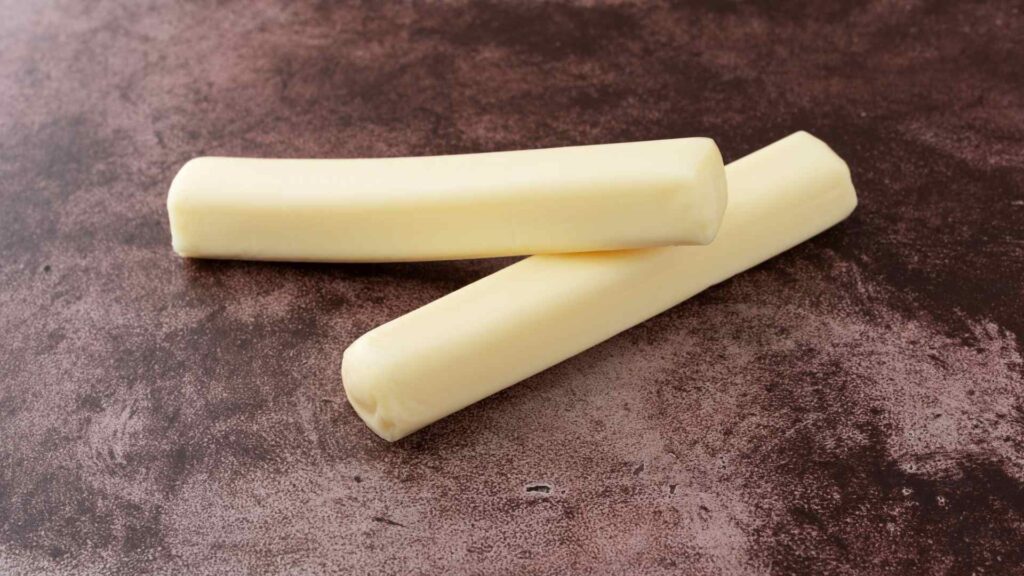
Most string cheese is low-moisture mozzarella formed so its proteins peel into strands, but brands may use other cheeses, blends, smoke flavor, herbs, or processed ingredients. Read the current label.
The answer for plain mozzarella cannot be copied to pepper jack, garlic-herb, meat-wrapped, breaded, or flavored cheese sticks. Their heat, seasonings, fat, salt, and packaging differ.
Lactose and digestive upset
Many adult dogs digest lactose poorly, although cheese may contain less lactose than milk depending on production. A sensitive dog can still develop gas, abdominal discomfort, diarrhea, nausea, or vomiting.
The ASPCA explains that dairy can cause digestive upset because pets do not possess substantial amounts of lactase. One dog’s tolerance does not predict another’s.
Repeated vomiting, blood, severe pain, dehydration, or inability to keep water down deserves care. Do not use more cheese to settle the stomach or stop diarrhea.
Milk-protein allergy
Lactose intolerance is digestive, while milk-protein allergy involves the immune system. Recurring itching, ear disease, vomiting, or diarrhea needs veterinary evaluation rather than repeated trials with different cheeses.
Facial swelling, widespread hives, breathing difficulty, weakness, or collapse after eating is an emergency. During an elimination diet, even a small string-cheese pill wrapper can invalidate results.
Fat and pancreatitis
String cheese is calorie-dense and can add up quickly during training or medication routines. Whole-milk and flavored products may carry more fat, but part-skim is not automatically appropriate for a dog with pancreatitis.
The Merck Veterinary Manual notes table scraps and inappropriate foods as suspected pancreatitis risks. Large cheese thefts deserve special attention in fat-sensitive dogs.
Repeated vomiting, appetite loss, weakness, dehydration, fever, abdominal pain, or a hunched posture warrants assessment. Do not tempt a nauseated dog with another cheese stick.
Sodium
Sodium varies across brands and flavors, and smoked or processed sticks may contain more than plain mozzarella. Check milligrams per serving and multiply by the number missing.
One tiny bite is different from an entire multipack, particularly for dogs with heart, kidney, or sodium-sensitive disease. Keep normal water available and call after a large salty theft or neurologic signs.

Why the string shape matters
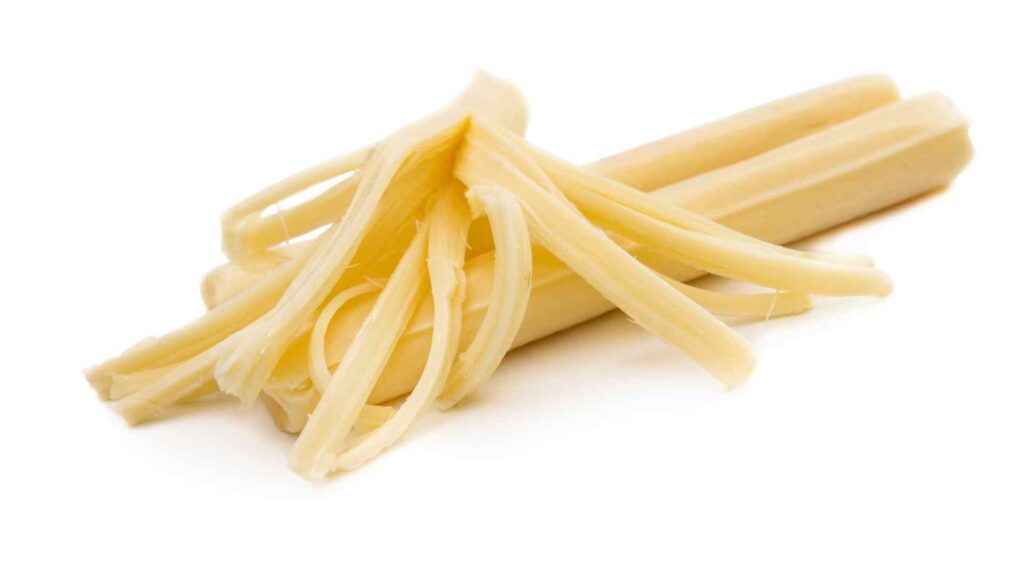
A long flexible strand can be gulped, lodge in the throat, or create a sticky mass, especially in a small dog or one with dental, neurologic, or swallowing disease. A whole stick is also easy to swallow with minimal chewing.
Coughing, gagging, repeated swallowing, pawing at the mouth, drooling, breathing difficulty, or blue gums is an emergency. Do not push the cheese down with more food or sweep the mouth blindly.
Cut any approved portion across the stick into tiny pieces. Pulling dramatic strings for a dog offers no benefit and adds avoidable risk.
Plastic wrappers and tear strips
The individual film can stick to cheese and disappear in one gulp. Multipack bags, labels, tear strips, and desiccant packets can also choke or obstruct.
The FDA warns that food bags can suffocate pets and notes foreign-body hazards. Store opened cheese and empty wrappers beyond reach.
Repeated vomiting, appetite loss, abdominal pain, straining, little stool, or lethargy after missing plastic needs veterinary assessment. Do not induce vomiting without direction.
Flavored and stuffed products
Garlic, onion, jalapeño, pepper, smoke flavor, cured meat, pesto, and spice blends turn plain cheese into a mixed exposure. Some stuffed snacks also contain sharp picks or foil.
Our garlic guide covers Allium risk, and our paprika guide explains hot and concentrated pepper exposure.
Mold and spoilage
Refrigerate string cheese as directed and discard packages that lost refrigeration, developed mold, leaked, swelled, or smelled wrong. Do not trim visible mold and give the remainder to the dog.
Vomiting, diarrhea, weakness, tremors, fever, or unusual behavior after spoiled food deserves advice. Save lot numbers if a commercial product may be defective.
Using cheese for pills
Ask whether the medicine may be given with food and whether dairy affects administration. Some drugs need an empty stomach, exact timing, or separation from calcium-containing foods.
Use the smallest approved piece, confirm the tablet was swallowed, and never crush, split, or open medication without the prescriber’s permission. Keep medicated cheese away from other pets and children.
Training with string cheese
Dozens of tiny rewards can quietly become several sticks. Pre-count a small allowance, use part of the dog’s regular kibble for repetition, and stop before dairy or calories accumulate.
The UC Davis treat guidance recommends keeping extras under 10 percent of daily calories. Complete food should remain the nutritional foundation.
No calcium or probiotic promise
Cheese contains calcium, but adding cheese is not a safe way to balance a homemade diet or strengthen a puppy’s bones. Excess and deficiency both matter, particularly during growth.
String cheese is not a reliable probiotic treatment for diarrhea, allergies, immunity, or digestion. Use veterinary-formulated diets and products when a clinical need exists.
Different cheese-stick products
Mozzarella sticks from a restaurant are breaded and fried, while snack sticks may combine cheese with salami or pepperoni. Frozen sticks may be hot inside after cooking and can burn the mouth.
Our mozzarella guide covers fresh and low-moisture products, and our cheese guide compares broader cheese categories.
Special-risk dogs
Puppies need controlled mineral and calorie balance, while seniors may have dental or swallowing problems. Dogs with pancreatic, kidney, heart, gastrointestinal, endocrine, allergy, or weight disease need individualized rules.
Do not use cheese to coax a sick dog indefinitely. A declining appetite can be clinically important, and rich food may mask the pattern or worsen nausea.
What to do after a cheese theft
- Count missing sticks and wrappers, then check the multipack bag, labels, and tear strips.
- Save the flavor label and identify garlic, onion, pepper, cured meat, mold, or other add-ins.
- Estimate the amount, time, dog’s weight, conditions, medicines, and symptoms.
- Separate pets so vomiting, stool, appetite, and amounts can be tracked.
- Call for choking, serious symptoms, large amounts, dangerous flavors, strict medical diets, or missing packaging.
Do not induce vomiting or give oil, bread, milk, salt, or another remedy without veterinary direction. Sticky cheese and plastic can complicate swallowing and aspiration risk.
Part-skim and reduced-fat labels
Part-skim or reduced-fat cheese may contain less fat than a full-fat comparison product, but it still contributes calories, sodium, lactose, and milk protein. It is not automatically safe for pancreatitis.
Compare the actual Nutrition Facts panels and the amount eaten. Front-label claims do not override a veterinary low-fat or sodium target.
Lactose-free string cheese
Lactose-free cheese may reduce one digestive concern without removing milk-protein allergy, fat, calories, sodium, flavorings, or packaging. A dog reacting to dairy proteins can still react.
Do not use a lactose-free label to restart cheese during an elimination diet. Follow the treating veterinarian’s exact approved ingredient list.
Cheese boards and lunchboxes
String cheese may sit beside grapes, raisins, chocolate, macadamias, cured meat, medication, skewers, and small plastic lunch accessories. Inventory the complete box after a raid.
A classroom or party multipack can make the missing number uncertain. Count sealed sticks, empty films, outer bags, and tear strips before calling.
Hot melted string cheese
A microwaved cheese stick can remain much hotter inside than it feels on the surface, and melted cheese clings to tissue. Mouth pain, drooling, refusal of food, or visible burns needs advice.
Do not scrape stuck hot cheese from delicate tissue or apply ice directly. Prevent further eating and follow the clinic’s instructions.
Constipation myths
Cheese should not be used to stop diarrhea or create a bowel movement. Dairy and fat can worsen gastrointestinal signs, while constipation may reflect pain, dehydration, medication, obstruction, or disease.
Persistent vomiting, diarrhea, straining, abdominal pain, blood, or refusal of food deserves evaluation. Another cheese stick can delay a useful diagnosis.
Monitoring an ordinary small bite
Watch appetite, vomiting, stool, gas, abdominal comfort, itching, swelling, swallowing, breathing, and energy. Keep the regular complete diet and normal water available.
Call if signs repeat, worsen, or seem out of proportion. A hidden flavoring, mold, larger amount, allergy, pancreatitis, or missing wrapper may explain the reaction.
After an uncertain multipack raid
A pile of empty wrappers may represent one dog, several dogs, or cheese removed earlier by a person. Separate pets, count intact sticks, and note which animal has cheese odor, torn film, vomiting, or appetite change.
Report a reasonable minimum and maximum rather than assigning equal shares. The smallest dog, any dog with prior pancreatitis, and any pet that may have swallowed plastic may need different advice.
Bottom line
A tiny plain string-cheese piece is usually low risk for a healthy dog, but it is not a calcium or probiotic treatment. Lactose, allergy, fat, sodium, choking, flavors, mold, medication rules, calories, and wrappers determine whether it belongs.