Can Dogs Eat Watermelon Rind? Choking and Obstruction Risks
Dogs should not be fed watermelon rind because its tough, fibrous texture can cause choking, vomiting, or gastrointestinal obstruction. Rind is not a chemical poison, so the response depends on the swallowed piece, dog’s size, chewing, symptoms, and time; a scraped sliver and a missing wedge are not the same emergency.
First decide whether rind was actually swallowed
- Only red seedless flesh: usually a fruit-treat question, not a rind incident.
- A thin pale scrape with almost no green skin: lower physical risk than a thick curved chunk, but still not a recommended food.
- A large tough piece or multiple wedges: call promptly with the dog’s size and amount.
- Choking, repeated retching, breathing trouble, blue gums, or collapse: emergency care now.
- Vomiting, appetite loss, abdominal pain, lethargy, bloating, or reduced stool afterward: possible obstruction needs assessment.
Do not wait for a rind-shaped piece to appear in stool before asking for advice. Some fragments may pass, some may cause transient stomach upset, and others can lodge depending on their shape and the dog’s anatomy.
The danger is physical, not a rind toxin
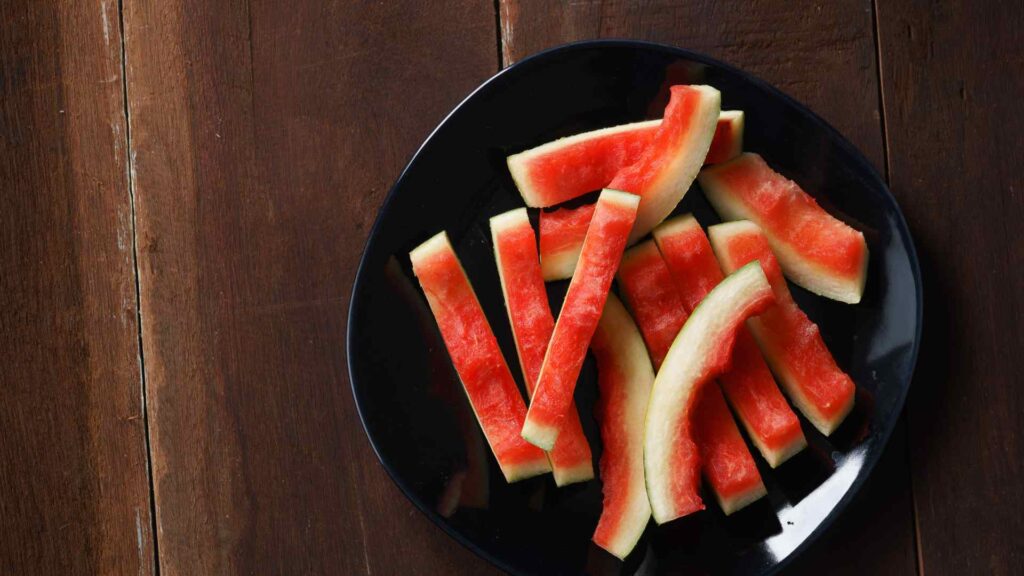
Watermelon’s outer rind is dense plant tissue designed to protect the fruit. Dogs may tear it into irregular slabs, gulp curved pieces, or swallow strips that do not break down like the soft red flesh.
The American Kennel Club watermelon guidance advises discarding the tough rind because it can lead to gastrointestinal upset and recommends serving watermelon only after rind and seeds are removed. It does not describe rind as a chemical poison.
That distinction matters during triage. An owner should report shape, thickness, length, amount, dog size, and symptoms rather than searching for a toxic dose that does not fit a mechanical obstruction.
Pale inner rind versus green outer skin
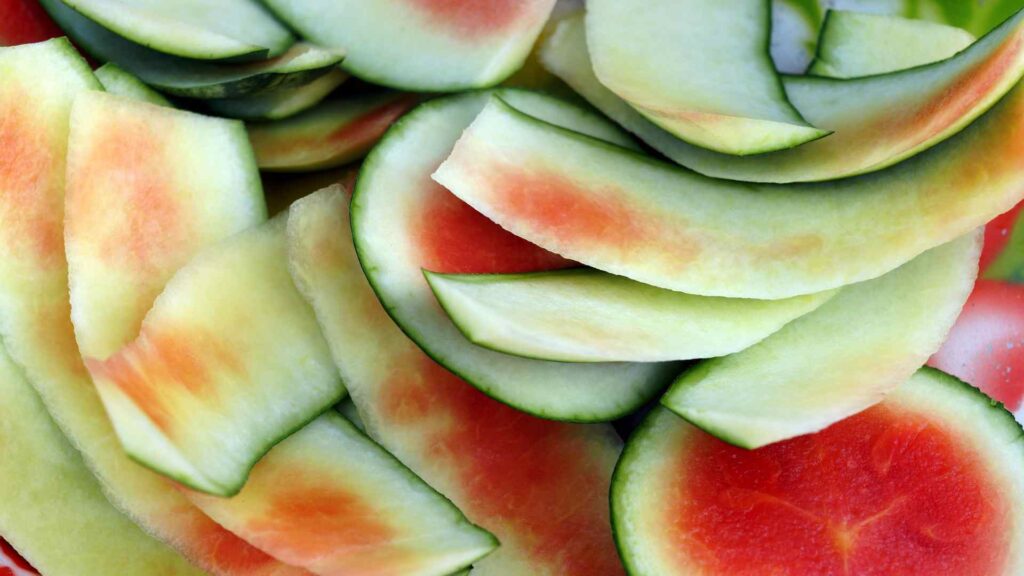
The pale white or light-green layer near the flesh is softer than the dark-green outer skin and may be present as a thin accidental scrape. It is still fibrous and not something to offer deliberately.
A tiny soft shaving is less likely to obstruct than a thick piece containing outer rind, but no color line can guarantee passage. A small dog, puppy, fast gulper, or dog with prior gastrointestinal surgery may face more risk from the same piece.
Do not encourage the dog to chew the rind down because more chewing can become more swallowing. Remove the remaining melon and save a comparable piece to show thickness and shape.
Choking happens before intestinal obstruction
A large curved rind can lodge at the back of the mouth or in the esophagus before it reaches the stomach. Signs include gagging, repeated swallowing, drooling, pawing at the mouth, regurgitation, distress, or trouble breathing.
Active breathing difficulty, blue or gray gums, collapse, or a completely blocked airway is an emergency. Call the emergency clinic while leaving, and follow real-time first-aid instructions rather than sweeping fingers blindly into the throat.
A dog that can still breathe but repeatedly gags, drools, or cannot swallow also needs urgent assessment. Partial esophageal obstruction can injure tissue even when air continues to move.
What gastrointestinal obstruction can look like
The Merck Veterinary Manual obstruction review explains that signs vary by location and duration but often include vomiting and appetite loss. Diarrhea, lethargy, abdominal pain, weight loss, dehydration, or shock can also occur.
A partial blockage may produce intermittent or mild signs, and a dog can still pass some stool. One normal bowel movement does not prove every rind fragment has cleared.
Puppies and young large-breed dogs are overrepresented in foreign-body obstruction, but any dog can swallow a problematic piece. Previous abdominal surgery, known narrowing, chronic gastrointestinal disease, or habitual object eating should lower the threshold for calling.
What the veterinarian may need to know
- Dog’s weight, age, breed, medical history, and prior intestinal surgery.
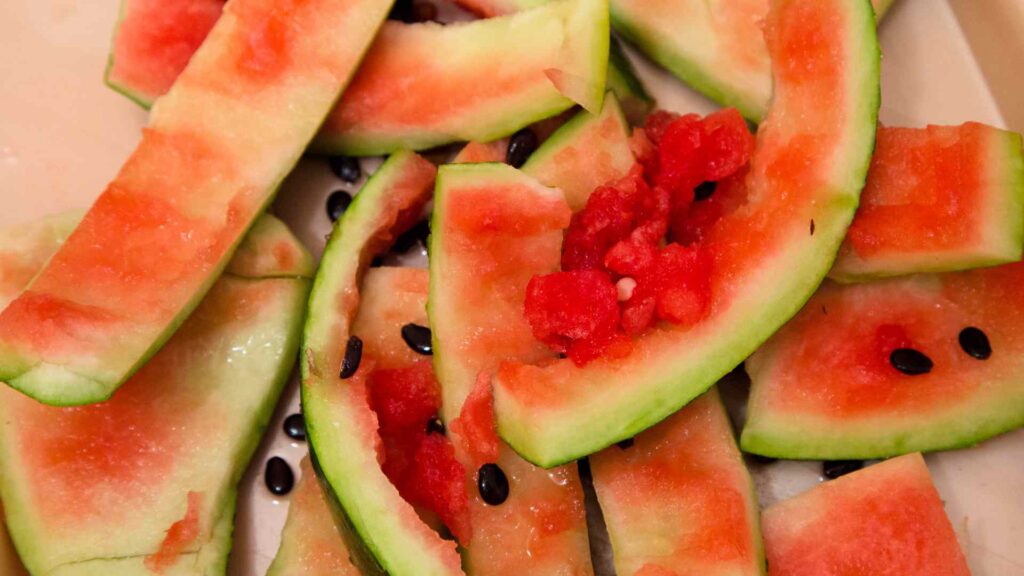
- Approximate rind length, width, thickness, number of pieces, and whether it was chewed.
- Time of ingestion and whether flesh, seeds, plastic wrap, skewers, or trash were also swallowed.
- Any vomiting, retching, drooling, pain, bloating, appetite change, lethargy, stool change, or breathing issue.
- A photograph of the missing wedge or an intact comparison piece beside a ruler.
The clinic may recommend monitoring, examination, imaging, endoscopy, or surgery depending on the case. Rind is organic material and may not appear as clearly as metal on every radiograph, so history and clinical findings remain important.
Do not push it through with more food
Bread, pumpkin, rice, oil, butter, fiber supplements, and bulky meals cannot guarantee that a rind passes. Adding food may increase vomiting, delay imaging or anesthesia, or create false reassurance while obstruction progresses.
Do not massage the abdomen or force exercise to move the piece. Pain or resistance is a reason to stop handling and seek care.
Withhold or offer food only according to veterinary instructions because the plan depends on timing and whether sedation, endoscopy, or surgery may be needed. Fresh water advice also depends on vomiting and clinical status.
Do not induce vomiting at home
A large or irregular rind can lodge in the esophagus or be aspirated on the way back up. Peroxide can cause gastrointestinal irritation and aspiration, while salt can create its own dangerous toxicosis.
A veterinarian may consider supervised decontamination in selected recent cases, but that is a patient-specific decision. Choking, neurologic impairment, active vomiting, and aspiration risk can change what is safe.
Why waiting for dramatic signs can be costly
Obstruction can compromise blood flow to the intestinal wall, cause tissue damage, perforation, dehydration, and severe systemic illness. Earlier assessment may create more options than waiting until the dog is collapsed.
Call the same day for a substantial swallowed piece even if the dog looks cheerful. Dogs often act normal between early episodes of nausea, and symptoms can evolve as the material moves.
Immediate care is warranted for repeated unproductive retching with a swollen abdomen, severe or constant pain, collapse, pale gums, breathing trouble, repeated vomiting, blood, profound lethargy, or inability to keep water down.
Flesh is the safer part, prepared separately
Seedless red flesh cut away from all rind can be an occasional treat for many healthy adult dogs. It should be cut into bite-size pieces and served in moderation rather than as heat treatment or hydration therapy.
Our watermelon guide covers flesh, seeds, frozen chunks, sugar, and portions. Removing the rind before the dog enters the kitchen prevents the common mistake of handing over a wedge like a chew toy.
The UC Davis veterinary treat guideline recommends that all extras stay below 10 percent of daily calories, with at least 90 percent from complete and balanced food. Watermelon flesh is optional and does not replace water, cooling, or emergency heat care.
Wash before cutting, even when rind is discarded
The FDA produce-safety guidance recommends washing produce under running water before preparation, including produce whose skin will not be eaten. Cutting through an unwashed rind can move surface contamination onto the knife and flesh.
Do not wash melon with soap, detergent, bleach, or commercial produce wash. Use clean hands, a clean knife, and a clean board, and refrigerate cut fruit promptly.
Frozen rind is not a cooling chew
Freezing makes rind harder and can increase tooth-fracture and choking concerns without making the fiber digestible. A dog can also swallow a frozen chunk before it softens.
For a frozen fruit treat, use a suitably small piece of seedless red flesh without rind and supervise. Hard frozen food is still inappropriate for dogs with dental disease, swallowing problems, or a tendency to gulp.
Pickled and candied rind are different foods
Pickled watermelon rind may contain substantial salt, vinegar, sugar, garlic, onion, chili, or spices. A small lick of brine and an emptied jar need different assessments, and the jar or lid adds breakage and obstruction risk.
Our onion guide and garlic guide explain why cooked and powdered forms still count. Save the recipe because homemade pickles vary widely.
Candied rind adds concentrated sugar and may be coated in chocolate or sugar-free sweetener. It remains chewy and fibrous underneath, so sweetness does not solve the physical problem.
Rind is not a dental chew or fiber supplement
Gnawing tough rind does not reliably clean teeth and may fracture a tooth or lead to gulped chunks. Effective dental care uses toothbrushing, veterinary assessment, and products chosen for evidence and chewing style.
Watermelon rind is also not constipation treatment. Straining, pain, vomiting, lethargy, blood, or failure to pass stool can signal obstruction or another condition that extra fiber will not fix.
Trash, mold, and picnic debris
Discarded rinds can ferment, grow mold, collect meat grease, or mix with corn cobs, bones, skewers, foil, plastic, grapes, onion, and alcohol. A trash raid should be inventoried item by item.
Moldy food can cause vomiting or serious tremors and seizures, while skewers and glass can perforate tissue. Secure the trash immediately and photograph what remains before cleanup erases the evidence.
What to do now
- Remove the remaining rind and prevent the dog from eating more.
- Estimate the swallowed amount and save a same-size piece or photograph with a ruler.
- Record time, dog’s weight, symptoms, medical history, and every other missing item.
- Call promptly for a substantial piece, small or vulnerable dog, uncertain amount, packaging, skewers, or symptoms.
- Go to emergency care for choking, breathing trouble, collapse, repeated retching, severe pain, bloating, or repeated vomiting.
For a tiny pale scrape swallowed by a comfortable large healthy dog, the veterinarian may advise monitoring. That decision should come from the actual dimensions and dog, not a blanket promise that rind always passes.
Monitor appetite, vomiting, comfort, energy, and stool exactly as instructed, and keep the emergency clinic number handy. Call again if anything changes, even if the first hours were quiet.
Frequently asked questions
Is watermelon rind poisonous to dogs?
It is not treated as a chemical toxin. The concern is tough fibrous material causing choking, stomach upset, or gastrointestinal obstruction.
Will a small piece pass?
Some small pieces pass, but no one can guarantee it without considering thickness, shape, chewing, dog size, health, and symptoms. Call for case-specific advice.
Can I give bread or pumpkin to push it through?
No home food can guarantee passage, and adding a meal may complicate vomiting or procedures. Follow veterinary feeding instructions.
Should I make my dog vomit?
Do not induce vomiting at home. Rind can lodge or be aspirated on the way back up, and common home methods can cause additional harm.
Is the pale inner rind safe?
It is softer than the dark outer skin, so a tiny scrape is lower risk than a thick wedge, but it is still fibrous and should not be fed.
The bottom line
Watermelon rind is not a chemical poison, but its tough structure can create a genuine choking or obstruction emergency. Swallowed dimensions and dog size matter more than a generic yes or no.
Remove rind before serving flesh, never use it as a chew, and do not attempt to push or vomit it out at home. Call early with a photo, measurements, symptoms, and the dog’s details.