Can Dogs Eat Raw Carrots? Cut Size, Choking, Dips, and Myths
Dogs can usually eat a small amount of washed plain raw carrot, but the cut matters as much as the vegetable. Whole carrots, thick coins, frozen-hard pieces, large portions, dips, seasoning, garden chemicals, and packaging create risks that grated or finely cut plain pieces do not.
Choose the safest form
- Washed, peeled if desired, and cut into small thin pieces: a reasonable occasional taste for many healthy dogs.
- Whole carrot, thick coin, large baby carrot, or hard end: cut it smaller because gulping can cause choking.
- Frozen solid carrot: thaw it because tooth damage and hard-piece choking are avoidable.
- Seasoned, glazed, roasted, dipped, or salad form: check garlic, onion, salt, fat, xylitol, raisins, and dressing.
- Garden carrot with tops, soil, fertilizer, pesticide, wire, or plant label: inventory the whole exposure.
After an accidental theft, record the amount, piece size, time, dog weight, chewing behavior, symptoms, health conditions, and everything else eaten. One grated strip and a swallowed whole carrot need different advice.
Raw carrot itself is generally low risk
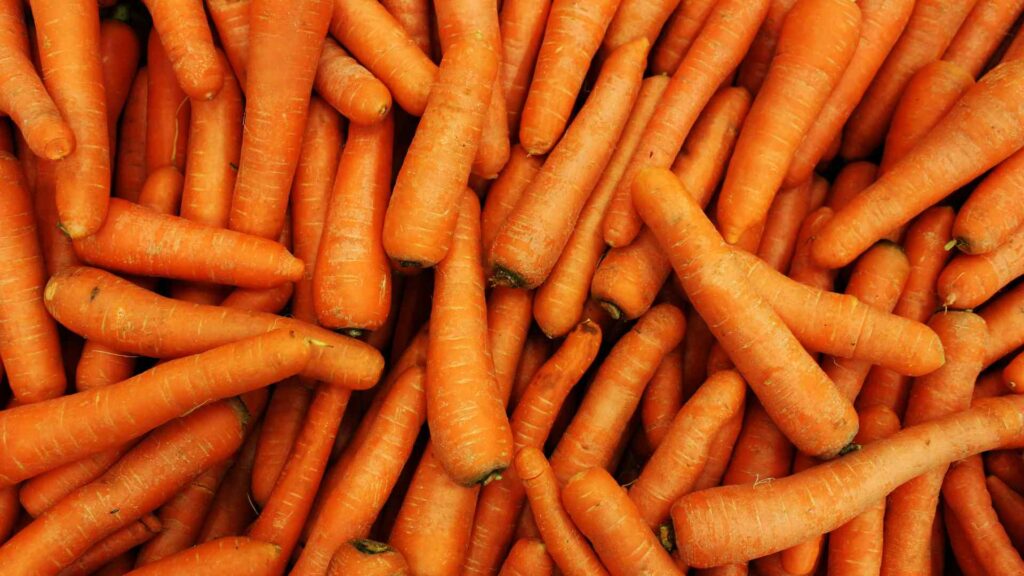
Plain carrot is not a classic canine toxin, and a few small pieces may cause no sign. Its firmness, fiber, and portion are the practical limits.
A dog new to raw vegetables may develop gas, vomiting, loose stool, constipation, or visible carrot pieces in stool. That does not prove detoxification or a digestive benefit.
Start with one or two small pieces rather than handing over a whole carrot. Stop if the dog gulps, coughs, vomits, strains, or seems uncomfortable.
Dogs with swallowing disorders, dental disease, prior gastrointestinal obstruction, severe digestive disease, diabetes, or a veterinary prescription diet need individualized advice. A generally non-toxic food can still be a poor fit for a particular patient.
Choking is the main form-related concern
Baby carrots, thick coins, tapered ends, and broken chunks can lodge in the throat, especially when a dog swallows before chewing. Round coin cuts are particularly easy to gulp as plugs.
Cut carrots lengthwise into thin strips, then crosswise into pieces appropriate to the dog. Grating or finely dicing is safer for dogs that bolt food, although any food still requires supervision.
Continuous gagging, frantic pawing, blue or gray gums, breathing difficulty, collapse, or inability to make sound is an emergency. Do not perform a blind finger sweep because that can push an object deeper or cause a bite.
Repeated swallowing, drooling, regurgitation, coughing after eating, or food returning undigested can suggest an esophageal problem. Call promptly even if breathing appears normal.
Whole carrots are not chew toys
A whole carrot can split into a large wedge after several bites, and its length encourages some dogs to brace and gulp. It is not a safe substitute for a size-appropriate tested chew.
Hard chewing can fracture already weakened teeth or worsen painful dental disease. Stop for sudden yelping, mouth bleeding, pawing at the face, refusal to chew, or a visibly broken tooth.
Our apple-skin guide uses the same cut-size principle for another crisp food. A nutritious ingredient is not automatically safe in every shape.
Frozen carrots can be too hard
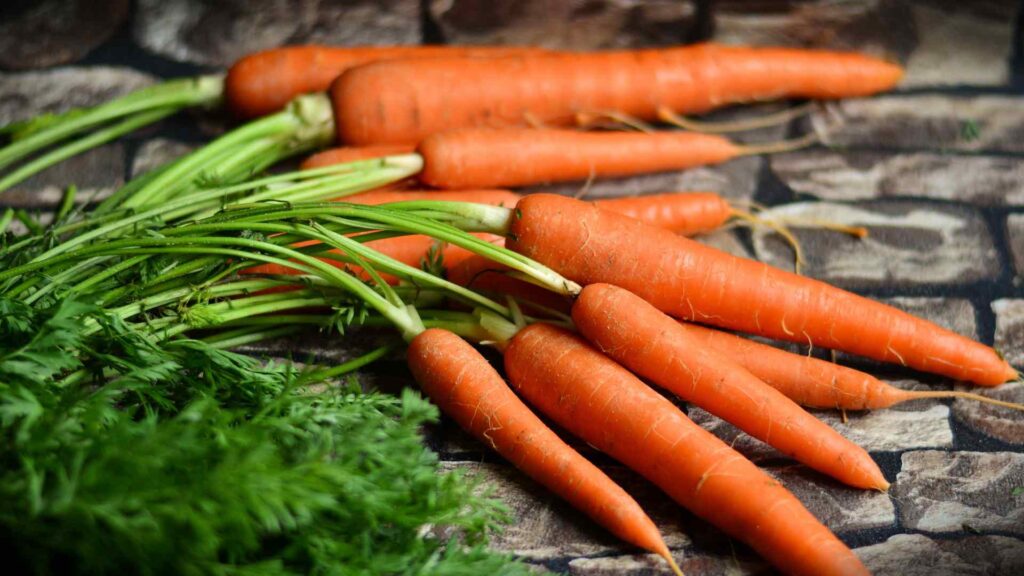
Freezing makes a carrot harder, not safer. A frozen baby carrot or thick section can challenge teeth and behave like a hard choking object.
Thaw frozen pieces until they are easily cut, then reduce them to an appropriate size. Do not hand a solid frozen carrot to a teething puppy as a home dental treatment.
Cold food may briefly feel soothing, but it does not diagnose or treat dental pain. A puppy that cannot settle, refuses food, has facial swelling, or has an injured tooth needs veterinary assessment.
Raw carrots do not clean teeth reliably
Crunching carrot may scrape a little debris from some tooth surfaces, but it does not clean under the gumline or treat plaque, tartar, gingivitis, fractured teeth, or periodontal infection. Chewing pattern also varies from dog to dog.
The Veterinary Oral Health Council accepted-products list identifies products that meet its standards for plaque or tartar control. Carrots are not a replacement for toothbrushing, professional examination, or a veterinarian-directed dental plan.
Bad breath, red or bleeding gums, loose teeth, dropping food, one-sided chewing, facial swelling, or mouth pain deserves examination. Masking odor with food delays the cause.
Carrots are not vision treatment
Carrots contain beta-carotene, but nutrient presence does not prove that extra raw carrot will improve a dog’s vision. Complete diets already account for required nutrients, and eye disease has many causes.
Squinting, redness, cloudiness, discharge, sudden bumping into objects, unequal pupils, or apparent vision loss needs prompt veterinary attention. Do not wait for a vegetable routine to work.
Carrot should also not be used as hydration therapy. Keep ordinary fresh water available unless medically restricted and seek help for dehydration, repeated vomiting, or inability to drink.
Portion and weight claims need perspective
Carrots can be lower in calories than many table scraps, but unlimited low-calorie food still adds calories and can displace complete nutrition. Pieces used throughout the day are easy to forget.
The World Small Animal Veterinary Association treat guide recommends keeping all treats below 10 percent of daily calories. A weight plan depends on measured total intake, not one “healthy” ingredient.
Do not use carrots to fill a hungry dog without checking the complete feeding plan. Increased hunger can reflect calorie restriction, medication effects, endocrine disease, malabsorption, behavior, or an unsuitable diet.
A veterinarian can help choose lower-calorie rewards and set an appropriate weight-loss rate. The dog’s measured kibble often works well for training because it comes from the planned meal.
Wash and prepare produce safely
Soil and handling can contaminate produce. The FDA produce-safety guide recommends rinsing under running water and avoiding soap, detergent, or commercial produce wash.
Wash hands and use a clean board and knife, then trim damaged areas and the hard stem end. Peeling is optional when the carrot is clean and sound, but washing still comes first.
Store cut carrots cold in a clean container and discard slimy, moldy, fermented, or badly spoiled pieces. Do not feed old refrigerator scraps to avoid waste.
Seasoned carrots and dips are different foods
Roasted or glazed carrots may contain butter, oil, salt, sugar, honey, garlic, onion, nutmeg, or sugar substitutes. A plain raw piece does not clear the cooked side dish.
Hummus and ranch commonly contain garlic or onion plus fat and sodium. Our ranch guide explains why one lick and an emptied dip container deserve different responses.
The Merck Veterinary Manual Allium review explains that fresh, cooked, and dehydrated garlic or onion can damage red blood cells. Save the dip label and amount.
Sugar-free dips, nut butters, and dessert sauces require an immediate xylitol check. Call promptly after confirmed or possible xylitol rather than waiting for weakness, tremors, or seizures.
Carrot salad and mixed dishes
Carrot salad may include raisins, grapes, mayonnaise, sugar, nuts, apple, pineapple, or dressing. Grapes and raisins are urgent canine kidney-toxin concerns regardless of the carrot.
Soup and stew can add onion, garlic, concentrated broth, salt, fat, bones, skewers, and packaging. A visible carrot slice does not make the bowl dog-safe.
Our potato-skin guide applies the same plain-versus-loaded distinction to another root vegetable. Recipe details matter more than the vegetable category.
Garden carrots bring soil and chemical questions
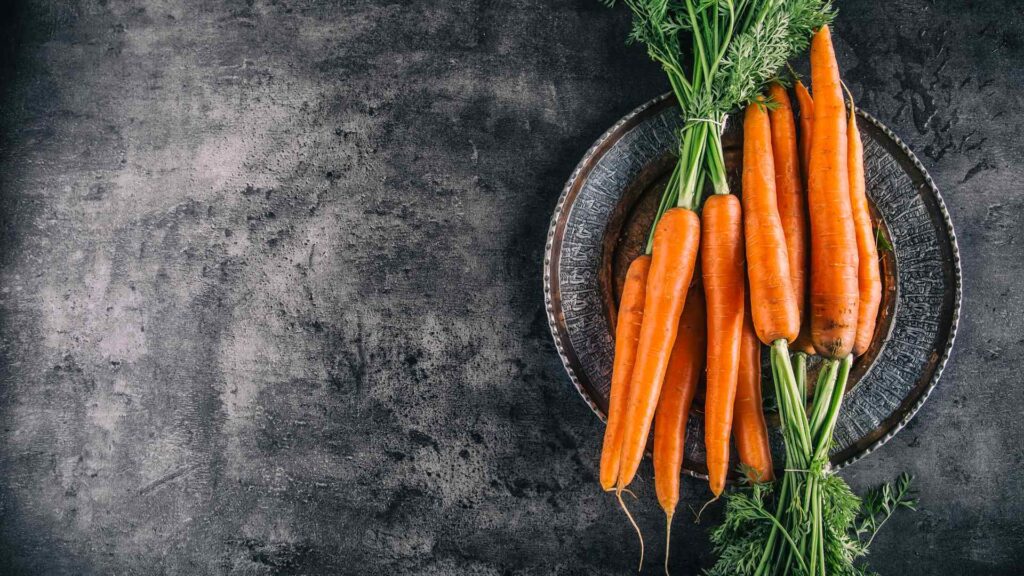
A freshly pulled carrot may carry soil, compost, manure, fertilizer, pesticide, slug bait, wire, plant ties, or a sharp label. Photograph and inventory the garden area after a raid.
Carrot tops are not the same choking shape as the root and can add a large fibrous plant mass. Unknown greens should be identified rather than assumed to be carrot from proximity alone.
Do not let a dog drink from a bucket containing fertilizer or pesticide rinse water. Call with the exact product label after any chemical exposure, even when the carrot itself looks harmless.
Our pepper guide explains the same garden-identity problem for edible versus irritating varieties and seasoning products. Plant identification comes before reassurance.
Bags and kitchen tools can be the bigger hazard
Produce bags can seal around a muzzle and cause suffocation, while clips, twist ties, rubber bands, peelers, knives, and plastic tubs can injure or obstruct. Keep tools and packaging accounted for.
If a bag, clip, blade cover, skewer, or other object may be missing, call rather than waiting for it to appear in stool. Repeated vomiting, abdominal pain, refusal to eat, or inability to keep water down needs prompt evaluation.
How to offer a small taste
Wash the carrot, trim it, and cut a thin piece that the dog cannot gulp whole. Supervise, stop after a small portion, and include it in the day’s treat calories.
Do not offer raw carrot to a dog that coughs or regurgitates food, has painful teeth, or is under a strict diet plan without veterinary approval. A few pieces of measured complete food are the easiest alternative.
Bottom line
Small, washed, thinly cut plain raw-carrot pieces are usually reasonable for a healthy dog, but whole, thick, or frozen-hard pieces can choke or damage teeth. Portions, digestion, dips, seasonings, garden exposures, medical restrictions, and packaging determine whether the situation stays simple.