Can Dogs Eat Plantains? Cooked Flesh, Peels, and Chip Risks
A healthy dog can usually have a small piece of ripe plantain that has been peeled and cooked plain. Raw hard chunks, peel, fried chips, salt, oil, sugar, rich toppings, and oversized portions are less friendly, and plantain should not be used as a potassium or diarrhea treatment.
The useful answer by form
- Ripe, peeled, plain cooked flesh: one or two small soft pieces are a reasonable occasional taste for many healthy dogs.
- Green or raw plantain: hard, starchy pieces are difficult to chew and may cause digestive upset.
- Peel or stem: remove it because tough fibrous material can choke or obstruct.
- Fried chips or sweet plantains: fat, salt, sugar, spices, and portion size make these poor dog treats.
- Unknown plant called plantain: identify it before assuming it is the banana-like fruit.
After a theft, note whether it was green or ripe, raw, boiled, baked, air-fried, pan-fried, or packaged. Save the label or recipe and record amount, time, dog weight, symptoms, health conditions, prescribed diet, and missing packaging.
What plantain means in this guide
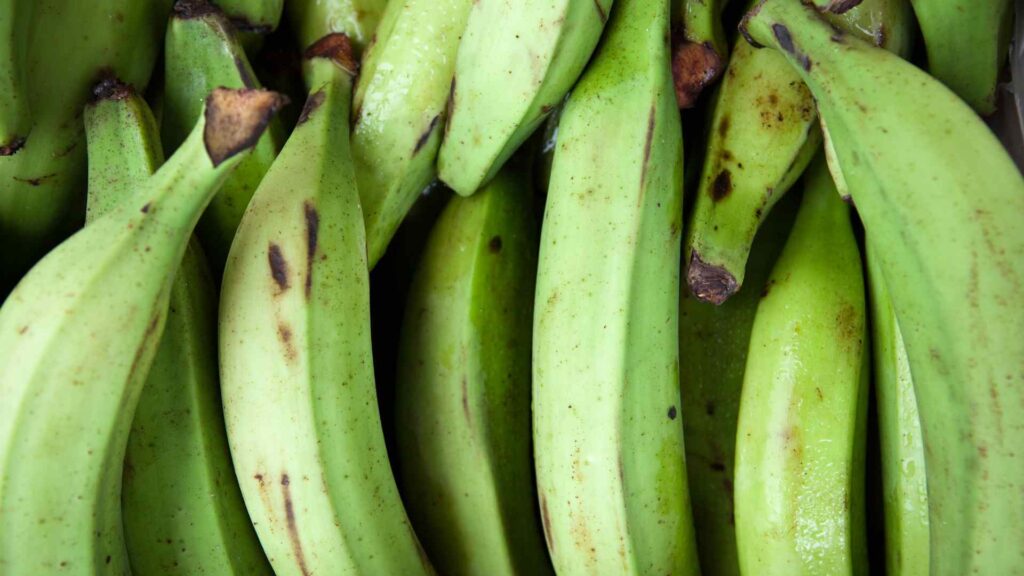
This article covers the cooking plantain, a banana relative commonly prepared as a starchy side dish. It does not automatically cover broadleaf or narrowleaf plantain weeds in the genus Plantago, herbal extracts, flour, supplements, or products that merely use plantain in their name.
Cooking plantains may be sold green, yellow, or very dark as they ripen, and the flesh becomes softer and sweeter with ripeness. Color helps with preparation, but it does not turn a large serving into a balanced dog meal.
The USDA SNAP-Ed plantain guide describes common culinary uses and preparation. For a dog, the safest version strips that preparation back to peeled, fully cooked, plain flesh.
Our banana guide covers the sweeter fruit most people serve raw. Plantains are starchier and generally cooked, so banana portions and preparation advice should not be copied blindly.
Why cooking and texture matter
Raw green plantain is dense, firm, and starchy. A thick chunk can be swallowed before it is chewed well, especially by a small dog or a dog that gulps food.
Cooking softens the flesh and makes a small piece easier to chew and digest, but cooking method matters. Boiling, steaming, or baking without oil, salt, sugar, or seasoning is simpler than frying.
Cut cooked flesh into pieces appropriate for the dog’s mouth and let it cool completely. Do not offer a hot slice from the pan or a hard end piece simply because the center looks soft.
One swallowed raw piece may pass uneventfully, but repeated vomiting, gagging, abdominal pain, refusal to eat, marked lethargy, or inability to keep water down warrants veterinary care. Do not induce vomiting or force bulky food to push it through.
The peel is not a chew
Plantain peel is thick, fibrous, and difficult to digest. Large strips can lodge in the throat or form obstructive material in the digestive tract, particularly when swallowed with stickers or produce ties.
Do not encourage a dog to strip the peel as enrichment. Peel the fruit away from the dog, discard the skin in a closed bin, and report the maximum amount missing after a raid.
Our banana-peel guide explains similar foreign-material concerns, although plantain peel is often tougher. Produce wax, soil, and surface residue add handling reasons to wash the fruit before peeling.
Call promptly for choking, repeated retching, a painful or enlarging belly, repeated vomiting, refusal to eat, or swallowed string and plastic. Do not pull string-like material from the rectum.
Fried plantains add concentrated fat
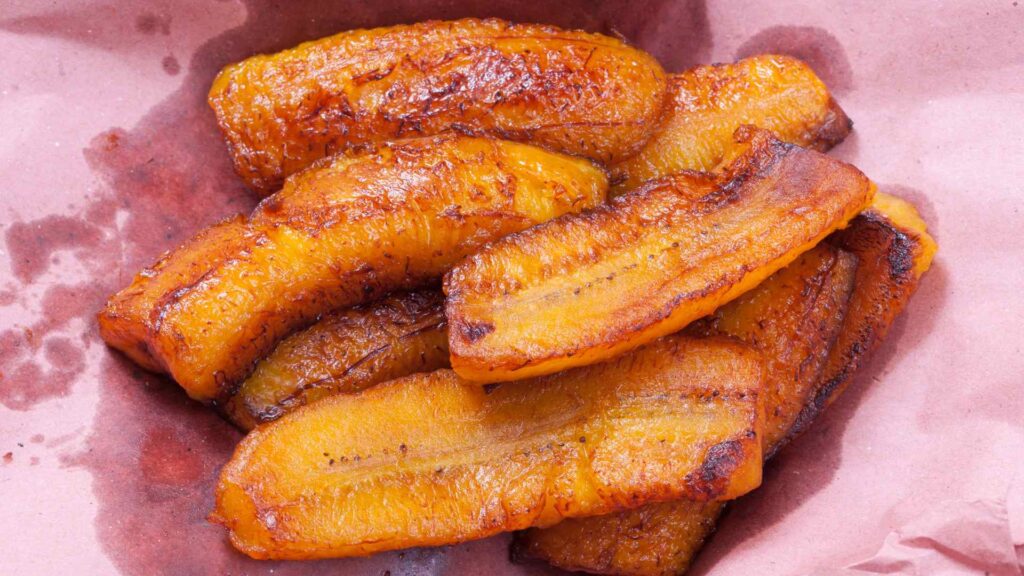
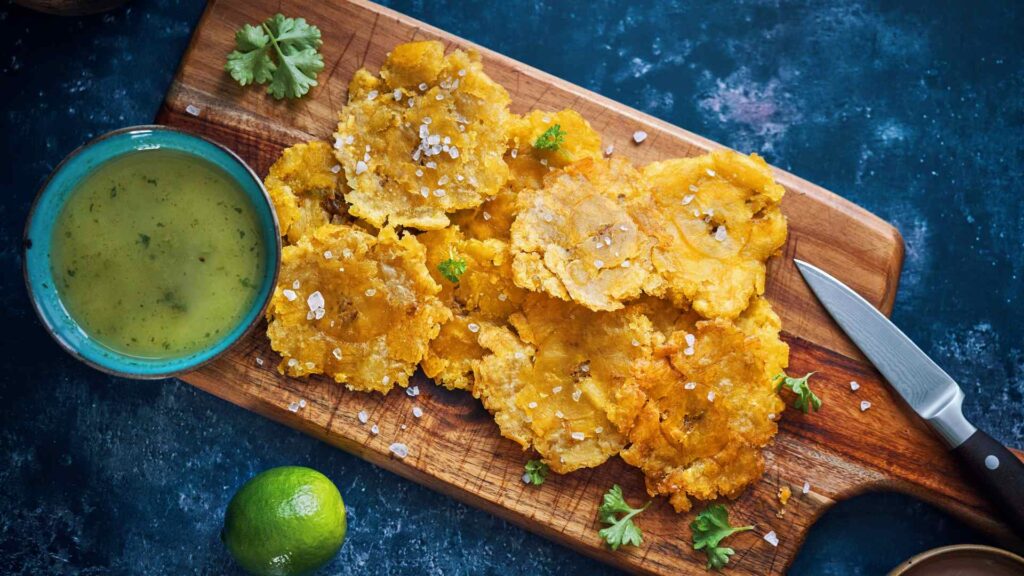
Tostones, maduros, and pan-fried plantains absorb oil and may be salted before or after cooking. A small accidental bite is often a stomach-monitoring matter, but a plate raid can deliver much more fat and energy than the fruit alone.
Rich or fatty food can cause vomiting and diarrhea and may contribute to pancreatitis in susceptible dogs. The Merck Veterinary Manual pancreatitis overview lists appetite loss, vomiting, weakness, abdominal pain, dehydration, and diarrhea among possible signs.
Dogs with previous pancreatitis, high blood fats, obesity, endocrine disease, or a prescribed low-fat diet should skip fried plantain. Do not judge fat exposure only by whether the food leaves visible grease on a napkin.
Air-fried does not automatically mean plain or calorie-free because many recipes coat slices with oil first. Check the actual ingredients and amount rather than relying on the appliance name.
Packaged plantain chips
Commercial chips may contain oil, salt, sugar, chile, lime flavor, garlic, onion, cheese powder, or sweetener. Even plain-looking chips are dry and calorie-dense compared with soft cooked fruit.
A few crumbs are unlikely to cause salt poisoning in a healthy dog, but a bag raid requires the nutrition panel, serving size, number of servings missing, and dog weight. Dogs on sodium restriction need individualized advice for smaller amounts.
Hard chips can scratch the mouth or become a choking hazard for a tiny dog, and sharp bag edges can cut. Bags also create suffocation and obstruction risks, so cut or secure them before disposal.
Our banana-chip guide covers another dried fruit snack with concentrated calories and variable additives. Neither product offers a reason to replace a measured dog treat.
Sweet preparations and desserts
Caramelized plantains may add brown sugar, syrup, butter, coconut milk, condensed milk, or cream. These ingredients make the dish richer without creating a canine health benefit.
Ordinary sugar is primarily a calorie and dental concern in a small taste, while xylitol in a sugar-free syrup, glaze, or dessert would be an emergency. Check labels for xylitol, birch sugar, wood sugar, or birch bark extract.
Chocolate, coffee, alcohol, raisins, macadamia nuts, and cannabis can appear in desserts and require separate urgent assessment. Save the recipe and identify every topping rather than focusing on the plantain base.
Sticky caramel and large soft pieces can still choke a small dog. Do not offer a dessert bite as a clever way to hide medication or encourage a poor appetite.
Savory recipes can hide Alliums
Plantain stews, soups, curries, mofongo, fritters, stuffing, and meat dishes may contain onion, garlic, stock powder, bacon, cheese, salt, and spicy sauce. A plainly cooked fruit and a finished restaurant plate are different questions.
Onion and garlic can damage canine red blood cells, including when cooked or powdered. Signs may be delayed, so call promptly with the recipe and amount rather than waiting for weakness, pale gums, fast breathing, dark urine, or collapse.
The garlic powder guide helps identify concentrated seasonings and delayed signs. Restaurant staff may be able to provide an allergen or ingredient sheet even when the server does not know the recipe.
Spicy chile can irritate the mouth and gut, while salty meat and cheese add sodium and fat. Do not use milk, oil, bread, or another home remedy to neutralize a seasoned-food exposure.
Portions, calories, and digestive response
Plantain is a starchy food, so a modest-looking slice still contributes calories and carbohydrate. A dog does not need a bowlful to experience the taste.
Begin with a single bite-size piece of soft plain flesh if the dog is healthy and plantain is genuinely worth sharing. Stop if it causes gas, loose stool, vomiting, itching, or appetite change.
The World Small Animal Veterinary Association treat guide recommends keeping treats below 10 percent of daily calories. That allowance includes plantain, dental chews, training rewards, table scraps, and food used for pills.
Small dogs reach their treat budget quickly, while dogs with obesity or a calorie-controlled plan need even tighter accounting. Pieces of the measured daily food are easier to use frequently without displacing the diet.
No potassium, diarrhea, or energy therapy
Plantains contain potassium, but a food’s nutrient list does not make it a treatment for low blood potassium. Abnormal potassium can reflect kidney, adrenal, gastrointestinal, urinary, medication, or sampling issues and requires veterinary interpretation.
Do not feed extra plantain to a dog with kidney or heart disease because someone called potassium healthy. The correct mineral intake depends on diagnosis, laboratory findings, medication, and the complete diet.
Plantain should not be used to stop diarrhea or constipation. Fiber and starch can worsen some cases, and diarrhea with blood, repeated vomiting, pain, weakness, dehydration, toxin exposure, or persistence needs veterinary attention.
Carbohydrate does not make plantain an energy treatment for a tired dog. Lethargy, exercise intolerance, or weakness can signal pain, anemia, infection, heart disease, endocrine disease, overheating, poisoning, or another problem that a snack cannot diagnose.
Complete diets and homemade recipes
Adding chicken, plantain, and vegetables to a bowl does not guarantee nutritional completeness. The FDA complete-and-balanced pet food guide explains how nutritional adequacy is established rather than inferred from wholesome-looking ingredients.
Homemade diets require formulation for the individual dog, exact ingredient weights, supplement specifications, cooking yields, storage directions, and rechecks. Swapping plantain for rice or sweet potato changes more than color and texture.
Dogs on elimination trials, hydrolyzed diets, diabetes plans, kidney diets, gastrointestinal diets, or other therapeutic foods should receive only approved extras. An unplanned taste can interfere with the purpose of the diet.
Unknown yard plant or herbal product
Broadleaf plantain and other yard plants are not the cooking fruit discussed here. A common name on a gardening app is not enough to clear an unknown leaf, seed head, extract, tea, or supplement.
Photograph the whole plant, leaves, stem, flowers, growing location, nursery label, and product package. Report fertilizer, herbicide, pesticide, slug bait, mushrooms, compost, or mulch that was accessible at the same time.
Do not taste the plant, brew it into tea, or wait for crowdsourced identification if the dog is symptomatic. A veterinarian or animal poison service can advise what specimens and product details are useful.
What to do after a plantain raid
- Secure the remaining food, peel, dish, wrappers, skewers, and other pets.
- Identify fruit versus yard plant and record ripeness, cooking method, ingredients, amount, and time.
- Record dog weight, conditions, medicines, prescribed diet, symptoms, and missing packaging.
- Call for peel or obstruction risk, a large fatty or seasoned meal, dangerous co-ingredients, unknown plants, medical vulnerability, or significant signs.
- Follow professional feeding, monitoring, and transport instructions.
Do not induce vomiting or force oil, milk, salt, bread, fiber, or medication unless a veterinarian directs you. The form swallowed and the possibility of peel or packaging affect the safest plan.
Bottom line
A small piece of ripe, peeled, fully cooked plain plantain is usually a low-risk occasional taste for a healthy dog. Raw chunks, peel, fried chips, sugar, salt, seasonings, excessive calories, medical diets, and identity confusion deserve more caution.