Can Dogs Eat Cooked Mushrooms? Store-Bought vs Wild
A small amount of plain, fully cooked, correctly identified grocery-store mushroom is unlikely to poison most dogs. An unknown wild or foraged mushroom is an urgent toxicology question even after cooking, because dangerous species can resemble edible ones and heat does not reliably destroy several serious mushroom toxins.
Identity is the first fork in the road
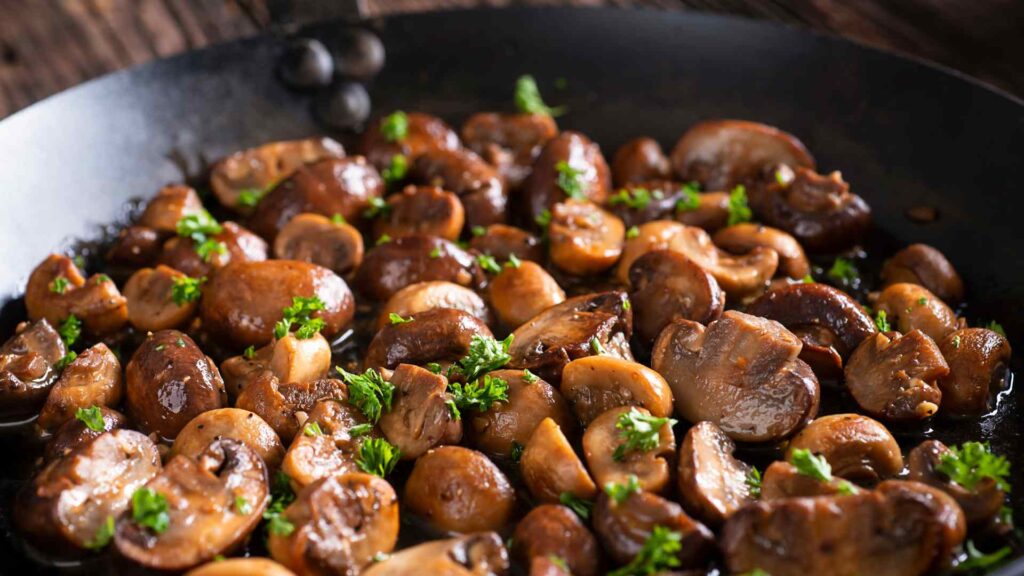
Button, cremini, and portobello mushrooms sold for human food are the same cultivated species at different stages and are not treated like unknown lawn mushrooms. Other commercially identified edible species can still cause stomach upset, particularly in large portions or sensitive dogs.
The ASPCA Animal Poison Control mushroom guidance says ordinary store-bought culinary mushrooms are not expected to cause issues, while wild mushrooms can produce severe gastrointestinal, respiratory, neurologic, liver, kidney, or fatal effects.
A mushroom gathered from a yard, trail, planter, compost pile, farmers-market forager, or unverified gift is not made safe by someone’s confidence. Species identification can challenge experts and cannot be settled by one phone app, color, gill pattern, or folk test.
If origin is uncertain, treat it as an unknown mushroom exposure. Call a veterinarian or animal poison service immediately rather than waiting to see whether the dog becomes ill.
Cooking is not a wild-mushroom antidote
Frying, boiling, baking, drying, freezing, pickling, or microwaving does not reliably neutralize mushroom toxins. Some amatoxins remain stable through normal food preparation and can cause delayed, catastrophic liver injury.
A CDC review of poisonous mushroom ingestions warns that toxic mushrooms can resemble edible species and that cooking does not remove or inactivate toxins. Although its cases involve people, heat stability and identification difficulty support the same conservative exposure response for dogs.
The FDA’s morel-mushroom illness investigation adds nuance: correct preparation may reduce some morel risk, but it does not guarantee safety. This is not permission to test a foraged mushroom on a dog.
Why symptoms can be misleading
Different mushroom toxins target different systems and begin on different timelines. Early vomiting may accompany a self-limited irritant species, but it can also precede a deceptive quiet period before serious liver injury.
The Merck Veterinary Manual’s mushroom overview notes that some life-threatening amanitin signs may be delayed six to 24 hours. A symptom-free afternoon after ingestion does not clear an unknown specimen.
Possible signs include drooling, vomiting, diarrhea, abdominal pain, weakness, wobbliness, tremors, seizures, unusual agitation, depression, pinpoint pupils, breathing difficulty, abnormal heart rate, excessive urination or thirst, jaundice, and collapse. The exact pattern depends on species and dose.
Do not use onset time to identify a mushroom at home. Mixed species can grow together, and a dog may swallow more than one specimen.
What to collect after a wild exposure
- Remove the dog from the area and stop other animals or children from touching or eating mushrooms.
- Photograph the intact mushroom from above, below, and the side, plus the base, surrounding ground, nearby trees, and the entire patch.
- Using gloves, place an intact sample and loose pieces in a paper bag rather than a sealed wet plastic bag, if this can be done safely.
- Record the likely amount, time, dog’s weight, symptoms, weather, location, and whether the mushroom was raw, cooked, dried, or part of a product.
- Call a veterinarian, emergency hospital, or animal poison service immediately and follow its sample-handling and transport instructions.
Do not rely on social-media votes or an image-search result before calling. A professional mycologist may assist the veterinary toxicology team, but treatment decisions can be time-sensitive.
Do not induce vomiting unless a veterinary professional who knows the case directs it. Hydrogen peroxide, salt, mustard, fingers in the throat, and other home methods can cause aspiration, irritation, poisoning, or delay.
Plain grocery mushrooms still need plain preparation
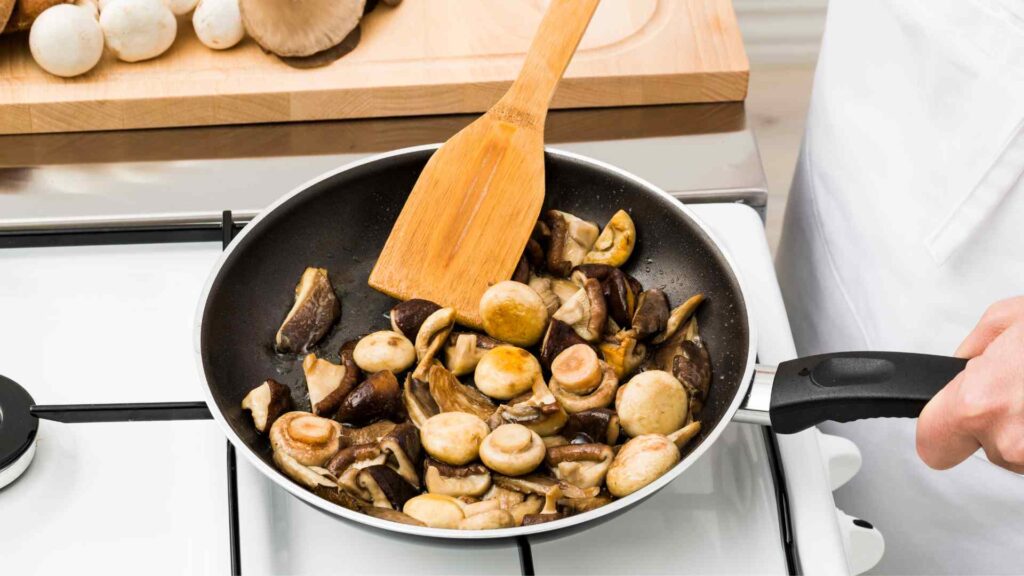
A correctly identified store mushroom should be fully cooked without butter, oil, cream, salt, garlic, onion, chives, wine, sauce, or hot spice if a veterinarian permits a taste. There is no need to offer it raw or in a restaurant recipe.
Garlic and onion-family ingredients can damage canine red blood cells, and powder can hide in seasoning. Our garlic guide and cooked onion guide cover delayed Allium risk.
Butter, cream, cheese, and oil add calories and fat that can cause gastrointestinal upset or pancreatitis in a susceptible dog. Wine and cooking alcohol may not evaporate completely under every preparation.
Stuffed mushrooms can add sausage, bacon, breadcrumbs, raw dough, raisins, nuts, sharp toothpicks, and foil. Inventory the complete dish instead of isolating the mushroom.
Canned, marinated, and specialty products
Canned mushrooms can contain substantial sodium, and draining does not remove all salt. Marinated jars may add oil, vinegar, garlic, onion, chile, herbs, sweetener, and glass or metal lid hazards.
Mushroom powders and extracts are concentrated products that may contain several species, botanicals, caffeine, sweeteners, or medications. Do not assume a functional-mushroom supplement is equivalent to one cooked button mushroom.
Psychoactive mushroom chocolates and gummies combine mushroom constituents with chocolate, xylitol, cannabis, or other active ingredients. Any such exposure needs immediate label-based veterinary or poison-service triage.
Our salt guide helps with a large canned or brined theft, but an unknown mushroom identity remains the priority. Preserve every package and lot code.
Spoilage and leftovers
Discard mushrooms that are slimy, unexpectedly discolored, moldy, sour-smelling, or stored unsafely. Feeding questionable leftovers to a dog does not rescue the food from waste.
Moldy foods can expose dogs to tremorgenic toxins, while old dishes may grow bacteria. Tremors, seizures, wobbliness, repeated vomiting, severe lethargy, or collapse after spoiled food needs urgent care.
Refrigerate cooked mushrooms promptly in a closed container and avoid repeated warming and cooling. Keep compost, trash, and outdoor food scraps inaccessible because mushroom identity and spoilage become impossible to reconstruct.
Allergy and ordinary stomach upset
Even edible store mushrooms can trigger vomiting, gas, diarrhea, or appetite change in an individual dog. A true food allergy is possible but should not be diagnosed from one upset stomach after a seasoned meal.
Facial swelling, widespread hives, breathing difficulty, or collapse is an emergency. Dogs on an elimination diet should receive no unapproved mushroom, sauce, treat, supplement, or flavored medicine.
Persistent itching, recurring ear trouble, or gastrointestinal signs need a veterinary workup rather than repeated home challenges. Avoiding the suspected food while keeping a clear diet record is more useful than testing different mushroom species.
What to do after a cooked store-mushroom theft
For one small plain piece from an identified grocery package in a comfortable healthy dog, a veterinarian may advise observation. Keep normal water available and monitor appetite, vomiting, stool, energy, gait, breathing, and abdominal comfort.
Call promptly if the portion was large, the recipe contained Alliums or other hazards, the mushrooms were spoiled, packaging was swallowed, the dog is medically high-risk, or symptoms develop. Save the grocery label and recipe.
Seek emergency care for repeated vomiting, severe pain, tremors, seizures, wobbliness, breathing trouble, jaundice, collapse, or a suspected wild mushroom. Do not wait for a delayed syndrome to declare itself.
Preventing yard exposures
Walk the yard before letting a foraging dog outside after rain, and remove mushrooms completely with gloves. Check mulch, tree roots, stumps, planters, compost edges, and shaded lawn areas because fruiting bodies can appear overnight.
Supervise dogs on trails and teach leave it and trade, but use a leash where mushrooms are abundant. Training reduces opportunity but does not make an unidentified mushroom edible.
Photograph recurring patches for property records and ask a qualified local expert about management. Fungicides are not a substitute for access control and can add a chemical exposure if used carelessly.
Why early veterinary care matters
A clinic may recommend decontamination, examination, blood tests, urine testing, liver or kidney monitoring, intravenous fluids, seizure control, or other supportive care based on the suspected syndrome and timing. There is no single antidote or home protocol for every mushroom.
Bring the sample and photos, but do not delay transport while trying to perfect an identification. The veterinarian can begin risk-based care while a poison specialist or mycologist works with the available evidence.
If the dog vomits naturally, ask the clinic whether a sample should be brought in a sealed leak-proof container. Wear gloves, wash hands, and keep children and other animals away from vomit and remaining specimens.
Frequently asked questions
Are cooked button mushrooms safe?
One small plain fully cooked piece is unlikely to poison most healthy dogs, but it is unnecessary and can still upset the stomach. Seasonings and portion matter.
Can I cook a wild mushroom until safe?
No. Cooking does not reliably destroy dangerous wild-mushroom toxins, and identification errors can be fatal.
My dog ate an unknown cooked mushroom and looks fine. Should I wait?
No. Call immediately with the sample, photos, time, amount, dog’s weight, preparation, and symptoms because serious effects can be delayed.
The bottom line
Correctly identified plain grocery mushrooms and unknown wild mushrooms belong in separate risk categories. A tiny cooked store piece may be minor, but any uncertain or foraged specimen deserves immediate professional triage even after heat.
Skip butter, garlic, onion, salt, rich sauces, spoiled leftovers, and unverified supplements. Never use the dog, an app, or a casual photo poll as a mushroom-identification test.