Can Dogs Eat Cucumbers? Peel, Seeds, and Safe Pieces
Yes, most healthy dogs can eat a few pieces of plain cucumber. Wash it, trim the ends, and cut it into thin, bite-sized pieces; peel and scoop out large seeds if your dog has a sensitive stomach, but ordinary peel and soft seeds are not toxic, while whole cucumbers and large rounds can be choking or obstruction hazards.

The easy cucumber answer
A small slice of fresh, washed, unseasoned cucumber is a low-risk treat for many dogs. The vegetable needs no salt, dip, dressing, oil, or clever preparation beyond making the pieces safe to chew.
The veterinarian-reviewed PetMD cucumber guide recommends washing and thin slicing because a whole cucumber or large chunk can choke or obstruct. That physical risk matters more than squeezing a nutritional sales pitch from a watery vegetable.
Cucumber is optional variety, not a dietary requirement. A complete and balanced dog food supplies necessary nutrients, and a dog who ignores cucumber is not missing a wellness tool.
Peel and seeds: optional decisions, not poisons
Normal cucumber peel is edible, but it can be chewy and may carry wax or surface residue. Wash and rub the cucumber thoroughly, then peel it for puppies, toy breeds, dogs with swallowing trouble, or pets that get gas or loose stool from fibrous skins.
The soft seeds in common slicing cucumbers are not toxic. Scoop them from an overripe cucumber when they have become large and firm, or remove them when a dog has a sensitive digestive system.
Seedless or English cucumbers can simplify preparation, but the label does not eliminate the need to wash and cut safely. “Seedless” usually means very small underdeveloped seeds, not a different dog food.
Whole cucumbers and thick rounds can be risky
A whole mini cucumber is exactly the sort of firm cylinder a fast eater may swallow before chewing. Thick circular slices can also lodge in the throat, especially in a small dog.
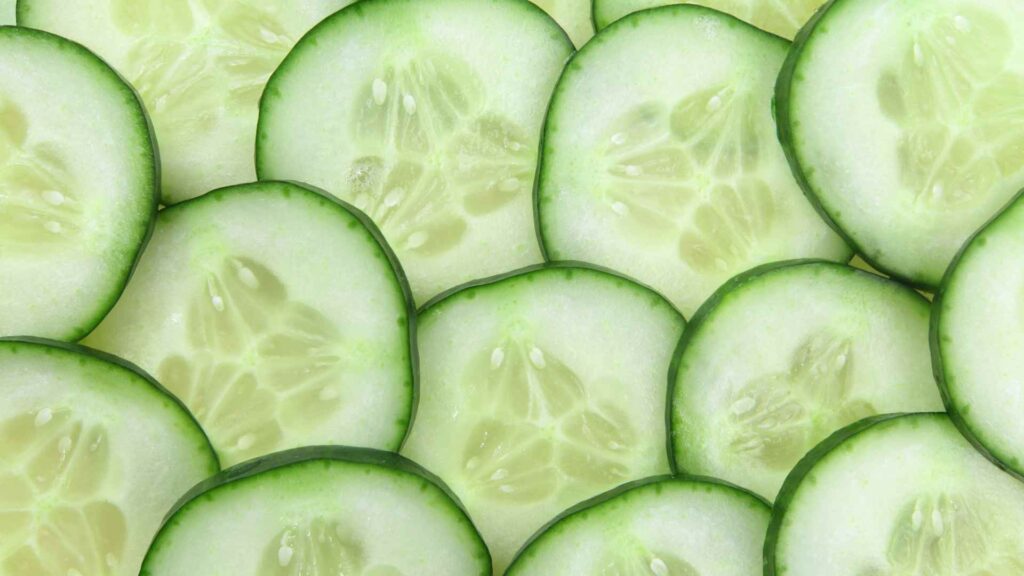
Cut the cucumber lengthwise first, then make thin half-moons or small dice. Supervise the snack and scale pieces to chewing behavior, not merely body weight.
The Merck Veterinary Manual’s obstruction overview describes vomiting, appetite loss, abdominal pain, dehydration, and lethargy after swallowed material lodges in the digestive tract. Some obstructions require endoscopy or surgery.
How to prepare cucumber
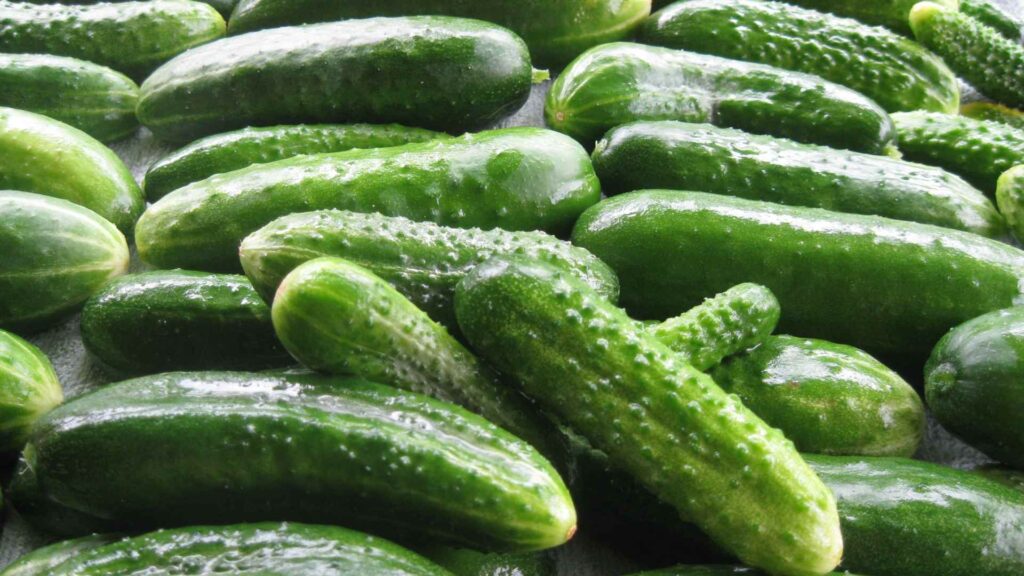
1. Choose a fresh cucumber
Use a firm cucumber without mold, slime, leaking areas, or decay. If the flesh tastes intensely bitter, discard it rather than serving it, because unusual bitterness can signal elevated cucurbitacins that may cause gastrointestinal illness.
2. Wash and trim
Rinse under running water and rub the peel, then trim both ends. Peeling is optional for a normal healthy dog but useful when the skin is thick, waxed, or poorly tolerated.
3. Inspect the seeds
Leave small soft seeds in place for a dog who tolerates them, or scoop out a mature watery seed cavity. This is a texture choice rather than a detoxification ritual.
4. Cut thin and small
Halve long slices and dice pieces for small dogs. Avoid handing over a whole mini cucumber, a thick end, or a frozen chunk.
5. Offer one piece
Introduce cucumber slowly and watch for vomiting, loose stool, gas, itching, or another unusual response. One taste is enough to learn whether the dog likes it and handles it comfortably.
Fresh, frozen, cooked, or blended?
Fresh raw cucumber: This is the simplest form and keeps the ingredient list under control. Serve small, plain pieces after washing.
Frozen cucumber: Freezing makes pieces harder and more slippery, so use tiny pieces, partially thaw them, and avoid frozen chunks for dogs with dental or swallowing problems. Cold is not a safety feature by itself.
Cooked cucumber: Plain cooked cucumber is not toxic, but most recipes add oil, salt, garlic, onion, soy sauce, or spicy seasoning. There is no advantage to cooking it for a dog unless softness is needed.
Blended cucumber: A spoon-tip of plain purée can go on a lick mat, but store-bought smoothies and “cucumber water” may contain grapes, lemon, sweeteners, caffeine, herbs, or supplements. Read every ingredient.
Cucumber is not hydration therapy
Cucumber contains plenty of water, but a few slices cannot correct dehydration, heat illness, ongoing vomiting, or diarrhea. Fresh drinking water is the routine hydration source, and a sick or overheated dog needs cause-based veterinary care.
Do not force cucumber or cucumber water into a dog that refuses fluids. Weakness, heavy panting that does not settle, collapse, repeated vomiting, tacky gums, or altered behavior warrants prompt assessment.
Cucumber does not cause weight loss
Cucumber is lower in calories than many treats, but it is not a fat-burning food or complete weight-control plan. Safe weight loss requires an appropriate calorie target, a nutritionally complete diet, measured portions, activity suited to the dog, and monitoring.
The UC Davis School of Veterinary Medicine treat guidance recommends that 90 percent or more of calories come from complete and balanced food. Cucumber can fit the remaining allowance for some dogs, but all treats still count together.
Dogs on a veterinary weight-loss plan should use only approved extras. A low-calorie snack can still derail progress when portions multiply across the household.

Pickles are a different food
Pickling adds brine, sodium, vinegar or fermentation, and often garlic, onion, sugar, chili, or spices. Read the detailed guide to pickles for dogs, but the practical answer is to offer fresh cucumber instead.
One small plain pickle slice is unlikely to poison most healthy dogs, while a jar or brine raid can involve enough sodium or unsafe seasonings to merit a veterinary call. The full label, amount, dog size, water access, and health determine the response.
Salads and sandwiches create similar ingredient problems through onion, garlic, dressing, mayonnaise, cheese, deli meat, and toothpicks. A cucumber’s safe reputation does not cover everything touching it.
Dogs who need extra caution
Dogs with swallowing trouble: Follow the prescribed texture and piece size. Thin, soft pieces may be appropriate, but a clinician who knows the cause should decide.
Dogs with dental disease: Avoid hard frozen cucumber and use small soft pieces if treats are permitted. Mouth pain itself deserves evaluation.
Dogs with chronic digestive disease: Peel, seeds, and raw fiber may be poorly tolerated. Do not use cucumber to treat constipation or diarrhea without veterinary guidance.
Dogs on prescription or elimination diets: Cucumber is still an extra ingredient. Ask before adding it so a food trial or therapeutic plan stays interpretable.
Puppies and toy breeds: Their pieces and calorie allowances must be tiny. Growing puppies need balanced puppy food to supply nearly all nutrition.

What to do after a cucumber mishap
If a whole cucumber or large chunk disappeared, estimate the size, time, and dog’s weight, then watch closely for choking or digestive signs. Call promptly for a swallowed piece that seems large relative to the dog or for any breathing problem.
Seek urgent care for repeated gagging or retching, repeated vomiting, abdominal pain or swelling, inability to keep water down, marked lethargy, or collapse. Do not feed bread, oil, more vegetables, or another home remedy to push a possible obstruction through.
If a healthy dog ate extra small plain pieces and remains comfortable, monitor for gas, vomiting, or diarrhea and skip further treats. Call if symptoms persist or worsen.
For salad, dip, flavored water, pickles, or sandwiches, keep the recipe or package and check for xylitol, grapes, onion, garlic, chocolate, caffeine, and swallowed packaging. Ingredient hazards change the urgency.
Easy serving ideas
Use tiny dice as training rewards, tuck a few pieces into a familiar puzzle, or mix a spoonful of chopped cucumber with regular food. Count the pieces rather than letting the dog free-range through a bowl.
For more crisp options, compare properly cut carrots, bell peppers, zucchini, and lettuce. Each is optional and still needs plain preparation and portion control.
Storage and kitchen habits that prevent trouble
Refrigerate cut cucumber promptly in a clean covered container and discard pieces that become slimy, moldy, fermented-smelling, or badly dried out. A dog should not function as the disposal system for produce that you would no longer eat.
Keep toothpicks, skewers, plastic wrap, produce stickers, compost scraps, and snack bags out of reach. Packaging and sharp serving hardware can turn an otherwise ordinary vegetable theft into an obstruction or puncture risk.
When children offer treats, prepare the pieces yourself and set out a fixed number. That prevents both oversized rounds and the cheerful, accidental avalanche that happens when every family member believes they offered “just one.”
For training, tiny dice work better than large slices because the dog can swallow quickly and return attention without filling up. Reduce other treats that day, and never toss firm pieces toward a dog that tends to snap them from the air.
The bottom line
Fresh, washed, plain cucumber is a safe occasional treat for many healthy dogs when cut thin and small. Peel and remove mature seeds for dogs who need an easier texture, but normal peel and soft seeds are not toxins.
Whole cucumbers, large rounds, frozen chunks, pickles, dressings, and seasoned dishes introduce different risks. Cucumber can provide variety, but it does not replace water, dental care, digestive treatment, or a complete weight-management plan.