Can Dogs Eat Raspberries? Fresh Fruit, Xylitol, and Portions
Most healthy adult dogs can eat a few plain, washed raspberries as an occasional treat. Serve them one at a time or lightly mash them for a tiny dog, keep portions small because fiber and sugar can upset the gut, and avoid jam, syrup, sweetened yogurt, baked goods, chocolate, and any product containing added xylitol.
Fresh fruit and sweetened products are different foods
A fresh raspberry is small, soft, and easy to portion, but it is not nutritionally necessary. The sensible goal is a fun taste that does not crowd out the complete diet or trigger digestive trouble.
- Fresh or thawed unsweetened berry: wash, inspect, and offer only a few.
- Tiny dog, puppy, or gulper: mash or break the berry and supervise.
- Large bowl of berries: expect a greater chance of gas, loose stool, or vomiting and call if symptoms are significant.
- Jam, syrup, sauce, pastry, candy, or sweetened yogurt: inspect every ingredient and the total amount.
- Added xylitol on a label: call a veterinarian, emergency clinic, or animal poison-control service immediately.
Our strawberry guide covers similar fresh-versus-processed decisions, but berry advice is not interchangeable with grape advice. Correct identification comes first.
The xylitol sentence that needs context
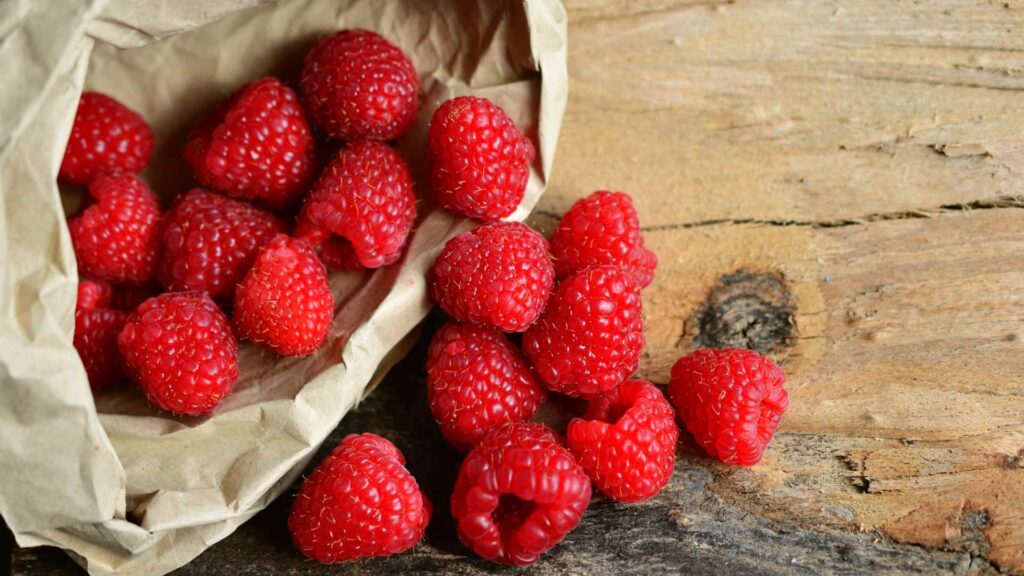
The American Kennel Club raspberry guide notes that raspberries contain a small naturally occurring amount of xylitol while still classifying the fruit as safe in moderation. That is not the same exposure as a sugar-free product formulated with xylitol as an ingredient.
A few fresh berries should not be described as equivalent to chewing gum, bulk sweetener, or sugar-free jam. The concentration and amount drive risk, which is why portion control and label reading belong in two different parts of the conversation.
The FDA xylitol warning focuses on manufactured products such as sugar-free candy, baked goods, desserts, medications, and some nut butters. It advises immediate professional contact after a dog eats a product containing added xylitol.
Do not calculate safety from the product’s total weight because ingredient concentration may be unavailable. Save the label, note the dog’s weight and amount missing, and call before weakness, staggering, collapse, or seizures appear.
How to prepare raspberries
- Choose berries that are dry, intact, and free of mold, insects, leaking juice, and fermented odor.
- Refrigerate them promptly and keep the container away from counter-surfing dogs.
- Rinse gently under cool running water shortly before serving.
- Offer one whole berry only to a dog that can comfortably chew it, or mash it for a small dog.
- Start with one and stop after a few, counting every other treat in the day.
The FDA produce-safety guide recommends running water rather than soap, detergent, or commercial produce wash. Washing reduces contamination but does not sterilize fruit, so damaged or rotten berries still belong in secure trash.
Clean hands, colanders, bowls, and counters, and keep berries away from raw meat and seafood juices. If a package says pre-washed or ready-to-eat, follow its storage instructions and still inspect the fruit.
Whole berries, choking, and tiny mouths
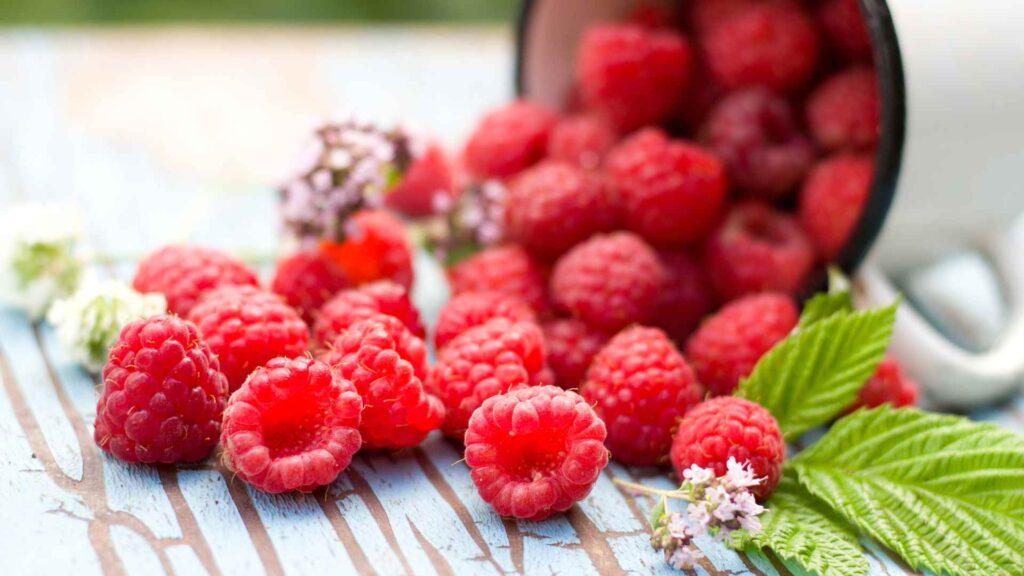
Raspberries are softer and smaller than many fruits, but any food can be gulped awkwardly. Mash them for toy dogs, dogs with poor teeth, dogs with swallowing disease, and enthusiastic puppies.
Feed berries directly or in a bowl rather than tossing them into the air. A game that rewards catching whole food encourages speed when slow chewing would be safer.
Coughing that resolves quickly may reflect a momentary mis-swallow, but active choking, breathing difficulty, blue or pale gums, severe distress, or collapse is an emergency. Repeated gagging or difficulty swallowing also needs prompt assessment.
Fiber and sugar set the portion limit
Raspberries contain fiber, water, and natural sugar, and dogs differ in how well they tolerate them. Too many can cause gas, loose stool, vomiting, abdominal discomfort, or occasionally constipation in a dog that receives a sudden fiber load.
Fiber does not make raspberries a constipation treatment, and fruit does not replace a diagnosis for recurring diarrhea. A dog straining, passing blood, repeatedly vomiting, refusing food, or acting painful needs veterinary care.
Dogs with diabetes, obesity, chronic gastrointestinal disease, or a prescribed therapeutic diet need an individual decision. Even relatively low-sugar fruit can disrupt a plan when portions are not counted.
The UC Davis veterinary treat guideline recommends keeping treats and extras below 10 percent of daily calories. A few berries can fit more easily than a bowl, but the percentage includes chews, training food, scraps, and medication helpers.
Fresh, frozen, freeze-dried, and dried
Fresh raspberries
Fresh ripe berries are the easiest form to inspect and portion. Use them promptly because delicate fruit molds and ferments quickly once damaged.
Frozen raspberries
Plain unsweetened frozen berries are suitable after checking the ingredient list, but a hard frozen berry can be awkward for a small dog. Thaw or mash it and discard fruit that has been repeatedly thawed, warmed, and refrozen.
Freeze-dried raspberries
Freeze-dried fruit is light and concentrated by volume, with a brittle texture that may create sharp crumbs. Choose an unsweetened single-ingredient product, break it small, and reduce the portion rather than matching fresh berries piece for piece.
Sweetened dried raspberries
Commercial dried fruit may add sugar, oil, juice concentrate, preservatives, or other fruit. Many mixed bags contain raisins, and a raspberry-colored piece cannot be identified safely by appearance alone.
Wild raspberries need more than a berry check
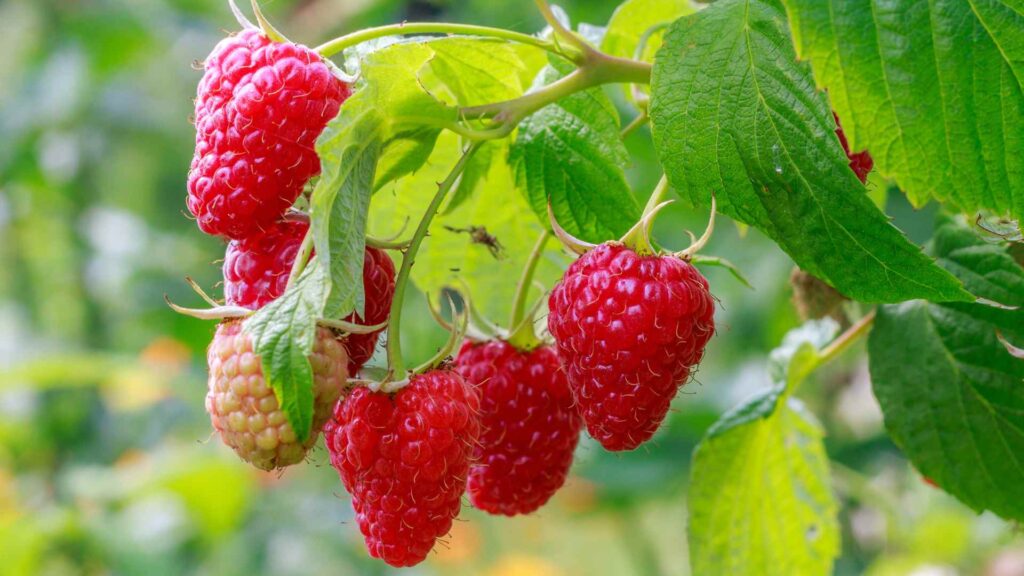
Correct plant identification is essential because not every red cluster is a raspberry. Do not let a dog browse an unknown shrub based on a phone photo or a vague resemblance.
Roadside plants, public landscaping, and treated gardens may carry pesticides, herbicides, fertilizers, exhaust residue, animal waste, or contaminated water. Ask the property owner about chemical applications and use store-bought fruit when the history is uncertain.
Wild canes have thorns and may shelter insects, spiders, ticks, snakes, or wildlife. A dog pushing into a patch can injure the mouth, eyes, paws, and skin even when the berry itself is edible.
Moldy fallen fruit and compost can ferment or contain other toxic foods and foreign objects. A compost raid is never just a raspberry exposure.
Jam, jelly, preserves, and syrup
These products concentrate fruit and commonly add sugar, pectin, acids, and preservatives. Sugar-free versions may contain xylitol, so they require immediate label review rather than a generic low-sugar assumption.
A tiny lick of ordinary raspberry jam is usually a sugar-and-stomach issue for a healthy dog, not a berry-poisoning emergency. A missing sugar-free jar, broken glass, swallowed lid, or product with xylitol is a different case.
Pancake syrup, dessert sauce, and coffee flavoring may contain little raspberry and plenty of sweetener. Evaluate the actual product, not the picture of fruit on the front.
Yogurt, smoothies, and frozen treats
Plain xylitol-free yogurt with one mashed berry may fit some dogs, but lactose, fat, calories, and sweeteners still matter. Flavored yogurt often adds sugar and may contain ingredients that do not belong in a dog’s bowl.
Our yogurt guide explains why ordinary grocery yogurt should not be promoted as probiotic treatment. Live cultures and a fruit flavor do not turn dessert into medical care.
Smoothies can hide grape juice, chocolate, coffee, protein powders, supplements, xylitol, macadamia ingredients, or large portions of fruit. Homemade does not mean simple unless every ingredient and amount is known.

Baked goods, chocolate, and mixed fruit
Raspberry muffins, scones, pies, bars, cookies, and cakes add flour, fat, sugar, and sometimes chocolate or sugar-free sweetener. Raw batter can add uncooked flour and egg risks, while wrappers create a foreign-object concern.
Chocolate-covered raspberries require a chocolate assessment, so use our chocolate guide to gather the cocoa type, amount, dog’s weight, and time. Dark and baking chocolate are more concentrated than milk chocolate.
Fruit salad may contain grapes or raisins, which require urgent advice because dog sensitivity is unpredictable. Picking out the raspberries does not remove juice, missing fruit, or uncertainty about what was swallowed.
Our grape and raisin guide explains why no universal safe dose should be guessed. Keep the recipe and contact a veterinary professional promptly when grapes or raisins may be involved.
Raspberries are not antioxidant medicine
Raspberries contain nutrients and plant compounds, but a treat portion has not been shown to treat arthritis, cancer, cognitive decline, heart disease, inflammation, or immune problems in dogs. Marketing language is not a veterinary treatment plan.
A complete and balanced diet already supplies required nutrients in appropriate proportions. Adding berries cannot correct a deficiency or compensate for an unbalanced homemade diet.
Pain, stiffness, reduced activity, weight loss, appetite change, or confusion needs diagnosis. A few berries can be enjoyable, but they should never delay an examination or replace prescribed care.
What to do after a raspberry raid
- Secure the remaining fruit, package, jar, baked food, smoothie, or mixed dish.
- Identify fresh berries versus a processed product and find the complete ingredient list.
- Estimate the amount, time, dog’s weight, symptoms, and relevant medical history.
- Check for added xylitol, grapes, raisins, chocolate, alcohol, caffeine, macadamias, and swallowed packaging.
- Call promptly for any xylitol product, unsafe co-ingredient, foreign object, significant symptoms, or medically vulnerable dog.
A healthy adult dog that ate several plain washed berries and remains comfortable can usually be monitored. Keep water available, return to the normal diet, and avoid stacking more fruit and treats on top.
Large fresh-fruit exposure is more likely to cause gastrointestinal upset than xylitol poisoning, but the dog’s size and symptoms still matter. Repeated vomiting, inability to keep water down, bloody diarrhea, severe lethargy, pain, weakness, or collapse needs care.

Frequently asked questions
Can puppies eat raspberries?
A mashed fragment may be tolerated, but puppies need nearly all calories from complete growth food and have tiny airways. New treats should be rare, small, and supervised.
How many raspberries can a dog eat?
There is no useful one-size count for every dog and berry size. Begin with one, stop after a few, and ask the veterinarian for a calorie allowance if berries will be frequent.
Do raspberries contain xylitol?
They contain a small naturally occurring amount, yet a few fresh berries are not comparable to a product with added xylitol. Added xylitol on a label requires immediate professional advice.
Can dogs eat raspberry jam?
It is unnecessary and usually sugar-heavy, while sugar-free jam may contain xylitol. Check the label before deciding whether the concern is calories or an urgent toxin exposure.
Can raspberries help a dog’s joints?
Do not use them as arthritis treatment. Pain or mobility changes need veterinary assessment, weight management where appropriate, and therapies with evidence for that dog.
The bottom line
A few plain, washed raspberries can be a pleasant occasional treat for many healthy adult dogs. The trouble usually comes from oversized portions, unsafe products, mistaken wild plants, or co-ingredients rather than the fresh berry itself.
Keep naturally occurring trace xylitol in proportion and take added xylitol seriously. Read the label, count the whole day’s treats, and choose a mashed berry for the smallest mouths.