Can Dogs Eat Chia Seeds? Dry Seed, Portions, and Supplements
Dogs may tolerate a small food-level amount of chia seed that is already mixed into moist food, but dry spoonfuls and supplement-size portions are poor experiments. Chia absorbs liquid, adds fiber, fat, and calories, and can cause choking, digestive upset, diet displacement, or uncertain medication interactions.
Use form and amount to set the risk
- A few seeds in prepared food: usually low concern if every other ingredient is dog-safe.
- A small pre-hydrated portion: may be tolerated, but it still counts as an extra and can loosen stool.
- A dry spoonful: call if the dog coughs, gags, cannot swallow normally, or has a swallowing disorder.
- A bag or supplement raid: assess amount, packaging, other ingredients, medical conditions, and medications.
- Chia drink, pudding, bar, or smoothie: check xylitol, chocolate, grapes, raisins, caffeine, alcohol, macadamia, and sweeteners.
Save the package and note whole seed, ground seed, flour, oil, gel, capsule, or blended product, plus amount, time, dog’s weight, symptoms, conditions, and medications. Do not report a concentrated supplement as just seeds.
Why dry chia deserves caution
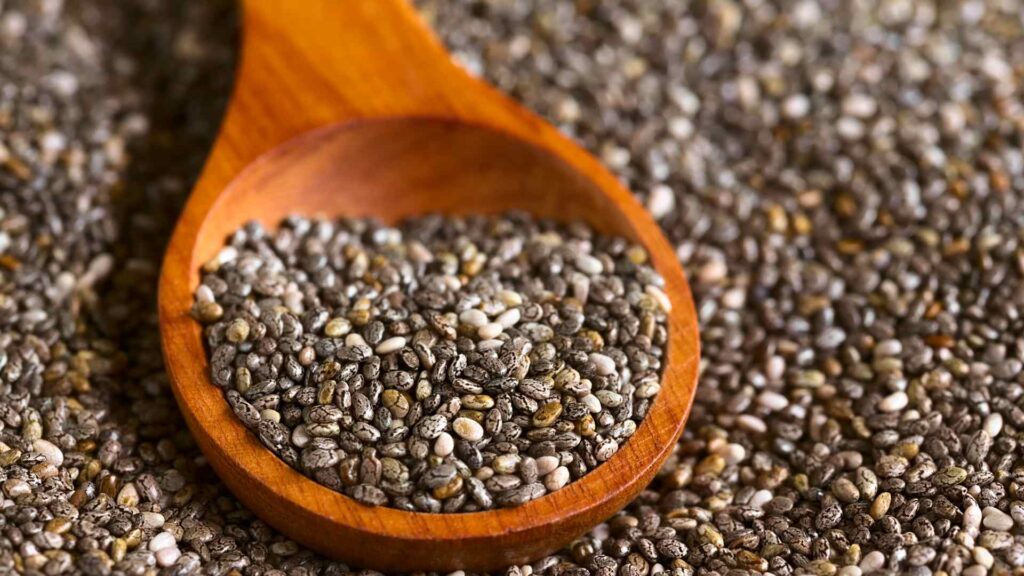
Chia seeds form a gel as they absorb water, which makes a dry mouthful very different from seeds already dispersed through wet food. A fast-eating dog can inhale powdery seeds, cough, or have difficulty swallowing before the seeds reach the stomach.
The Memorial Sloan Kettering chia review describes a human case of throat blockage after dry chia expanded and advises against consuming dry seeds alone. That is not canine incidence data, but it supports avoiding concentrated dry spoonfuls, especially in dogs with swallowing or esophageal problems.
Do not pour water into the mouth of a coughing or distressed dog in an attempt to hydrate the seeds. Difficulty breathing, blue or gray gums, continuous gagging, collapse, or inability to swallow is an emergency.
A few dry seeds scattered on the floor are not equivalent to a tablespoon swallowed at once. Proportionate guidance depends on amount, symptoms, dog size, and existing swallowing disease.
Hydrated chia still needs a small portion
Pre-soaking lets the seeds expand before eating and makes them easier to disperse, but it does not remove calories or fiber. Mix a very small amount into the dog’s normal moist food rather than serving a separate bowl of thick gel.
There is no universal canine soaking ratio proven to prevent every problem, so this guide does not present a medical recipe. If a veterinarian recommends chia, ask for the exact dry weight, liquid amount, final portion, frequency, and duration.
Discard soaked chia that has been left out, smells sour, is moldy, or contains spoiled milk or fruit. Refrigerate prepared food promptly and follow ingredient-specific storage guidance.
Keep bowls and spoons supervised because thick mixtures can stick to fur and invite frantic licking. Clean spilled gel before it dries into a slippery or difficult-to-remove patch.
Fiber can help a formula and still upset an individual dog
Chia contains soluble and insoluble fiber that changes water holding, fermentation, and stool bulk. Too much can cause gas, bloating, loose stool, urgency, constipation, appetite loss, or abdominal discomfort.
Stop the seeds and call for repeated vomiting, severe diarrhea, a swollen or painful belly, weakness, refusal to eat, or inability to keep water down. Those signs should not be managed by adding still more fiber.
Dogs with chronic gastrointestinal disease, megacolon, motility problems, previous obstruction, swallowing disorders, or recent surgery need veterinary guidance before a gel-forming fiber is added. The diagnosis matters more than the ingredient’s wellness reputation.
Chia should not be used as a constipation or diarrhea treatment without a veterinary plan. Either symptom can reflect dehydration, parasites, diet, pain, obstruction, medication effects, or systemic disease.
Calories and nutrient balance matter
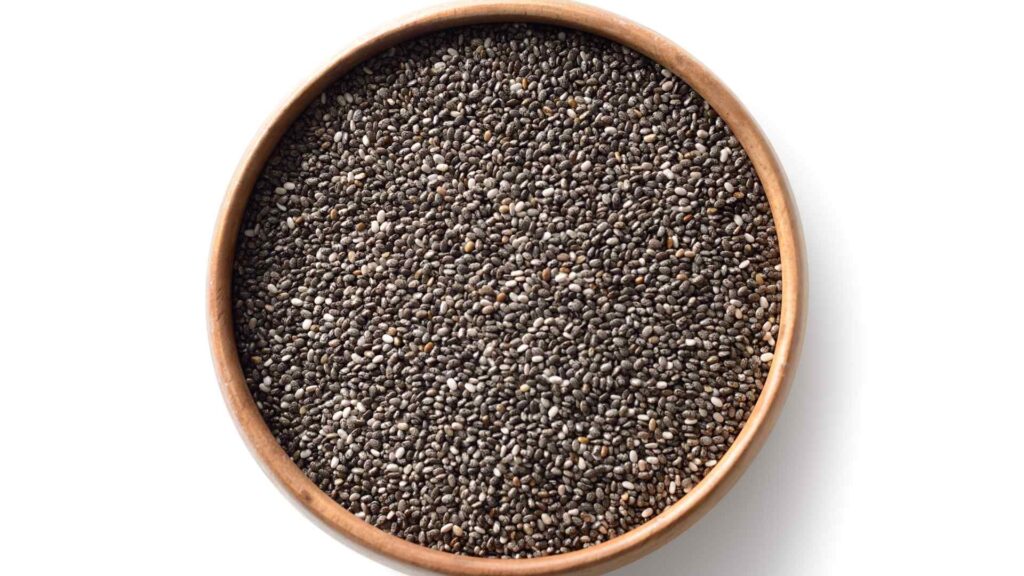
Chia seeds are calorie-dense because they contain fat as well as protein and fiber. A tablespoon that looks tiny can be a meaningful extra for a small dog.
The World Small Animal Veterinary Association treat guide recommends keeping all treats below 10 percent of daily calories. Chia belongs inside that allowance and should not replace the complete food.
Adding chia because it contains omega-3 fat does not ensure that the dog’s total fatty-acid intake, conversion, dose, and balance are appropriate. Plant alpha-linolenic acid is not automatically interchangeable with the marine fatty acids used in some veterinary diets and supplements.
Do not use chia to treat skin disease, arthritis, inflammation, heart disease, kidney disease, or cognitive change. Ask the veterinarian whether any fatty-acid product has evidence, quality control, and a defined dose for the actual diagnosis.
Chia is not a weight-loss tool
Gel and fiber may create fullness, but adding chia also adds calories and does not correct oversized meals, frequent treats, limited activity, endocrine disease, or inaccurate measuring. Weight loss requires a complete calorie plan with regular reassessment.
The human evidence summarized by Memorial Sloan Kettering does not adequately support chia weight-loss claims. Human supplement findings should not be converted into canine treatment promises.
For a dog on a weight-management food, use measured pieces of that food as treats or ask the clinic for approved options. An uncounted healthy topping can stall a carefully designed plan.
Medication interactions require honest uncertainty
Direct canine evidence for chia-drug interactions is limited, so strong claims that food-level chia definitely thins blood, lowers pressure, or changes glucose would be irresponsible. Concentrated daily supplementation still deserves review when a dog uses anticoagulants, antiplatelet drugs, blood-pressure medicine, insulin, or other diabetes treatment.
The National Center for Complementary and Integrative Health interaction overview notes that many supplement interaction concerns are hypothetical or based on indirect evidence. It recommends special caution with drugs that have a narrow therapeutic index and emphasizes the knowledge gaps.
Tell the veterinarian the chia product, exact daily amount, duration, reason for use, and every medication and supplement. Do not stop a prescribed drug or change insulin because of an internet interaction list.
Before anesthesia or surgery, disclose all supplements during the preoperative history. The surgical team decides what to continue or stop and when.
Allergy is possible but not assumed
Rare human allergy reports do not establish a common canine chia allergy, but a dog can react to almost any dietary protein. Stop the product for hives, facial swelling, vomiting, diarrhea, or sudden itching after exposure.
Breathing difficulty, collapse, or rapidly worsening facial swelling requires emergency care. Save the label because chia bars and blends contain multiple possible allergens.
Chia should not be introduced during a veterinary elimination diet unless it is explicitly included. One casual topping can invalidate weeks of controlled feeding.
Chia products are rarely just chia
Pudding may contain dairy, coconut cream, chocolate, coffee, sweetener, or fruit, while smoothies can contain grapes, raisins, xylitol, caffeine, protein powder, supplements, or macadamia. Energy bars add wrappers and concentrated ingredients.
Call immediately for xylitol and promptly for grapes, raisins, chocolate, caffeine, alcohol, macadamia, or an unknown supplement amount. Assess the complete product rather than clearing it because chia is food.
Chia pet treats may be safe when labeled for dogs and fed as directed, but they still count as treats. Check calorie content, serving size, life-stage suitability, and whether the product is complete or supplemental.
Our granola guide covers seed mixtures and dangerous add-ins, while the flaxseed guide explains why another omega-3-marketed seed has its own form and dose questions. Do not substitute one seed scoop for another.
The same portion discipline applies to sunflower seeds, although chia’s gel-forming behavior creates a distinct dry-swallowing concern. Similar pantry placement does not make seeds nutritionally or physically interchangeable.
Bags, jars, scoops, and freshness packets
A pantry raid may include plastic film, zip closures, clips, labels, lids, scoops, or desiccant packets. Those objects can choke or obstruct regardless of the seeds.
Report every missing item and call for repeated vomiting, gagging, abdominal pain, refusal to eat, lethargy, straining, or inability to keep water down. Do not pull stringy material from the rectum.
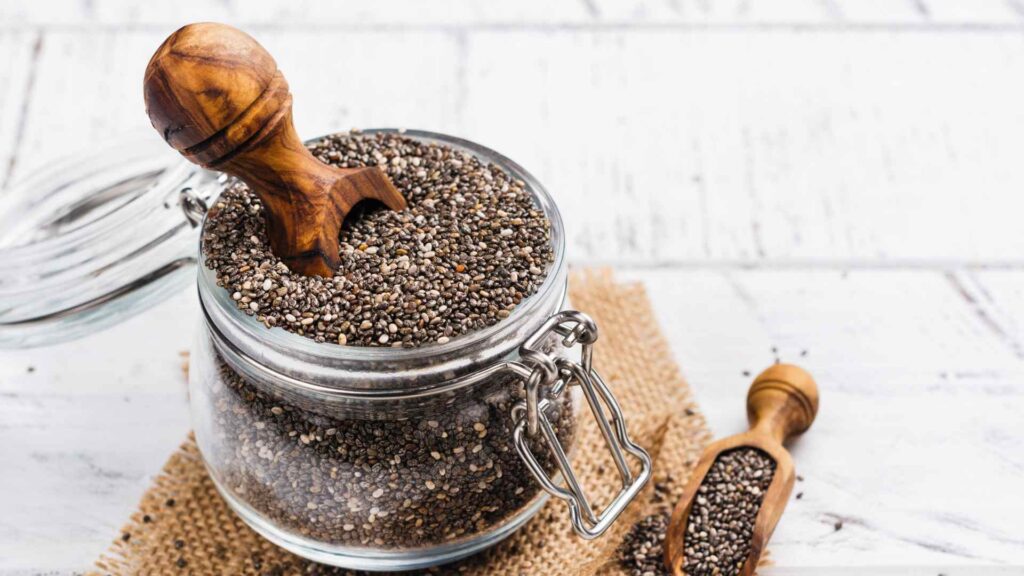
Store chia in its original labeled package inside a sealed pet-proof container. Discard damp, moldy, insect-infested, or rodent-contaminated seed securely.
If a veterinarian approves chia
- Use a plain single-ingredient food product with no flavors or supplement blend.
- Measure the dry amount instead of estimating a scoop.
- Hydrate or mix it into moist food exactly as the veterinarian recommends.
- Count its calories and keep the complete diet as the overwhelming majority of intake.
- Monitor appetite, swallowing, vomiting, stool, gas, discomfort, weight, and any requested lab values.
Do not copy a human chia-water ratio or increase the amount because stool has not changed yet. Fiber effects can lag, and more is not automatically better.
What to do after a chia theft
Secure the remainder, identify dry versus hydrated and plain versus mixed, estimate amount and time, check packaging, and list medical conditions and medications. Call for choking signs, a large or unknown amount, dangerous co-ingredients, swallowed objects, medical vulnerability, or significant symptoms.
Do not induce vomiting or force water, oil, food, salt, or medication unless a veterinarian directs you. Swallowing status, dry expansion, symptoms, product ingredients, and aspiration risk change the safest response.
Bottom line
A tiny food-level amount of chia already dispersed in moist food is usually low risk, but dry spoonfuls and concentrated supplements are unnecessary. Choking, digestive effects, calories, diet displacement, medication uncertainty, mixed products, and packaging deserve a careful assessment.