Alcohol Poisoning in Cats: What Counts and What to Do Now
Alcohol is unsafe for cats, and exposure is not limited to cocktails. Ethanol in drinks or fermenting dough, isopropanol in rubbing alcohol, and methanol in some automotive products can cause rapid illness, so contact a veterinarian or animal poison service immediately after a known or suspected exposure.
Start here if exposure just happened
Move the product away, keep your cat warm and quiet, and call your regular veterinarian, an emergency clinic, or animal poison control. Give the exact product name, alcohol type and percentage, possible amount, time, route of exposure, cat’s weight, medical history, and current behavior.
Save the container, ingredient panel, safety data sheet, or recipe and take clear photos if transporting the original is unsafe. When the amount is uncertain, report the largest plausible exposure rather than the quantity you hope was involved.
Do not induce vomiting or give coffee, food, sugar water, charcoal, salt, or a cold bath unless the veterinary team directs a specific step. Alcohol is absorbed quickly, and a sleepy or uncoordinated cat can inhale vomit into the lungs.
Emergency signs that should not wait
Go straight to emergency care for trouble breathing, collapse, seizures, profound weakness, inability to stand, severe tremors, or unresponsiveness. Wrap a chilled cat loosely in a dry blanket during transport, but do not apply direct heat that could burn skin.
Earlier signs can include vomiting, diarrhea, drooling, wobbliness, disorientation, unusual sleepiness, vocal changes, or a strong chemical odor. The Merck Veterinary Manual explains that alcohols are rapidly absorbed and can cause hypothermia, metabolic acidosis, central nervous system depression, coma, seizures, and death.
Symptoms can begin within an hour, although timing varies by product, stomach contents, amount, and route. A cat who appears normal during the first phone call still needs the professional’s monitoring plan.

Alcohol is a family of chemicals, not one ingredient
Ethanol is found in beer, wine, spirits, liqueurs, extracts, fermented foods, some medicines, sanitizer, and raw yeast dough. It depresses brain function and can disturb temperature, breathing, glucose, and acid-base balance.
Isopropanol occurs in rubbing alcohol and certain cleaning or grooming products. Merck notes that it is more toxic than ethanol, so a lick of rubbing alcohol must not be evaluated like a lick of low-alcohol beer.
Methanol may occur in windshield washer fluid, solvents, and industrial products. These exposures require urgent identification because the product may contain additional toxic ingredients and should never be described merely as alcohol.
Ethylene glycol is commonly called an alcohol chemically but is the dangerous ingredient in some antifreeze products and has a different toxicosis. Tell the clinic antifreeze or ethylene glycol immediately rather than relying on a broad label category.
How cats encounter ethanol at home
An unattended glass is obvious, but spilled cocktails, soaked cake, tiramisu, rum balls, wine sauce, fondue, extracts, mouthwash, perfume, and medicine can also contain ethanol. Cats may lick a sweet mixer, cream, meat sauce, or sticky paw without showing interest in the drink itself.
Alcohol does not always cook away completely because remaining concentration depends on heat, time, surface area, and preparation. Do not treat a flambéed or simmered dish as alcohol-free without reliable product information.
Our guide to pizza and cats covers raw dough and allium-laden sauces, while the dog alcohol guide offers a broader household inventory. Veterinary triage must still use feline details rather than borrowing a dog dose.
Raw yeast dough makes its own alcohol
Unbaked yeast dough can expand in the warm stomach while fermentation produces ethanol. This combines dangerous distention with alcohol absorption, making it more urgent than a crumb of fully baked plain bread.
The ASPCA’s people-food guidance warns that yeast dough can produce gas and alcohol inside a pet. A swollen or painful abdomen, repeated retching, weakness, or odd behavior after dough ingestion needs immediate care.
Salt dough adds a separate sodium hazard, while enriched dough may include raisins, chocolate, garlic, or sweeteners. Bring the recipe and account for plastic wrap, proofing cloth, and packaging that may also be missing.
Hand sanitizer, rubbing alcohol, and skin exposure
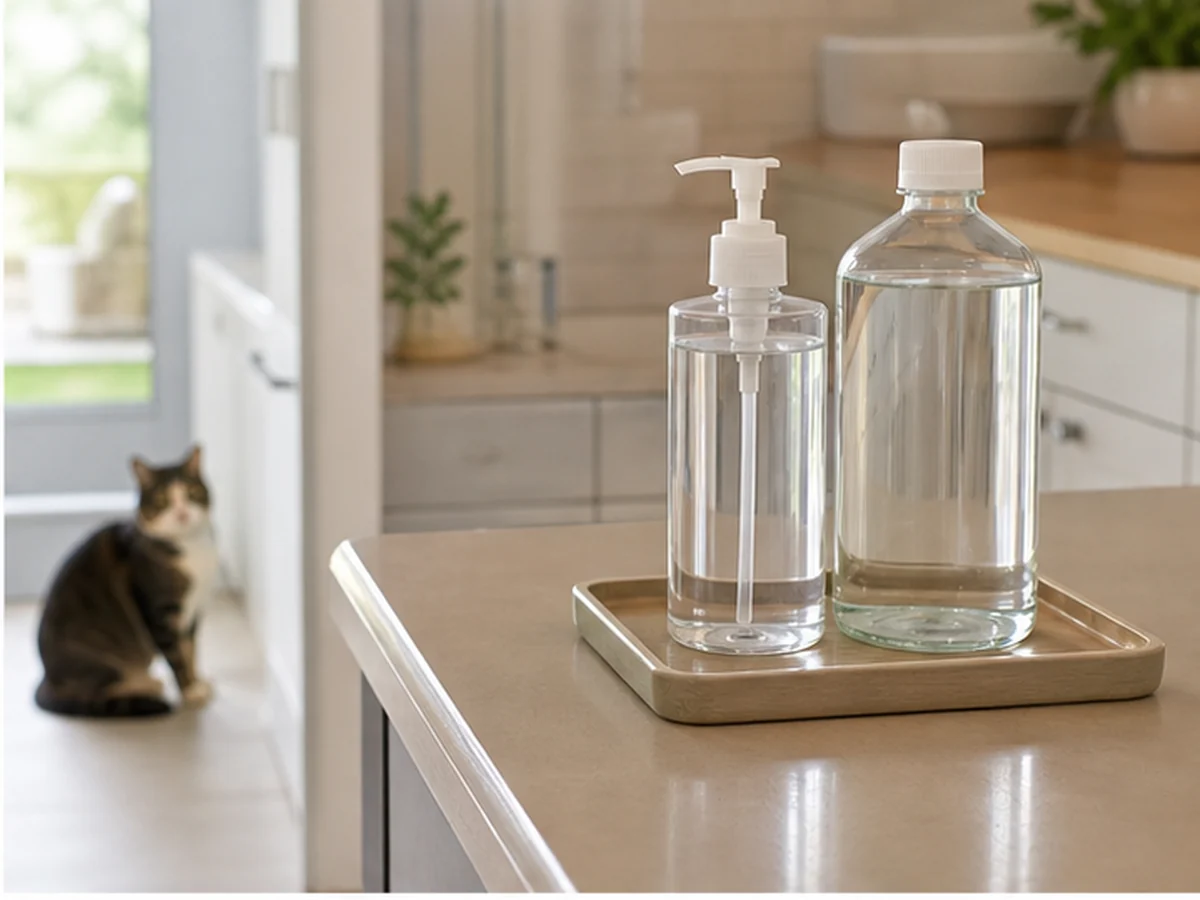
A dried trace after normal hand-sanitizer use differs from licking pooled liquid or chewing a refill bottle. Some formulas contain ethanol, others isopropanol, and imported or recalled products may have unexpected ingredients.
If liquid is on fur, prevent grooming and call for decontamination instructions. Alcohol can be absorbed through skin, and a cat’s cleanup routine converts a coat spill into repeated oral exposure.
Do not pour alcohol on a cat to cool fever, treat fleas, clean a wound, or remove adhesive. Safer veterinary products exist, and evaporative chilling can worsen hypothermia in an intoxicated animal.
What the veterinary team may do
Assessment can include temperature, blood glucose, breathing, heart function, neurologic status, hydration, and acid-base balance. Product identification matters because ethanol, isopropanol, methanol, and mixed chemicals do not produce identical plans.
Treatment is supportive and may involve warming, intravenous fluids, glucose support, oxygen, seizure control, laboratory monitoring, or airway protection. Merck notes there is no single antidote for the common alcohol toxicoses, making timely stabilization important.
Activated charcoal is usually not useful for simple alcohols, and vomiting may be unsafe once neurologic signs develop. Those decisions belong in a clinic, not beside the kitchen sink with a search result open.
Tiny cats have little margin for a casual pour
Kittens and small adults receive more alcohol per pound from the same puddle. Seniors, diabetic cats, underweight cats, and animals with liver, kidney, respiratory, neurologic, or heart disease may have less reserve during hypoglycemia, chilling, dehydration, or sedation.
Medication can compound drowsiness or affect metabolism, so share every prescription, supplement, topical product, and recent dose. Never assume an apparently sturdy cat can sleep off intoxication safely.
The FDA includes alcoholic drinks and alcohol-containing foods among pet hazards. That broad warning appropriately covers cats even though exact feline dose data for every beverage and product are limited.
Preventing the next exposure
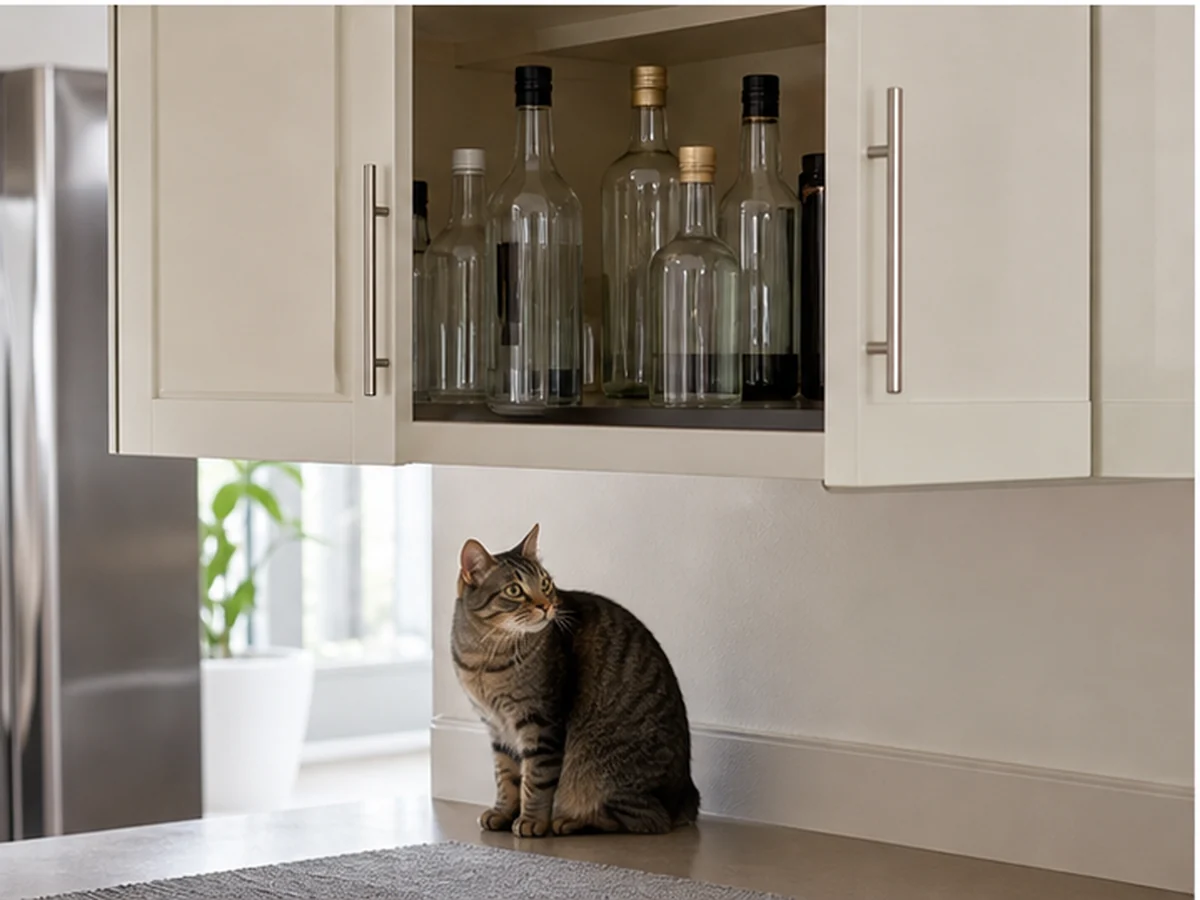
Clear glasses, cocktail shakers, soaked fruit, dessert plates, and spills before leaving a room. Store sanitizer, rubbing alcohol, extracts, mouthwash, cleaners, and automotive fluids behind a latched door rather than trusting a cap.
Keep rising dough in a closed oven, microwave, or secured cabinet with the appliance switched off. A towel over a bowl may deter a fly, but it is mostly decorative security against a cat.
At gatherings, give guests one plain rule: no shared drinks or desserts. Provide approved cat treats elsewhere so hospitality does not turn into amateur toxicology.
Foods that hide alcohol surprisingly well
Brandy-soaked fruit, bourbon glaze, wine jelly, champagne truffles, beer batter, kombucha, and homemade extracts can all retain measurable ethanol. Fermented fruit left in a warm bowl may also produce alcohol even though nobody deliberately added spirits.
Kombucha varies in alcohol, caffeine, acidity, sweetener, and botanical ingredients, so it should never be offered as a probiotic drink. Likewise, a sauce described as reduced tells you nothing precise about the amount remaining in the stolen portion.
For beer-specific details, our beer and brewing guide helps identify hops, dough, cans, and brewing residues. Use that inventory to describe the scene, while the veterinarian translates the actual event into feline risk.
Why watching at home can be deceptively difficult
Cats commonly hide illness, and early alcohol signs can resemble fatigue, fear, or medication sedation. A cat under a bed cannot be reliably assessed for balance, temperature, breathing effort, or declining responsiveness.
If a clinician recommends home observation, ask how often to check, which signs change the plan, whether food is permitted, and how long risk remains. Write the instructions down because an anxious household is not famous for perfect memory.
Use a quiet, warm room without stairs or high furniture, but do not delay transport to create the ideal monitoring setup. Video of gait or behavior can help the clinic, provided filming never replaces the call.
Frequently asked questions
My cat took one lick of wine. Is that enough to call?
Yes, call and describe the real lick, wine strength, timing, cat’s weight, and behavior. A professional may recommend observation, but that recommendation should come from the exposure details.
Is alcohol-free beer safe?
Not automatically, because some products contain residual alcohol and beer adds carbonation, hops, calories, and packaging. Water is the appropriate feline drink.
Can vanilla extract poison a cat?
Many extracts contain substantial ethanol, so a bottle spill or meaningful ingestion deserves prompt advice. Save the exact label because alcohol-free flavorings use different carriers.
Should I let an intoxicated cat sleep?
No, unusual drowsiness after alcohol can reflect dangerous nervous-system depression, low temperature, or low glucose. Seek veterinary direction immediately and monitor breathing during transport.
After professional triage, document the event while details remain fresh: product, quantity range, access point, advice received, and outcome. That record helps every caregiver follow the same prevention plan and gives the veterinarian useful history if delayed signs appear.
Review why the exposure happened without blaming the cat for behaving like a cat. A lidded glass, closed baking room, latched chemical cabinet, and secured trash solve different access routes, so choose the barrier that matches the actual incident.
If household members use alcohol-containing medicine or sanitizer regularly, designate one storage and application area. Let wet hands dry before handling the cat, and dispose of soaked wipes where paws cannot retrieve them.
Post the emergency clinic and animal poison numbers where every caregiver can find them before an accident. Fast access to help is a practical part of prevention.
Bottom line
Alcohol exposure in cats is time-sensitive whether it comes from a drink, dough, sanitizer, rubbing alcohol, food, or automotive product. Identify the chemical, prevent further licking, skip home remedies, and call immediately so the veterinary team can act before wobbliness becomes respiratory or metabolic crisis.