Can Dogs Eat Goldfish Crackers? Salt, Dairy, and Flavor Risks
A few original Goldfish crackers are unlikely to harm a healthy dog, but they are not good routine treats. Sodium, fat, calories, dairy, wheat, flavored powders, garlic or onion, oversized servings, medical diets, and swallowed packaging matter more than the playful fish shape.
The quick answer
- Two or three original crackers: usually monitor for digestive upset.
- A large bag or unknown amount: calculate servings and call for symptoms or medical vulnerability.
- Flavor Blasted or limited-edition variety: check garlic, onion, chile, dairy, sugar, and every seasoning.
- Allergy or elimination diet: even a few crackers can interfere with the plan.
- Bag, carton liner, clip, or freshness packet missing: report packaging separately.
Save the package and note exact flavor, ingredients, nutrition panel, serving size, amount left, time, dog weight, conditions, medications, prescribed diet, and symptoms. Original, cheddar, pretzel, whole grain, colored, spicy, and coated products should not be grouped together.
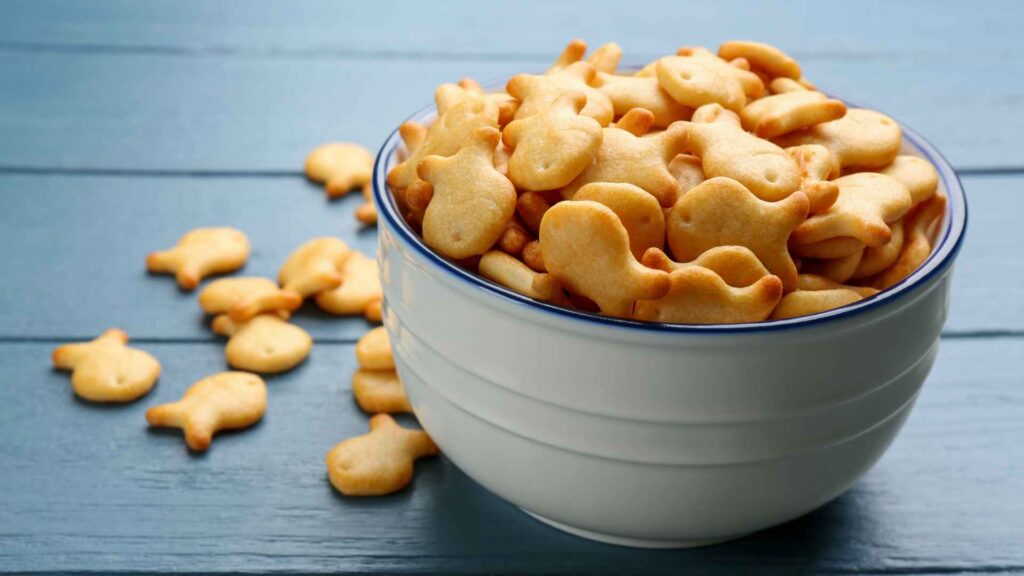
Goldfish crackers are snack food, not fish
The crackers are baked wheat snacks shaped like fish, usually with cheese or another flavoring. They do not provide the nutritional profile of cooked fish and should never be used as a stand-in for a fish ingredient.
Our fish guide covers species, bones, cooking, raw-food hazards, and mercury. None of those questions explains whether a cheese cracker fits a dog’s treat budget.
One smiling cracker is small, which makes it easy to lose count while training or sharing from a bowl. Count what the dog actually ate rather than describing the event as only a snack.
Sodium is the everyday reason to limit them
Salt contributes to the flavor of the dough and coating, and sodium varies among flavors. Read milligrams per serving together with crackers per serving and servings missing.
A few crackers are unlikely to cause salt poisoning in a healthy dog, but an emptied carton can deliver much more sodium than expected. Reduced sodium is a comparison claim, not a veterinary clearance.
Dogs with heart disease, kidney disease, high blood pressure, fluid-balance problems, or a prescribed sodium limit need advice from the clinician managing the diet. Do not use a general article to override a therapeutic plan.
Keep normal access to fresh water unless a veterinarian says otherwise, but never force water. Marked thirst, repeated vomiting, weakness, wobbliness, tremors, seizures, or unusual dullness after a large salty snack raid warrants urgent care.
Fat and calories still count
Goldfish contain flour, oil, cheese or seasonings, and calories despite their airy crunch. Frequent handfuls can join dental chews, scraps, and food used for pills until extras displace a meaningful part of the complete diet.
Cheese-rich and heavily coated varieties may contain more fat than a plain cracker. A large fatty snack can cause vomiting or diarrhea and may contribute to pancreatitis in susceptible dogs.
Dogs with previous pancreatitis, high blood fats, obesity, endocrine disease, or a low-fat prescription plan should not receive them casually. Call for repeated vomiting, abdominal pain, weakness, or refusal to eat.
Our graham-cracker guide explains similar calorie and package questions with different sugar and flavor profiles. Cracker does not mean nutritionally neutral.

Dairy intolerance and allergy are different
Cheddar-flavored crackers contain dairy ingredients, though the amount per cracker is small. A sensitive dog may develop gas, loose stool, abdominal discomfort, or vomiting after a larger serving.
Lactose intolerance involves difficulty digesting milk sugar, while dairy allergy is an immune reaction to proteins. A low-lactose baked product can still contain milk proteins and interfere with an allergy diet.
The Merck Veterinary Manual food-allergy review lists dairy and wheat among common canine food allergens. Diagnosis requires a controlled veterinary diet trial rather than guessing from one itchy episode.
Dogs on elimination or hydrolyzed trials must receive only approved foods, treats, flavored medicines, and toothpaste. Even a few crackers can introduce wheat or dairy and make results harder to interpret.
Our cheddar guide addresses cheese as a separate food. A cheese cracker adds flour, oil, salt, and coatings rather than delivering a useful dairy benefit.
Flavored powders can contain Alliums
Flavor Blasted, pizza, ranch, barbecue, spicy, sour-cream, and limited-edition coatings may contain garlic powder, onion powder, or seasoning blends. Powder is concentrated and sticks across many crackers.
The Merck Veterinary Manual Allium review explains that raw, cooked, dehydrated, and granulated garlic or onion can damage red blood cells. Signs of anemia may take several days to develop.
One coated cracker is unlikely to contain the same Allium amount as an entire bag, so triage should remain proportionate. Call with the label, amount, time, and dog weight after a large or unknown serving or concentrated seasoning spill.
Possible signs include vomiting, weakness, pale gums, fast breathing, rapid heart rate, dark urine, jaundice, or collapse. Our garlic-powder guide covers delayed monitoring.
Spicy, sweet, colored, and specialty varieties
Chile and hot seasoning can irritate the mouth and digestive tract, while sugar in sweet varieties adds calories. Do not force milk, oil, bread, or another rich food to neutralize spice.
Colored crackers use approved food colors, which are not the usual acute concern after a few pieces. The full product amount, sodium, fat, dairy, and flavor powder generally matter more.
Sugar-free or specialty products require a xylitol check, though xylitol is not expected in ordinary Goldfish. Look for xylitol, birch sugar, wood sugar, or birch bark extract and call immediately if present.
Whole-grain, organic, plant-based, or made-with-real-cheese claims do not make the snack a complete dog food. Evaluate the ingredient list and nutrition panel rather than the front of the carton.
Crunch, crumbs, and choking
Individual Goldfish are small, but a mouthful can become a dry mass in a tiny dog or fast eater. Hard pretzel-style crackers may also scrape gums or stress damaged teeth.
Breathing trouble, blue or gray gums, continuous gagging, or collapse is an emergency. Do not sweep blindly through the mouth or pour water into a choking dog.
Our pretzel guide covers hard texture, salt, coatings, and dough. Supervise any permitted snack and never toss handfuls for a dog to gulp.
Packaging can become the bigger problem
Inner bags, cartons, clips, plastic tubs, lids, foil, and freshness packets may disappear during a raid. These items can choke, cut, obstruct, or expose the dog to packet contents.
The FDA pet-hazard guide specifically warns that snack and food bags can be dangerous. Thin bags can seal around the face and cause suffocation.
Inventory every missing item and call for repeated vomiting, belly pain, refusal to eat, straining, lethargy, or inability to keep water down. Do not induce vomiting when packaging or sharp material may be present.
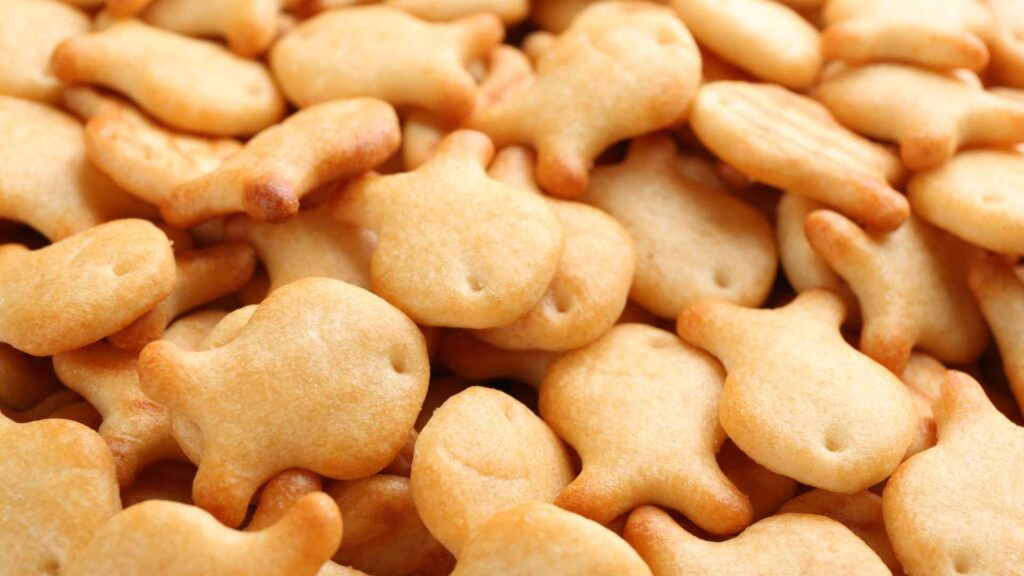
No nutrition advantage
Goldfish crackers should not be used for calcium, protein, vitamins, energy, weight gain, coat health, or dental cleaning. A fortified human snack does not become nutritionally necessary for a dog.
The FDA complete-and-balanced pet food guide explains how nutritional adequacy is established. A complete dog diet already supplies nutrients in planned amounts and proportions.
The World Small Animal Veterinary Association treat guide recommends keeping treats below 10 percent of daily calories. Measured regular food is a better frequent training reward.
Dogs with diabetes plans, kidney diets, sodium restrictions, gastrointestinal diets, or allergy trials should receive only approved extras. A smiling cracker is still an unplanned ingredient.
A sensible planned portion
There is no nutritional need or universal Goldfish serving for dogs. If a healthy adult receives a taste, two or three original crackers are enough to provide the experience without turning a snack into a side dish.
Toy dogs, puppies, seniors, gulpers, and dogs with sensitive stomachs may need less or none. Break crackers for a tiny dog and stop sharing if even a small amount repeatedly causes digestive or skin signs.
Do not scatter crackers across the floor for enrichment because that encourages fast eating and makes the amount hard to track. Use measured kibble in a puzzle toy or sniffing game instead.
Lunchboxes, car seats, and playrooms
Crackers commonly spill under furniture, into car seats, and inside children’s bags where a dog can repeatedly graze. Small repeated access matters for calories, allergy trials, and cumulative Allium exposure from strongly flavored varieties.
Teach children to place unfinished snacks and wrappers in a closed container rather than offering them to the dog. Check play areas for plastic, clips, and stale food before allowing unsupervised pet access.
Store bulk cartons behind a closed door, not on a low pantry shelf. Transfer packs only when the new container keeps the flavor label, ingredient panel, expiration date, and lot code available.
What about an actual goldfish?
A live or aquarium goldfish is unrelated to the cracker and should not be treated as dog food. Aquarium water, gravel, decorations, filters, medicines, and cleaning chemicals create separate ingestion and foreign-object concerns.
If a dog raids a fish tank, identify every missing fish, object, chemical, and medication and call for product-specific advice. Do not apply cracker guidance to raw aquarium animals or tank water.
What to do after a raid
Secure remaining crackers and packaging, identify the exact flavor, and estimate the maximum servings missing. Record time, dog weight, conditions, medications, prescribed diet, symptoms, and every swallowed object.
Call for a large or unknown amount, significant Allium seasoning, xylitol, medical vulnerability, packaging, choking, repeated vomiting, pain, weakness, or neurologic signs. For a few original pieces in a healthy dog, label review and monitoring are usually enough.
Bottom line
A few original Goldfish crackers are usually low risk, but they are salty calorie extras rather than nutrition. Dairy, wheat, fat, flavored powders, Alliums, large servings, medical diets, choking, and packaging deserve closer attention.