Can Cats Eat Goldfish Crackers? Flavors, Salt, and Bag Risks
One crumb from a standard Goldfish cracker is unlikely to harm a healthy adult cat, but the snack is not a useful feline treat. Flavor powders, salt, dairy, garlic or onion ingredients, overeating, and a chewed bag matter much more than the cracker’s cheerful shape.
First, count crackers and inspect the bag
Remove the snack, save the exact package, and estimate how many crackers are missing. Check whether the cat ate one dropped fish, raided a full bowl, licked concentrated seasoning from the bottom, or tore off plastic while fishing for crumbs.
A single plain or cheddar-flavored crumb usually calls for monitoring. Call for a large unknown amount, a flavor containing onion or garlic, a cat with dietary restrictions, or any missing plastic, foil lining, clip, desiccant, or oxygen-absorber packet.
Choking, breathing difficulty, repeated gagging, persistent vomiting, marked weakness, tremors, seizures, collapse, a painful belly, or inability to swallow needs urgent care. Do not induce vomiting or feed bread, oil, milk, or extra salt.
One crumb is not the same exposure as a snack bag
Risk lives in proportion. A tiny cat tongue collecting one dusty crumb receives far less flour, oil, cheese, and salt than a cat that pushes its head into an open family-size bag and treats portion control as a human problem.
Standard crackers are baked human snack foods, not concentrated poison, yet they also are not complete feline nutrition. Repeated sharing adds calories and sodium while teaching the cat that every crinkly package should be investigated personally.
The Cornell Feline Health Center explains that cats have distinctive nutrient needs and treats are not complete and balanced. A measured piece of regular food provides the social moment without turning crackers into a habit.
Read the current label every time
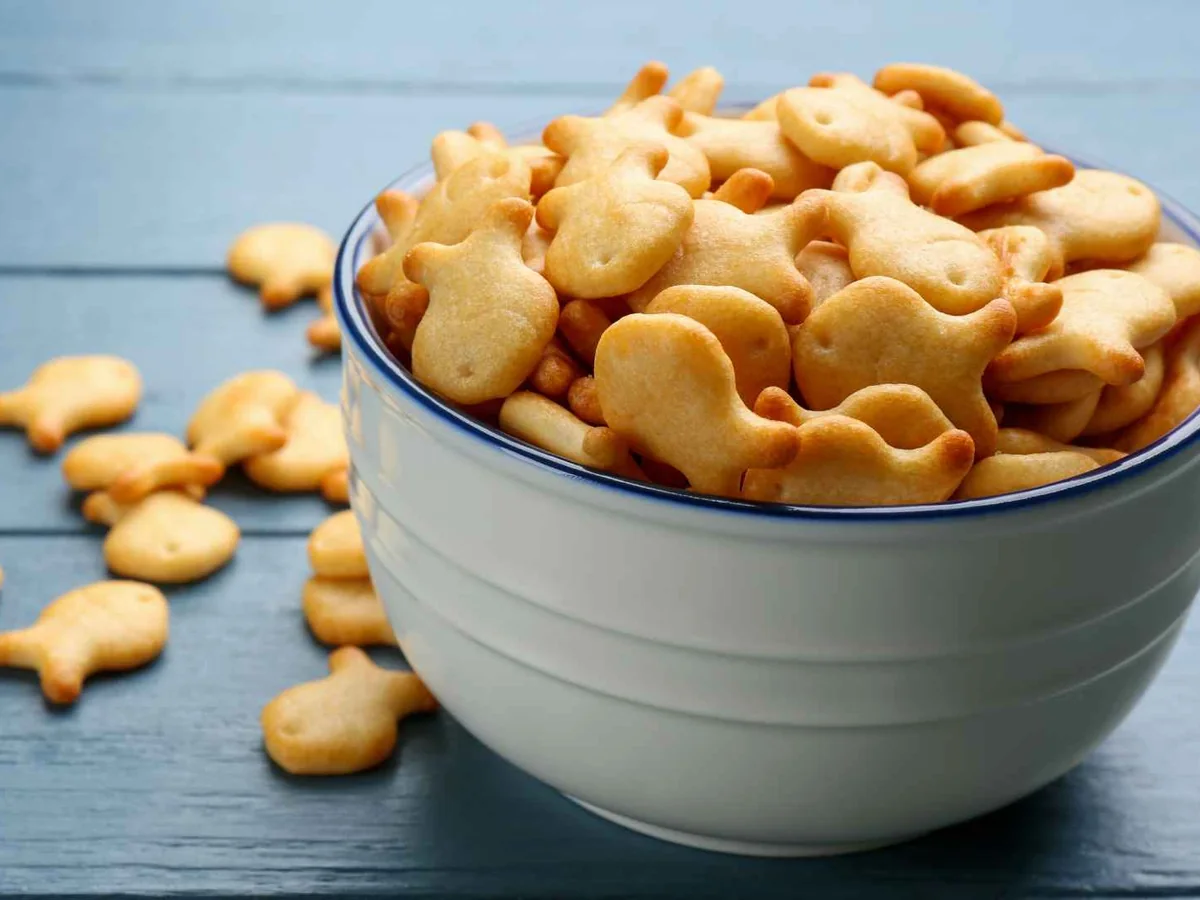
Goldfish is a product line, not one permanent formula. Original, cheddar, color varieties, extra-cheese versions, pretzel forms, flavor-blasted crackers, seasonal products, and limited editions can have different ingredients and coatings.
Manufacturers may reformulate, and products sold in different countries can differ. Avoid relying on a remembered label or an online photograph when the actual bag is sitting in your kitchen.
The live Goldfish cracker product guide can help identify common forms, but its canine health framing does not set a feline dose or diagnosis. Use it for package reconnaissance, then apply the cat-specific evidence here.
The FDA’s Nutrition Facts guide explains serving sizes, sodium, and nutrient amounts, while the ingredient list identifies flavorings. Photograph both panels before calling so the clinic can assess the product in front of you.
Flour and oil mostly create snack-food problems
Baked wheat flour and vegetable oil are not inherently toxic in an ordinary cracker bite. They contribute starch, fat, and calories that cats do not need from a human snack.
A cat with wheat allergy, inflammatory bowel disease, diabetes, obesity, or a strict elimination diet has less room for experiments. One cracker can disrupt a food trial even if it causes no immediate symptom.
Vomiting or soft stool after a small snack does not prove a wheat allergy, and home allergy tests do not replace a veterinary dietary trial. Record the product and response, then discuss recurring patterns rather than diagnosing from one floor crumb.
Cheese flavor does not make it cat food
Cheddar-style crackers can contain dairy ingredients such as cheese, whey, or milk-derived flavor components. Many adult cats digest lactose poorly, although the exact lactose content of a dry cracker differs from a saucer of milk.
One cheesy crumb rarely delivers enough dairy to cause major trouble, but several crackers may lead to gas, vomiting, or diarrhea in a sensitive cat. The cat cheese guide covers dairy tolerance and richer cheese products in more detail.
Milk-protein allergy is different from lactose intolerance. A cat on a veterinary elimination trial should not receive cheese crackers, since tiny extras can make the trial’s result harder to interpret.
Salt depends on amount and medical context
Salt makes crackers appealing to people, but it is unnecessary as a cat reward. One fish-shaped cracker is unlikely to cause salt poisoning, while many crackers, seasoning dust, restricted water, or a cat with kidney or heart disease deserves a call.
Concerning signs after a substantial salty exposure include vomiting, marked thirst, weakness, disorientation, tremors, seizures, or collapse. Keep normal fresh water available but never force water into a struggling or nauseated cat’s mouth.
Report the serving size, sodium per serving, and estimated fraction consumed. Saying “some crackers” gives the veterinary team less useful information than noting that twelve pieces are missing from a counted bowl.
Onion and garlic powders change the call
Some flavored crackers or seasoning blends may include onion powder, garlic powder, or related alliums. Powdered forms can be concentrated, and cats are especially susceptible to oxidative damage to red blood cells.
The ASPCA lists onion, garlic, and chives among foods to avoid and notes feline sensitivity. Call with the product, amount, time, and cat’s weight instead of waiting for anemia signs to appear.
Vomiting may happen early, while weakness, pale gums, rapid breathing, dark urine, or reduced stamina can emerge later. A normal first hour does not clear a meaningful allium exposure.
Flavor-blasted means inspect the coating
Heavily coated varieties deliver more seasoning per cracker and leave concentrated powder in bag corners. Cats may lick the dust without eating many crackers, so the missing snack count can underestimate exposure.
Hot, barbecue, ranch-style, pizza, and specialty flavors can include multiple dairy, spice, sweetener, yeast, smoke, and allium ingredients. The flavor name is only a clue; the current ingredient panel is the evidence.
Pizza-flavored crackers should be assessed by their actual formula, while a stolen pizza slice has sauce, toppings, and much more fat. The cat pizza guide handles that larger and messier meal.
Colored crackers are not automatically more dangerous
Colorful versions may use approved color additives or color from plant-derived ingredients, depending on the product. A bright cracker does not by itself prove toxicity, and a natural-sounding color source does not make the snack nutritionally useful.
Check the label for the exact additives and call about any unusual ingredient, large exposure, or symptom. Do not treat red, green, or blue stool after colored food as harmless if the cat is also ill or straining.
Pretzel and giant versions alter the physical bite
Pretzel-style or larger crackers may be harder, drier, and saltier than a standard baked fish. A whole piece can be an awkward choking object for a kitten, senior, flat-faced cat, or cat with dental or swallowing trouble.
Do not intentionally offer a whole cracker to watch the crunch. If choking occurs and the cat cannot move air, seek emergency help immediately rather than sweeping blindly in the mouth.
The bag can become the real emergency
Food-scented snack bags invite cats to push in their faces, chew seams, and swallow torn strips. A bag over the head can obstruct breathing, while ingested plastic can lodge in the stomach or intestine.
The FDA pet-hazard list includes food bags and foreign objects as household concerns. Cut empty bags open before secure disposal and never leave a snacking cat alone with the package.
If plastic is missing, call even if the cat seems normal. Repeated vomiting, appetite loss, lethargy, abdominal pain, straining, or reduced stool can accompany an obstruction and should not be managed with laxatives unless a veterinarian directs them.
Goldfish crackers and actual goldfish are different questions
The trademarked cracker is a baked snack; a pet fish is a live animal with aquarium water, substrate, medication, and tank equipment around it. Advice about one does not cover the other merely because English has reused the same noun.
If a cat raids an aquarium, identify the fish species, water treatments, missing gravel, hooks, plants, and equipment. Call the veterinarian about that exact scene rather than reading a cracker label and hoping for thematic guidance.
Monitoring after one known cracker
For one standard cracker from an intact, reviewed package, return to normal food and water. Watch for vomiting, diarrhea, appetite loss, lethargy, coughing, gagging, excessive thirst, or abnormal coordination.
Do not withhold food all day from a cat without veterinary direction. If the cat repeatedly vomits or stops eating, call rather than assuming the cracker simply needs time to pass.
Cats with less margin for snack experiments
Kittens and cats with swallowing difficulty, dental disease, kidney disease, heart disease, diabetes, obesity, food allergy, or chronic digestive problems should skip crackers. Prescription diets work best when the unplanned extras remain truly absent.
If a cat takes medication affected by food or sodium, ask the prescribing veterinarian before choosing any human snack as a pill vehicle. A soft morsel of approved wet food is usually easier to portion than a brittle cracker.
Prevent the crunchy little heist
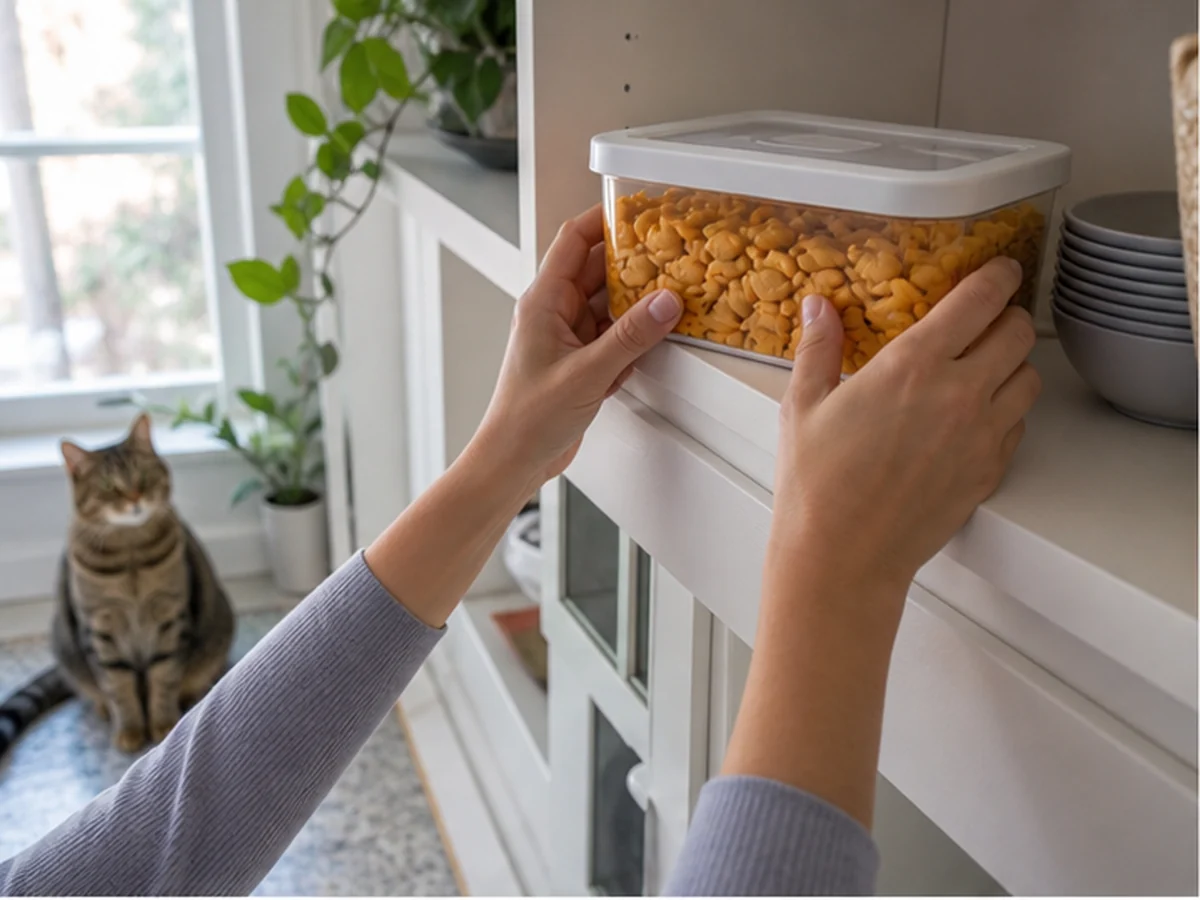
Pour human portions over the counter, reseal the bag, and return it to a closed cabinet before sitting down. Sweep beneath children’s chairs promptly, since the floor often receives a much more generous serving than the cat should.
Offer part of the cat’s measured kibble in a puzzle feeder during snack time. You preserve the shared ritual, and the cat still gets to crunch something shaped by a nutrition plan rather than a marketing department.
FAQ
Can cats have one Goldfish cracker?
One standard cracker is unlikely to poison a healthy adult cat, but it is salty, calorie-dense, and unnecessary. Check the flavor label and offer normal cat food instead of another.
Are cheddar Goldfish safe for cats?
A crumb is generally low risk, although dairy-sensitive cats may develop digestive upset. Large quantities, allium-containing varieties, or a cat on a restricted diet require more caution.
What if my cat ate flavor-blasted crackers?
Read the full ingredient list and estimate both crackers and loose seasoning consumed. Call if onion or garlic appears, the amount is large or unknown, or symptoms begin.
My cat chewed the Goldfish bag. What should I do?
Remove the bag, check for missing plastic and packets, and call about anything swallowed. Breathing trouble, repeated vomiting, belly pain, appetite loss, or lethargy needs urgent evaluation.
Bottom line
One cracker crumb is usually a low-stakes theft, not a nutritional opportunity. Flavoring, salt, dairy, quantity, medical history, and the plastic bag decide whether the event stays small.