Dog Ate Xylitol? Toxic Doses, Symptoms, and What to Do Right Now
If your dog ate xylitol, call a veterinarian or animal poison service now, even if your dog looks completely normal. This is one of those exposures where I would rather make an unnecessary phone call than spend the next hour hoping the ingredient list was bluffing.
Do these five things before you start Googling doses
- Take the product away and keep every wrapper, bottle, pouch, tube, or box.
- Find xylitol on the ingredient list and photograph the entire label.
- Estimate the largest amount your dog could have swallowed, not the smallest amount you hope was swallowed.
- Write down your dog’s current weight, the time of exposure, and any symptoms.
- Call a veterinarian, emergency hospital, or animal poison service immediately.
Do not wait for weakness, vomiting, or a seizure to prove the exposure matters. Xylitol can trigger a rapid insulin release in dogs, and early professional guidance gives you more options than a late scramble.
I know the instinct is to calculate the exact number of pieces before calling. Do the arithmetic while someone else is dialing, because the xylitol content can vary dramatically between products and even between flavors from the same brand.
Why xylitol is different from ordinary sugar
Xylitol is a sugar alcohol used to sweeten many sugar-free foods, supplements, medicines, and oral-care products. People can consume it without the dramatic insulin response seen in dogs, which is exactly why a perfectly normal-looking human product can become a veterinary emergency.
In dogs, xylitol can cause a fast, dose-dependent release of insulin that drives blood glucose dangerously low. Some dogs also develop serious liver injury, and that liver problem can occur after the low-blood-sugar phase or without an obvious dramatic crash first.
Published veterinary guidance associates hypoglycemia with doses around 0.1 gram per kilogram of body weight and liver injury with larger exposures around 0.5 gram per kilogram, but those are treatment-oriented reference points, not home “safe dose” cutoffs. Product concentration, swallowed amount, timing, dog size, and individual response still matter.
That distinction matters because a tiny dog can reach a concerning dose with far less product than a large dog. It also matters because nobody standing beside a torn backpack at 7:12 a.m. knows the true swallowed amount with laboratory precision.
The ingredient can hide in surprisingly normal products
Sugar-free gum is the classic xylitol exposure, but it is not the only one. Xylitol can appear in mints, candies, baked goods, peanut and nut butters, protein bars, protein powders, drink mixes, chewable vitamins, gummy supplements, toothpaste, mouthwash, nasal products, medicines, and other items designed for people.
Do not assume “natural,” “keto,” “low carb,” or “no added sugar” means xylitol is present, but do not assume it is absent either. The ingredient list wins every argument here.
Xylitol may also be marketed in ways that sound less familiar, including birch sugar. When I am checking a mystery sugar-free product around a dog, I read the full ingredients instead of trusting the front of the package to tell the whole story.
Sugar-free gum deserves its own level of suspicion
Gum causes trouble because individual pieces are small, dogs can swallow several quickly, and xylitol concentration varies widely. A purse, backpack, bedside table, coat pocket, or car cup can turn into an exposure before anyone realizes the dog learned how zippers work.
If gum is involved, count the pieces left and find the package size, flavor, and exact ingredient panel. Our gummy candy guide covers other candy hazards, but xylitol-containing gum should be treated as its own urgent problem.
Do not assume chewed gum is harmless because a person already removed some sweetness. The remaining amount of xylitol is not something you can reliably estimate at home, and swallowed wrappers add a separate foreign-body question.

Low blood sugar can appear fast or be delayed
Possible signs of xylitol-related hypoglycemia include vomiting, unusual sleepiness, weakness, wobbliness, poor coordination, collapse, tremors, seizures, and coma. Some dogs can develop signs within about 30 minutes, while absorption from certain products can delay the problem for many hours.
A dog acting normal ten minutes after stealing gum has not passed a meaningful safety test. The absence of symptoms is useful information for the veterinarian, not permission to ignore the exposure.
If your dog is weak, trembling, disoriented, seizing, collapsing, or difficult to wake, go to an emergency veterinary hospital immediately. Do not try to walk a wobbly dog around to “perk them up,” because falls and aspiration can make an already dangerous situation worse.
Liver injury is the quieter second concern
Some dogs exposed to larger amounts of xylitol develop liver injury or liver failure. Signs may include repeated vomiting, lethargy, loss of appetite, yellow discoloration of the eyes or gums, unusual bruising or bleeding, and worsening weakness.
Liver abnormalities may lag behind the first discovery of the exposure, which is one reason a quick return to normal blood sugar does not automatically end veterinary monitoring. Your veterinarian may recommend repeated blood work for glucose, liver enzymes, clotting function, or other values depending on the dose and clinical picture.
This is where the phrase “my dog seems fine now” can become misleading. A normal afternoon after a morning exposure does not erase the need for the monitoring plan the veterinary team gave you.
Do not make your dog vomit unless a veterinarian directs it
Xylitol can begin affecting blood glucose quickly, so home vomiting is not a casual first-aid step. A weak, sleepy, trembling, poorly coordinated, or seizing dog can aspirate vomit, and improvised methods like salt or mustard create additional poisoning risks.
Hydrogen peroxide should not be given automatically just because it appears in old pet advice online. Whether vomiting is appropriate depends on timing, symptoms, product, dose, and the dog’s medical history, so this decision belongs to the professional handling the case.
Activated charcoal is also not a useful do-it-yourself answer for xylitol because it does not bind xylitol well. Please do not turn the kitchen into a chemistry lab while a toxin is being absorbed.
Do not pour syrup into a dog that cannot swallow normally
People sometimes hear “low blood sugar” and immediately reach for honey or corn syrup. A veterinary professional may give case-specific instructions in some situations, but forcing anything into the mouth of a weak, seizing, unconscious, or poorly coordinated dog can cause choking or aspiration.
If professional help tells you to use a sugar source during transport, follow the exact method and amount they provide. That is a bridge to care, not an antidote to xylitol or a substitute for blood-glucose monitoring.
Protein bars and powders can create a multi-ingredient emergency
A protein bar may combine xylitol with chocolate, raisins, macadamia nuts, caffeine, vitamins, minerals, or a foil wrapper. A flavored powder may add caffeine, cocoa, green tea extract, creatine, vitamins, or other ingredients that change the risk assessment.
Never report only “protein bar” to the clinic. Give the exact brand, flavor, serving size, number missing, ingredient list, nutrition panel, and whether the dog ate the wrapper or packet.
The same principle applies to keto snacks and low-sugar baked goods. Xylitol is one problem, but a dog does not politely eat one ingredient and leave the rest of the recipe on the counter.
Toothpaste and dental products count too
Some toothpastes, mouth products, and dental items contain xylitol, while others do not. Swallowing a tiny smear from a pet-safe toothpaste is a completely different situation from chewing an entire tube of a human product.
Bring or photograph the tube and report how full it was before the incident. If the dog chewed the plastic cap or tube, mention those missing pieces because obstruction and mouth injury can matter separately.
Medicines and supplements can be harder to decode
Chewable vitamins, gummy supplements, dissolving tablets, liquid medications, and compounded products can use xylitol as a sweetener or base. The active drug itself may be toxic to dogs, so the call should include every ingredient and the medication strength.
Count what remains instead of assuming one tablet is missing, especially if the bottle spilled. If several pets had access, separate them and tell the veterinary team that the dose may not have been evenly shared.
What the veterinary team may do
Treatment depends on estimated dose, product, time, symptoms, and laboratory results. A veterinary team may consider controlled decontamination in an appropriate dog, frequent blood-glucose monitoring, intravenous dextrose, liver-value monitoring, fluids, and supportive treatment for seizures, electrolyte abnormalities, or liver dysfunction.
Dogs treated promptly for uncomplicated low blood sugar can do very well. Severe liver injury is a much more serious development, which is why early assessment and follow-up monitoring matter even if your dog has already perfected the innocent face.
The easiest prevention fix is changing where human snacks live
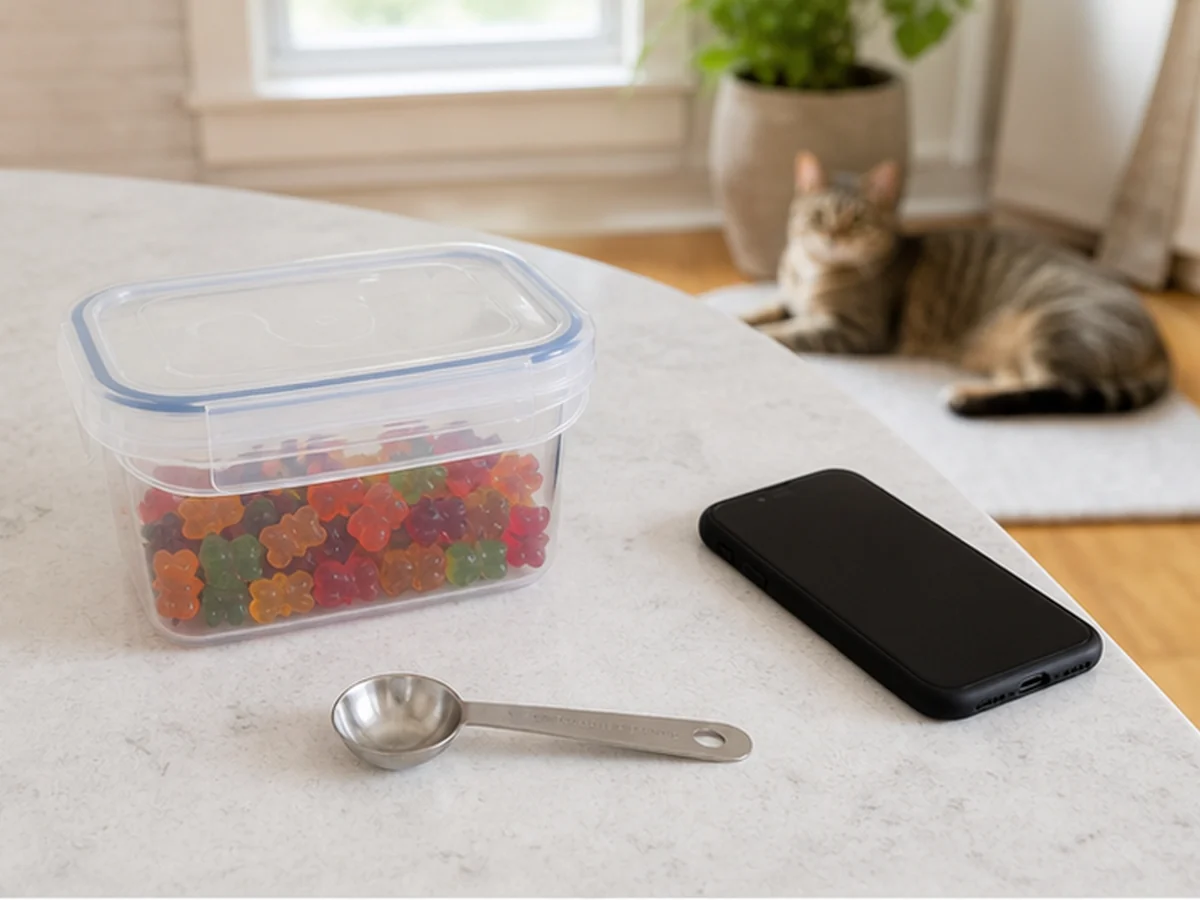
Keep gum, mints, supplements, toothpaste, protein products, and sugar-free snacks in closed cabinets or containers a dog cannot nose open. Purses and backpacks belong on hooks or behind doors, not on the floor beside an animal whose hobby is conducting unrequested luggage inspections.
Check new products when they enter the house because formulas change. If a dog is especially skilled at stealing food, I would rather replace one xylitol-containing pantry item than rely on everyone remembering the same safety routine forever.
Frequently asked questions
How much xylitol is dangerous to a dog?
Veterinary toxicology references associate roughly 0.1 gram per kilogram with hypoglycemia risk and larger doses around 0.5 gram per kilogram with liver injury, but do not use those values to clear an exposure yourself. Product concentration and swallowed amount can be uncertain, so call with the label and your dog’s weight.
How quickly can xylitol symptoms start?
Low-blood-sugar signs can begin within about 30 minutes in some dogs, but certain products can delay absorption for many hours. That is why waiting for symptoms is not a safe screening method.
Is xylitol dangerous to cats too?
The dramatic xylitol-related hypoglycemia and liver injury documented in dogs have not been demonstrated in cats in the same way. A cat that eats a xylitol-containing mixed product can still need advice for other ingredients, packaging, or symptoms.
Can I just monitor my dog at home?
Only if a veterinarian or poison professional has assessed the exact exposure and specifically tells you home monitoring is appropriate. Unknown doses, meaningful xylitol ingestion, or any symptoms deserve prompt professional evaluation.
Bottom line
Xylitol exposure in dogs is time-sensitive because dangerous low blood sugar can develop quickly and liver injury can follow larger doses. Save the product, calculate the largest plausible amount, call immediately, avoid improvised vomiting or antidotes, and follow the veterinary monitoring plan even if your dog still looks fine.