Can Cats Eat Duck? Cooked Meat, Raw Duck, H5N1, Skin, and Bones
Cats can eat plain fully cooked boneless duck meat in small amounts. I would cook it thoroughly, remove skin and bones, and skip raw duck because poultry can carry foodborne pathogens and H5N1 is a serious current concern for cats eating contaminated uncooked poultry.
The quick duck verdict for cats
Plain fully cooked boneless duck can be an occasional treat for many healthy cats. It provides animal protein plus iron, selenium, B vitamins, and other nutrients.
I cook duck thoroughly, remove every bone and most visible skin, skip salt and seasoning, let it cool, and offer a tiny portion. Complete cat food should remain the nutritional foundation.
Duck also appears in complete commercial cat foods and limited-ingredient formulas. A balanced duck-based food is nutritionally very different from a bowl of plain duck meat.
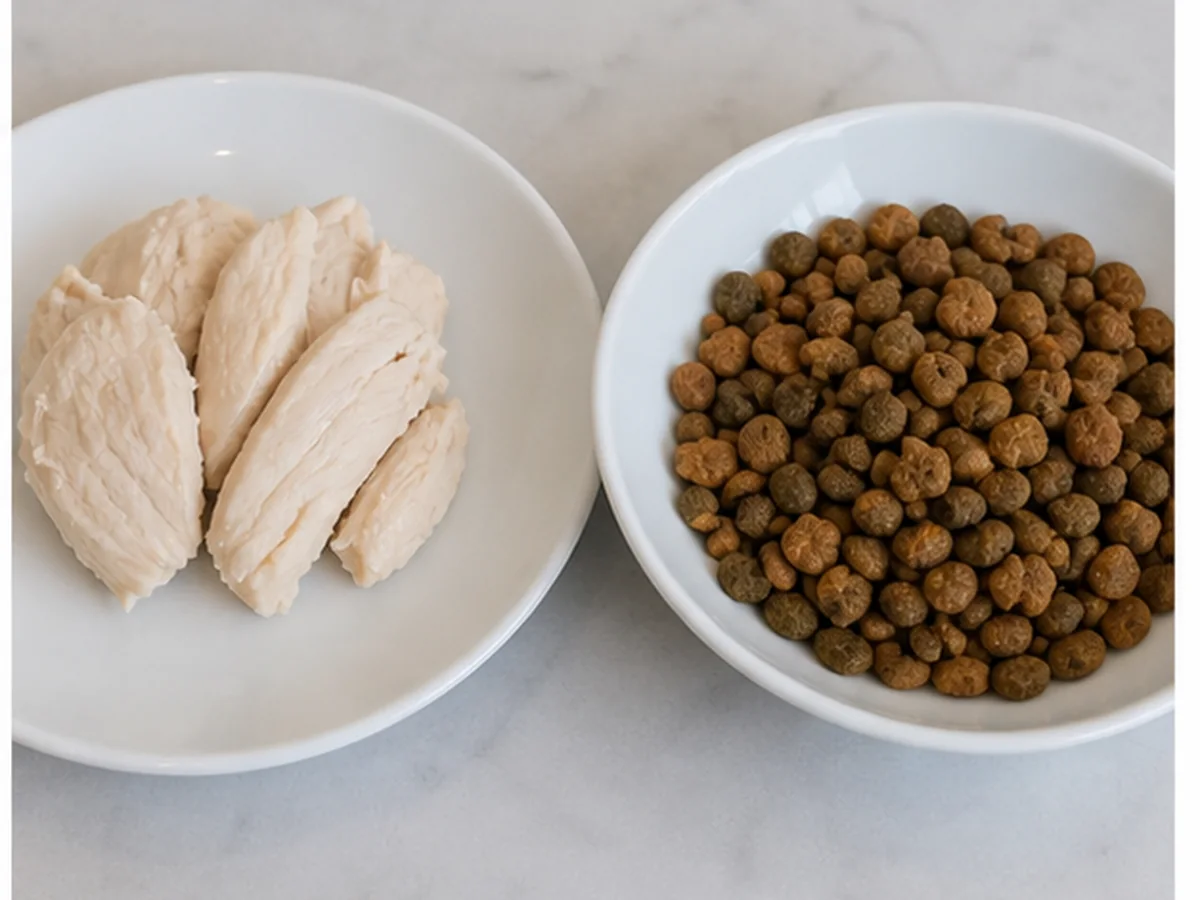
Plain cooked duck is the version I would serve
Lean cooked duck can be a useful protein treat when a cat tolerates it well. One or two tiny pieces are enough to add variety without turning the treat into a second meal.
Cats are small, so a human-sized serving can become a substantial calorie contribution quickly. I would keep the portion tiny and count it as an extra.
If a cat is on a prescription diet for kidney, liver, gastrointestinal, urinary, allergy, or weight issues, I would check before adding duck regularly.
Raw duck has an H5N1 risk I would not ignore
Cats are particularly susceptible to highly pathogenic avian influenza H5N1, and contaminated uncooked poultry products have been linked with severe feline illness and death. Cooking poultry thoroughly is an important risk-reduction step.
Raw poultry also carries familiar bacterial hazards such as Salmonella and Campylobacter. The current H5N1 concern is an additional reason, not the only reason, I would choose cooked duck.
Fever, severe lethargy, poor appetite, eye or nasal discharge, breathing difficulty, tremors, seizures, incoordination, or other neurologic changes after raw-poultry exposure deserves urgent veterinary evaluation.
Freeze-dried raw duck still counts as raw
Freeze-drying and dehydration remove moisture but should not automatically be treated as equivalent to cooking. Products marketed as raw should still be treated as raw unless the manufacturer describes an effective pathogen-kill step.
I would read the label rather than assume a dry crunchy texture means the poultry has been cooked. Raw-poultry handling still matters.
Duck skin can be much richer than the meat
Duck skin contains a lot of fat. A tiny plain piece may cause no problem, but a large amount can cause vomiting or diarrhea and is a poor choice for cats with pancreatitis, obesity, or gastrointestinal disease.
If I want to share duck, I choose a small piece of cooked meat and leave the crispy skin on the human plate. The cat still gets the exciting part without the concentrated fat.
Large amounts of duck fat also add calories quickly and can work against weight-management plans.
Rendered duck fat is not a useful topper
Rendered duck fat is calorie-dense and can overwhelm a cat’s small daily calorie budget quickly. A spoonful meant as a flavor boost can be a surprisingly large amount of fat.
I would not use drippings or duck fat as a routine topper, especially for cats with pancreatitis, obesity, or chronic gastrointestinal disease.
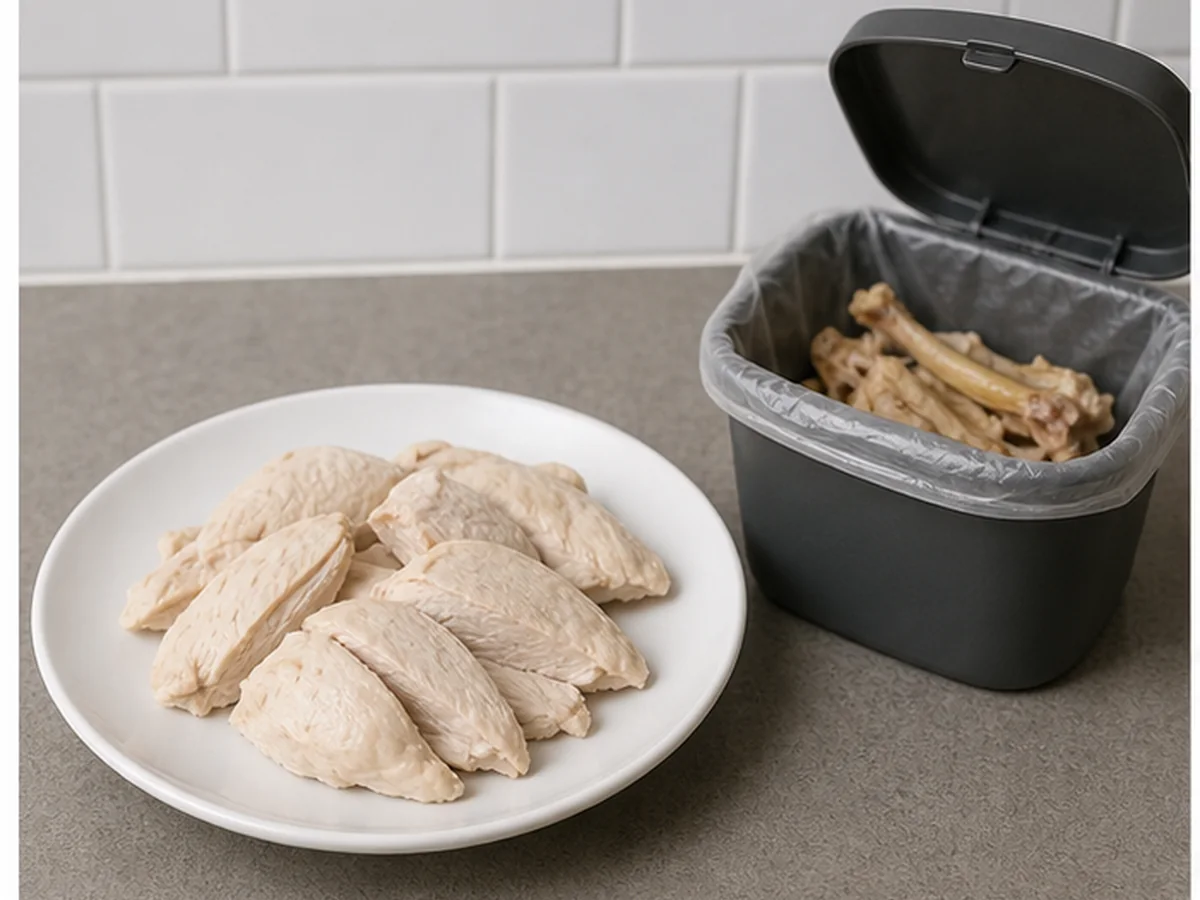
Cooked duck bones are not cat treats
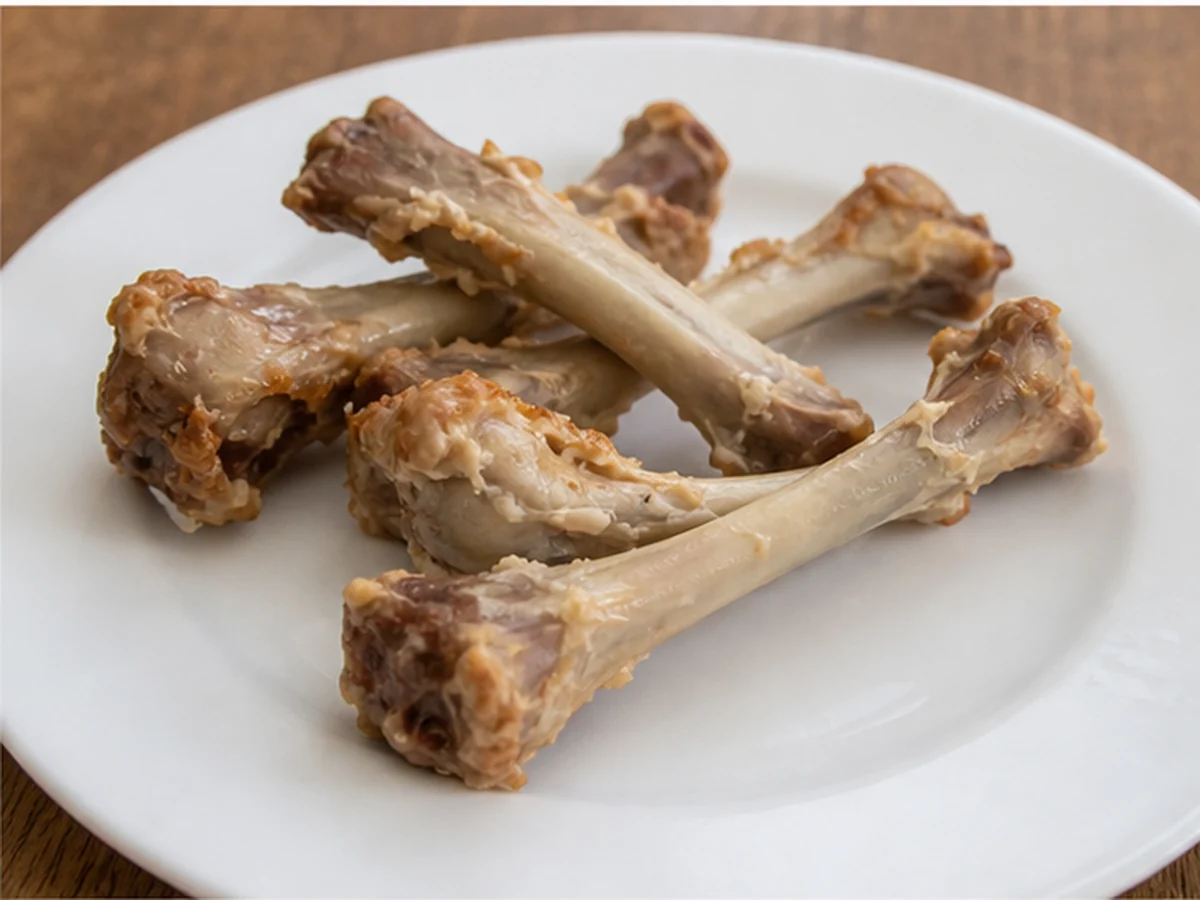
Cooked poultry bones can become brittle and fracture into sharp pieces. They can cause choking, lodge in the esophagus, cut the mouth, injure the gastrointestinal tract, or create an obstruction.
If cooked bones were swallowed, call your veterinarian for case-specific advice. I would not induce vomiting at home because sharp fragments can cause additional injury.
Gagging, drooling, repeated swallowing, regurgitation, vomiting, abdominal pain, bloody or black stool, or breathing difficulty deserves urgent evaluation.
Raw duck bones are not automatically safe
Raw poultry bones may be more flexible than cooked bones, but they can still choke, lodge, fracture teeth, or obstruct the gastrointestinal tract. Raw-bone feeding also keeps the pathogen and H5N1 concern in the picture.
I would not recommend duck bones simply because they are raw. Boneless cooked meat is much easier to portion and predict.
Sauces can add alliums, salt, sugar, and alcohol
Duck is often served with garlic, onion, shallots, hoisin, wine sauce, orange glaze, plum sauce, or salty marinades. Cats are particularly sensitive to alliums, and enough garlic or onion can damage red blood cells.
I set aside the cat’s piece before seasoning rather than trying to rinse a finished restaurant dish. A plain morsel is much easier to evaluate than lacquered duck with three sauces.
Sugar-heavy glaze, salty sauce, and alcohol-based reductions add separate concerns even when no classic toxin is present.
Hoisin and restaurant duck are not plain poultry
Restaurant duck can come with hoisin, soy sauce, garlic sauce, scallions, sesame oil, chile, sugar, or plum sauce. The complete recipe matters more than the fact that the protein is duck.
I would not scrape off one visible garnish and assume the remaining meat is plain. Sauce and seasoning can coat the entire serving.
Smoked duck is usually too salty
Smoked or cured duck can contain substantial sodium and added spices. Cats with kidney disease, heart disease, high blood pressure, or sodium restrictions deserve extra caution.
Plain fresh cooked duck is a simpler intentional treat. A cat does not need charcuterie just because the meat happens to be poultry.
Duck sausage and confit are much richer
Duck sausage can contain added fat, salt, garlic, onion, preservatives, and spice blends. Duck confit is deliberately cooked and stored in substantial fat.
I would not use either as a routine cat treat. These foods are nutritionally very different from plain lean duck meat.
Duck should stay an extra unless the diet is complete
Cats need taurine, essential fatty acids, vitamins, minerals, and amino acids in carefully balanced amounts. Plain duck muscle meat does not provide every requirement by itself.
If duck becomes a regular ingredient in a homemade diet, use a properly formulated recipe. A cat’s carnivore status does not make nutritional math optional.
Duck can be useful in elimination diets
Duck is sometimes used as a novel or less-common protein in veterinary elimination diets for suspected food allergy. In that setting, diet purity matters.
Random treats, flavored medications, table scraps, and other proteins can undermine the test. Follow the veterinarian’s prescribed food list closely.
A novel protein is not inherently hypoallergenic forever. Individual cats can become sensitized to many proteins, including duck.
Commercial duck cat food is different from plain duck
A complete commercial duck-based food is formulated to supply the full nutrient profile a cat needs. Plain duck muscle meat is only one ingredient.
I would not assume a bowl of duck is nutritionally equivalent to complete duck-based canned food just because both use the same protein source.
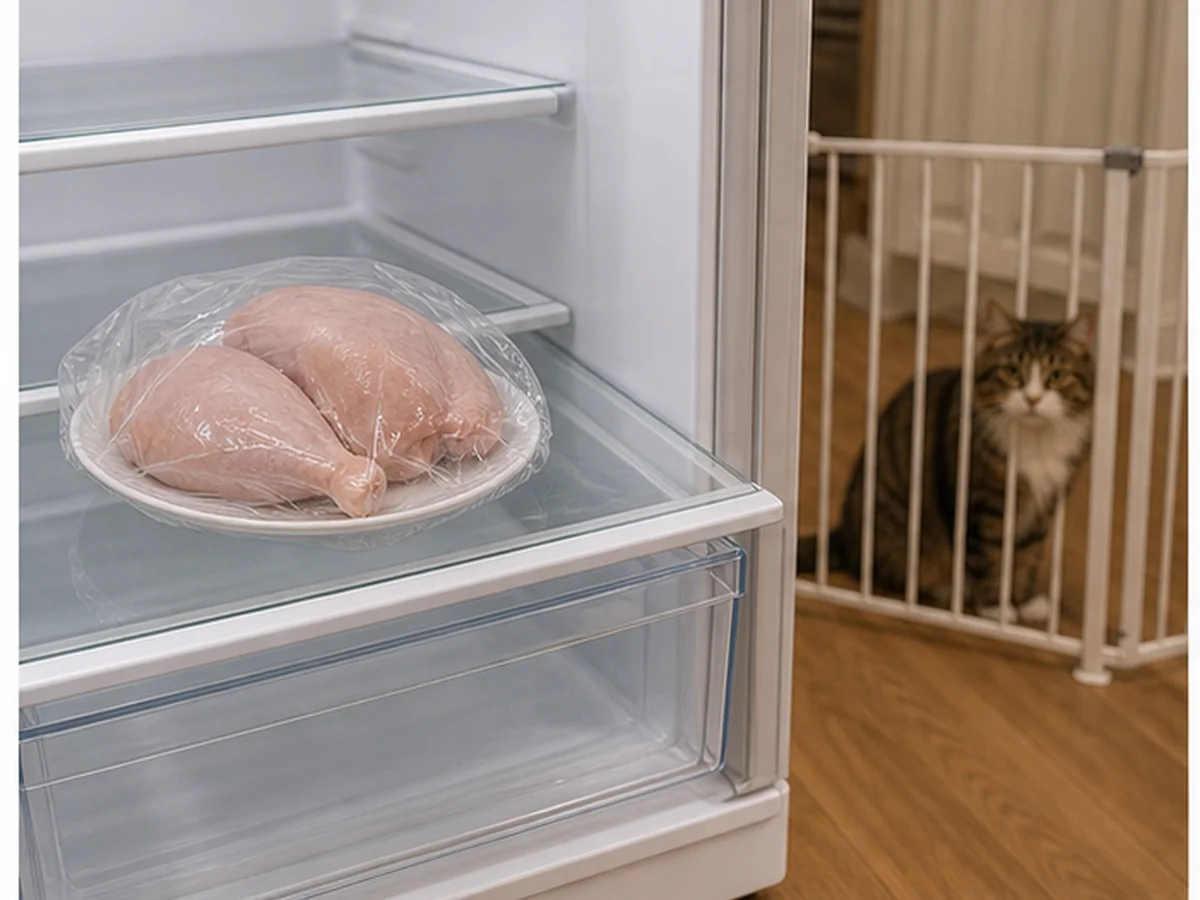
Kittens can have duck only as a tiny extra
Kittens need complete growth food with carefully balanced protein, taurine, calcium, phosphorus, vitamins, and minerals. Plain duck should not displace that diet.
A tiny cooked boneless piece can be an occasional treat for a healthy kitten, but raw duck adds unnecessary pathogen and H5N1 risk during growth.
What to do if your cat ate raw duck
- Remove the remaining raw poultry and clean contaminated surfaces.
- Estimate the amount eaten and the time.
- Save the package or raw-food label if one exists.
- Note whether the product was fresh raw, frozen raw, freeze-dried raw, or dehydrated raw.
- Watch closely for gastrointestinal, respiratory, neurologic, or severe systemic illness.
- Call promptly if the cat becomes ill or a known raw-pet-food advisory or H5N1 concern applies to the product.
What to do if your cat swallowed duck bones
Estimate the bone size, whether it was cooked or raw, and how many pieces were swallowed. Call for case-specific advice, especially after sharp cooked fragments.
Do not try to induce vomiting at home or force bread. Follow the veterinary team’s instructions based on the actual foreign-body risk.
How I would serve duck on purpose
I would use plain fully cooked boneless meat, remove most visible skin and fat, cut it into tiny pieces, and skip salt, garlic, onion, glaze, butter, and sauce.
If duck is being used therapeutically as a diet-trial protein, I would follow the veterinarian’s plan rather than adding unrelated table foods.
Frequently asked questions
Can cats eat cooked duck breast?
Yes, a small amount of plain fully cooked boneless meat can be an occasional treat. Remove skin and seasoning.
Can cats eat raw duck?
I would avoid it. Raw poultry can carry bacteria and H5N1, which can cause severe illness in cats.
Can cats eat duck skin?
A tiny plain cooked piece may be low risk, but duck skin is very fatty and is not a useful routine treat.
Can cats eat duck bones?
I would not feed cooked duck bones because they can splinter and cause choking, injury, or obstruction. Raw bones still carry mechanical and pathogen risks.
Bottom line
Plain fully cooked boneless duck meat can be an occasional cat treat. I would skip raw duck because of pathogen and H5N1 concerns, remove fatty skin and every bone, avoid allium-heavy sauces, and keep the portion tiny.