Can Cats Eat Salmon? Cooked Fillets, Cans, Smoke, and Bones
A healthy adult cat may have a tiny flake of fully cooked, plain, boneless salmon. Raw salmon, pin bones, smoked or cured fish, salty cans, rich sauces, spoiled seafood, and fish-only feeding carry different risks, so “salmon” is only the beginning of the answer.
For a fish theft, save the package and check for bones, sauce, skewers, and absorbent pads. Call for symptoms, raw fish, a vulnerable cat, or missing objects.
The salmon worth sharing is almost comically plain
Cook an unseasoned fillet until it reaches 145°F or becomes opaque and separates easily with a fork, following FDA seafood guidance. Let it cool before checking the flesh with clean fingers and tweezers for pin bones.
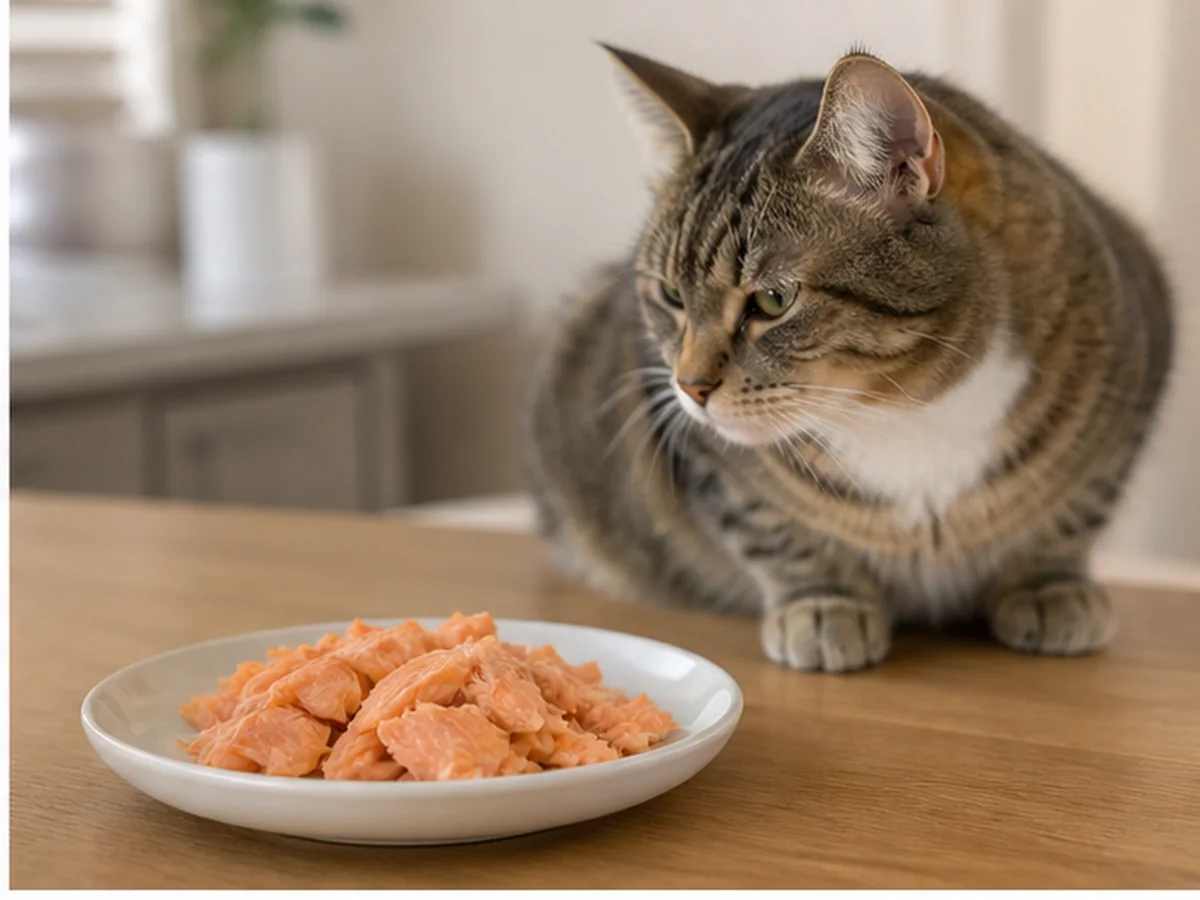
Remove tough skin and visible pools of fat, then make one pea-size flake. Salt, butter, oil, garlic, onion, lemon-pepper seasoning, teriyaki glaze, and pan sauce belong on the human portion only.
A cat who begs beside the oven is responding to aroma, not submitting a nutrient analysis. Put the approved flake on a dish instead of offering bites from the table, where portions grow by negotiation.
Pin bones deserve a fingertip inspection
Salmon fillets can retain slender bones after processing, including products sold as boneless. A pin bone can lodge in the mouth or throat, cause gagging, injure tissue, or contribute to a digestive obstruction.
Do not feed bread to sweep a suspected bone downward and do not reach blindly into the throat. Drooling, pawing at the mouth, repeated swallowing, retching, neck extension, breathing difficulty, or refusal to eat call for urgent veterinary help.
Whole salmon steaks add vertebrae and rib bones that are much harder to overlook but not safer. Keep the carcass, foil, butcher string, and trash bag secured until disposal.
Raw salmon is covered by a different risk sheet
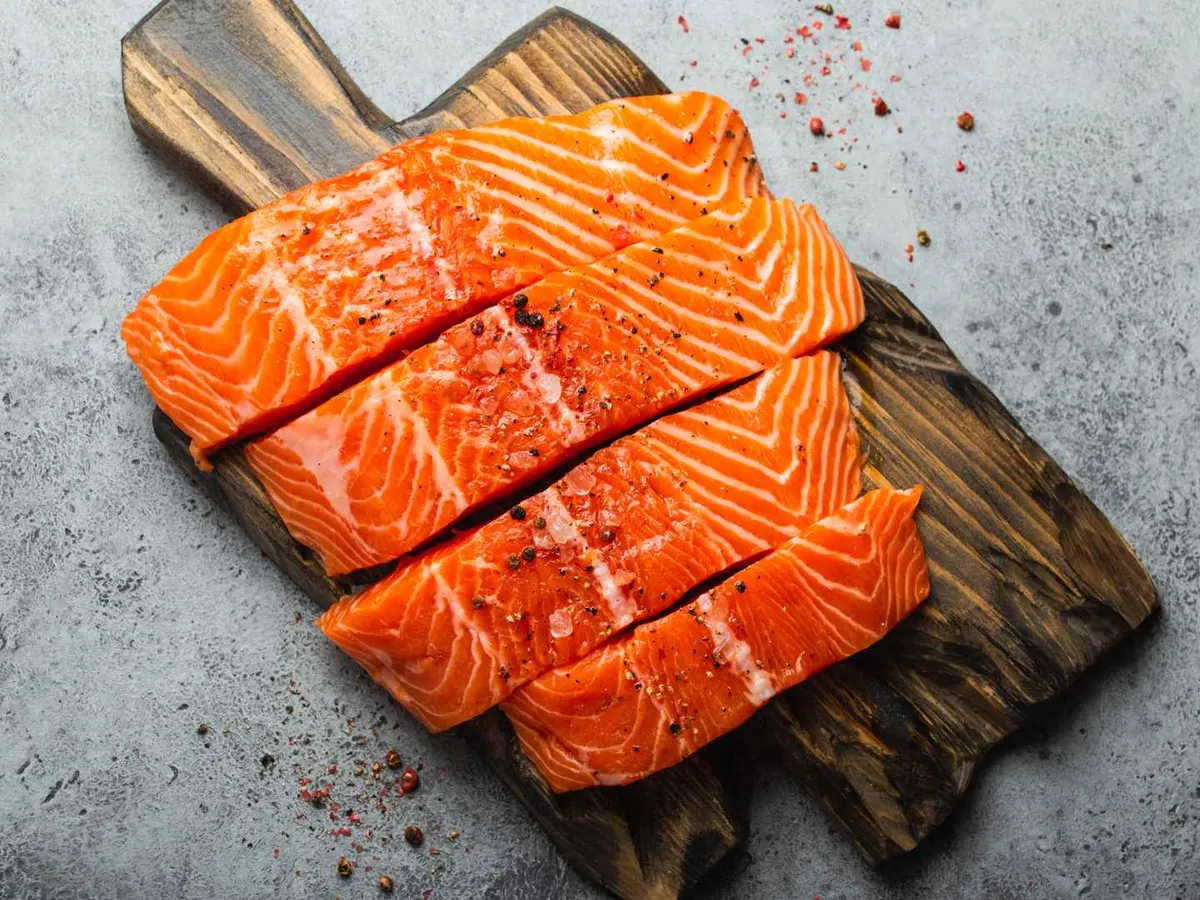
Uncooked fish can carry bacteria and parasites, and freezing does not kill every harmful germ. The CDC advises against raw pet foods, including frozen, dehydrated, and freeze-dried forms that have not received an adequate pathogen-kill step.
Our raw fish guide explains species, parasites, thiaminase, bones, and household contamination. A sushi-grade label does not promise sterility, feline nutritional balance, or freedom from pin bones.
Sushi and poke also bring rice, soy sauce, wasabi, spicy mayonnaise, avocado, scallion, seaweed, and disposable packaging. Keep the menu receipt because “two bites of salmon roll” is less informative than the ingredient list.
Canned salmon: inspect the liquid and the label
A no-salt-added product packed in water is easier to evaluate than fish in brine, oil, broth, smoke flavor, or sauce. Drain the piece and check carefully for skin, bone, and seasoning before considering a tiny taste.
Canning can soften bones enough for people to eat, but that does not make every fragment appropriate for every cat. Cats with dental disease, swallowing trouble, constipation, or a prescribed mineral target should skip the experiment.
Never let a cat lick the can or lid because the edge can cut the tongue. Refrigerate leftovers in a covered nonmetallic container and follow the product’s storage directions.
Smoked salmon, lox, and gravlax
Cold-smoked salmon may not receive a full cooking step and is usually salty. Hot-smoked salmon is cooked but can still carry salt, sugar, pepper, garlic, onion, wood-smoke compounds, and hidden bones.
Lox and gravlax are cured products rather than plain cooked fish. Dill is not the central issue when the recipe also uses a substantial salt cure, sugar, pepper, or alcohol.
One stolen shred does not automatically create salt poisoning, but repeated sharing and large portions are poor choices. Our salami guide offers a parallel lesson about cured foods that are not classic poisons yet remain clumsy treats.
Mercury: salmon is lower, not limitless
The FDA fish chart places salmon in its lower-mercury “Best Choices” category for people who are pregnant or feeding young children. That comparison helps distinguish species but is not a feline feeding schedule.
Mercury is one reason to avoid relying on a single fish, while nutritional imbalance is a more immediate reason not to replace complete cat food with salmon. “Lower mercury” should never be translated into “all the salmon a cat can lobby for.”
Fish aroma can hide a bigger recipe
Salmon in garlic butter combines an Allium toxin with fat, while creamy pasta adds dairy, salt, and perhaps onion powder. Teriyaki can deliver soy sauce, sugar, garlic, and onion in a glossy coating that does not rinse away reliably.
Salmon cakes may contain raw or cooked egg, breadcrumbs, mayonnaise, onion, garlic, seasoning, and frying oil. Account for every ingredient and any toothpick, parchment, or plastic film after a theft.
Salmon dog treats are formulated and portioned for another species, and dried jerky can be tough and concentrated. A complete salmon-flavored cat food is the better way to make salmon part of regular meals.
Why salmon cannot carry the whole diet
Salmon contributes protein and fat but does not provide every feline nutrient in the correct amount and relationship. Cornell’s cat nutrition guidance warns that homemade diets are difficult to formulate and notes neurologic illness in some cats fed human canned-fish products.
Look for a complete-and-balanced statement for the cat’s life stage on the main food. Toppers marked for intermittent or supplemental feeding are extras even when their package features a salmon more photogenic than most family portraits.
Frequent rich fish may also worsen calorie control or digestive upset. Cats with pancreatitis history, obesity, kidney disease, heart disease, or a prescription diet need veterinary approval before fish treats.
Freshness and the cold chain
Buy refrigerated salmon or fish displayed on fresh ice, and reject sour, rancid, strongly fishy, or ammonia-like odors. Color alone does not prove freshness because feed, environment, and processing can alter appearance.
Thaw frozen salmon in the refrigerator or in a sealed bag under cold water when it will be cooked immediately. Counter thawing lets the surface warm long before the center is ready.
Refrigerate cooked leftovers promptly and discard food that was left out too long. Cooking cannot reliably redeem seafood that has already spoiled, and cats do not need to participate in a refrigerator clean-out.
A quick plan after the plate tips
- Remove access. Secure fish, bones, sauce, foil, pads, skewers, and trash.
- Name the form. Record raw, cooked, smoked, canned, cured, or dried.
- List additions. Check for alliums, alcohol, dairy, soy sauce, xylitol, and other seafood.
- Keep identifiers. Save the brand, lot, date, receipt, and a photo.
- Call for concern. Seek advice for symptoms, raw or spoiled fish, high-risk cats, or swallowed objects.
Emergency signs include trouble breathing, collapse, seizures, severe weakness, repeated vomiting, a painful swollen abdomen, inability to swallow, or suspected obstruction. Do not induce vomiting or administer home remedies without direct instructions.
Salmon-flavored cat food is a separate category
A complete salmon recipe for cats includes other ingredients and supplements to meet feline nutrient targets. The fish name describes flavor or a major protein, not a can filled with nothing but kitchen salmon.
Read the adequacy statement to distinguish a main diet from a topper, treat, or supplemental product. Life-stage language matters because kittens, pregnant cats, and adults have different nutritional requirements.
If salmon is being considered for a suspected food allergy, use a veterinarian-designed elimination diet rather than rotating grocery fish. Cross-contact and undocumented ingredients can make a home trial impossible to interpret.
Alternatives when fish is not a fit
A tiny piece of plain cooked egg can be easier to debone because there are, reassuringly, no bones. Our boiled egg guide covers portions, refrigeration, shells, and add-ins.
Cats on low-fat, low-phosphorus, or limited-ingredient plans may need to use their regular food as treats. Reserve several pieces from the daily ration before serving the meal so the rewards do not become extra calories.
Fish oil supplements are concentrated products with oxidation, dose, and interaction questions. Use a veterinarian-recommended formulation instead of pouring oil from a salmon tin or puncturing a human capsule.
When digestive signs continue
Repeated vomiting, diarrhea, appetite loss, or weight change after fish is not a cue to try another preparation. Stop salmon and arrange an examination, bringing details about every food, treat, supplement, and table theft.
Cats that stop eating can become seriously ill, especially when overweight. Do not wait several days while offering increasingly elaborate salmon toppings to tempt a cat whose appetite has changed suddenly.
Salmon FAQs, minus the folklore
Can kittens eat cooked salmon?
Growth nutrition deserves the available stomach space, so use complete kitten food rather than table fish. Ask the kitten’s veterinarian before introducing extras.
Can cats eat salmon skin?
Plain cooked skin is not inherently poisonous, but it is fatty, chewy, and often seasoned. Removing it creates a simpler, lower-calorie bite.
Can salmon help a cat’s coat?
Essential fatty acids matter, but a complete diet or veterinarian-selected supplement provides controlled amounts. Random salmon portions are not a precise dermatology treatment.
The clean answer
When one household cat receives salmon and another eats a restricted diet, serve them apart and collect both dishes immediately. Shared bowls make portion control and exposure history surprisingly murky.
Write the opening date on canned or refrigerated fish so nobody has to infer freshness from memory. A piece that has become dry, slimy, sour, or questionable is not improved by being offered to the cat.
If the cat repeatedly hunts human food despite adequate meals, discuss feeding schedule, enrichment, body condition, and medical causes of increased appetite. Hyperthyroidism and diabetes can make food seeking more intense, and a salmon habit can mask the pattern.
Serve salmon only as a cooled, cooked, plain, meticulously deboned flake, and keep the taste tiny. Raw, smoked, cured, sauced, spoiled, or bone-filled versions stay off the cat’s plate, while complete food remains responsible for nutrition.