Can Cats Eat Raw Meat? Pathogens, Bones, H5N1, and Balance
Cats can physically eat raw meat, but major public-health and veterinary authorities do not recommend feeding it. Raw meat and raw pet food can carry bacteria, parasites, and, in uncooked poultry or products containing it, emerging H5N1 risk; bones and nutritionally incomplete recipes add separate hazards.
After a theft, remove access and call your veterinarian, especially for poultry, symptoms, or swallowed packaging.
The short decision guide
| Situation | Main concern | What to do |
|---|---|---|
| Small stolen bite of grocery meat | Foodborne pathogens and any attached bone, skewer, pad, or wrap | Remove access, clean surfaces, and call if poultry, symptoms, high-risk cat, or foreign material is involved. |
| Raw chicken, turkey, or raw poultry pet food | Bacteria plus current H5N1 concern | Do not feed; call promptly after exposure or illness and keep the package and lot code. |
| Commercial raw, frozen raw, freeze-dried raw | Processing may reduce but not reliably eliminate pathogens | Check the label and recall status; “commercial” does not equal sterile. |
| Homemade raw diet | Pathogens and likely nutrient imbalance without expert formulation | Speak with a veterinarian or board-certified veterinary nutritionist before feeding. |
| Raw meaty bone | Dental fracture, choking, obstruction, perforation, constipation | Avoid; seek urgent advice if swallowed or symptoms develop. |
| Cat or person becomes ill | Foodborne or other infection | Contact the appropriate medical professional and save product information. |
Why “cats are carnivores” does not settle the question
Cats are obligate carnivores because they require nutrients found naturally in animal tissues. That biological fact says what nutrients they need, not that cooking is forbidden or that a kitchen-raised cat is protected from Salmonella, Listeria, Escherichia coli, parasites, and viruses.
Cornell’s feline nutrition guidance calls raw meat a potential vehicle for toxoplasmosis and other infectious diseases. Cornell also recommends nutritionally balanced commercial food or, when a medical homemade diet is needed, a recipe developed by veterinary nutrition experts.
Cooking changes pathogen risk without turning meat into a vegetable. A plain, fully cooked piece of boneless meat can remain recognizably meaty while skipping the raw-diet roulette wheel.
What counts as raw? More products than the butcher tray
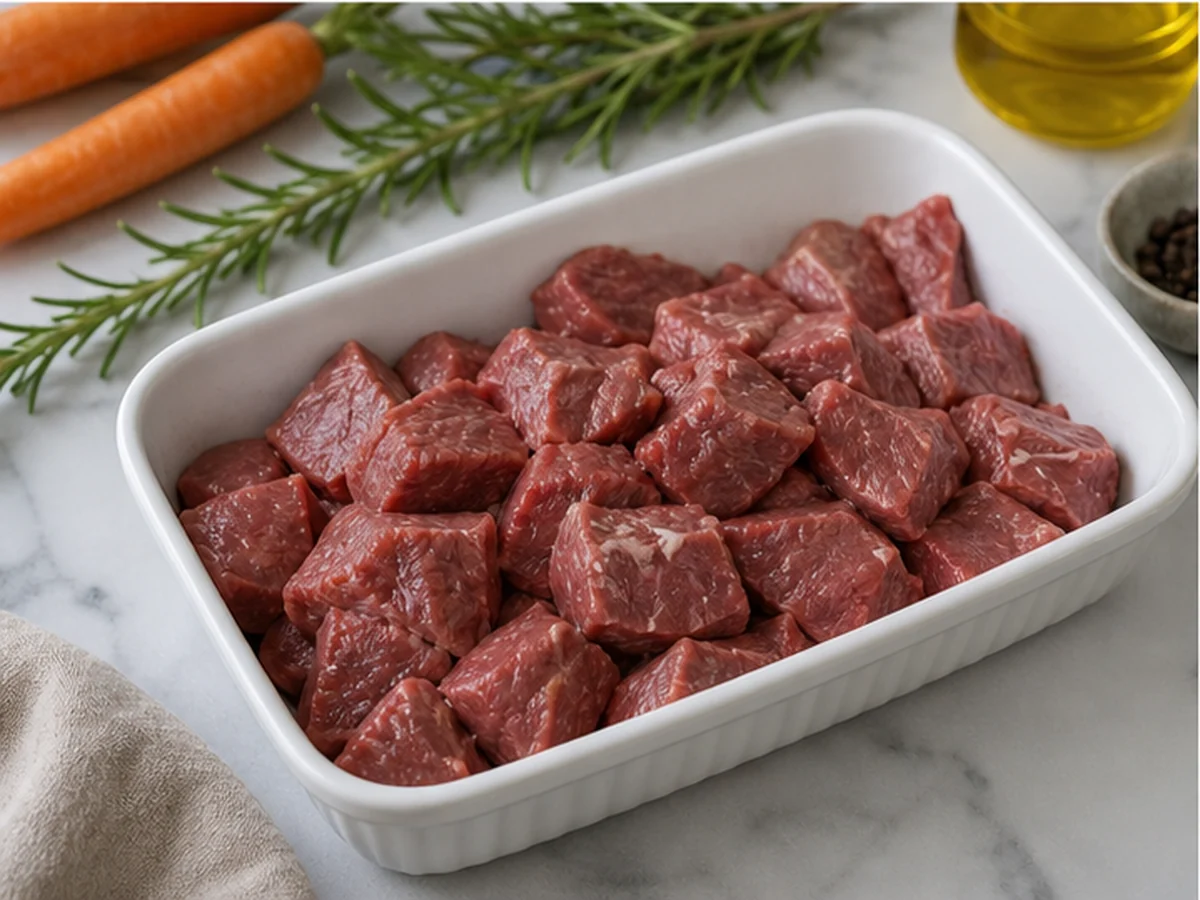
Raw food includes uncooked grocery meat, organ meat, bones, raw eggs, and unpasteurized dairy. Commercial products may be sold refrigerated, frozen, freeze-dried, air-dried, dehydrated, or as nuggets, patties, toppers, treats, and coated kibble.
The CDC explains that freezing, freeze-drying, and dehydrating reduce germs but do not kill all of them. High-pressure processing and irradiation are real technologies, yet the CDC still categorizes products containing uncooked animal protein as raw because real-world process control matters.
Read the fine print for words such as raw, uncooked, freeze-dried raw, or raw-coated. A pastoral package photo and the word “fresh” do not tell you whether the food received a validated pathogen-kill step.
Bacterial contamination affects the whole household
Raw meat can contain bacteria that make a cat ill, but the risk does not stop at the whiskers. Organisms can spread from the food to hands, counters, bowls, floors, bedding, litter, feces, and a cat’s face or coat.
In an FDA sampling study of 196 commercial raw dog and cat foods, 15 samples tested positive for Salmonella and 32 for Listeria monocytogenes. The FDA raw-food report concluded that the category was more likely to contain disease-causing bacteria than the other pet foods tested.
A contaminated cat may have vomiting, diarrhea, reduced appetite, fever, or low energy, but some animals shed bacteria without obvious illness. An apparently jaunty cat therefore cannot certify the food as safe for the toddler who touches the bowl next.
Households with children under five, adults 65 or older, pregnant people, or anyone with weakened immunity have particular reason to avoid raw feeding. Young, elderly, pregnant, chronically ill, or immunocompromised cats also have less margin for infection.
Raw poultry and H5N1
H5N1 avian influenza changed the raw-poultry conversation. Federal and state investigations have linked infections in cats to raw milk and raw pet foods containing poultry, and feline disease can be severe or fatal.
FDA has warned about specific raw cat-food lots after testing connected product and cat samples. Follow current FDA H5N1 raw cat-food advisories and recall notices rather than assuming a frozen bag purchased last month is outside an evolving problem.
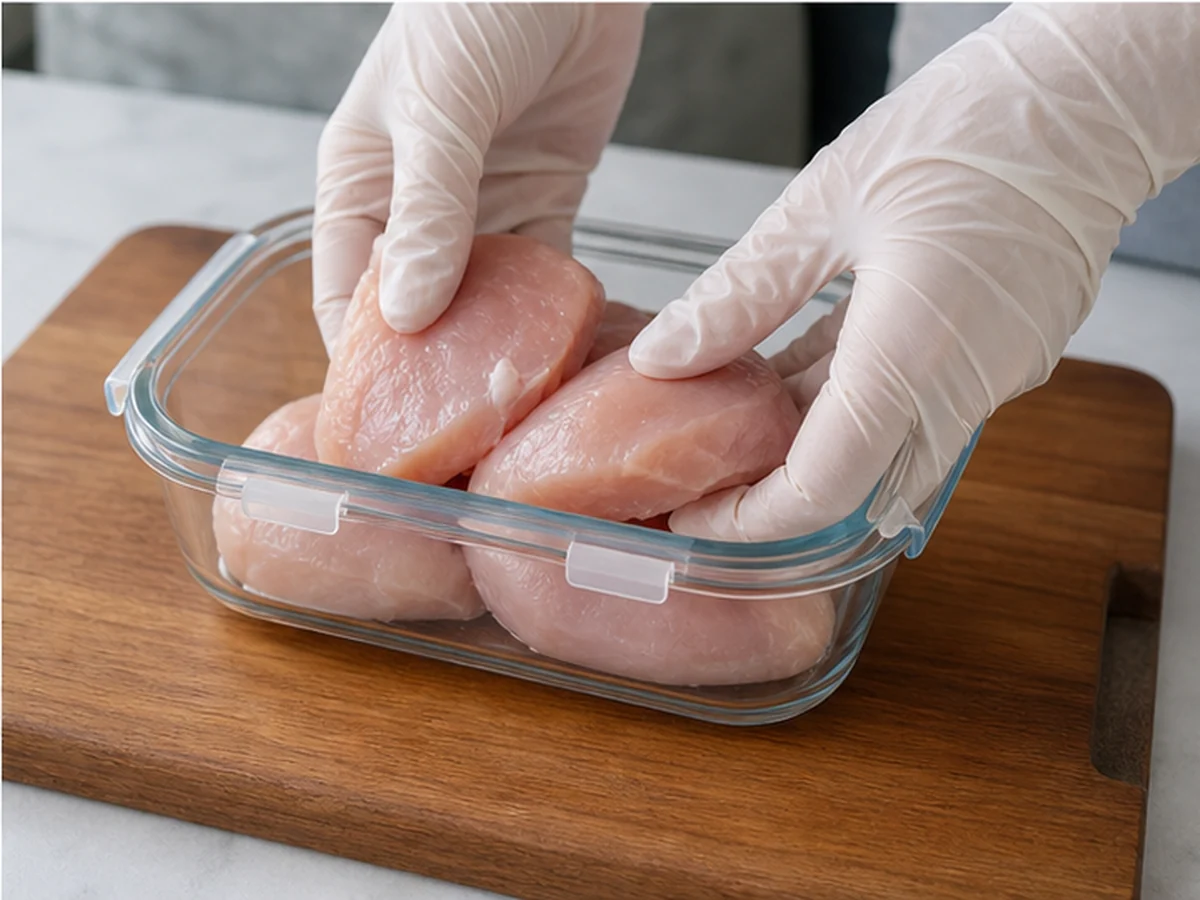
Do not feed cats raw or undercooked poultry, raw poultry pet food, or unpasteurized milk. Keep cats away from sick or dead birds and livestock, and call a veterinarian promptly after suspected exposure or signs such as fever, marked lethargy, poor appetite, breathing difficulty, eye or nose discharge, tremors, seizures, circling, or blindness.
A 2026 CDC report found serologic evidence of H5N1 infection in a veterinary professional exposed to an infected cat, reinforcing the need for veterinary infection control. Minimize direct contact with a potentially infected cat and follow public-health or veterinary instructions for protecting people and other animals.
Do not take a sick cat into a waiting room unannounced after a possible H5N1 exposure. Call first so the clinic can give arrival and infection-control instructions.
Parasites and species-specific meat risks
Raw meat can transmit parasites as well as bacteria. Risk varies with the animal species, tissue, farming and slaughter controls, geographic source, freezing protocol, and whether the meat was wild game.
Wild game and feral prey are not equivalent to inspected grocery meat, while home freezing is not a universal parasite-kill step. Pork, game, and organ tissues can pose different hazards, and no single “freeze it for a few days” rule makes every meat safe.
Raw fish has its own issues, including parasites, bones, pathogens, and thiaminase in certain species. See our raw fish guide rather than applying chicken advice to a salmon fillet.
Bones are a physical hazard, cooked or raw
Raw bones may be less brittle than cooked bones, but they can still fracture teeth, choke a cat, lodge in the esophagus, obstruct the intestine, cause constipation, or perforate tissue. Ground bone can also make a home diet nutritionally excessive or unbalanced.
Never pull string, bone, or another object protruding from the mouth or rectum. If your cat swallowed a bone, skewer, absorbent meat pad, butcher string, plastic wrap, or tray fragment, call an emergency clinic for instructions.
Drooling, pawing at the mouth, repeated swallowing, gagging, vomiting, refusal to eat, abdominal pain, straining, or little stool can signal injury. Our boiled egg guide offers a boneless cooked protein option for cats whose veterinarian approves extras.
A pile of meat is not a complete feline diet
Muscle meat alone does not provide every nutrient in the correct proportion. Cats require taurine, arachidonic acid, preformed vitamin A, appropriate calcium and phosphorus, other vitamins and minerals, and enough energy for their life stage.
Adding liver, bone, supplements, or an online premix without a properly formulated recipe can create new excesses and deficiencies. Nutritional disease may take weeks or months to become visible, which makes a glossy coat after day four meaningless as a diet trial.
Look for a nutritional adequacy statement showing that the product is complete and balanced for your cat’s life stage. Toppers and treats may be labeled for intermittent or supplemental feeding only, which means they are not designed to replace meals.
Is commercial raw safer than homemade raw?
A responsible manufacturer can use supplier controls, validated processing, environmental monitoring, final-product testing, traceability, and veterinary nutrition expertise. Those practices may reduce risk, but the raw label still does not guarantee pathogen-free food.
Ask whether every finished lot is tested for Salmonella, Escherichia coli, and Listeria, what kill step is used, whether the diet is complete for the stated life stage, and who formulated it. Ask how positive lots are handled and how quickly customers are notified.
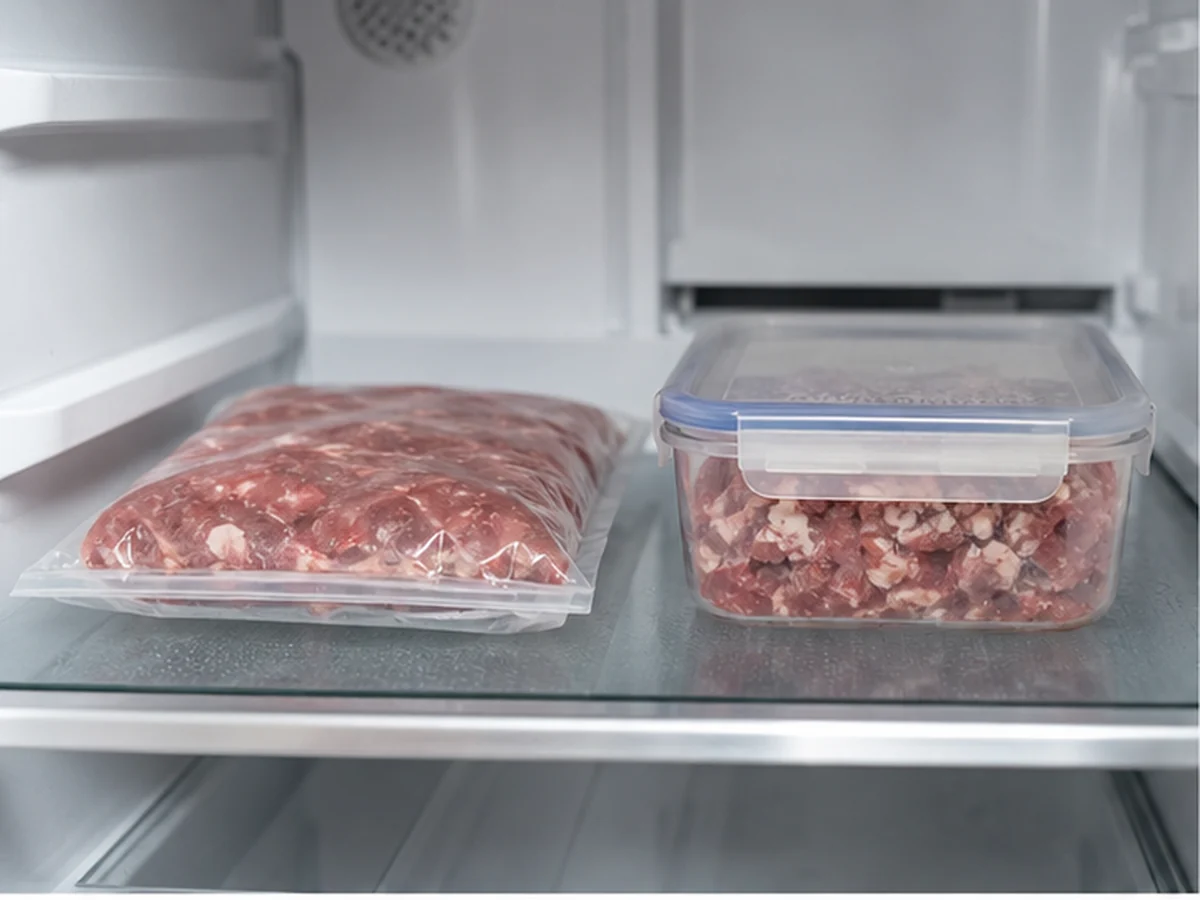
Check the FDA recall list and keep the original bag or a photo showing the product, lot, best-by date, and manufacturer. Pouring nuggets into an anonymous freezer tub is tidy until somebody needs the number printed under the seal.
Safer ways to serve meat
Choose plain meat, remove bones, skin, and visible fat, and cook it thoroughly. The USDA safe-temperature chart specifies 165°F for poultry, 160°F for ground meat, and 145°F with a three-minute rest for whole cuts of beef, pork, lamb, and veal.
Those temperatures protect household food safety; let the cat’s portion cool before serving. Keep onion, garlic, salt-heavy marinades, sauces, butter, oil, breading, smoke flavor, and pan drippings out of it.
Cut one small bite and use it as an occasional treat, not an improvised meal. For a processed example, compare the salt, alliums, fat, casing, and storage issues in our cat and salami guide.
What to do after a raw-meat exposure
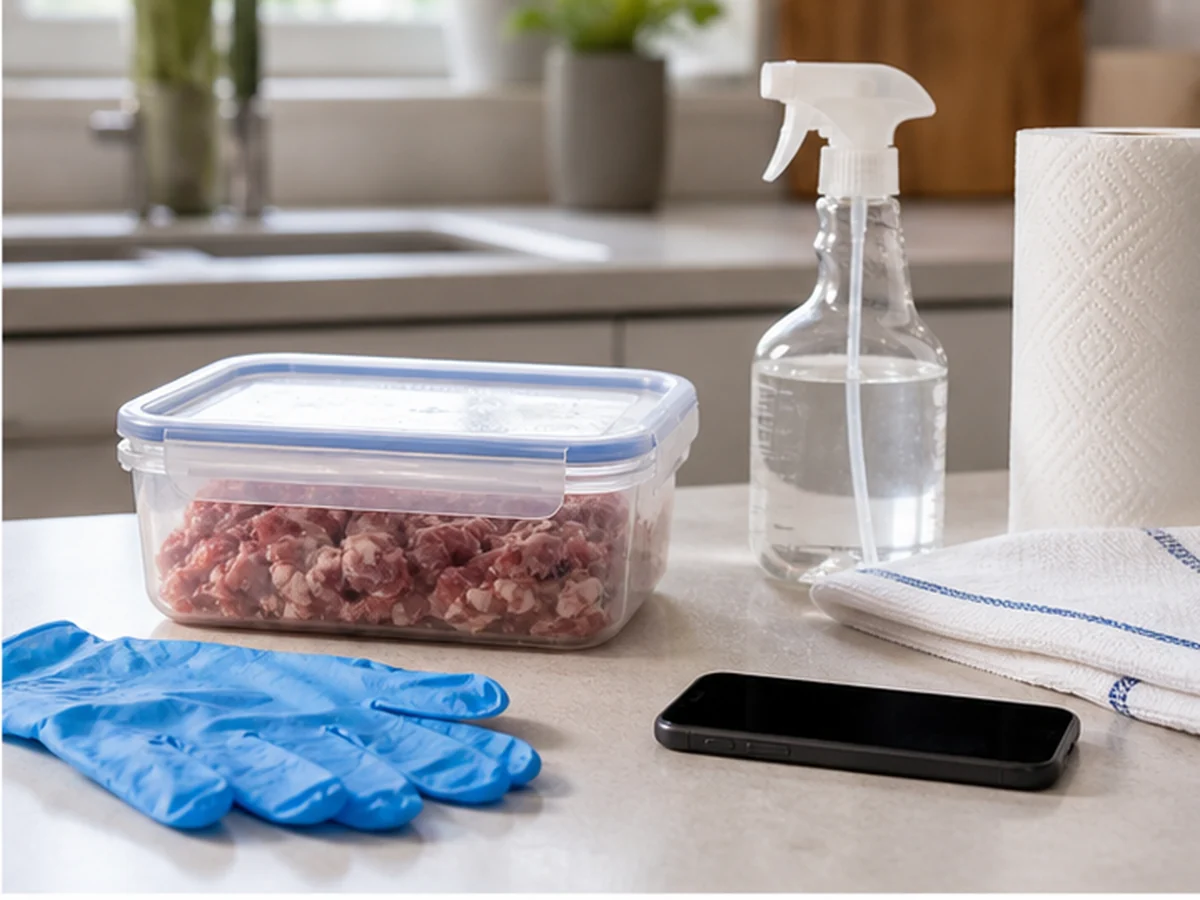
- Remove the food. Keep other pets away and do not serve the rest.
- Save the evidence. Keep the package, lot code, receipt, species of meat, recipe, and remaining sample sealed and separate.
- Check for non-food hazards. Account for bones, skewers, pads, string, wrap, clips, and tray pieces.
- Call your veterinarian. Mention raw poultry, recalled food, symptoms, underlying illness, and vulnerable people in the home.
- Clean carefully. Wash hands and disinfect contacted surfaces according to product instructions without exposing the cat to cleaning chemicals.
- Do not improvise treatment. Do not induce vomiting or give antibiotics, charcoal, milk, or another remedy without veterinary direction.
Seek urgent care for repeated vomiting or diarrhea, bloody stool, fever, profound lethargy, trouble breathing, neurologic signs, severe abdominal pain, pale gums, collapse, or suspected swallowed bone or packaging. Call before arrival after possible H5N1 exposure.
If a person in the household develops illness after handling raw pet food, that person should contact a human healthcare professional. Mention the raw animal-food exposure and keep the product details available.
Frequently asked questions
My cat ate one small piece of raw beef. Is this an emergency?
A small exposure is not guaranteed to cause illness, but risk depends on freshness, source, contamination, your cat’s health, and whether bone or packaging was swallowed. Remove access and call your veterinarian for individualized advice, then monitor only as directed.
Does freezing raw meat make it safe?
No. Freezing may reduce certain parasites under specific validated conditions, but it does not reliably eliminate all bacteria or viruses and is not a universal safety treatment.
Is freeze-dried raw food cooked?
Usually not unless the manufacturer states a validated heat or other kill step. Freeze-drying removes moisture under vacuum and does not by itself guarantee elimination of pathogens.
Can raw meat clean a cat’s teeth?
Raw meat is not a substitute for evidence-based dental care, and bones can fracture teeth. Ask your veterinarian about brushing, dental diets or treats with accepted evidence, and professional oral assessment.
Bottom line
Raw meat offers no safety advantage that cancels pathogens, H5N1 concerns, bones, household exposure, or nutritional imbalance. Choose a complete and balanced cat food, cook occasional plain meat thoroughly, and make the veterinarian your first call when a freezer raid becomes more than a story about excellent jumping skills.