Can Dogs Eat Parmesan Cheese? Sodium, Dairy, and Rind Risks
One small sprinkle of plain Parmesan is usually low risk for a healthy dog, but it is not a useful routine treat. Sodium, fat, calories, dairy reactions, hard chunks, rind, mold, seasoned dishes, and swallowed packaging matter more as the amount grows.
The quick decision guide
- A few plain shavings: usually monitor for digestive upset.
- A cup, wedge, or unknown amount: call if the dog is small, medically restricted, or symptomatic.
- Hard rind or chunk: consider choking, dental injury, and obstruction separately.
- Pasta, pizza, pesto, or seasoned cheese: check garlic, onion, fat, salt, and every co-ingredient.
- Plastic, foil, wax, lid, or freshness packet missing: contact a veterinarian about packaging.
Save the label and record product type, amount, time, dog weight, conditions, medications, prescribed diet, symptoms, and missing nonfood material. Powder in a shaker, grated refrigerated cheese, wedges, rinds, sauces, and snacks are different exposures.
Why a sprinkle and a wedge are different
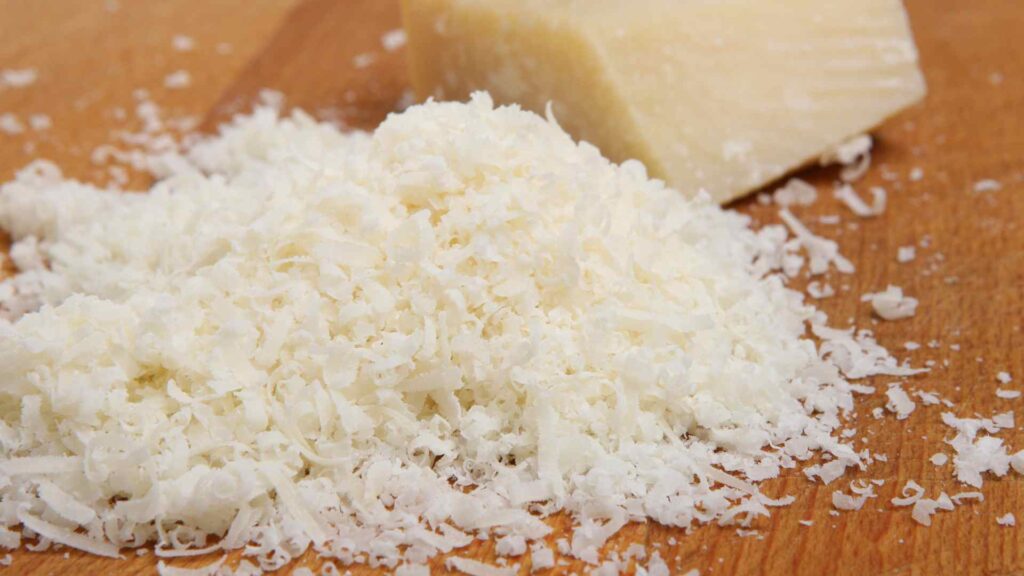
Parmesan is a hard aged cheese with concentrated flavor, so a little can contain meaningful sodium, fat, and calories. One dusting on the floor is not equivalent to an unattended container or cheese-board raid.
Plain Parmesan is not generally classified as a canine poison. The practical question is whether its amount and form can upset digestion, aggravate a medical condition, or introduce another hazard.
Our dairy guide compares milk products and common reactions. Aging changes Parmesan, but it does not make cheese necessary for a dog.
A healthy adult that licks a teaspoon scattered across dinner will often need only observation. A toy dog that empties a shaker or a dog with pancreatitis, kidney disease, heart disease, or a sodium restriction deserves earlier advice.
Sodium is the everyday limitation
Salt helps define and preserve aged cheese, and sodium varies by brand, style, moisture, and serving size. Imported-style wedges, domestic Parmesan, shelf-stable grated products, and cheese blends should not be treated as nutritionally identical.
Check milligrams per labeled serving and calculate how many servings could be missing. A serving printed for people may be much larger than the amount appropriate as an occasional canine taste.
Dogs with heart disease, kidney disease, high blood pressure, fluid-balance disorders, or prescribed sodium limits need advice from the clinician managing the diet. Reduced sodium is a comparison claim, not a universal veterinary clearance.
Keep normal access to fresh water unless a veterinarian says otherwise, but do not force water. Marked thirst, repeated vomiting, weakness, wobbliness, tremors, seizures, or unusual dullness after a large salty-food raid warrants urgent care.
Fat and calories add up quickly
Parmesan contributes fat and energy even when grated into tiny pieces. Frequent sprinkles can quietly join dental chews, training treats, scraps, and food used for pills until extras crowd out the measured diet.
A large cheese theft can cause vomiting or diarrhea and may contribute to pancreatitis in susceptible dogs. The Merck Veterinary Manual pancreatitis overview includes appetite loss, vomiting, weakness, abdominal pain, dehydration, and diarrhea among possible signs.
Dogs with previous pancreatitis, high blood fats, obesity, endocrine disease, or a low-fat prescription plan should not receive Parmesan casually. Call for repeated vomiting, belly pain, a hunched or restless posture, weakness, or refusal to eat.
Do not fast a sick dog or give human pain medicine without instructions. The veterinary team can decide whether examination, fluids, anti-nausea medication, pain control, or testing is appropriate.
Lactose intolerance is not milk allergy
Aged Parmesan usually contains less lactose than fresh milk, but low lactose does not guarantee digestive comfort. Individual dogs can still develop gas, loose stool, abdominal discomfort, or vomiting after dairy.
Lactose intolerance is difficulty digesting milk sugar, while a food allergy is an immune reaction to proteins. A lactose-free cheese can still contain dairy proteins and does not solve a confirmed milk allergy.
The Merck Veterinary Manual food-allergy review lists dairy among common canine food allergens and distinguishes immune allergy from other adverse food reactions. Diagnosis relies on a controlled veterinary diet trial, not a guess based on one itchy evening.
Dogs on elimination or hydrolyzed diet trials should receive no Parmesan unless the supervising veterinarian approves it. Cheese hidden around pills, sprinkled on food, or baked into treats can invalidate the trial.
Our milk guide explains dairy intolerance and allergy in more detail. Seek urgent care for facial swelling, hives with breathing trouble, collapse, or another severe reaction.
Rinds and hard chunks can injure
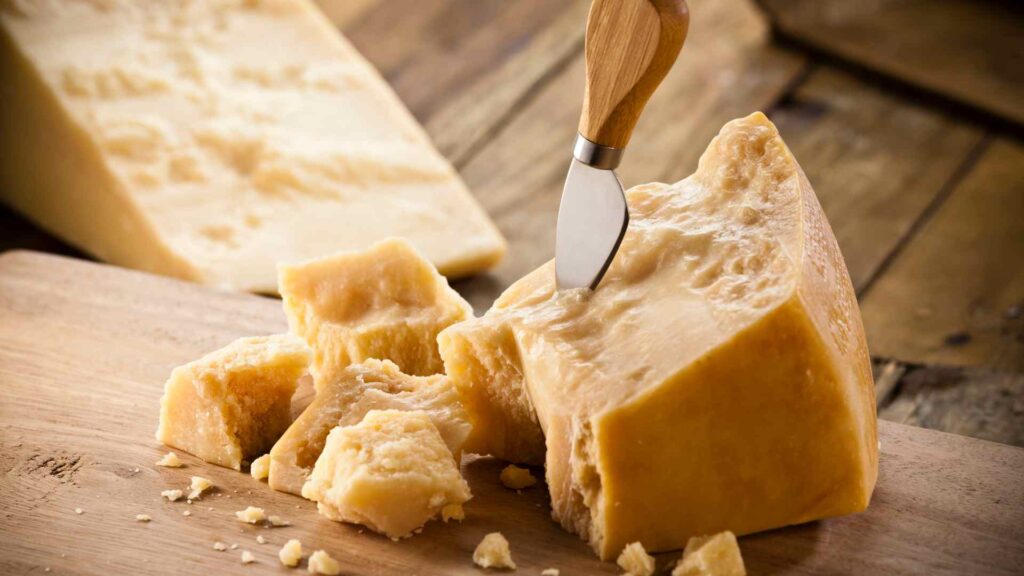
A natural Parmesan rind may be edible in human cooking, but it is extremely hard and dense. A dog can crack a tooth, choke, or swallow a piece large enough to obstruct.
Wax, plastic coating, labels, and netting are not food even when attached to cheese. Do not assume every object called a rind has the same composition.
Report gagging, repeated swallowing, drooling, pawing at the mouth, vomiting, a painful belly, refusal to eat, straining, or inability to keep water down. Breathing difficulty, blue or gray gums, or collapse is an emergency.
Do not induce vomiting when a hard chunk, wrapper, or sharp material may have been swallowed. Do not reach blindly into the throat or pull string from the rectum.
Mold and spoilage need context
Crystals that naturally form in aged Parmesan are not the same as fuzzy, colored, wet, or unusually odorous growth. When the owner cannot tell what is on the cheese, the dog should not be the taste tester.
The USDA mold guidance distinguishes hard cheese from shredded, sliced, and soft cheese for human food handling. For a pet exposure, report whether the cheese was grated, how extensive the growth was, and whether trash or other moldy foods were eaten.
Moldy trash can contain toxins that cause vomiting, agitation, tremors, overheating, or seizures. Call promptly for neurologic signs, a significant moldy-food raid, or uncertainty about other discarded food.
Store cheese as directed, keep the refrigerator and trash secured, and discard questionable grated cheese rather than scraping the surface for a dog treat. Do not sniff heavily moldy food.
Pasta, pizza, pesto, and garlic bread
Parmesan rarely arrives alone at the table. Pasta sauces, pizza, soups, casseroles, garlic bread, meatballs, and salad dressings may contain garlic, onion, salt, fat, chile, alcohol, and rich dairy.
Garlic and onion can damage red blood cells, including when cooked or powdered, and signs may take days to appear. Call with the recipe and amount rather than waiting for pale gums, weakness, fast breathing, dark urine, or collapse.
Pesto commonly combines cheese with garlic, oil, nuts, and salt. The green color and herb aroma do not make it a light dog condiment.
Save restaurant ingredient information and report every topping. One plain noodle with a Parmesan fleck is different from a bowl of Alfredo, carbonara, or garlic-heavy sauce.
Shakers, tubs, bags, and freshness packets
Dogs attracted to cheese may swallow shaker lids, plastic film, tubs, foil, wax paper, bags, clips, labels, and desiccant or oxygen-absorber packets. These items can choke, cut, or obstruct even when the cheese amount is modest.
Inventory every missing part and photograph the container. A freshness packet should be identified by its printing rather than assumed harmless or poisonous from appearance alone.
Food bags can seal around the face and suffocate a pet. Cut or secure empty packaging and place it in a lidded bin immediately.
No calcium or protein shortcut
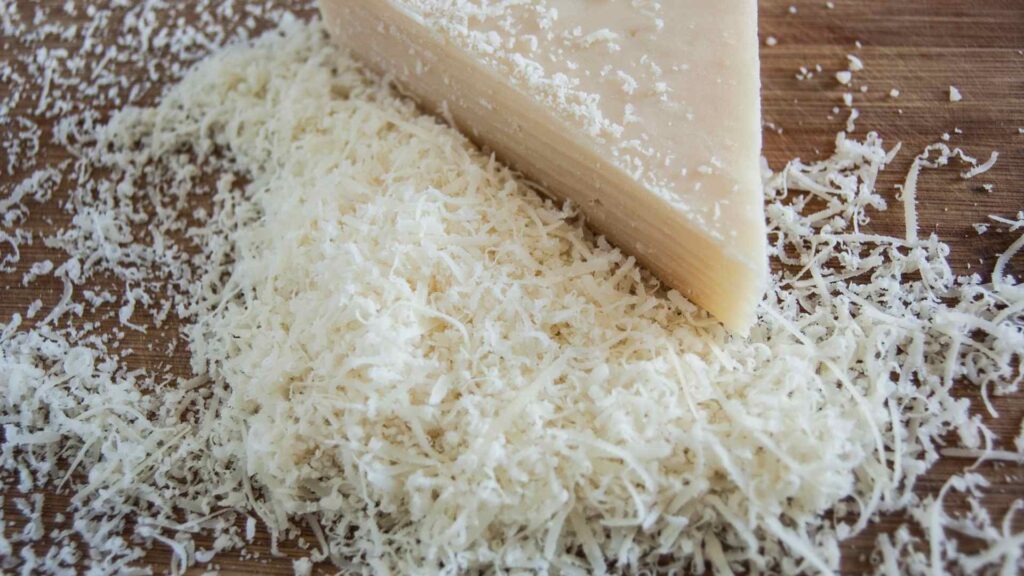
Parmesan contains calcium and protein, but that fact does not make it a supplement or muscle-building tool. Complete diets already provide amino acids and minerals in amounts and proportions designed for the dog’s life stage.
Adding cheese cannot safely correct low blood calcium, weak bones, poor growth, weight loss, or muscle loss. Those findings require a diagnosis, and improvised calcium can unbalance a diet or complicate disease.
The World Small Animal Veterinary Association treat guide recommends keeping treats below 10 percent of daily calories. Salty, calorie-dense cheese uses that allowance quickly.
Use measured regular food for frequent rewards or ask for a compatible treat if the dog has medical restrictions. Our cream-cheese guide shows why a softer dairy product has its own fat, lactose, and flavoring questions.
What to do after a Parmesan raid
- Secure remaining cheese, dishes, trash, and packaging.
- Record form, amount, sodium, fat, seasonings, spoilage, time, and dog weight.
- Note conditions, medications, therapeutic diets, symptoms, and dairy history.
- Call for a large amount, Alliums, mold, rind, packaging, medical vulnerability, or significant signs.
- Follow professional feeding, monitoring, and transport instructions.
Do not induce vomiting or force oil, milk, bread, salt, or medication unless a veterinarian directs you. Ingredients and swallowed objects change the safest plan.
Parmesan-style toppings are not always cheese
Snack dust, popcorn seasoning, vegan Parmesan, breadcrumb toppings, and shelf-stable cheese blends may contain salt, garlic, onion, nuts, starch, oil, yeast, or anticaking agents. Identify the actual product instead of borrowing assumptions from a plain wedge.
A flavored shaker raid requires the full ingredient panel and amount, especially when powder may have been inhaled. Coughing, eye irritation, breathing trouble, or a concentrated Allium exposure deserves prompt advice.
Bottom line
A tiny plain Parmesan sprinkle is usually low risk for a healthy dog, but it offers no needed calcium or protein advantage. Larger amounts, sodium, fat, dairy reactions, rinds, mold, seasoned dishes, medical diets, and packaging deserve closer attention.