Can Cats Eat Swiss Cheese? Lactose, Salt, Rind, Fondue, and Sandwiches
A crumb of plain Swiss cheese is unlikely to poison most healthy adult cats, but it is a salty, fatty dairy extra rather than a useful treat. Slice thickness, holes, rind, lactose tolerance, pasteurization, flavored varieties, fondue, sandwiches, hot cheese, medication use, and wrappers all change the practical answer.
The holes are not the nutrition story
Swiss-style cheeses include domestic Swiss, Emmental, baby Swiss, Gruyère, and blends with different moisture, aging, salt, fat, rind, and cultures. The familiar holes come from cheesemaking, not from missing calories or a special feline digestive advantage.
| Cheese form | What to check |
| One plain crumb | Freshness, size, individual tolerance |
| Thick slice or cube | Choking size, fat, salt |
| Rind or wax | Hard material or foreign body |
| Flavored Swiss | Garlic, onion, herbs, smoke, pepper |
| Fondue or sauce | Heat, wine, garlic, cream, bread, skewers |
| Sandwich | Meat, condiments, toothpicks, wrappers |
Aged cheese may be lower in lactose, not consequence-free
Cheesemaking and aging can reduce lactose compared with fluid milk, but exact amounts and feline tolerance vary. A cat that develops gas, loose stool, vomiting, or abdominal discomfort after dairy should not receive another trial to confirm the point.
Lower lactose does not remove calories, fat, sodium, milk proteins, or diet displacement. Lactose-free Swiss-style products still require portion restraint and a full label read.
Lactase tablets made for people should not be given to justify cheese, and lactose-free does not mean dairy-free. Products can retain milk proteins and may introduce sweeteners or flavorings that deserve their own review.
Fat hides inside a tiny cube
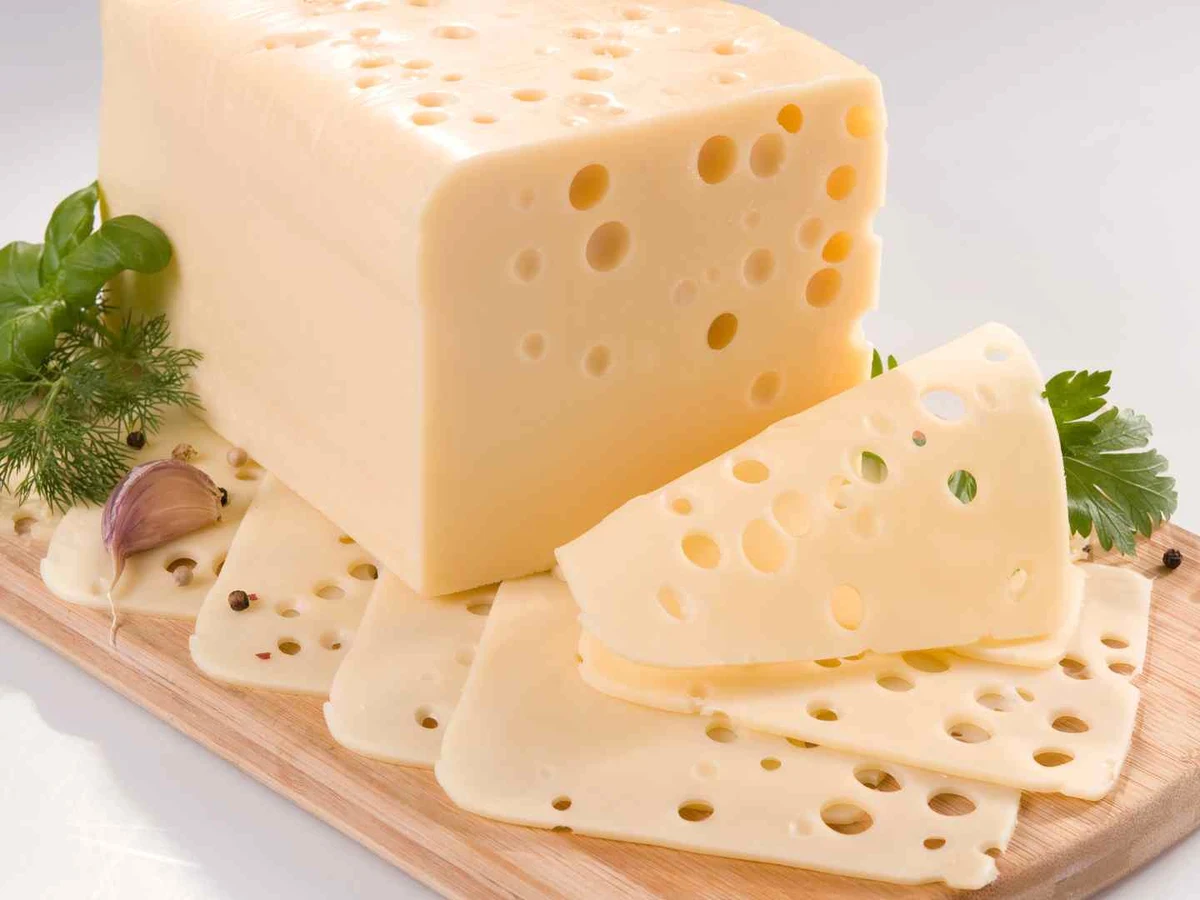
Cheese is energy-dense, and a human snack cube can represent a surprisingly generous extra for a cat. Routine pieces can undermine weight control without producing any immediate digestive drama.
Cats with obesity, diabetes, prior pancreatitis, or fat-sensitive gastrointestinal disease should skip cheese unless the veterinarian approves it. One bite does not guarantee pancreatitis, but persistent vomiting, pain, lethargy, or appetite loss deserves examination.
Sodium matters most for certain patients
Salt varies by Swiss-style cheese and serving, and processed slices may add sodium-containing emulsifying ingredients. Check the current nutrition label rather than judging saltiness from taste or holes.
Kidney, heart, blood-pressure, urinary, and sodium-controlled patients should not receive casual cheese treats. Marked thirst, repeated vomiting, weakness, poor coordination, tremors, or seizures after a large salty-food raid needs urgent advice.
A low-sodium label is a comparison claim for people, not permission for a therapeutic feline diet. Ask what treats fit the actual daily sodium plan instead of trying to subtract milligrams from a human serving on the fly.
Cheese boards add cured meats, olives, grapes, nuts, crackers, dips, knives, picks, and decorative herbs within one paw’s reach. After a raid, photograph the board before clearing it and inventory the whole arrangement instead of blaming the Swiss slice by default.
Pasteurized is the safer dairy baseline
FDA guidance explains that raw milk and raw-milk products can carry dangerous germs. Artisan or imported cheese should be checked for pasteurization and storage rather than assumed safe because it is firm.
The agency’s dairy and egg safety advice also emphasizes refrigeration and avoiding unpasteurized products for higher-risk people. Those handling rules are useful in a cat household because a spoiled wedge can expose both the thief and the person cleaning the mess.
Kittens, seniors, pregnant cats, immunocompromised cats, and vulnerable people in the home warrant special caution. Pasteurization reduces specific microbial risks but does not make mishandled cheese immortal.
Foodborne contamination may not announce itself through smell, holes, or rind appearance. Follow recall notices, lot numbers, and discard instructions, and clean the refrigerator shelf without letting the cat investigate drips.
Rind, wax, paper, and netting are not cheese
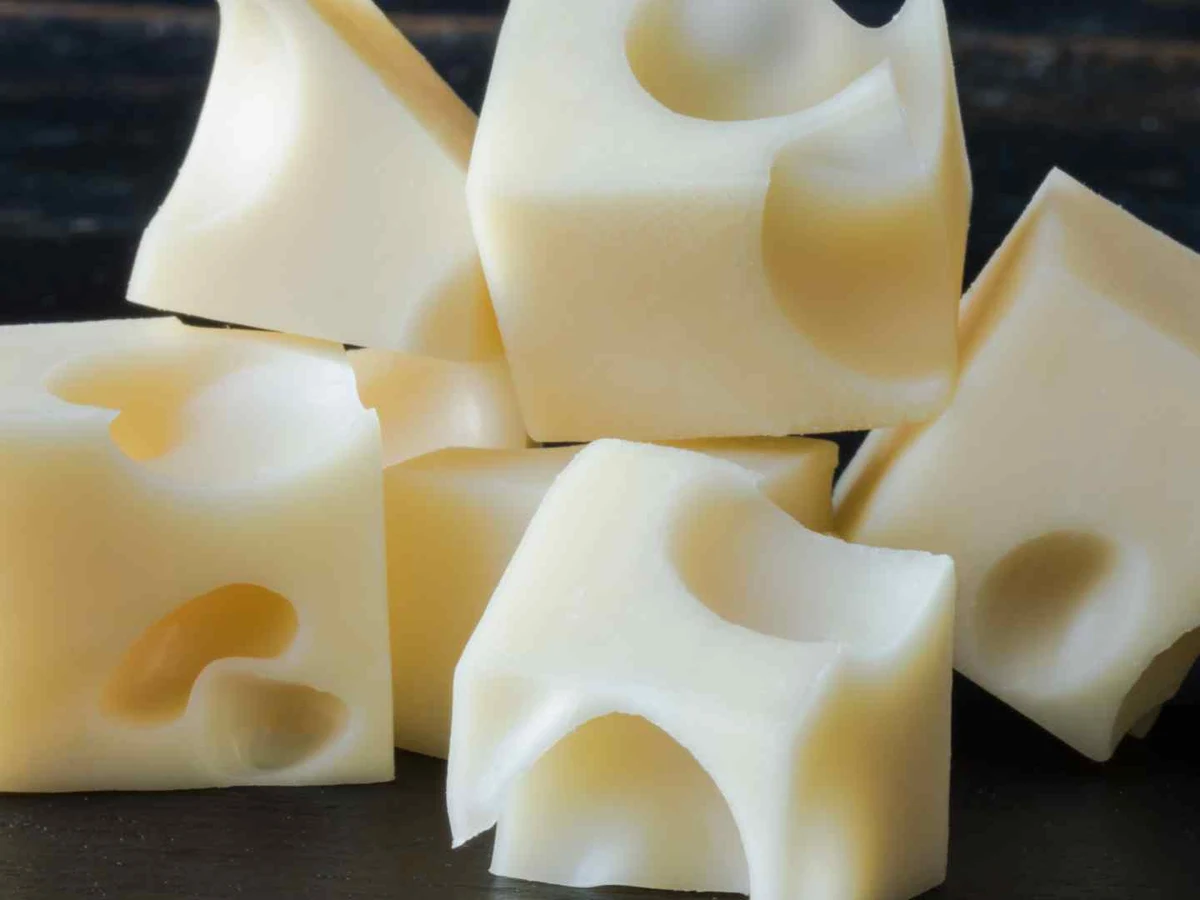
Natural rind can be hard and chewy, while wax, plastic film, paper separators, labels, string, and mesh are foreign objects. Trim them away for human service and put scraps directly into a secured bin.
Call for a swallowed rind chunk or missing wrapper, especially with gagging, vomiting, abdominal pain, reduced stool, or food refusal. Do not induce vomiting or pull string that resists.
Cheese-plane shavings can cling to parchment and make the entire sheet attractive, while pre-sliced packs hide thin plastic dividers between pieces. Flatten the package and count those layers before deciding only food is missing.
Garlic and onion can turn up in specialty wheels
Herb, garlic, onion, pepper, smoked, beer-washed, and deli-seasoned Swiss-style cheeses are finished recipes. Garlic and onion can damage feline red blood cells, and powdered forms may be distributed invisibly through the slice.
Save the label and call promptly for confirmed Alliums or an uncertain amount. The site’s garlic guide explains delayed weakness, pale gums, fast breathing, appetite loss, dark urine, and collapse.
Fondue is a pot of new variables
Swiss fondue may combine Gruyère or Emmental with wine, kirsch, garlic, cornstarch, nutmeg, salt, and bread. The mixture is hot, sticky, and served with forks or skewers that can injure a cat before dairy digestion becomes relevant.
Keep the cat away from the burner and cord, and save the exact recipe after a theft. Drooling, mouth pawing, red tissue, repeated swallowing, or food refusal can signal a burn and needs prompt advice.
Dipping bread can trail cheese across the tablecloth and floor, where it cools into rubbery strings that invite a fast swallow. Count fondue forks before cleanup and never chase a cat carrying one, because panic can drive the point deeper.
A sandwich belongs to its full stack
Swiss cheese commonly accompanies ham, turkey, corned beef, pastrami, tuna salad, mayonnaise, mustard, sauerkraut, pickles, onion, butter, and bread. Deli meat adds sodium and seasoning, while toothpicks, foil, paper, and plastic bags create physical hazards.
Inventory top to bottom and use the ham guide when cured meat is present. Removing the visible cheese does not undo condiments already spread across it.
Melted cheese changes temperature and speed
Melted Swiss clings to the palate and stretches into long strings, allowing a cat to swallow more quickly and sustain a burn. Grilled sandwiches, casseroles, burgers, and French onion soup may also contain butter, Alliums, meat drippings, and very hot broth.
Do not cool a burn with ice, butter, ointment, or human numbing gel. Call for oral pain, breathing trouble, repeated swallowing, drooling, or sudden appetite loss.
It should not become a pill pocket by default
Cheese can make medication smell appealing, but some drugs should not be crushed, require fasting, or interact with food and minerals. A cat that eats around a tablet also leaves the administered dose uncertain.
Ask the prescribing clinic about a compatible pill treat, capsule, compounded form, or measured amount of regular food. If another pet eats medicated cheese, report the drug, strength, amount, time, and both animals’ weights.
Some medicines must be separated from food or calcium-containing products, and others cannot be split or crushed. The small convenience of cheese is not worth changing how a drug is absorbed or guessing whether an entire tablet reached the stomach.
Storage decides whether a slice stays ordinary
Refrigerate cheese as labeled and discard mold, slime, swelling, leaking, or an off odor. Do not trim mold from a cat portion or use stale rind as a chew.
Keep lot and package information if a product appears defective or recalled. A slice left warm on a party tray through the evening should not become pet food to avoid waste.
Grated Swiss scattered under a deli drawer is easy to overlook until a cat finds it days later. Wipe crumbs from refrigerator rails and inspect reusable cheese boxes for cracked corners that could break into sharp plastic.
Freezing can make thawed cheese crumbly and encourage people to leave a plate out while it softens, but it does not reset prior temperature abuse. Label the date, thaw in the refrigerator, and discard questionable pieces instead of assigning them to the cat bowl.
Mold on Swiss cheese is not a feline probiotic experiment, and blue-green growth should not be confused with the holes made during production. Seal spoiled food before disposal so a determined cat cannot retrieve the same wedge from the trash.
Complete food beats dairy math
Swiss cheese contributes protein and calcium but not in a complete feline nutrient pattern. The FDA’s nutritional adequacy resource explains what food intended as a sole cat diet must declare.
For a broader comparison, the cheese guide separates cheese families and portions. Cats on elimination or prescription diets should use approved food as rewards.
The missing-slice checklist
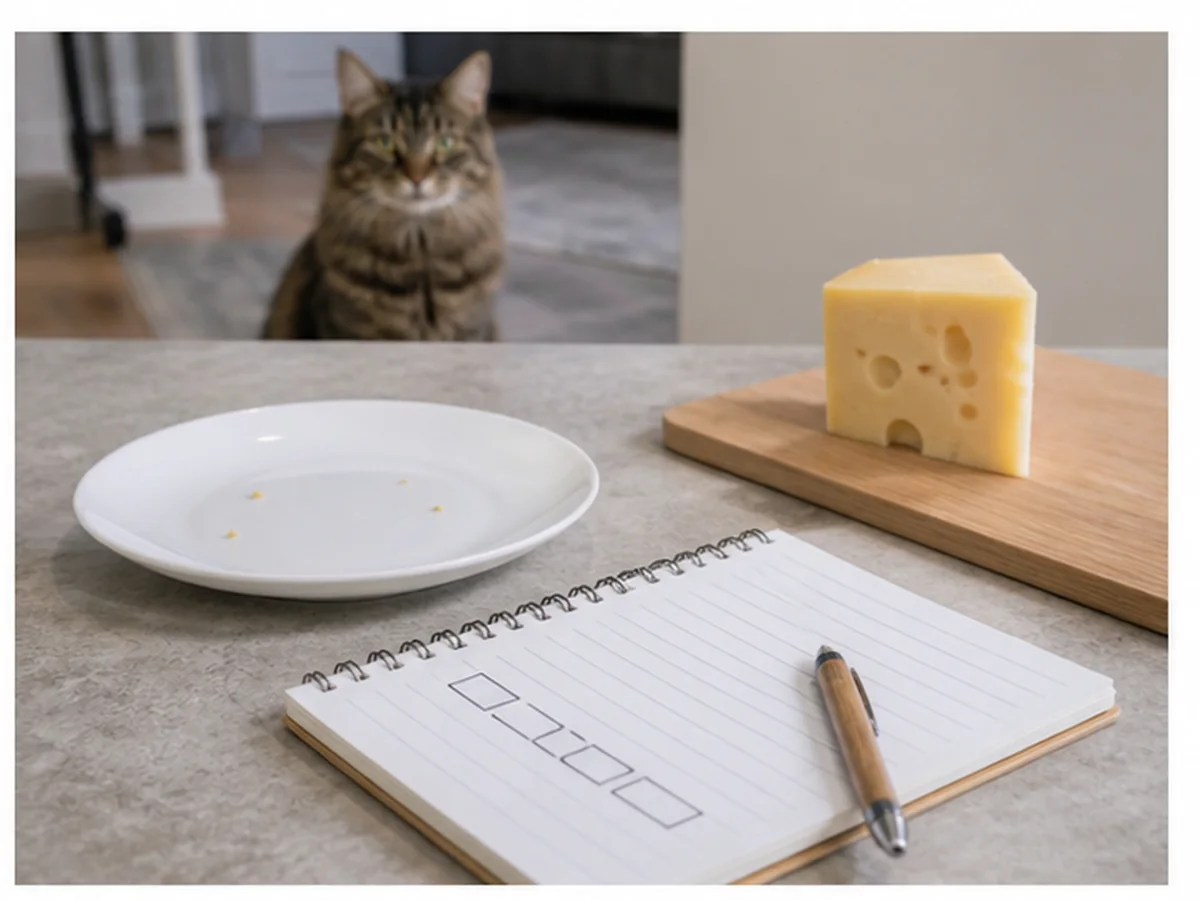
- Collect cheese, rind, wax, wrappers, sandwich ingredients, hot cookware, and skewers.
- Identify variety, pasteurization, flavoring, amount, temperature, and storage history.
- Record time, weight, medical conditions, medication, and current signs.
- Call for raw-milk product in a vulnerable cat, Alliums, large amount, burns, packaging, or symptoms.
- If observation is advised, serve normal food and water and monitor vomiting, stool, appetite, and mouth comfort.
Frequently asked questions
Can cats eat plain Swiss cheese?
A crumb is generally low concern for a healthy adult, but cheese remains salty, fatty, and unnecessary. Do not offer a cube or make it routine.
Is Swiss cheese low in lactose?
Aging may reduce lactose, but values and tolerance vary, and low lactose does not remove fat, sodium, or milk protein. Observe any accidental taste for digestive upset.
Can cats eat Swiss cheese rind?
No deliberate amount is appropriate because rind can be hard or treated, and wax or wrapping may be attached. Call after a large or missing piece.
Can Swiss cheese hide cat medicine?
Only when the prescribing veterinarian confirms the drug and amount are compatible. A purpose-made pill treat or regular food is often easier to dose accurately.
Bottom line
Plain Swiss cheese is usually a low-concern crumb, not a sensible cat treat. Fat, sodium, pasteurization, flavoring, rind, fondue, sandwiches, heat, medication, storage, and wrappers determine whether a larger incident needs a call.