Can Cats Eat Green Olives? Pits, Brine, Stuffings, and Portions
A tiny piece of plain, pit-free green olive may be low risk for a healthy cat, but olives are poor routine treats. Brine can be salty, whole fruit can choke, pits can obstruct, and garlic, onion, pepper, cheese, anchovy, alcohol, toothpicks, glass jars, lids, and plastic packets make stuffed or served olives much less simple.
First find out whether the pit is still inside
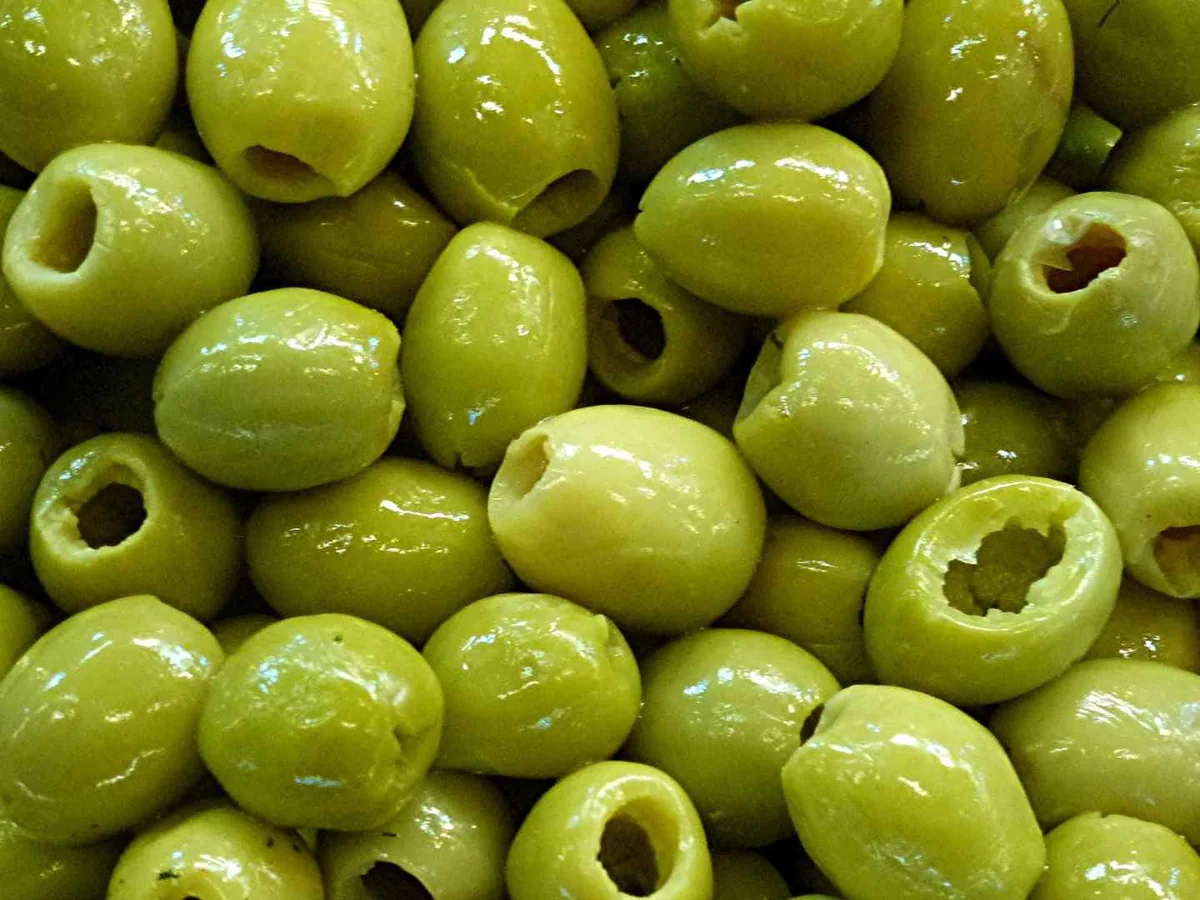
Whole green olives may be sold with pits, mechanically pitted, sliced, chopped, crushed, or stuffed. Even a pitted jar can occasionally contain a fragment, so inspect rather than trusting shape alone.
An olive pit is hard, smooth, and indigestible. It can lodge in the throat or digestive tract, crack a tooth, or create an obstruction that does not announce itself immediately.
Gagging, repeated swallowing, drooling, regurgitation, vomiting, appetite loss, abdominal pain, reduced stool, or lethargy after a pit disappears needs veterinary advice. Do not induce vomiting or feed bulky material to move it.
A missing cocktail pick is even more urgent because sharp wood or plastic can puncture tissue. Bring a matching pick or photograph with dimensions.
Brine is not broth for cats
Green olives are commonly cured in saltwater, sometimes with vinegar, lactic acid, herbs, garlic, peppers, or preservatives. The liquid can carry far more sodium than a tiny drained flesh piece.
One quick brine lick may cause nothing beyond thirst or mild stomach irritation in a healthy cat. A meaningful drink, a concentrated curing liquid, restricted water, sodium-sensitive disease, or neurologic signs deserves prompt care.
Possible salt-related signs include vomiting, marked thirst, weakness, disorientation, tremors, incoordination, seizures, or collapse. Provide normal water access but never force large volumes into the mouth.
A veterinary sodium target may be part of care for kidney, cardiac, urinary, or hypertensive disease. “Reduced sodium” is a comparison claim and not an automatic medical-diet approval.
A small portion is smaller than one olive
A human appetizer unit is round, slippery, and large for a cat. If the veterinarian allows a taste, use one tiny flattened fleck from a rinsed, plain, confirmed pit-free olive rather than handing over the fruit.
Cats do not need olive flesh or oil to complete their diet. The FDA explains nutritional adequacy claims for pet foods, which table olives do not carry.
A cat attracted to olives may be responding to aroma, salt, fermentation compounds, texture, or attention. Enthusiasm does not turn the jar into enrichment food.
Stuffings change the answer bite by bite
| Stuffing | Main concern | What to do |
|---|---|---|
| Pimiento | Usually mild, but recipe and piece size vary | Check ingredients and keep portion tiny or skip. |
| Garlic or onion | Allium red-blood-cell damage | Call promptly after ingestion. |
| Blue cheese or feta | Dairy, salt, fat, mold style | Assess exact cheese and amount. |
| Jalapeño | Mouth, eye, and stomach irritation | Call for persistent pain or breathing signs. |
| Anchovy | Salt, oil, fish allergy, small bones | Review the whole product. |
| Almond | Hard choking texture and calorie density | Do not offer stuffed fruit. |
| Cocktail filling | Alcohol, pick, citrus, other garnish | Treat as a mixed exposure. |
Garlic and onion remain hazardous after cooking or curing. The Merck Veterinary Manual identifies cats as especially susceptible to Allium-related red-cell injury, which may not become obvious for several days.
Possible delayed signs include weakness, poor appetite, pale or yellow gums, rapid breathing, dark urine, and collapse. Our cat garlic guide gives a focused ingredient-and-timing checklist.
Olive oil is a different product
Olive oil removes the pit and brine questions but concentrates fat and calories. A tiny accidental lick may be uneventful, while a spill can cause vomiting, diarrhea, greasy coat, slipping, and a large calorie load.
Do not give olive oil for hairballs, constipation, coat shine, ear cleaning, or to push a foreign object through unless a veterinarian recommends a measured plan. Oil can worsen nausea and may enter the lungs if forced.
Cats with obesity, previous pancreatitis, or fat-sensitive gastrointestinal disease should not receive casual oil. Clean floor spills promptly and prevent grooming from a saturated coat.
Why green and black olives are not safety opposites
Color reflects cultivar, ripeness, curing, oxidation, and processing rather than a simple toxic-versus-safe switch. Both can be salty, pitted or unpitted, seasoned, stuffed, and packaged in brine.
Canned black olives may taste milder than many brined green olives, but the label and portion remain essential. No olive color earns a daily feline serving.
Our pickle guide for cats covers a similar brine, jar, Allium, and sodium puzzle. A cucumber pickle and olive remain botanically different, yet the pantry triage overlaps.
Cocktails turn garnish into alcohol exposure
Martinis and other drinks may contain gin, vodka, vermouth, flavored spirits, cocktail onions, citrus peel, picks, and multiple olives. A cat drinking from the glass has not merely tasted brine.
Alcohol can cause vomiting, poor coordination, depression, low body temperature, breathing difficulty, coma, or worse. Contact a veterinarian immediately with the drink recipe and estimated amount.
Count picks and glass fragments if a drink fell. Do not induce vomiting after sharp hardware or alcohol exposure.
Tapenade, pizza, salads, and bread
Tapenade can combine olives with capers, anchovies, garlic, lemon, oil, herbs, and salt. A dark spread should never be assumed to be plain chopped fruit.
Pizza and focaccia may add onion, garlic, cheese, cured meat, dough, and a greasy box. The cat pizza guide is the better framework when the olive was attached to a slice.
Greek salads add feta, dressing, onion, grape tomatoes, herbs, and sometimes skewers. Reconstruct the entire dish and report the most concerning ingredient rather than the garnish named first.
Jars, cans, pouches, and deli containers
Glass can break, metal lids and can edges can cut, and foil seals or pouch plastic can be swallowed. A cat reaching into a narrow jar may also become stuck or knock it from the counter.
Account for the cap, inner seal, pull tab, label, freshness film, and every broken shard. Restrict paw traffic across glass and call after any possible cut or ingestion.
Repeated vomiting, abdominal pain, appetite loss, reduced stool, straining, or marked fatigue after plastic disappears warrants veterinary assessment. Do not pull visible strip material if it may be anchored.
Home curing and fermentation
Raw olives are intensely bitter and require processing, while home curing depends on salt concentration, sanitation, recipe, and storage. A mystery jar without dates or ingredients is not a suitable pet snack.
Discard leaking, bulging, moldy, oddly fizzy, or foul-smelling products. Do not skim surface growth or ask a cat to test whether the batch is still good.
The FDA recommends safe refrigeration practices for perishable foods. Follow the manufacturer’s directions after opening and use clean utensils.
Garden and tree access
An olive tree’s leaves, twigs, soil, fertilizer, pesticide, support ties, and fallen fruit create an exposure broader than table olives. Identify the plant and every treatment product.
Prevent grooming after wet chemical contact and call with the label. Organic or natural wording does not prove a garden product harmless to cats.
Uncured fallen olives can also mold or mix with compost. Secure the area rather than relying on their bitterness to deter a curious animal.
After an olive raid
- Find the pit and pick: count whole olives, fragments, stones, toothpicks, cocktail swords, and skewers.
- Read the cure: note sodium, brine, vinegar, garlic, onion, pepper, cheese, fish, nuts, and preservatives.
- Estimate the serving: distinguish one flesh fleck from several olives or drinking the liquid.
- Call promptly: seek advice for pits, sharp hardware, Alliums, substantial brine, alcohol, packaging, or symptoms.
- Use emergency care: airway trouble, collapse, seizures, repeated retching, severe weakness, or intense pain cannot wait.
For one tiny plain, pit-free, drained piece in a healthy symptom-free cat, normal observation may be enough. Continue the usual food and water without offering another olive as a tolerance test.
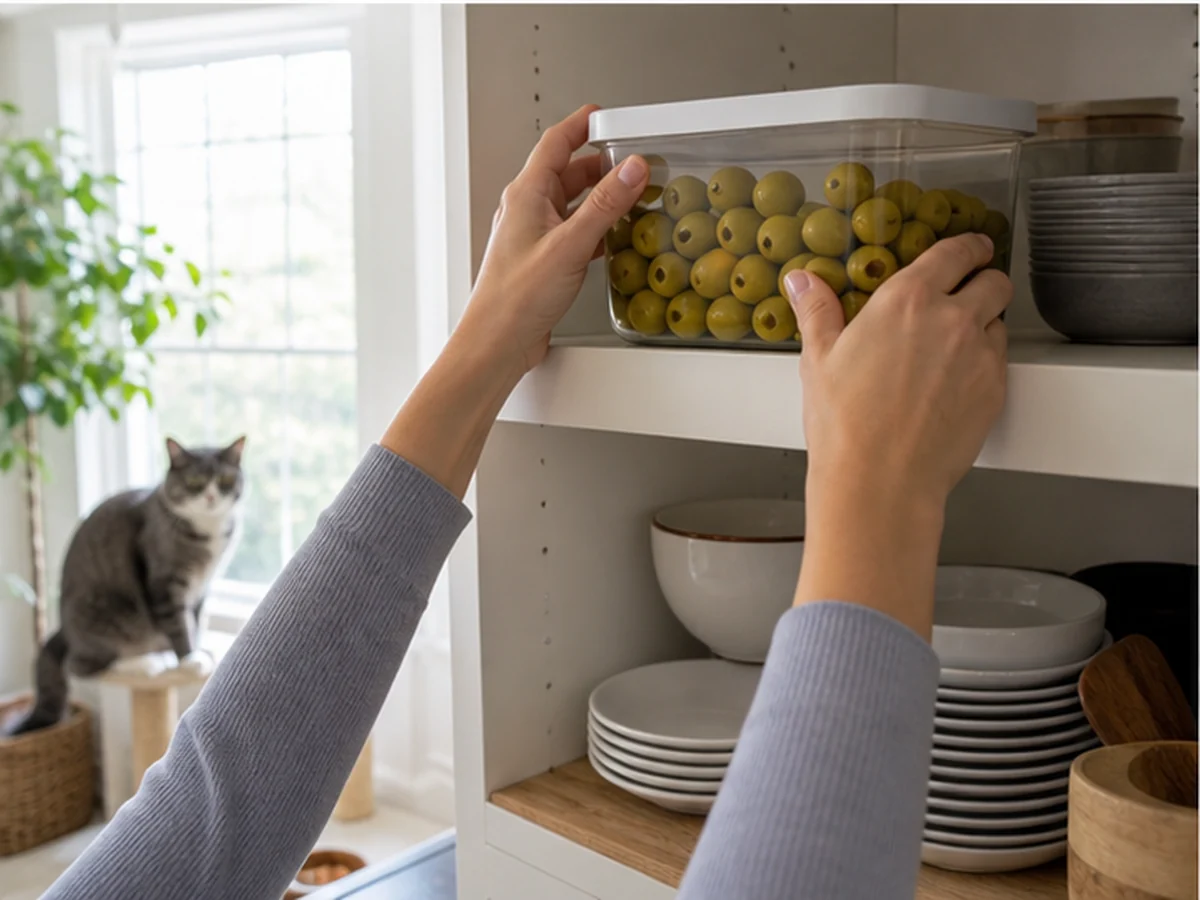
Olive snack boards need a cleanup captain
Charcuterie boards can scatter olives beside cured meat, cheese, grapes, raisins, nuts, chocolate, crackers, dips, and sharp serving tools. Assign one person to clear scraps and count picks before guests leave the table.
Keep the cat occupied with a measured portion of regular food in another room while plates circulate. Prevention is far easier than reconstructing which stuffed olive, cheese rind, and cocktail garnish vanished together.
After the meal, wipe brine and oil from furniture and floors before returning the cat to the room. A nearly invisible salty smear can encourage repeated licking even after every olive is gone.
Refrigerate opened jars according to their label and use a clean fork each time. Fingers, used cocktail picks, and returned serving spoons can introduce contamination that a salty cure does not magically erase.
Frequently asked questions
Can cats eat pimiento-stuffed green olives?
A tiny bit may be low risk if the recipe is plain and pit-free, but brine, sodium, round shape, and product variation make it an unnecessary treat. Check the current label.
Why do some cats like olives?
Aroma and fermentation compounds may interest certain cats, while others ignore them. Attraction does not prove nutritional benefit or justify brine and salt.
What if my cat swallowed an olive pit?
Call promptly with the pit size, time, cat’s weight, and symptoms. Do not induce vomiting or feed extra material to force passage.
Can cats drink olive brine?
No, the salty liquid is not an appropriate broth or hydration aid. A meaningful drink, symptoms, or sodium-sensitive disease warrants veterinary advice.
Bottom line
Green olives are a tiny optional flesh wrapped in brine, pits, stuffings, and party hardware. If a cat steals one, count the stone and pick first, read the cure second, and let complete cat food remain the snack that requires no martini-level investigation.