Can Cats Eat Watermelon Rind? Choking, Obstruction, Seeds, and What to Do
Do not give watermelon rind to cats. A tiny scraped bit of pale inner rind may pass, but the tough curved peel can choke, lodge, or obstruct, and attached seeds, brine, mold, garden chemicals, skewers, and packaging can turn picnic cleanup into an urgent problem.
Rebuild the picnic scene
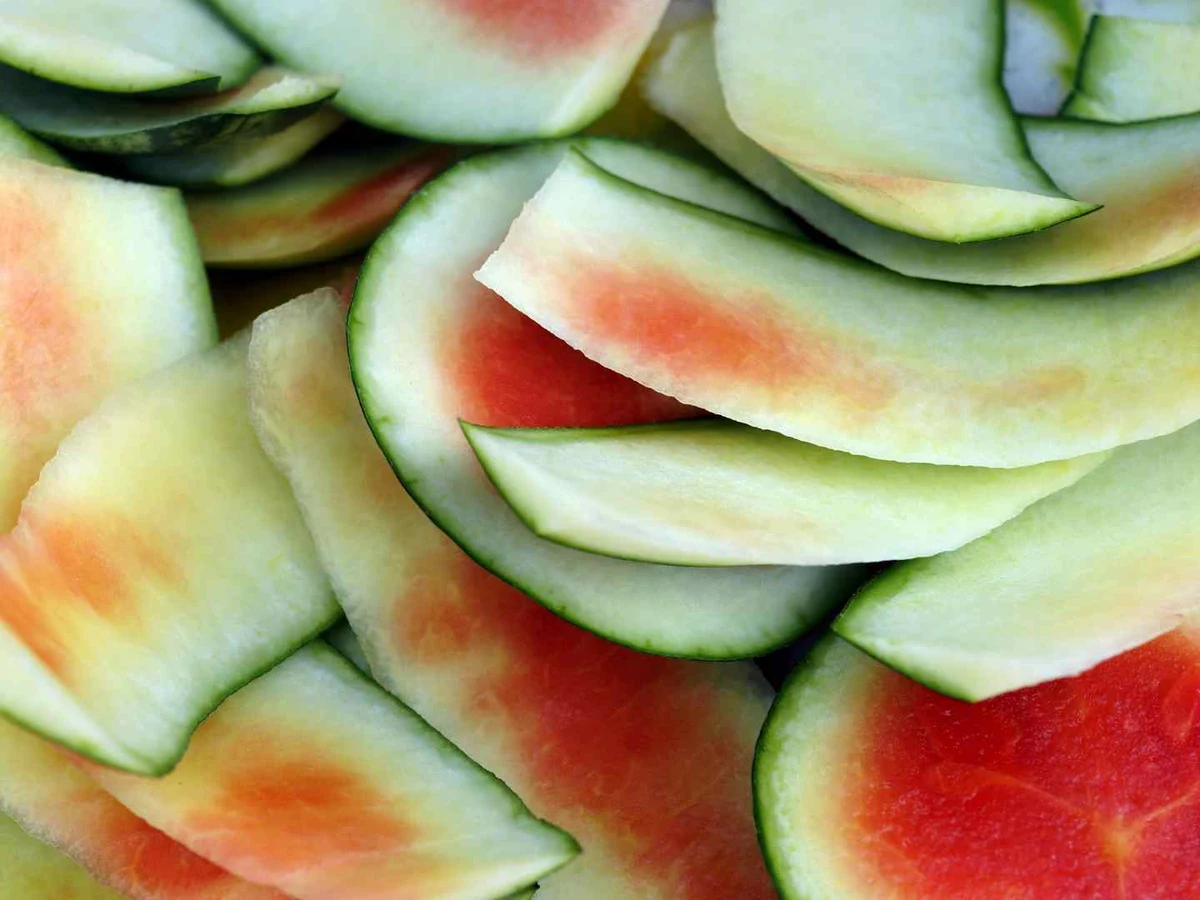
Estimate the missing rind by length, thickness, and whether it was a thin shaving, cube, wedge, or entire crescent. Photograph an intact matching piece beside a ruler.
Note dark outer peel, pale inner rind, red flesh, seeds, salt, chile, pickle brine, trash, compost, skewers, and plastic wrap. Count every utensil and package part.
Breathing trouble, gagging, repeated swallowing, heavy drooling, collapse, repeated vomiting, severe pain, or a missing skewer needs urgent care. Do not induce vomiting.
The rind is not the same as red flesh
Ripe watermelon flesh is soft and water-rich, while rind is firm plant tissue designed to protect the fruit. Advice about a tiny flesh cube does not transfer to a chewy peel.
The cat watermelon guide covers flesh, seeds, sugar, portions, and mixed products. Rind needs a more mechanical assessment.
Cats gain no needed nutrient by chewing rind. Their complete diet and fresh water remain better choices.
Why curved peel can lodge
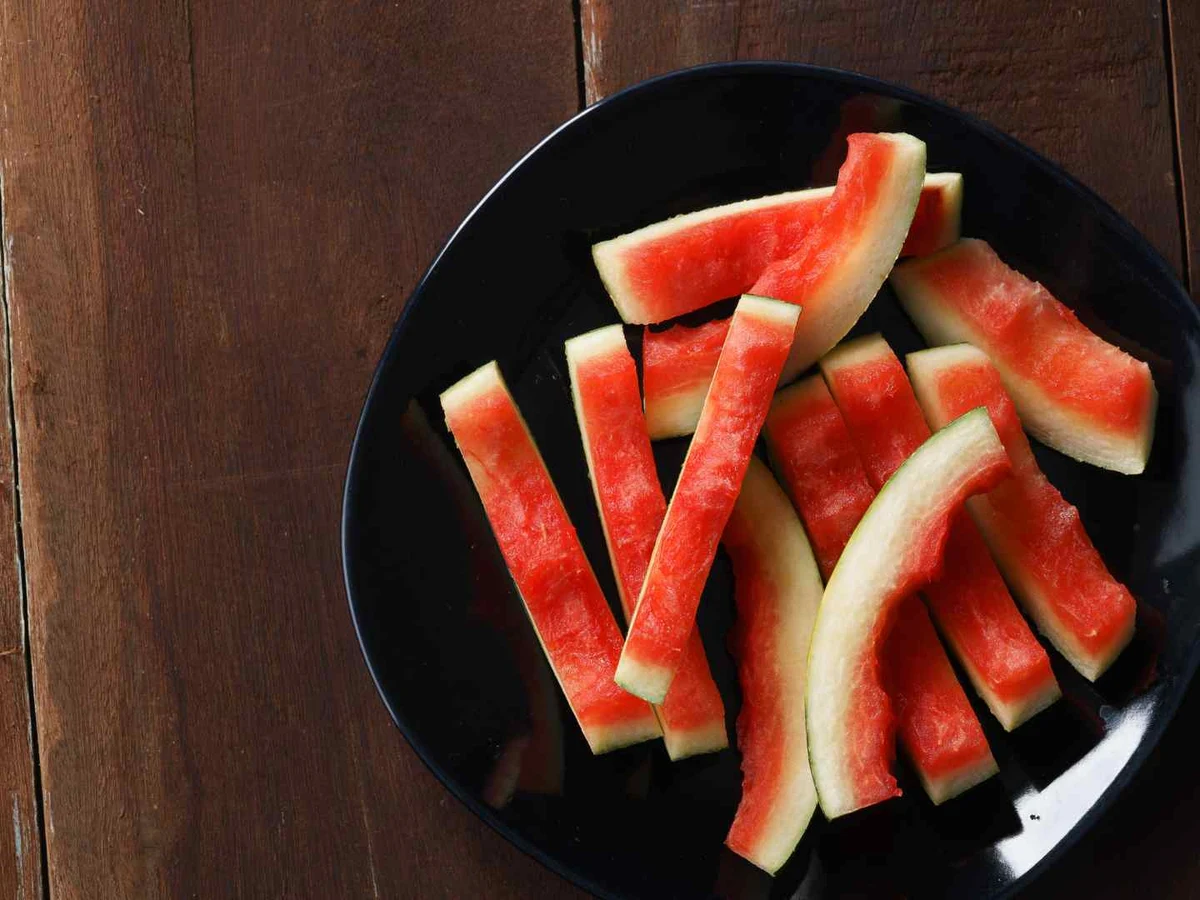
A rind strip can fold, wedge across the palate, or become a bulky swallowed object. Outer peel resists chewing, especially for a cat that gulps oily scraps.
FDA lists food objects among items that can obstruct a pet’s esophagus, stomach, or intestines in its pet-hazard guidance. Shape and size matter as much as chemistry.
Do not test safety by bending the rind in your hands. Feline chewing and digestive movement create different forces.
Choking happens before digestion
A cat with airway obstruction may cough, gag, panic, paw at the mouth, make little sound, develop blue or gray gums, or collapse. Partial blockage can still allow noisy breathing.
Seek emergency care and follow first-aid instructions from a professional. Do not pour water, oil, or food into the mouth.
Blind finger sweeps can push material deeper or cause a frightened cat to bite. Only remove an object that is plainly loose and safely reachable under direction.
Digestive obstruction can be delayed
A swallowed rind may leave the throat yet lodge farther along. Vomiting, food refusal, lethargy, abdominal pain, straining, reduced stool, or diarrhea can emerge hours or days later.
The Merck Veterinary Manual obstruction overview explains why location and severity alter signs. Waiting for rind to appear in stool is not a treatment plan.
Never pull plant material protruding from the mouth or anus because it may be anchored internally. Call immediately.
Inner white rind is still rind
The pale layer is softer than the dark peel but remains fibrous and unnecessary. A small accidental shaving may pass, while cubes or long strips create bulk and choking concerns.
Do not use inner rind as a hydration snack. Cats should drink fresh water and obtain moisture from an appropriate balanced diet.
If a healthy adult nibbled one tiny shaving, remove access and monitor while retaining a matching sample. Call if the amount or signs change.
Seeds can ride along
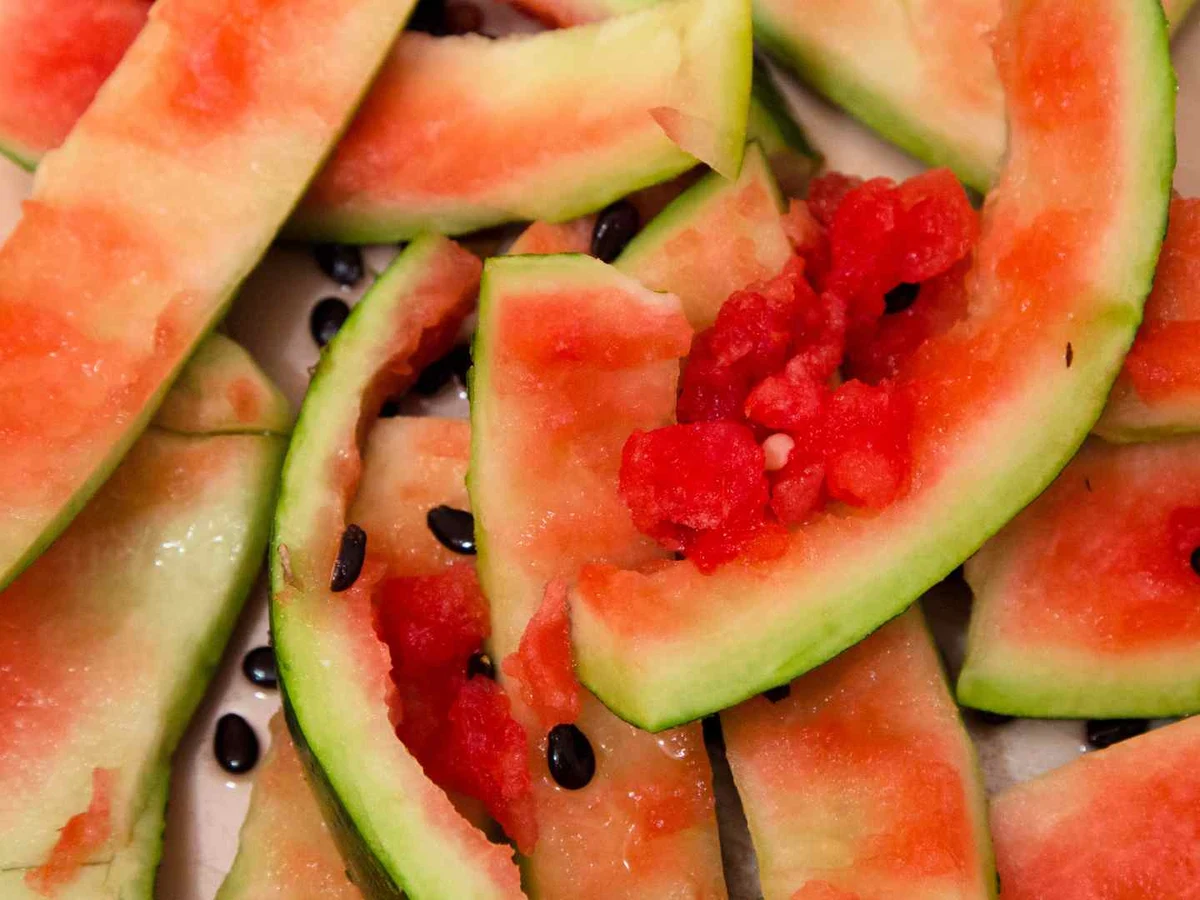
Black mature seeds are firmer than soft white immature seeds, but neither provides a useful feline food. A cluster stuck to fibrous rind can create a larger mouthful.
The seed itself is usually less important than choking, volume, seasoning, or a swallowed skewer. Count what is missing rather than assuming every seed is toxic.
Seedless watermelon still contains small undeveloped seed coats and does not have rind suitable for cats. The marketing term addresses human convenience.
Pickled watermelon rind
Pickled rind can contain substantial salt, sugar, vinegar, spices, onion, garlic, chile, or sweeteners. The softened texture does not erase recipe hazards.
The FDA label guide helps interpret sodium and added sugar. Human serving sizes are not cat doses.
Marked thirst, vomiting, weakness, disorientation, tremors, seizures, or collapse after a large brine exposure is urgent. Save the jar.
Chile-lime and salted watermelon
Picnic wedges may carry salt, chile powder, hot sauce, lime, chamoy, or seasoning blends with garlic and onion. Powder coats paws and can irritate eyes or airways.
The cat spicy-food guide covers capsaicin and cleaning. Move a coughing cat away without sweeping more dust upward.
Do not give milk as a chile remedy. Persistent drooling, squinting, coughing, vomiting, or diarrhea deserves advice.
Mold and fermented trash
Watermelon rinds spoil quickly in warm weather and collect meat juices, dairy, alcohol, insects, and mold in a picnic bin. A sour trash raid is not a fresh-rind exposure.
Some molds can produce neurologic toxins, while harmful bacteria may be present without visible growth. Tremors, seizures, high body temperature, or collapse needs emergency care.
Secure compost too, because natural decomposition does not make scraps safe for a cat. Photograph disturbed material before disposal.
Garden pesticides and waxes
Homegrown melons may have pesticide, fertilizer, slug bait, soil, netting, ties, or marker fragments on the surface. Store fruit may carry labels and food-grade coatings.
Wash human produce according to official food-safety guidance, but do not offer the washed rind to cats. Washing cannot make a thick peel digestible.
After a garden raid, list every product applied and photograph labels. Unknown granules or bait deserve immediate poison advice.
Knife, peeler, and skewer hazards
Rind is often cut beside sharp knives, peelers, melon ballers, metal picks, and wooden skewers. A missing utensil fragment outranks the food question.
Blood, mouth pain, drooling, gagging, or a swallowed pick needs urgent assessment. When a skewer or other sharp object may be involved, avoid home vomiting attempts and seek immediate case-specific direction.
Move the cat from the cleanup zone before collecting blades and broken dishes. Greasy handles can attract licking.
Plastic wrap and trash bags
Cling film, produce stickers, elastic bands, grocery bags, and trash liners retain melon juice. A cat may bat and swallow film after ignoring the fruit.
Count packaging and call whenever pieces are missing. Soft plastic can obstruct even when it does not appear sharp.
Do not pull film emerging from the mouth or anus. Internal attachment can make tugging dangerous.
What the clinic may need
Provide rind dimensions, amount, timing, cooking or pickling details, symptoms, and a matching photograph. Tell the team whether the cat ate other picnic food.
Veterinarians may recommend examination, imaging, endoscopy, or monitoring depending on location and signs. An online photo cannot prove a rind will pass.
Do not feed bulky food, laxatives, oil, or fiber to push it through unless a veterinarian directs that exact plan.
Preventing the second raid
Cut melon with the cat outside the kitchen, move rind directly into a rigid lidded container, and clear skewers before guests leave. Outdoor bins should resist wildlife as well.
Give the cat a normal meal or food puzzle away from the table. Rind does not become enrichment because it rolls dramatically across the floor.
For a tiny known shaving with no signs, follow veterinary monitoring advice and update the clinic if vomiting, appetite, stool, or comfort changes.
Rind crafts and frozen treats
Watermelon baskets, carved centerpieces, frozen rind toys, and novelty bowls can include toothpicks, wire, flowers, candles, paint, or glue. A decorative rind is not merely a food exposure.
Frozen peel becomes a hard curved object capable of injuring teeth or lodging before thawing. Do not offer it as a teething aid or summer enrichment.
Photograph decorations and count every attachment after a raid. Glue, wire, candles, and plant stems each require specific identification.
Juicer pulp and blended rind
Juicers can shred rind into fibrous pulp that is easier to swallow quickly but still bulky and unnecessary. Smoothies may add grapes, sweeteners, dairy, protein powder, or supplements.
Do not assume blending eliminates obstruction or digestive risk because long fibers can remain. Save the appliance recipe and pulp amount.
The cat cucumber guide offers comparison for another watery cucurbit, but watermelon peel remains much tougher.
Several cats at one trash can
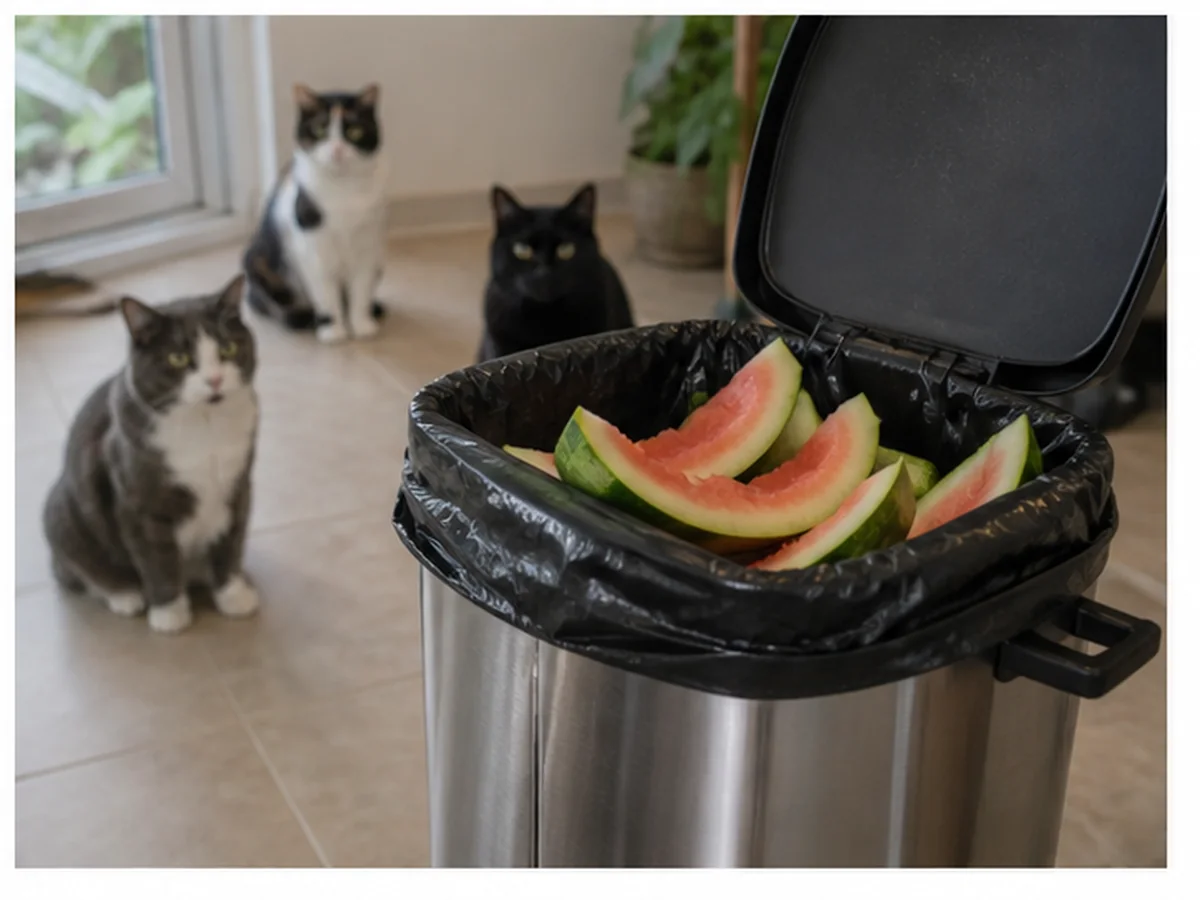
If multiple cats reached discarded rind, separate them calmly and track appetite, vomiting, stool, breathing, and comfort individually. The cat carrying a seed may not have swallowed the largest peel.
Report each cat’s weight and medical history along with the total missing amount. Do not divide the exposure equally without witnessing it.
Keep litter boxes easy to observe and follow clinic instructions. A normal stool from one cat cannot clear the others.
Rind pieces used to flavor drinking water can become slippery and easier to gulp whole. Keep pitchers closed and remove every peel before a cat reaches the glass.
A cat drinking unusually large amounts should be evaluated rather than offered fruit-infused water. Increased thirst can signal kidney disease, diabetes, thyroid disease, medication effects, or other illness.
Veterinary advice should guide hydration support for sick cats. Watermelon rind cannot replace fluids, diagnosis, or balanced wet food.
FAQ
Can cats chew watermelon rind?
No. Tough curved peel can choke, obstruct, damage the mouth, or carry seasoning and debris.
What if my cat ate a tiny white rind piece?
A very small shaving may pass, but retain a matching sample and call if vomiting, pain, appetite loss, or stool changes occur.
Is pickled watermelon rind safer?
No. Pickling may soften texture but adds sodium, sugar, spices, and sometimes garlic or onion.
Should I make my cat vomit after rind ingestion?
No. Inducing vomiting can worsen choking or injury; call a veterinarian for case-specific direction.
Bottom line
Watermelon rind is a physical hazard rather than a useful fruit snack. Size, shape, obstruction signs, pickling ingredients, spoilage, skewers, and packaging decide urgency, so secure every peel and call early when a substantial piece disappears.