Can Cats Eat Pomegranate? Arils, Seeds, Rind, Juice, and Extracts
Pomegranate is not a useful cat treat. One dropped aril may pass without trouble, but the crunchy inner seed, fibrous rind, tannin-rich plant material, juice, molasses, syrup, desserts, supplements, sweeteners, glass, and produce packaging can cause very different problems, and human antioxidant headlines do not establish a feline benefit or dose.
The fruit is a bundle of textures
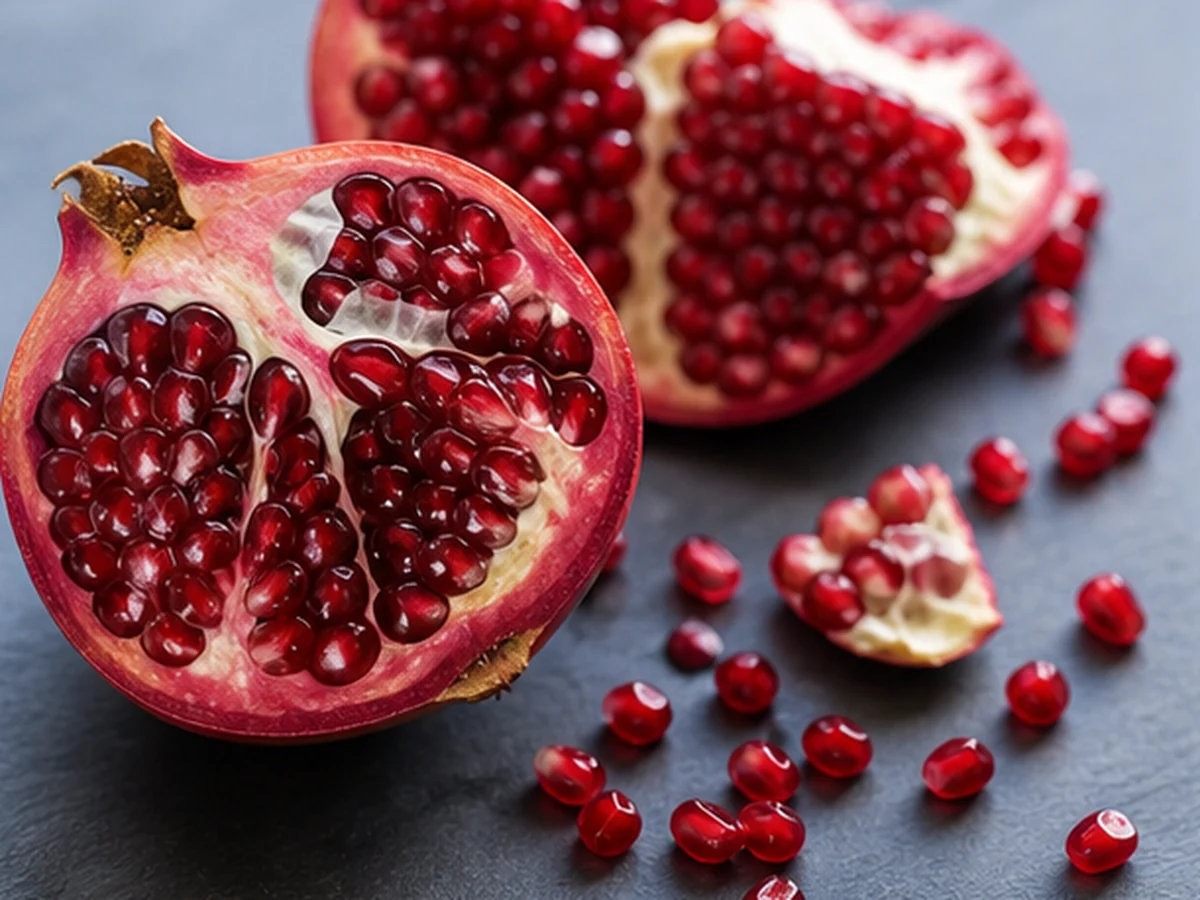
Each jewel-like aril is a juice sac around a firm seed, so a cat cannot truly eat “seedless” pomegranate unless the product was filtered. Several arils create a slippery, crunchy mouthful that can be gulped.
The leathery rind and white membranes are tougher, more fibrous, and richer in plant compounds than the arils. They should stay out of the food bowl and compost should remain secured.
A tiny accidental aril in a healthy adult is different from a cat tearing open half a fruit. Quantity, plant part, product concentration, companions, and symptoms decide the response.
Human benefits do not transfer by enthusiasm
Pomegranate is studied in people for polyphenols and other plant compounds, but that literature does not prove that feeding fruit prevents feline cancer, inflammation, heart disease, urinary disease, or aging. Cats also metabolize foods differently from humans.
The FDA’s label guide shows how pet foods communicate nutritional adequacy. A spoonful of arils, juice, or powder cannot complete or correct a cat’s diet.
Do not calculate a supplement serving by shrinking an adult human dose. Product purity, extraction, concentration, medicines, and feline evidence remain unresolved.
Why the seed changes an innocent-looking taste
Pomegranate seeds are small but firm and numerous. A cat may spit them out, swallow them whole, cough during a hurried gulp, or vomit after a larger serving.
One seed is unlikely to form a classic obstruction in an adult cat, yet a mass of seeds, rind, film, or other foreign material creates a different mechanical picture. Cats with swallowing disorders or prior gastrointestinal surgery should not be tested.
Do not grind seeds over food for fiber, dental cleaning, or omega claims. Abrasive texture does not safely brush feline teeth, and plant oil is not a complete dental plan.
Rind and membrane belong in the discard bowl
The thick red rind can splinter into curved pieces, while pale membranes cling to juice and invite chewing. Neither portion offers a reason to accept gagging, irritation, or obstruction risk.
Repeated swallowing, drooling, regurgitation, vomiting, abdominal pain, reduced stool, or appetite loss after rind disappears needs veterinary advice. Do not induce vomiting or feed bulky food to push it through.
Pomegranate peel powders and extracts are concentrated products, not equivalent to one fresh scrap. Save the label after any access.
Juice is easier to consume in quantity
Straight pomegranate juice removes most chewing but retains acidity and sugar. Blends may contain grape, apple, cherry, blueberry, tea, caffeine, vitamins, herbal extracts, or sweeteners.
The cat fruit guide helps separate flesh, seeds, pits, juice, dried fruit, and mixed products. A picture of one red fruit on the carton is not an ingredient list.
A few drops on a paw may only require cleanup, but a soaked coat invites repeated grooming. Ask how to remove a substantial sticky spill without using scented solvent.
Molasses, syrup, and reduction
Pomegranate molasses is concentrated tart juice, often with added sugar and lemon. It can appear in glazes, marinades, salad dressing, dips, and meat dishes.
Onion, garlic, salt, chili, alcohol, and high-fat meat may matter more than the fruit concentrate. Read the recipe before offering reassurance.
Sticky syrup can coat wrappers, jar rims, spoons, and broken glass. Check the scene for objects before wiping away the evidence.
Desserts and chocolate combinations
Pomegranate can appear in yogurt, ice cream, cakes, macarons, candy, gelatin, granola, and chocolate bark. Every base product changes calories, texture, temperature, and toxicology.
The feline chocolate guide is the relevant next stop when cocoa-coated arils disappear. Report cocoa percentage, product weight, and wrappers.
Sugar-free confectionery needs its current ingredient panel rather than a broad sweetener assumption. Do not import a dog xylitol dose into feline advice.
Supplements are not fruit servings
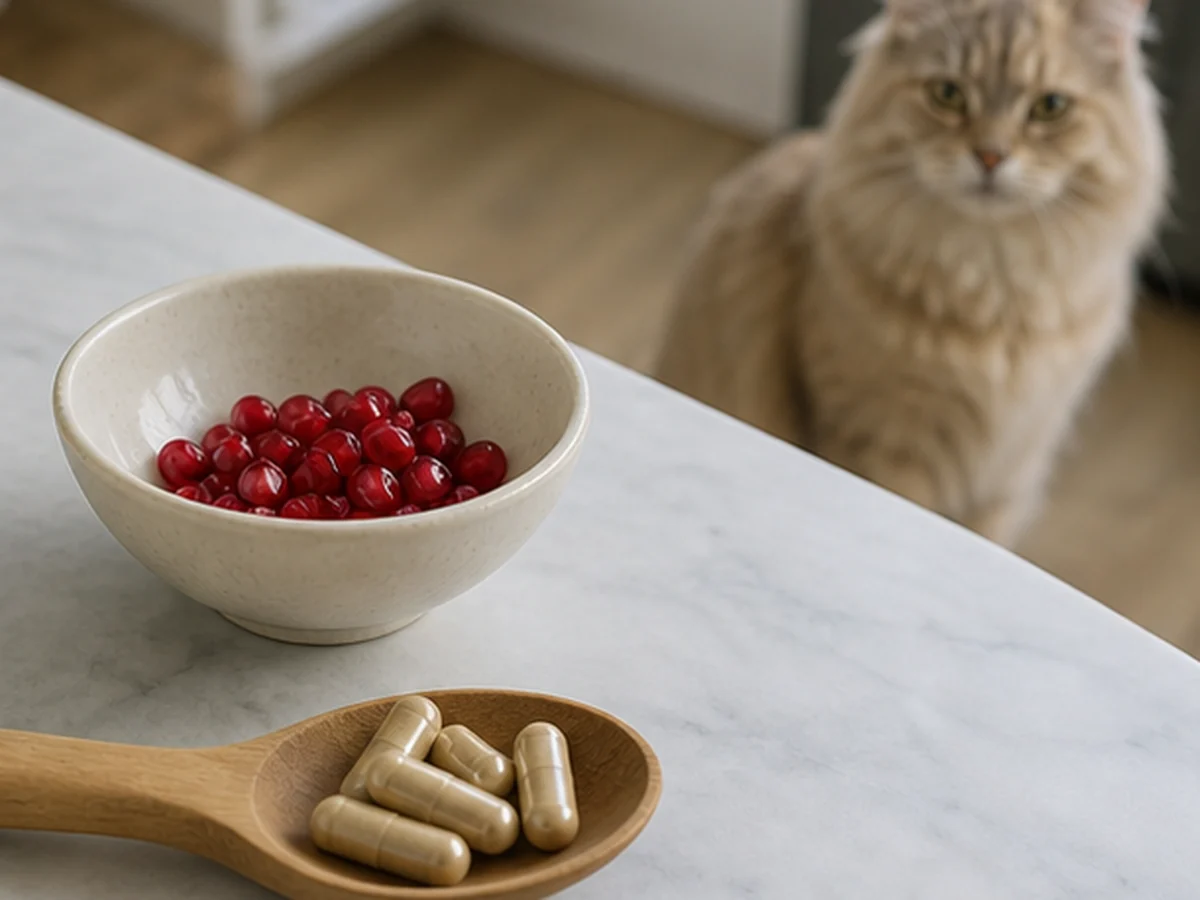
Capsules, tinctures, gummies, powders, and concentrated extracts can contain alcohol, glycerin, vitamins, minerals, herbs, black pepper extract, sweeteners, or multiple botanicals. Their strength may be listed per serving rather than per unit.
The FDA notes that dietary supplements are not approved like drugs before marketing. A polished wellness claim is not feline clinical evidence.
Never use pomegranate extract to treat anemia, parasites, diarrhea, inflammation, kidney disease, or cancer. Call the treating veterinarian before any supplement reaches a cat.
Freshness, fermentation, and kitchen hygiene
An opened fruit can grow mold or ferment, especially when arils are damaged. A sour smell, bubbling, slime, leaking, or visible growth means disposal, not salvage.
The FDA recommends rinsing produce under running water and using clean hands and tools. Soap and produce wash should not be applied to fruit for a cat.
Refrigerate prepared arils according to food-safety guidance and discard questionable containers. Never return a cat-licked spoon to the family bowl.
Plant, bouquet, and garden exposures
Flowers, leaves, bark, stems, roots, soil, fertilizer, pesticides, stakes, and decorative wire differ from the edible aril. Identify the plant rather than assuming every ornamental with a red bloom is pomegranate.
Save photographs of leaves, flowers, fruit, and the whole plant plus all treatment labels. Wet chemical contact on fur warrants prompt cleanup instructions before grooming spreads it.
Dried arrangements can shed sharp stems and painted pieces. “Natural décor” is not a safety category.
Containers are part of the incident
Pomegranates may arrive in mesh sacks, foam trays, thin film, or produce bags, while arils come in snap-lid cups. Molasses usually comes in glass with metal caps and tamper rings.
Count lids, seals, spoons, stickers, knives, and bowl fragments after a raid. Continued vomiting or pain after packaging vanishes deserves assessment even if the fruit itself seems mild.
A calm triage script
- Identify the form: aril, seed pile, rind, membrane, juice, molasses, powder, capsule, dessert, plant, or spoiled food.
- Read every ingredient: include grape, cocoa, caffeine, alcohol, Alliums, sweeteners, dairy, fat, and supplements.
- Estimate exposure: record maximum missing amount, product strength, time, route, and cat weight.
- Inventory objects: locate film, mesh, lids, glass, foil, spoons, sticks, and desiccants.
- Escalate signs: breathing difficulty, collapse, seizures, repeated retching, severe weakness, or marked pain needs emergency care.
Arils in salads and grain bowls
Restaurant salads may pair pomegranate with onion, garlic, feta, nuts, avocado, grapes, dressing, and skewered meat. A few red seeds on top do not describe the bowl underneath.
Ask for ingredient and allergen information before giving reassurance, especially when a cat emptied a takeout box. Foil seals, forks, napkins, rubber bands, and receipt paper can vanish with the food.
The cat yogurt guide helps when arils sit in a creamy parfait, though granola, honey, chocolate, and sweeteners still need separate review.
Dried arils and snack mixes
Dried pomegranate pieces have less water, concentrated sugar, and a chewy texture. Commercial products may be infused with juice, sweetened, oiled, or mixed with nuts and chocolate.
Trail mix can also contain raisins, coffee beans, cannabis candy, salty seeds, and freshness packets. Preserve the outer pouch because loose pieces may be impossible to identify later.
A tiny dried fragment is not automatically toxic, but a large sticky mass or mixed-product raid needs product-based advice. Do not offer more water by syringe to “flush” it.
Pomegranate tea and flavored water
Tea may use dried rind, flowers, juice flavor, black or green tea, hibiscus, citrus, spices, and sweeteners. Caffeine and concentrated botanical ingredients can matter more than the fruit name.
Hot tea can burn paws and mouths before ingestion occurs. Drooling, red skin, blisters, squinting, or sudden food refusal after a spill deserves prompt examination.
Flavored water is not superior feline hydration. Fresh plain water in clean accessible bowls is the safer default.
Dental and urinary claims deserve skepticism
Crunching seeds does not remove tartar safely, and acidic juice should not be rubbed on teeth or gums. Dental disease requires examination and an evidence-based home-care plan.
Pomegranate is also not a urinary acidifier or infection treatment. Straining, blood in urine, repeated box visits, pain, or producing little urine requires veterinary care rather than a fruit remedy.
The cat watermelon guide illustrates why a watery fruit cannot substitute for diagnosing poor hydration or urinary signs. Foods with similar marketing language can have different seeds and rinds.
When observation is proportionate
After one aril is swallowed and a veterinarian advises monitoring, keep normal food and water available and watch appetite, vomiting, comfort, gait, and litter-box output. Avoid adding new treats while the picture is still developing.
Escalate for repeated vomiting, ongoing diarrhea, pain, weakness, choking signs, breathing change, or unusual behavior. A swallowed rind piece or missing film changes the plan even if the cat seems comfortable at first.
Write down the observation period and callback threshold provided by the clinic. Clear notes keep a low-concern situation from becoming vague guesswork.
Frequently asked questions
Can kittens eat pomegranate?
A kitten’s limited stomach space belongs to complete growth food. Loose arils, firm seeds, rind, sweet products, and packaging offer no developmental advantage.
Are pomegranate seeds poisonous to cats?
They are not established as a classic feline poison in tiny food exposure, but their firm texture and larger quantities can cause trouble. Do not offer them or make benefit claims.
Can cats drink pomegranate juice?
Do not serve it because acidity, sugar, blends, additives, and easy overconsumption outweigh any reason to share. One accidental lick is assessed by product and symptoms.
Does pomegranate help a cat’s immune system?
No dependable feline clinical evidence supports home dosing for that purpose. Use complete nutrition, preventive care, and veterinary diagnosis instead.
Bottom line
Pomegranate arils are more likely to be unnecessary and stomach-upsetting than dramatically toxic, but seeds, rind, concentrates, recipes, supplements, spoilage, and packaging prevent a one-word answer. Keep portions out of reach and call with the exact form when curiosity becomes a raid.