Can Cats Drink Almond Milk? Labels, Sweeteners, and Carton Risks
A few licks of plain, unsweetened almond milk are unlikely to seriously harm most healthy adult cats, but it is not a useful drink for them. Products vary in sugar, flavoring, thickeners, fortification, and sweeteners, and almond milk cannot replace water, cat food, or kitten formula.
A low-risk lick is not a recommendation
If your cat sampled a small amount of ordinary refrigerated almond beverage and remains normal, check the label and monitor for vomiting or diarrhea. Remove the cup before curiosity upgrades the incident from taste test to brunch.
For a large drink, unknown formulation, concentrated product, flavored creamer, missing carton cap, or symptoms, call your veterinarian. Report the brand, ingredients, amount, time, cat’s weight, medical conditions, and any medication.
Almond milk is mostly water plus processed almond material, with a formulation selected for people. The word milk describes how humans use it, not whether it meets feline nutritional needs.
Read the carton in three passes
First, scan the ingredient list for sweeteners, chocolate or cocoa, coffee, vanilla extract, fruit blends, salt, oils, protein additives, and other nuts. Second, check calories and added sugar, then look at fortification on the Nutrition Facts panel.
Third, confirm whether the product is ready to drink or concentrated. Barista blends, shelf-stable mini cartons, powdered mixes, and coffee creamers can differ greatly from an unsweetened refrigerated beverage.
The FDA explains that plant-based milk alternatives vary with source, processing, and added ingredients. That human nutrition guidance reinforces why one almond-milk label cannot stand in for every brand.
Sweetened and flavored varieties
Vanilla almond milk may contain added sugar and flavoring, while chocolate versions add cocoa compounds that are unsafe for cats. Coffee-flavored products can add caffeine, and seasonal beverages may include spices or concentrated extracts.
Do not assume unsweetened means ingredient-free. It may still contain gums, emulsifiers, salt, vitamins, minerals, natural flavors, or oils that affect tolerance and medical suitability.
Sugar-free also needs interpretation, but dog warnings should not be pasted onto cats. The FDA notes that xylitol does not appear as dangerous to cats as it is to dogs, while still making exact product identification the sensible response to an exposure.
Almond milk is dairy-free, not cat-complete
Almond beverages do not contain lactose unless dairy is added, so lactose intolerance is not the central concern with a plain product. The more important issue is that it lacks the complete protein and nutrient pattern required for feline maintenance or growth.
Fortified calcium, vitamin D, or vitamin A amounts are designed around human labeling and serving sizes. They do not transform the carton into a balanced cat supplement, and repeated additions can complicate a prescription diet.
The Cornell Feline Health Center recommends nutritionally complete cat food and warns against unapproved supplementation. Fresh plain water remains the correct routine beverage.
Never use it as kitten formula
Newborn and orphaned kittens have precise needs for energy, protein, fat, minerals, fluid, temperature, feeding frequency, and elimination support. Almond milk cannot substitute for a queen’s milk or a commercial kitten milk replacer.
Contact a veterinarian or experienced neonatal rescue immediately for a kitten who is cold, weak, crying, not nursing, or losing weight. Feeding the wrong liquid can cause malnutrition, diarrhea, aspiration, or dangerous delay.
Do not syringe any milk into a kitten who cannot swallow normally. Position, nipple flow, formula temperature, and feeding volume all require proper instruction.
Can almonds themselves cause trouble?
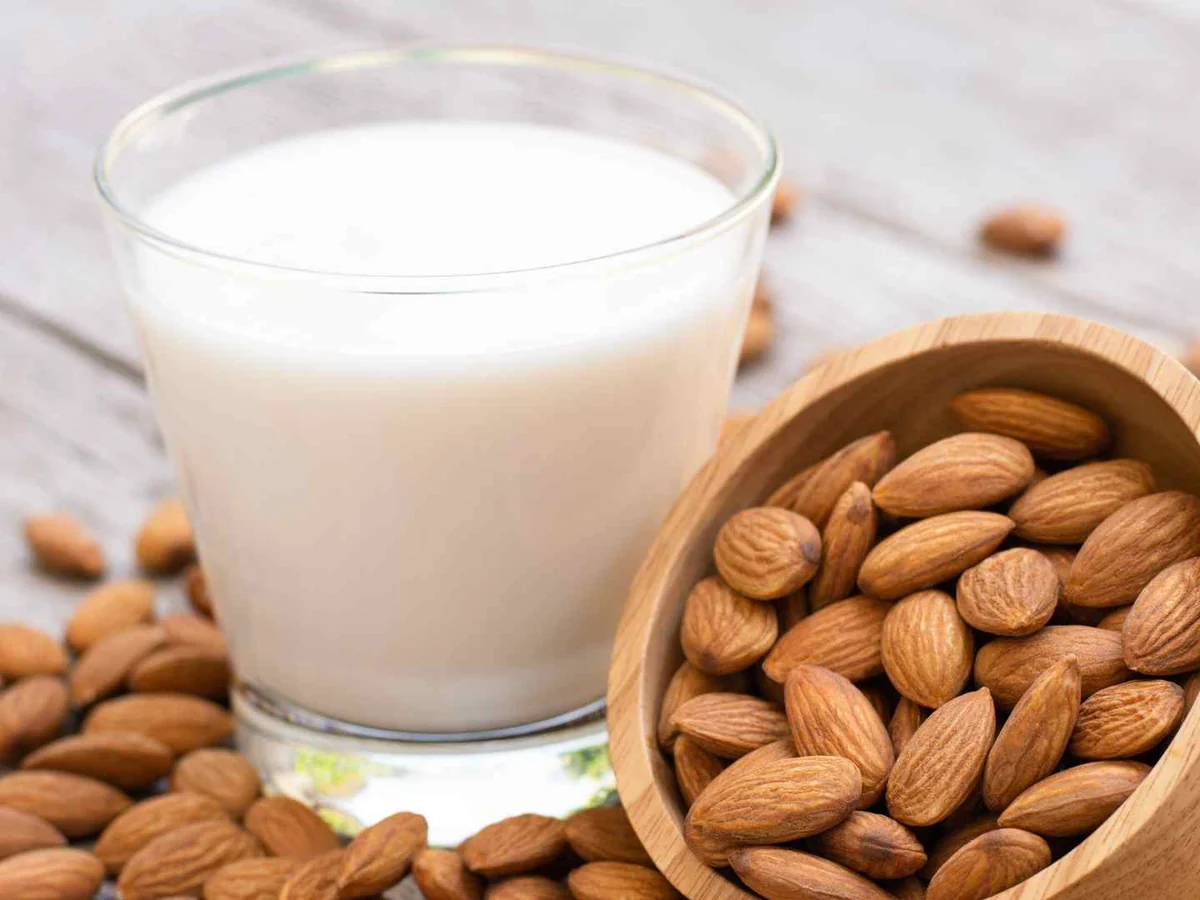
Commercial almond beverage contains much less solid nut than a bowl of almonds, but individual products vary. Whole almonds pose tougher chewing, choking, fat, seasoning, mold, and packaging concerns covered in our almond guide for cats.
A food reaction is possible in an individual cat, though one loose stool after a new drink does not prove almond allergy. Additives, fat, amount, spoilage, and sudden dietary change also deserve consideration.
Facial swelling, widespread hives, collapse, or breathing difficulty after any food needs emergency care. Recurring itch or gastrointestinal signs require a structured veterinary workup rather than repeated kitchen challenges.
Homemade almond milk has its own problems
Homemade versions may avoid gums but create uncertainty around sanitation, nut concentration, storage, sweeteners, and additives. Bitter almonds should never be used because they differ chemically from the sweet almonds sold for ordinary food.
Soaked nuts and wet pulp can spoil, while reusable bags and blenders need thorough cleaning. A fresh smell does not prove the mixture is microbiologically safe or nutritionally appropriate.
Discard homemade beverage left warm or stored beyond a reliable food-safety window. Do not salvage questionable liquid by giving it to the cat, whose stomach is not the household compost test.
Creamers, smoothies, cereal, and coffee
Almond creamer may be richer, sweeter, and more concentrated than milk. Some contain coconut oil, flavors, stabilizers, and enough sugar to make a small spill much less ordinary.
Smoothies can add grapes, raisins, chocolate, coffee, protein powders, supplements, or sweeteners. Cereal bowls contribute sugary cereal and possibly dried fruit, while coffee remains a caffeine exposure even when heavily diluted with almond milk.
Assess the whole recipe and tell the clinic everything in it. Our chocolate guide explains why cocoa changes urgency, while the grape guide addresses feline uncertainty without transferring dog dose claims.
Cartons, caps, straws, and absorbent seals
A cat fascinated by the remaining drops may chew the plastic cap, inner seal, straw, or carton lining. Missing packaging changes the event from nutrition question to possible foreign-body problem.
Call for repeated gagging, drooling, regurgitation, vomiting, appetite loss, abdominal pain, lethargy, or reduced stool. Do not induce vomiting or push food to move an object.
Rinse empty cartons and place them in a closed recycling bin. Countertop recycling is a convenient beverage bar for a cat with enough determination and very little respect for municipal sorting rules.
Which cats should skip almond milk entirely?
Avoid it for kittens, cats with nut sensitivity, chronic vomiting or diarrhea, obesity, diabetes, pancreatitis history, or swallowing trouble. Cats on renal, urinary, allergy, gastrointestinal, or weight-control diets should receive only approved additions.
Fortified minerals and calories may conflict with medical targets, even when the beverage looks light. Ask the treating team before using almond milk to hide medicine because some drugs have food restrictions or should not be crushed.
A cat who refuses water needs evaluation of bowl placement, cleanliness, diet, nausea, pain, dental disease, kidney function, and other factors. Masking the issue with flavored liquid can postpone useful answers.
Better hydration and treat options
Offer multiple clean water stations, wide bowls, or a well-maintained fountain if your cat prefers moving water. Wet cat food can contribute moisture when it suits the animal’s health and calorie plan.
For rewards, use part of the measured kibble ration, a spoonful of usual wet food, or a purpose-made cat treat with known calories. These options keep nutrition predictable and avoid teaching your cat that every human mug requires inspection.
The almond milk guide for dogs can help identify carton variants, but xylitol urgency and serving assumptions are canine-specific. The label checklist transfers; toxic doses do not.
Spoilage and storage are easy to overlook
Refrigerated almond beverage can spoil after opening, and shelf-stable packaging only remains shelf-stable while sealed. Follow the manufacturer’s refrigeration and discard instructions rather than judging safety from a quick sniff.
Do not leave a saucer out for hours because plant beverages can support microbial growth once opened and warmed. Multi-cat homes also make it impossible to know who drank how much or which animal later developed diarrhea.
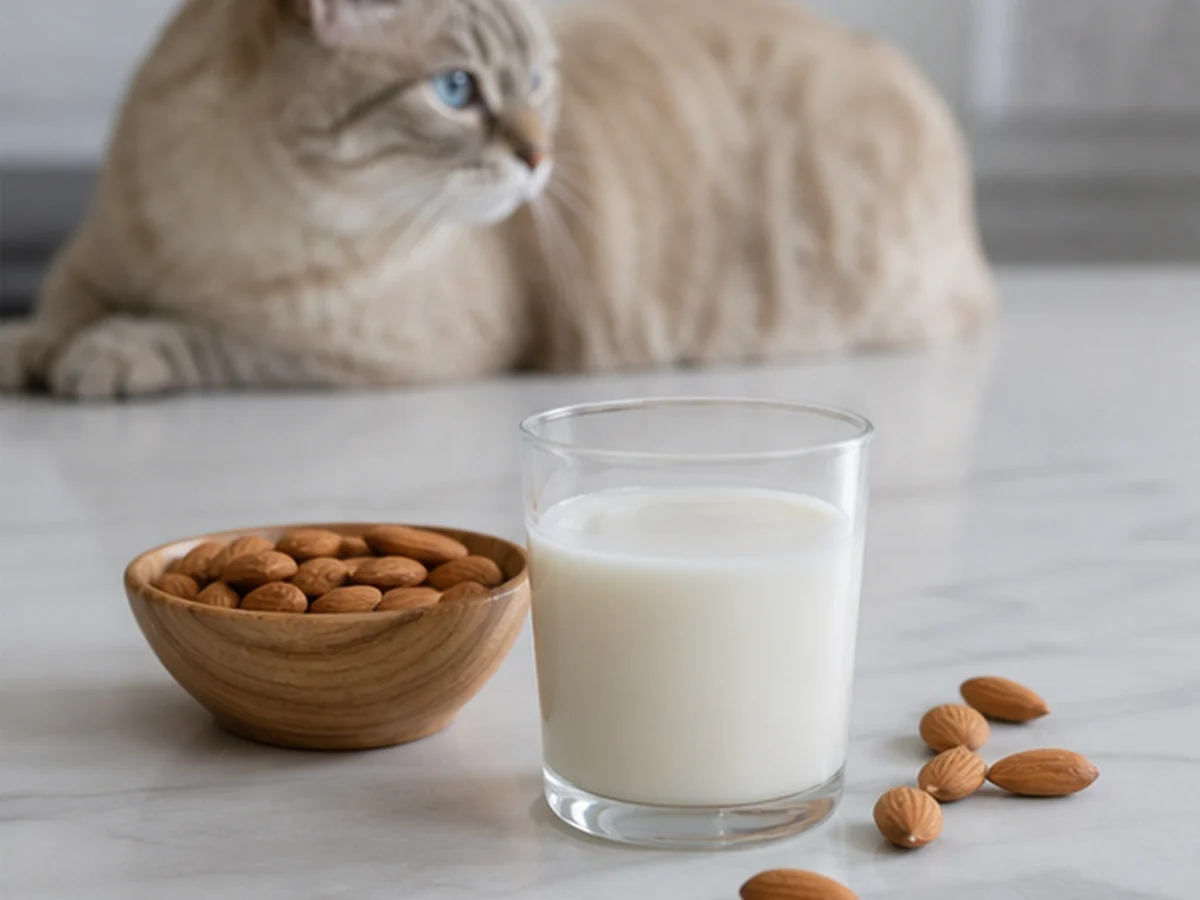
Almond milk and urinary health claims
More liquid is not automatically better when minerals, calories, and flavor change the cat’s overall diet. Urinary care depends on the diagnosis, urine concentration, stone or crystal type, stress, anatomy, and the complete nutrient profile.
A cat straining repeatedly, crying in the box, or producing little urine may have an obstruction and needs emergency evaluation. Almond milk cannot dissolve a blockage or safely replace veterinary fluids.
If a veterinarian wants more moisture, ask which canned food, water addition, broth, or prescription strategy matches the case. That recommendation will be far more useful than choosing a beverage because the carton shows a splash and a healthy-looking almond.
Frequently asked questions
Can cats drink unsweetened almond milk?
A small accidental taste is usually low risk, but unsweetened almond milk remains nutritionally unnecessary. Inspect flavorings, gums, salt, oils, and fortification before deciding how to monitor.
Is almond milk better than cow’s milk?
It avoids lactose but does not become a feline health drink. Plain water and complete cat food answer different needs more reliably than either human beverage.
Can I warm almond milk for my cat?
Warming does not correct nutritional mismatch or unsafe additives and may create a burn risk. Warm a small portion of the cat’s usual wet food instead if the veterinarian recommends aroma enhancement.
If a cat loves the creamy smell, redirect that interest before opening your own drink. Set aside a teaspoon of the usual wet food, offer a lickable cat treat approved for the diet, or begin a short play session away from the table.
Teach family members that plant-based does not mean designed for every species. This simple distinction prevents almond milk, oat creamer, coconut yogurt, and fortified smoothies from becoming an accidental rotation of unbalanced extras.
Keep a photo of the current carton if a medically complex cat repeatedly steals drinks. Formulas change, and an ingredient list from last year’s brand version may not describe today’s exposure.
Bottom line
Plain almond milk is usually a low-risk accidental taste for a healthy adult cat, not a beverage to serve. Check every formulation, keep chocolate and caffeine blends away, protect prescription diets, secure carton parts, and reserve the daily bowl for fresh water.