Can Cats Eat Parmesan Cheese? Sodium, Dairy, Rinds, and Grating Tools
A few plain Parmesan crumbs may cause no problem in many healthy adult cats, but the cheese is salty, calorie-dense, and unnecessary. Large portions, dairy sensitivity, hard rind, mold, garlic or onion blends, grated products, rich dishes, knives, graters, foil, and kidney, heart, urinary, or weight diets change the answer.
Begin with form and amount
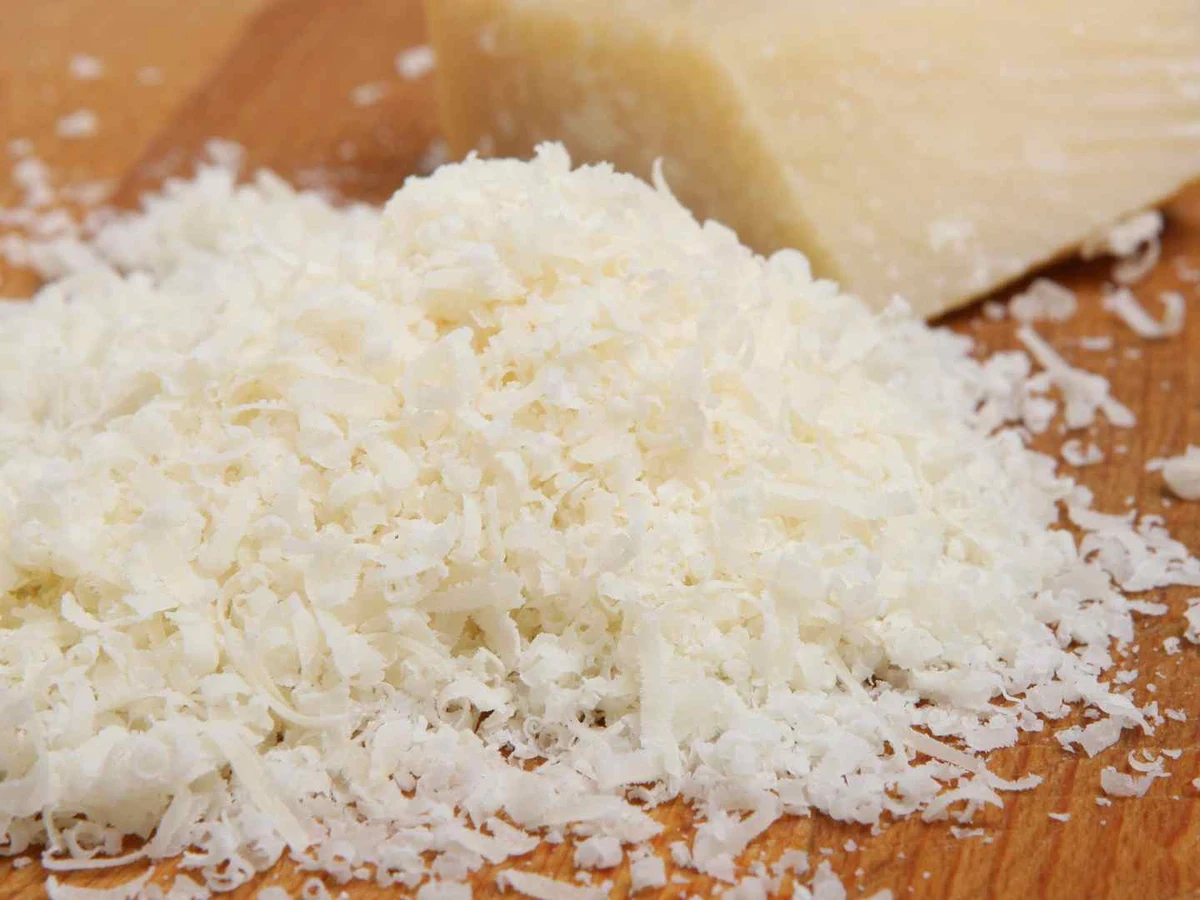
Freshly grated plain cheese, a hard rind, green-can powder, seasoned blend, and Parmesan-covered casserole are separate exposures. Save the package, amount, time, recipe, and any missing tools or wrappers.
Call for a swallowed rind, sharp object, Allium seasoning, severe symptoms, moldy cheese, or a large amount in a vulnerable cat. Do not induce vomiting.
Parmesan is concentrated aged cheese
Aging removes moisture and concentrates flavor, protein, fat, minerals, and sodium into a hard cheese. A human pinch can become a noticeable treat for a small cat.
Offer no deliberate serving when regular cat food already supplies complete nutrition. At most, a few crumbs may be tolerated by an unrestricted healthy adult.
Sodium is the practical label concern
Salt supports cheesemaking and preservation, so Parmesan can be sodium-dense. Packaged grated products and restaurant dishes may add still more salt.
The Merck salt review lists thirst, vomiting, incoordination, tremors, and seizures after excessive exposure. Keep water available without forcing it.
Lactose is lower, not necessarily zero
Aged hard cheeses tend to contain less lactose than milk, but tolerance varies and dairy is still unnecessary. Vomiting, gas, loose stool, or discomfort can follow a larger amount or individual sensitivity.
Our cheese guide compares types, lactose, sodium, fat, mold, and portions. Do not use low lactose as permission for a bowlful.
Fat and calories still count
Parmesan is calorie-dense and often lands on buttered pasta, cream sauce, pizza, or meat. Large rich thefts can cause digestive upset and are poor choices for pancreatitis history.
Do not claim one crumb guarantees pancreatitis, and do not ignore persistent vomiting, pain, lethargy, or appetite loss. Those signs require veterinary assessment.
The rind is a hard foreign object
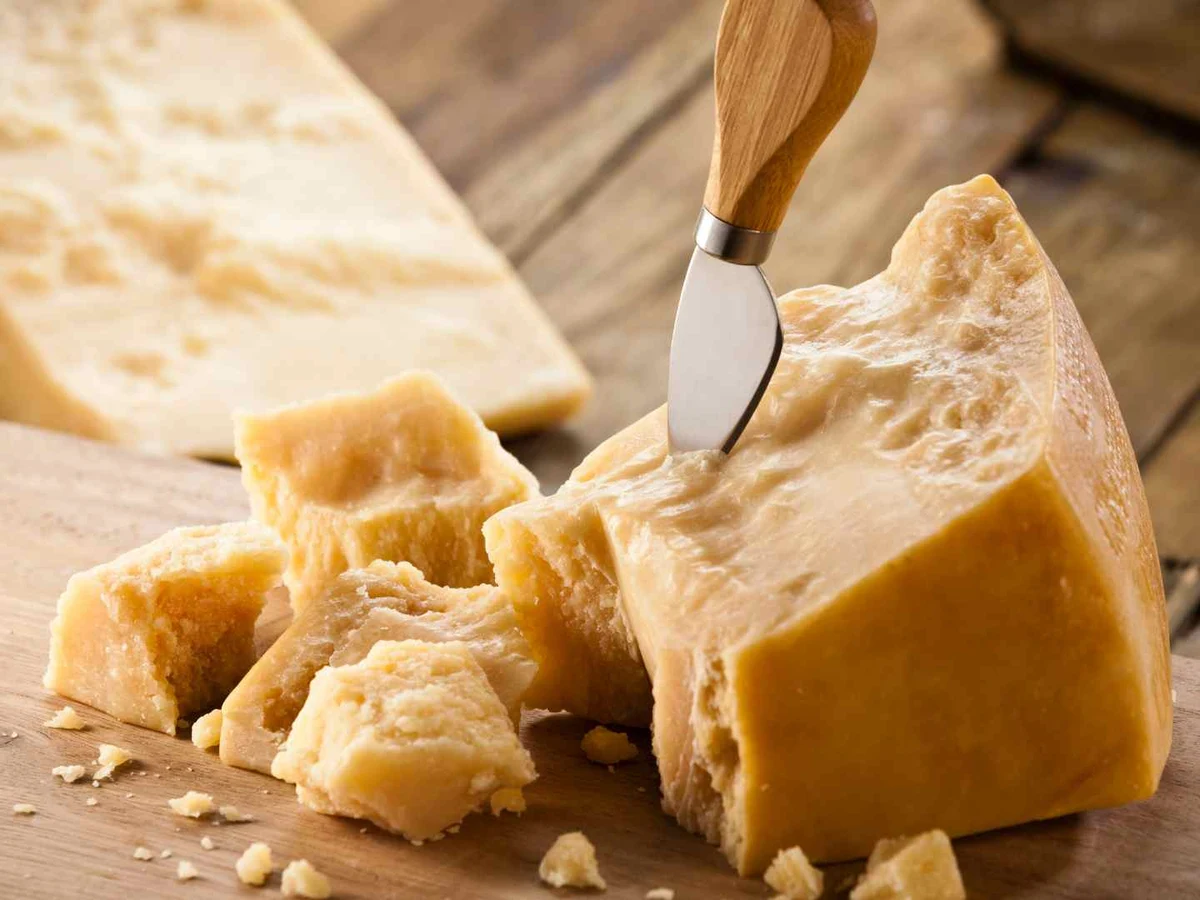
Natural and treated rinds can be extremely hard, irregular, waxed, or printed, and may choke, fracture teeth, or obstruct. A rind used in soup still remains unsuitable after simmering.
Call for a swallowed chunk, gagging, drooling, repeated swallowing, vomiting, belly pain, reduced stool, or food refusal. Do not rely on chewing or stomach acid.
Grated products need label reading
Shelf-stable shakers may contain Parmesan, cellulose, anticaking agents, preservatives, other cheeses, and flavoring. Refrigerated blends can add Romano, Asiago, garlic, herbs, or substantial sodium.
Read the exact package instead of using “Parmesan” as a single recipe. Fine powder can also irritate eyes and airways or coat paws.
Garlic Parmesan is an Allium exposure
Garlic Parmesan wings, fries, pasta, popcorn, bread, seasoning, and sauces may combine garlic powder with onion, butter, salt, and fat. Cooking does not reliably neutralize Allium oxidants.
Use the garlic guide and call promptly because feline anemia may be delayed. Removing visible crumbs does not remove absorbed seasoning.
Pasta and risotto are mixed dishes
Carbonara, Alfredo, pesto, risotto, soup, and casseroles may add onion, garlic, cream, butter, wine, bacon, stock, raw egg, or mushrooms. Parmesan may be the least consequential ingredient.
Save the recipe and restaurant information. Our bread guide covers another common vehicle with dough, mold, and wrappers.
Graters and knives create immediate hazards
Box graters, microplanes, rotary drums, knife tips, peelers, and food-processor blades can cut paws and mouths. Metal shavings or broken plastic require urgent attention.
Unplug appliances before disassembly, keep cats away during cleanup, and account for every tool part. Active bleeding or swallowed sharp material is an emergency.
Foil, wax paper, and tubs deserve a count
Cheese wedges may use vacuum film, foil, paper, wax, labels, clips, and resealable bags. Greasy packaging smells edible and can obstruct.
Call for missing material or repeated vomiting, appetite loss, abdominal pain, straining, or lethargy. Do not provoke vomiting after foreign material.
Mold and storage cannot be ignored
Follow refrigeration and use-after-opening directions, keep cheese wrapped cleanly, and discard suspicious mold or spoilage according to authoritative food guidance. Do not trim a questionable pet portion as a salvage plan.
Save lot codes after illness or a recall. A dry edge differs from fuzzy growth, but neither is needed badly enough to gamble.
Medical diets remove the garnish argument
Kidney, heart, urinary, diabetes, obesity, gastrointestinal, and food-allergy plans may control sodium, phosphorus, fat, calories, or ingredients. Parmesan can conflict even as a small topper.
The FDA explains nutritional adequacy statements. Use prescribed food for treats and medication unless the clinic approves another option.
The Parmesan cleanup plan
- Identify crumbs, wedge, rind, shaker powder, seasoned blend, or mixed dish.
- Save amount, time, sodium label, recipe, medical history, and symptoms.
- Count rind, knives, graters, blades, foil, film, labels, and clips.
- Call for Alliums, rinds, sharp objects, severe signs, mold, or a large amount.
- After a few plain crumbs, monitor appetite, vomiting, stool, thirst, and energy.
Wipe the counter and close the refrigerator rather than leaving the wedge under a decorative cover. Cats regard decorative covers as invitations with handles.
Parmesan names and imitations require labels
Parmigiano Reggiano, domestic Parmesan, cheese blends, vegan Parmesan, shelf-stable topping, and Parmesan flavor do not share one formula. Moisture, sodium, fat, dairy, nuts, yeast, preservatives, and anticaking agents vary.
Read the product in hand and note whether it is a wedge, shred, powder, sauce, snack coating, or plant-based substitute. A familiar shaker shape does not guarantee familiar ingredients.
During a food-allergy trial, cross-contact from shared graters or mixed cheese can invalidate the diet. Use only treats approved by the managing clinic.
Cheese obsession can reveal oral or appetite change
A cat newly licking cheese dust from plates may simply enjoy salt and aroma, but generalized scavenging can accompany hyperthyroidism, diabetes, medication effects, or inadequate intake. Track body weight, meals, thirst, urine, and behavior.
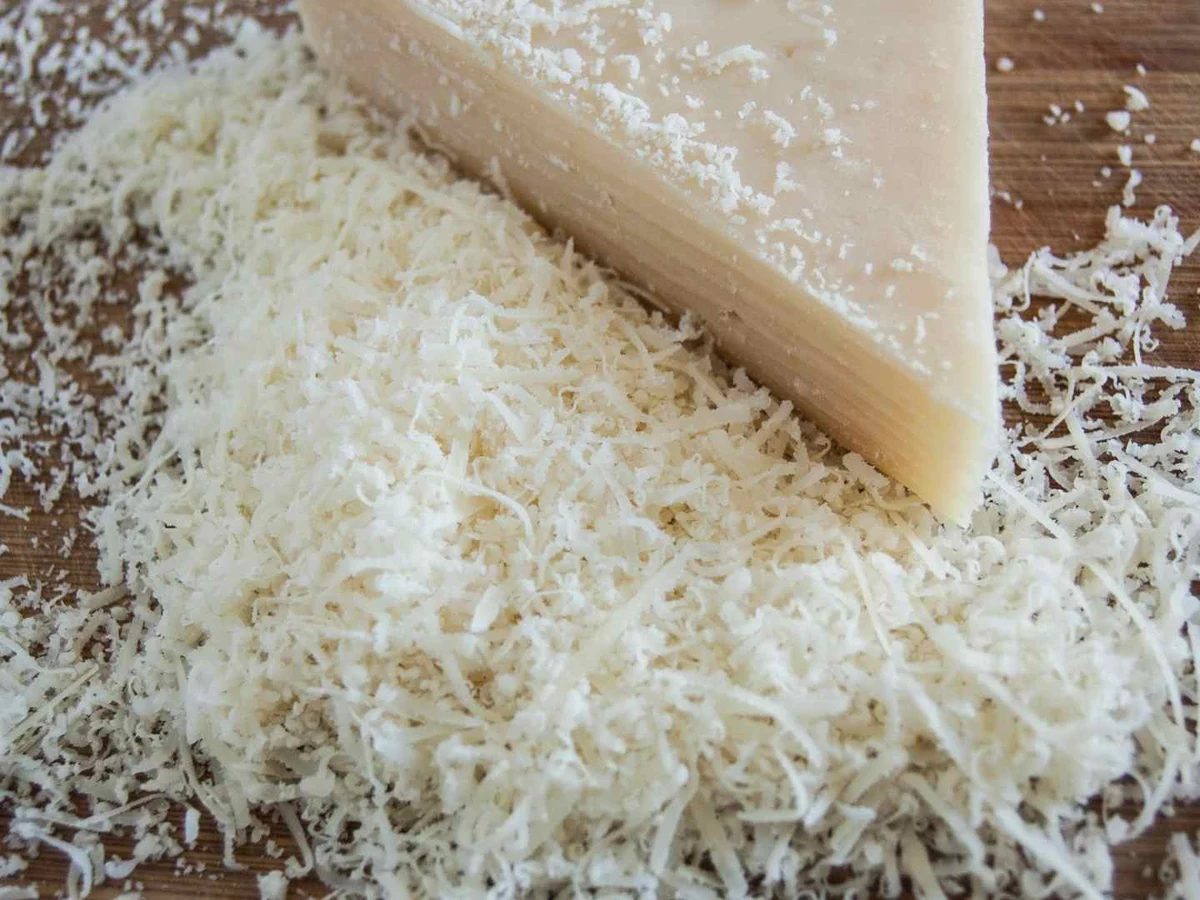
A preference for soft grated cheese can also accompany dental pain. One-sided chewing, food dropping, bad breath, drooling, or face sensitivity deserves an oral examination.
Do not solve either pattern by increasing Parmesan. Extra sodium and calories obscure the clue while the underlying condition remains untreated.
Restaurant Parmesan needs a clean-tool question
Tableside graters, communal bowls, and shaker jars can carry residues from garlic bread, salads, raw egg dressing, meat, and other cheeses. Restaurant portions are also difficult to estimate and easy to repeat.
Ask whether the cheese or blend was seasoned and identify the full dish. A cat that licked Alfredo sauce did not consume plain Parmesan, even if cheese was the most visible garnish.
For a broader dairy comparison, the cream-cheese guide covers fresh spread, flavors, Alliums, desserts, and medication use.
Cold storage and recalls matter
- Keep wedges and grated cheese refrigerated as directed.
- Use clean utensils and close packages promptly.
- Retain lot, manufacturer, and date information.
- Discard leaking, slimy, moldy, or questionable product.
The FoodSafety.gov storage chart helps frame human leftover decisions, while the manufacturer governs the exact product. Do not serve old cheese to a cat to avoid waste.
If multiple people or animals become ill after one package, stop using it and preserve identifying information. Report the shared exposure to the veterinarian and appropriate food-safety authority.
Parmesan crisps concentrate cheese into hard salty wafers that can challenge sore teeth and are easy to overportion. Flavored versions may add garlic, onion, chile, seeds, or herbs.
A tiny crumb is not the same as a whole crisp, but neither is useful cat nutrition. Save the snack bag and count missing pieces and packaging.
Cheese sauce labeled Parmesan can contain milk, cream, butter, starch, broth, wine, salt, garlic, onion, and preservatives. Smooth sauce lets a cat lap a larger amount quickly than hard cheese.
Do not scrape a sauce-coated food and assume the remaining meat or pasta is plain. Liquids and powders soak into the surface during cooking.
If Parmesan is used to encourage eating, ask why the cat needs encouragement and how long the plan should continue. Dental pain, nausea, kidney disease, obstruction, and other illness can make normal food unappealing.
A few cheese crumbs may create the appearance of a meal while total calories remain dangerously low. Measure food and contact the clinic promptly about significant appetite reduction.
Grater cleaning brushes, sponge fragments, and dish towels can pick up sharp cheese and metal residue. Keep the cat away from the sink and inspect a damaged utensil before loading the dishwasher.
After grating, return the wedge to refrigeration and wipe the floor. Dried salty shreds under a cabinet can become repeated exposure that no one includes in the diet history.
Cheese used on popcorn or crackers may arrive as a flavor powder rather than grated Parmesan, with salt, whey, onion, garlic, colors, and anticaking agents. Read the snack label and account for the bag instead of relying on the flavor name.
A flexible snack bag can seal around a cat’s face, creating an immediate suffocation emergency. Store opened snacks in a closed cupboard and cut empty bags open before secure disposal where practical.
Frequently asked questions
Can kittens eat Parmesan?
Kittens need complete growth food and gain no necessary benefit from salty cheese. Hard rind and packaging also suit neither small teeth nor airways.
Is Parmesan lactose-free for cats?
Aged Parmesan is generally lower in lactose than milk, but it remains dairy, salty, fatty, and unnecessary. Individual digestive tolerance varies.
Can cats chew Parmesan rind?
No. A hard rind can fracture teeth, choke, obstruct, or carry wax and print. Call after a swallowed piece.
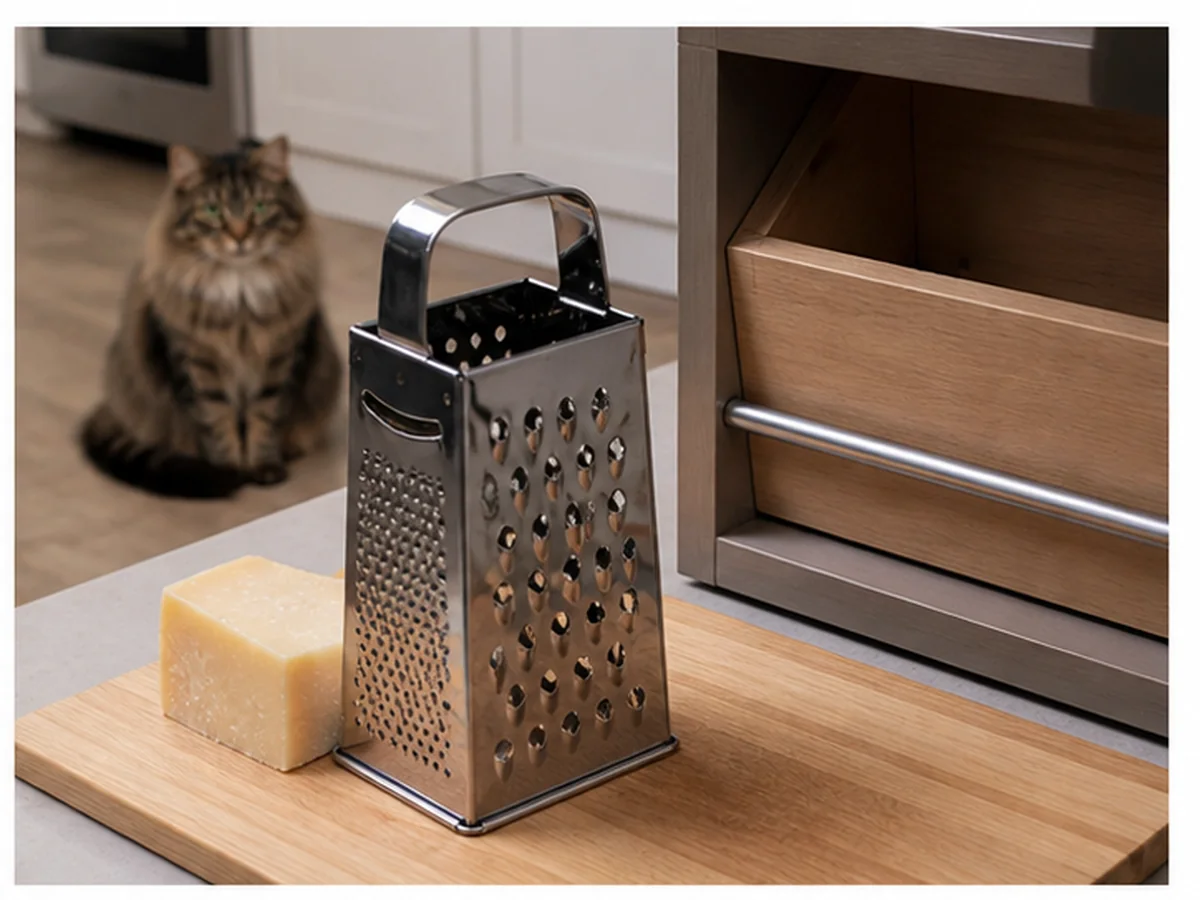
The final grate
A few plain Parmesan crumbs may be tolerated, but the cheese is a garnish rather than feline nutrition. Keep portions tiny, avoid garlic blends and rind, respect sodium and medical diets, secure graters and knives, count packaging, and let complete cat food remain the meal.