Can Cats Eat Hot Dogs? One Bite, Whole Links, and Labels
One small bite of a fully cooked, plain hot dog is unlikely to poison a healthy adult cat, but hot dogs are salty, fatty processed meat rather than balanced cat food. Whole links, onion or garlic, raw handling, toppings, skewers, and packaging are the reasons to look closer.
Cookout thefts are rarely tidy, so inspect the plate before everyone starts offering theories. A missing pick or wrapper can be far more urgent than the meat itself.
Move other pets away from the scene while you count. Competition encourages gulping and makes the missing amount harder to reconstruct.
One bite and one link are different emergencies
First check how much is missing and whether the cat swallowed a slice, an entire link, a bun, toppings, plastic casing, foil, or a toothpick. Save the package and photograph the ingredient and nutrition panels.
A thumbnail-sized plain cooked bite usually calls for monitoring. A whole link can choke or obstruct, while flavored products and loaded hot dogs may contain ingredients that merit a prompt veterinary call.
Breathing trouble, silent gagging, blue-gray gums, collapse, repeated vomiting, severe belly pain, tremors, or inability to swallow requires urgent care. Do not induce vomiting or feed bread to cushion a swallowed object.
Why one plain bite is usually low risk
Cooked meat itself is not foreign to feline nutrition, but a hot dog is formulated for human flavor, texture, preservation, and portion size. One small bite is not a balanced meal and is not automatically a poison.
That proportion matters because alarmist advice can send people chasing antidotes for a crumb while missing a wrapper or onion topping. Identify the actual product and amount before deciding what matters.
The Cornell Feline Health Center explains that cats need complete nutrition and occasional treats should remain limited. Processed sausage cannot replace the nutrient balance of cat food.
Whole links have terrible airway manners
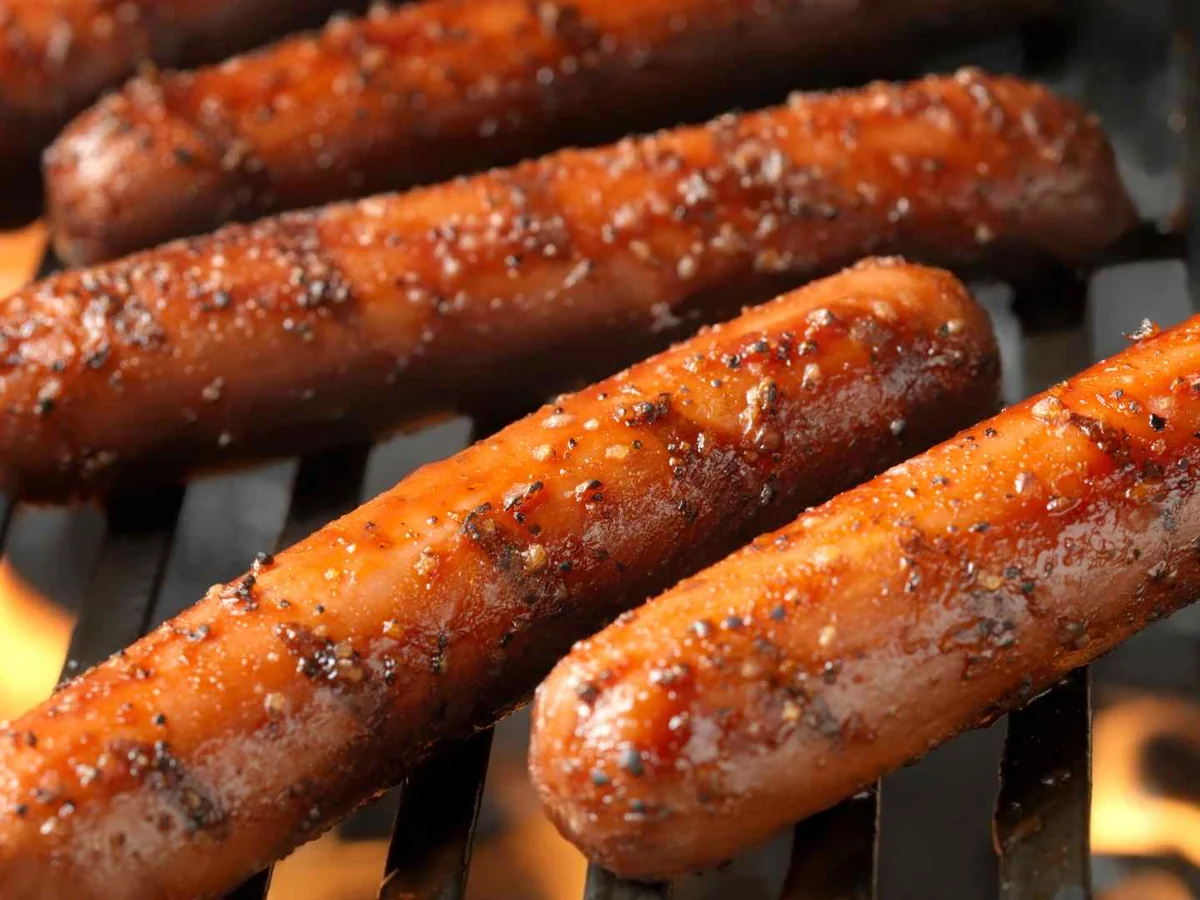
A hot dog is smooth, dense, and easy for an eager cat to gulp without much chewing. Mini cocktail links can be even more deceptively well-sized for swallowing intact.
If air movement stops, seek emergency help immediately and follow dispatcher instructions. Blind finger sweeps can push the sausage deeper or cause a bite injury.
Call even when a whole link appears to have gone down because obstruction remains possible. Later vomiting, appetite loss, lethargy, straining, or abdominal pain needs assessment.
Sodium deserves arithmetic, not drama
Hot-dog sodium varies by brand, meat, size, brine, and formulation. One small bite is unlikely to cause salt poisoning, but several links or a large amount can matter for a small cat.
Use the FDA Nutrition Facts guide to interpret serving size and sodium, then estimate the fraction eaten. Kidney and heart disease reduce the appeal of any salty experiment.
Vomiting, extreme thirst, weakness, disorientation, tremors, seizures, or collapse after a substantial salty exposure needs urgent guidance. Leave normal fresh water available but never force it into the mouth.
Fat can make the aftermath messy
Hot dogs can carry considerable fat, and rich food may cause vomiting or diarrhea. Regular bites also add calories that work against obesity and diabetes plans.
Cats with prior pancreatitis or chronic gastrointestinal disease deserve individual advice after a large fatty exposure. Persistent vomiting, abdominal pain, hunched posture, lethargy, or refusal to eat is more concerning than one soft stool.
The cat salami guide covers similar processed-meat themes without pretending every sausage has the same recipe. Compare labels instead of borrowing a portion from another product.
Onion and garlic can hide inside the link
Some hot dogs contain onion powder, garlic powder, or seasoning blends before toppings are added. Cats are particularly susceptible to allium-related red blood cell injury.
The ASPCA people-food guidance links onion, garlic, and chives with gastrointestinal irritation and red blood cell damage. Call with the product and amount rather than waiting for anemia signs.
Weakness, pale gums, rapid breathing, reduced stamina, or dark urine can appear later. A normal first hour does not clear a meaningful powdered-allium exposure.

Nitrites do not make a bite instant poison
Cured hot dogs may use nitrite or nitrate within regulated food formulations. The presence of a curing ingredient does not make one bite predictably toxic, and the label does not provide a feline toxic dose.
Processed meat still makes a poor routine food because of sodium, fat, calories, and flavorings. That practical conclusion is strong enough without exaggerating a tiny exposure.
Report the full product and amount if a large quantity disappears. Do not single out one preservative while overlooking a whole-link choking risk or missing plastic.
Raw and cooked need proper handling
Some packaged hot dogs are fully cooked, while others require cooking; storage and reheating directions vary. Follow the label rather than assuming every sausage is ready to eat from the refrigerator.
The USDA hot-dog food-safety guidance covers refrigeration, heating, and handling. Keep raw juices away from cat bowls and wash hands, boards, and utensils.
Call if vomiting, diarrhea, feverish behavior, marked lethargy, or appetite loss follows an undercooked or mishandled product. A cat that stops eating deserves timely care.
The bun is not empty scenery
Ordinary bun crumbs mainly add starch, but specialty bread can contain onion, garlic, cheese, sesame, raisins, or mold. Toothpicks and plastic clips may remain hidden in the fold.
Moldy bread or sausage belongs in secure trash because some mold toxins can cause tremors and seizures. Do not cut off the fuzzy part and give the rest to the cat.
If the meal was pizza-flavored or wrapped in dough, the cat pizza guide helps separate sauce, cheese, cured meat, and crust concerns. A bun and a slice are not nutritionally interchangeable.
Ketchup, relish, and mustard
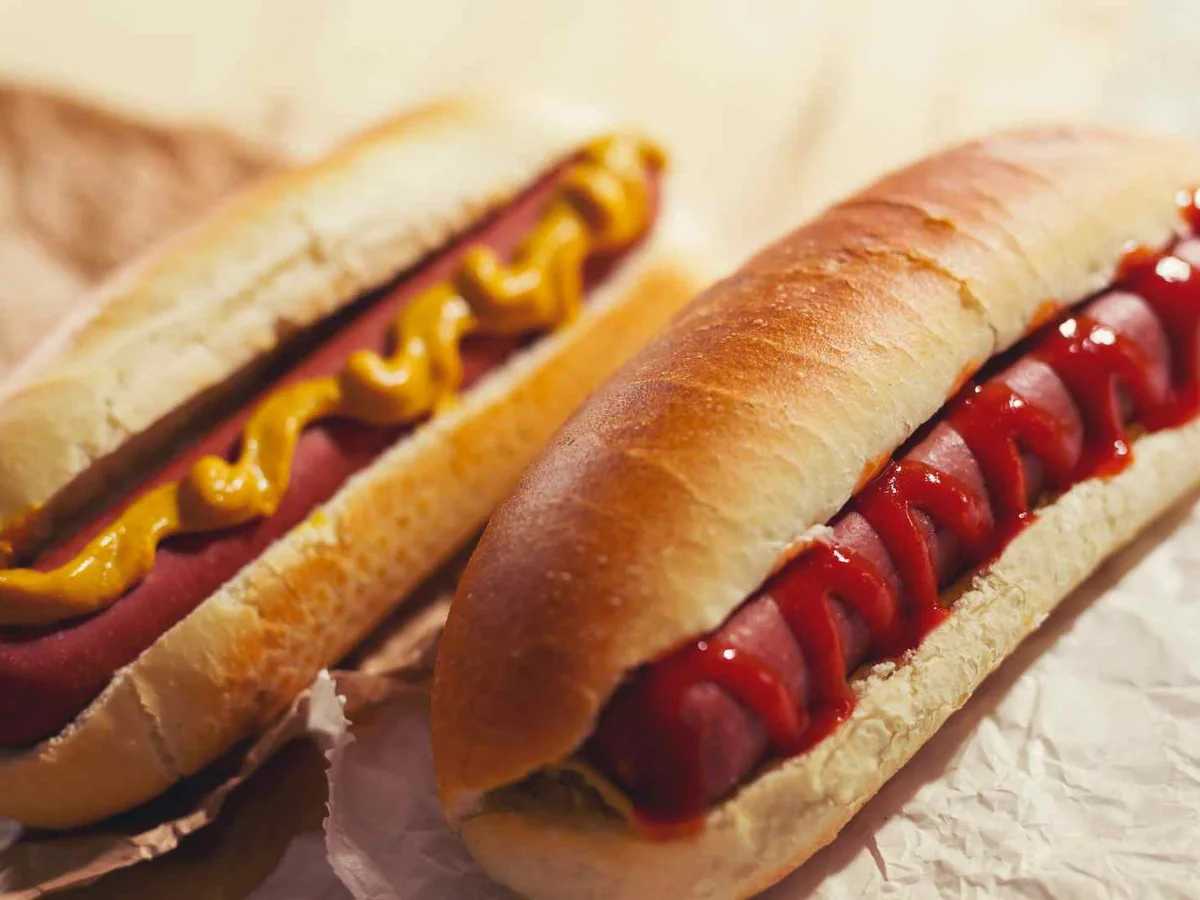
Condiments can add sugar, sodium, vinegar, onion, garlic, spices, and specialty sweeteners. A small lick of ordinary ketchup is usually an irritation or stomach question, while the exact label decides whether anything more serious is present.
Relish may include onion and a great deal of brine. Mustard and hot pepper can cause drooling, pawing, vomiting, diarrhea, or eye irritation without providing a useful cat treat.
Wipe a surface smear from fur with a damp cloth and do not give milk as a spice antidote. Call for persistent drooling, repeated vomiting, coughing, or eye pain.
Chili dogs are mixed-dish triage
Chili can contain onion, garlic, beans, spicy peppers, tomato, cheese, and substantial sodium and fat. Report the whole recipe rather than describing the exposure as one piece of sausage.
Cheese adds dairy and richness, and many adult cats digest lactose poorly. The cat cheese guide covers the difference between a cheese crumb and a heavily loaded meal.
Bacon-wrapped, fried, or cheese-filled links increase fat and may hide skewers. Grease trays and cooking oil should stay inaccessible during cleanup.
Plant-based hot dogs still need labels
A meatless link may contain concentrated plant protein, onion, garlic, smoke flavor, binders, oil, and plenty of sodium. Plant-based marketing does not establish feline safety or nutritional completeness.
Turkey and chicken hot dogs also require the current label. Naming a lean-sounding meat does not guarantee less sodium, fewer alliums, or an appropriate cat treat.
Do not replace complete feline protein with a human meat alternative. If food allergy or kidney disease drives protein choices, follow the veterinarian’s formulation.
Skewers, foil, and grill debris outrank lunch
Cookouts add wooden picks, metal skewers, foil, grease-soaked paper, charcoal, lighter fluid, and hot surfaces. A puncture, burn, chemical lick, or missing sharp object needs immediate professional direction.
Do not pull a deeply embedded object and do not feed food to cushion a swallowed point. Keep the cat quiet in a carrier and transport according to emergency instructions.
The FDA household pet-hazard guide includes food bags and foreign objects among common dangers. Cookout trash deserves a firm lid, not an optimistic knot.
Packaging smells like the food
Plastic casing, vacuum film, clips, absorbent pads, foil, and freshness packets can retain grease and be swallowed. These objects may choke or obstruct regardless of how small the meat exposure was.
Call whenever package material is missing and watch for repeated vomiting, food refusal, lethargy, abdominal pain, or reduced stool. Never pull visible film or string from the mouth or anus.
Keep the original wrapper for both ingredient information and a size comparison. Saying part of the package is missing is more useful when the clinic can see exactly which part.
Medical diets and medication hiding
Cats with heart disease, kidney disease, obesity, diabetes, pancreatitis history, digestive disease, or food allergy should not receive casual hot-dog pieces. Sodium, fat, calories, and novel ingredients can undermine the plan.
Do not use processed meat as a pill pocket unless the prescribing veterinarian approves it. A slippery chunk may let the cat eat the food and leave the medicine behind.
Reserve part of the normal ration for treats instead. The cat gets a snack ceremony without an ingredient panel that reads like a committee meeting.
Monitoring the known small bite
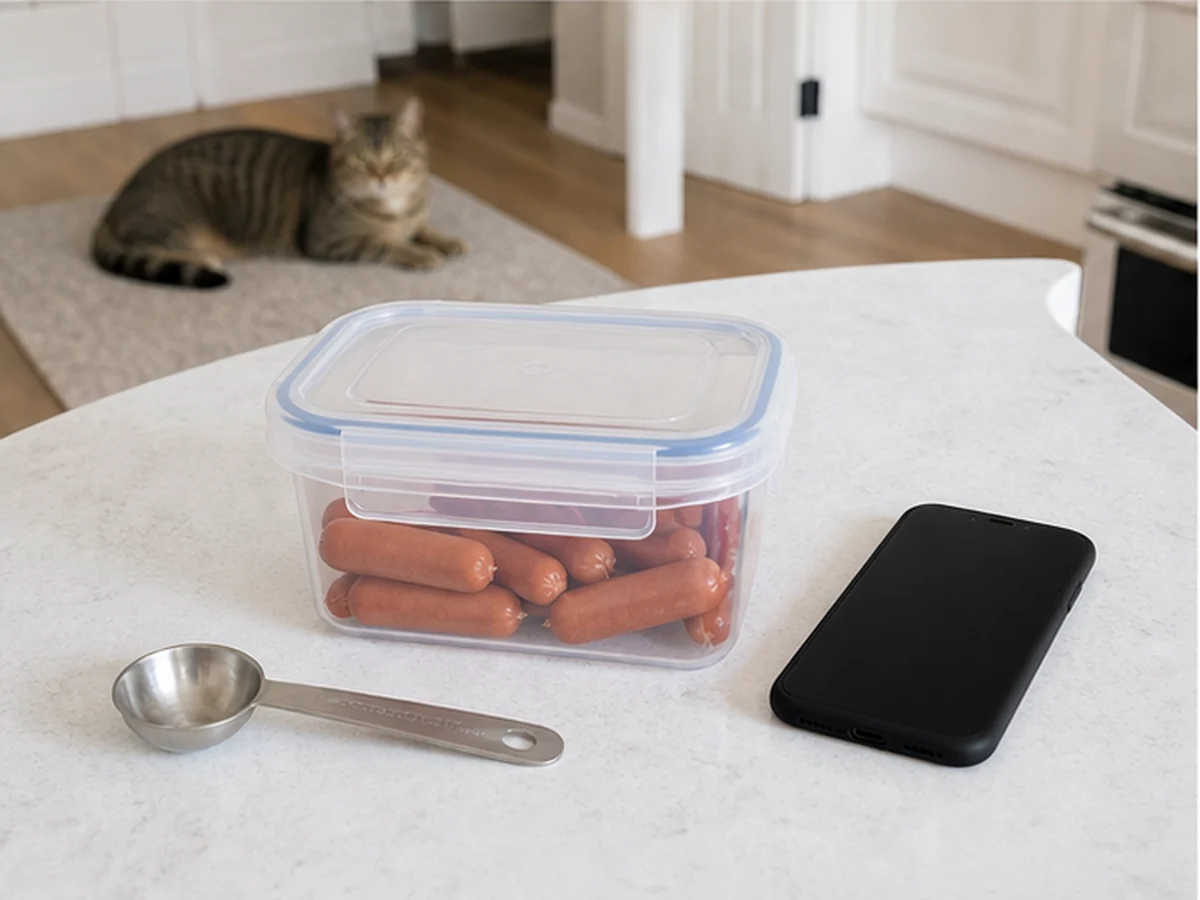
For one small fully cooked plain piece from a reviewed label with no alliums or missing objects, continue usual meals and water. Observe appetite, energy, vomiting, stool, thirst, swallowing, and abdominal comfort.
Call if signs repeat, worsen, or include pain, dehydration, weakness, or refusal to eat. Do not offer a second bite to test whether the first was tolerated.
Keep party trays covered, count toothpicks, clear dropped food, and move wrappers into lidded trash. Feeding the cat indoors before guests arrive can reduce interest in the grill patrol.
FAQ
Can cats eat one bite of hot dog?
One small fully cooked plain bite is unlikely to poison a healthy cat, but it is salty, fatty, and unnecessary. Check the label for onion and garlic.
What if my cat swallowed a whole hot dog?
Call immediately because a whole link can choke or obstruct. Breathing difficulty, silent gagging, blue-gray gums, or collapse is an emergency.
Are turkey hot dogs safer for cats?
Not automatically, because sodium, fat, alliums, and other ingredients vary by product. The meat name does not make the link balanced cat food.
Can cats eat raw hot dogs?
Do not offer them. Follow package storage and cooking directions, and call if digestive illness develops after an undercooked or mishandled product.
Bottom line
One small plain cooked bite is usually low risk, but a hot dog is still a salty, fatty human food. Whole links, alliums, unsafe handling, loaded toppings, skewers, and packaging are the hazards that deserve real attention.