Can Cats Eat Salami? Salt, Alliums, and Casing Risks
One tiny piece of ordinary salami is unlikely to poison most healthy adult cats, but salami should not become a feline treat. A larger theft, garlic or onion, heavy salt, rich fat, an unsafe raw product, choking, or swallowed casing and packaging can make the same snack much more urgent.

The quick decision
If your cat stole a crumb-sized piece and remains comfortable, take the salami away, read the entire label, and monitor closely. Call a veterinarian promptly when the amount is larger or unknown, the product contains an Allium, packaging is missing, the cat has a medical condition, or any symptom appears.
Do not use a dog toxicity table to decide what is safe for a cat. Feline susceptibility, product recipes, body size, water access, health history, and the difference between one nibble and an opened package all matter.
What salami actually is
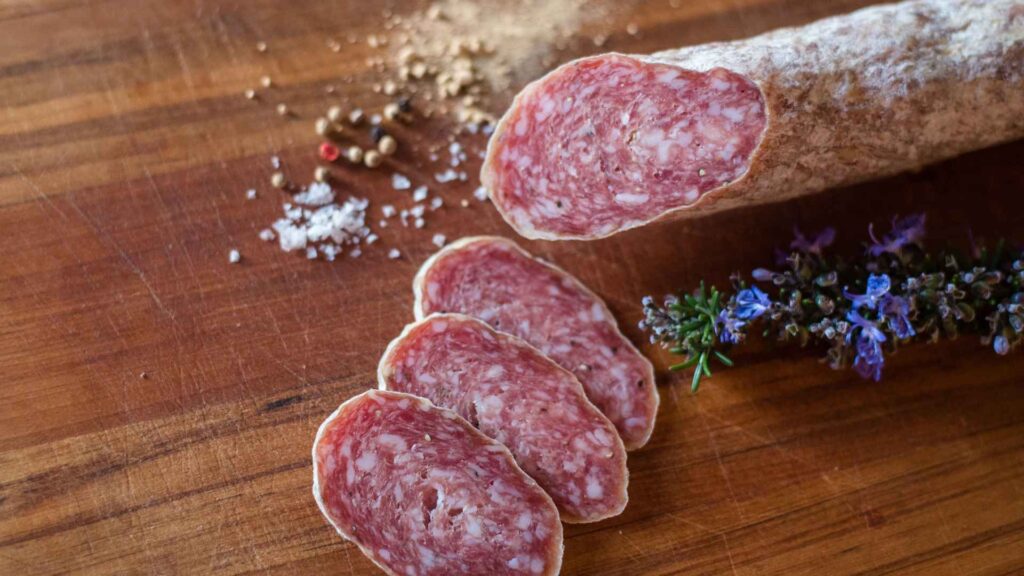
Salami is a broad family of sausages rather than one fixed recipe. It may contain pork, beef, poultry, fat, salt, curing agents, sugar, starter cultures, wine, garlic, onion, pepper, paprika, fennel, chile, smoke flavor, milk ingredients, or other additions.
Some salami is dry and ready to eat, some is semi-dry, and some sausage that looks similar still requires cooking. The United States Department of Agriculture sausage guide explains those distinctions and advises following ready-to-eat, refrigeration, and cooking statements on the package.
That label is more useful than the front-of-package word natural, artisan, uncured, turkey, or organic. None of those terms tells you that the product is low in sodium, free from Alliums, fully cooked, or suitable for a cat.
A crumb and a package raid are not the same
A paper-thin corner dropped from a sandwich is a different exposure from several thick slices, a whole stick, or an unknown amount eaten overnight. Estimate the missing weight or number of slices, the time window, the cat’s weight, and whether more than one pet had access.
Keep the wrapper and photograph the ingredient and nutrition panels. A veterinary team can use the actual sodium value, recipe, package size, symptoms, and medical history instead of guessing from a generic serving chart.
Kittens, small adults, senior cats, and cats with kidney, heart, gastrointestinal, metabolic, or dietary problems deserve a lower threshold for calling. A cat on a prescription diet may need advice even when the same bite would only be monitored in a healthy adult.
Salt deserves context, not panic
Salami is usually salty because salt contributes flavor, preservation, and texture. One tiny bite with free access to water is not automatically salt toxicosis, but a substantial amount of concentrated meat can deliver far more sodium than a normal feline meal.
The Merck Veterinary Manual salt review describes excess sodium intake, especially with limited water, as the core concern. Possible signs can include vomiting, diarrhea, weakness, poor coordination, tremors, abnormal behavior, or seizures.
Leave normal fresh water available, but do not force large volumes by mouth or make the cat drink salty broth. When hypernatremia is suspected, veterinary correction must be controlled because changing sodium and water balance too quickly can harm the brain.
A salty meal is also a poor choice for cats whose veterinarian has prescribed a kidney, cardiac, blood-pressure, or urinary diet. Ask the clinician managing that condition how to respond rather than assuming a human low-sodium label meets the cat’s target.
Garlic and onion can be the bigger problem
Garlic, onion, chives, leeks, and their powders belong to the Allium group. Salami may use concentrated garlic or onion powder even when no visible pieces appear in the slice.
According to the Merck Allium toxicosis review, cats are the most susceptible domestic species, and raw, cooked, dehydrated, or granulated forms can damage red blood cells. Hemolytic anemia may not become obvious until several days after exposure.
Possible warning signs include reduced appetite, lethargy, weakness, pale or yellow gums, fast breathing, a rapid heartbeat, dark urine, collapse, and vomiting. Call after a known Allium exposure rather than waiting for those delayed signs.
Our cat garlic guide and cat onion guide explain why cooking and curing do not neutralize this risk. Do not induce vomiting at home unless a veterinarian or animal poison specialist explicitly directs the method for this cat.
Pepper, paprika, wine, and other flavors
Ordinary culinary pepper or paprika in a tiny stolen piece is more likely to irritate the mouth or stomach than cause a distinctive poisoning syndrome. Hot chile, concentrated extracts, or a large dust exposure can cause drooling, pawing at the mouth, coughing, eye irritation, vomiting, or diarrhea.
Some salami recipes contain wine, but the amount and residual alcohol vary by product and process. Report wine, spirits, or an alcohol-containing specialty sausage to the veterinary team instead of assuming fermentation removed every concern.
Fennel, herbs, smoke flavor, cheese, nuts, and peppercorn coatings create more product variation. Check the complete ingredient list and any edible coating, not just the center of the slice.
Fat, calories, and feline pancreatitis
Salami packs meat and fat into a small portion, so repeated scraps can add meaningful calories while displacing complete cat food. A rich raid can also produce vomiting, diarrhea, abdominal discomfort, or appetite loss without being a classic toxin exposure.
Feline pancreatitis needs careful language because a single fatty meal is not proven to cause every case. The Merck guide to pancreatic disorders in cats notes that the cause cannot be determined in most cases and lists lethargy, appetite loss, dehydration, weight loss, vomiting, jaundice, fever, and abdominal pain among possible signs.
A cat with current or previous pancreatitis, diabetes, obesity, inflammatory bowel disease, liver disease, or a clinician-directed diet should receive individualized advice after a meaningful salami exposure. Do not transfer a canine fat threshold or pancreatitis rule to a cat.
A cat that stops eating after the raid needs prompt attention even if vomiting never develops. Cats can hide illness, and reduced appetite is an important clinical clue rather than proof that the animal is simply full from salami.
Nitrite and nitrate without the scare story
Cured salami may list sodium nitrite or sodium nitrate, while products marketed as uncured may use ingredients such as cultured celery powder. Read the ingredient panel rather than treating a front-label curing claim as proof that the food is suitable for a cat.
Do not describe one tiny cured-meat nibble as an immediate cancer emergency. For the practical feline decision today, the amount eaten, sodium, Alliums, fat, pathogens, choking, and packaging are clearer concerns than speculative claims about a single exposure.
Long-term salami feeding is still a poor plan because processed human meat is calorie-dense, salty, recipe-variable, and nutritionally incomplete for cats. Avoiding routine servings does not require exaggerating what nitrate or nitrite does in one bite.
Dry and fermented does not mean sterile
Commercial ready-to-eat salami uses controlled fermentation, curing, drying, heat, or other validated hurdles, but product types differ. The agriculture department notes that pathogens have survived dry fermentation in past incidents, which is why ready-to-eat fermented products require validated controls and sampling.
Homemade, farmers-market, imported, unrefrigerated, recalled, or partially eaten products may be harder to assess. The Centers for Disease Control and Prevention pet-food safety guidance explains that raw animal protein can carry germs such as Salmonella and Listeria that can affect pets and people.
A lick of an intact commercial ready-to-eat slice is not equivalent to feeding a raw-meat diet, but do not dismiss storage and process details. Follow keep refrigerated, cook before eating, use-by, and after-opening instructions on the actual package.
Discard salami that smells spoiled, feels unexpectedly slimy, has damaged packaging, was left warm beyond safe handling guidance, or shows mold inconsistent with its intended culture. Wash hands and clean counters, bowls, and floors after a raw or leaking product, especially in homes with young, elderly, pregnant, or immunocompromised people.
Choking, casing, string, and packaging
Dense rounds and tough ends can lodge in the throat, especially when a cat grabs and swallows instead of chewing. Coughing, gagging, pawing at the mouth, noisy or difficult breathing, blue-gray gums, or collapse requires emergency care.
Natural or synthetic casing, butcher string, netting, metal clips, waxed paper, plastic film, absorbent pads, and zip bags can be more dangerous than the meat. Long string-like material may anchor and injure the intestine, so never pull visible string from a cat’s mouth or rectum.
Repeated vomiting, drooling, appetite loss, abdominal pain, lethargy, straining, or reduced stool after packaging disappears may indicate obstruction. Call promptly and report every missing material rather than waiting for it to pass.

What to do after your cat eats salami
- Remove the salami and every wrapper, casing, string, clip, plate, toothpick, and condiment from reach.
- Save the label and record the product, amount, time, cat’s weight, symptoms, medical conditions, and normal diet.
- Check specifically for garlic, onion, chives, salt, chile, alcohol, unsafe raw-meat labeling, spoilage, and missing packaging.
- Call a veterinarian or animal poison service for Alliums, a large or uncertain amount, symptoms, medical-diet concerns, or foreign material.
- Seek emergency care for breathing trouble, collapse, seizures, severe weakness, repeated retching, marked pain, or very pale gums.
Do not give hydrogen peroxide, salt, oil, milk, bread, activated charcoal, antacids, or human medicine without professional direction. Cats need species-appropriate decontamination and dosing, and some home remedies add a second poisoning or aspiration risk.
For a genuinely tiny Allium-free bite in a comfortable healthy cat, continue the normal food and fresh water while watching appetite, energy, vomiting, stool, breathing, urination, and gum color. Call if anything changes or the ingredient list remains uncertain.
Salami is meat, but it is not complete cat nutrition
Cats are obligate carnivores, yet that fact does not make every meat product a good feline food. The Cornell Feline Health Center explains that cats need a complete balance of animal-derived nutrients and that human-food treats are not nutritionally complete.
Salami does not earn a health pass because it contains protein. It brings uncontrolled sodium, fat, seasonings, and calories without guaranteeing the taurine, vitamins, minerals, fatty acids, and overall balance supplied by a complete feline diet.
Use a few pieces of the cat’s regular food or a veterinarian-approved cat treat for rewards. If you need a pill vehicle, ask for a small compatible option because daily salami can create diet drift, food aversion, or accidental Allium exposure.
Pizza, sandwiches, and snack boards stack hazards around the salami. Our cat pizza guide covers raw dough, sauce, cheese, hot food, and boxes, while our cat butter guide handles rich spreads without importing dog pancreatitis assumptions.
Frequently asked questions
Can a cat eat one small piece of salami?
One crumb-sized Allium-free piece is unlikely to poison most healthy adult cats, but it offers no benefit and should not become routine. Check the label and call if the recipe, amount, medical history, or symptoms create uncertainty.
Is turkey salami safer than pork salami?
Not automatically. Turkey salami can still be salty, fatty, cured, seasoned with garlic or onion, stored unsafely, and wrapped in a tough casing.
Can cats eat uncured salami?
Uncured is not a feline safety claim. The product may use cultured celery ingredients, contain the same salt and seasonings, or still be dry-fermented, so read the complete label.
Why is my cat so interested in salami?
The strong meat and fat aroma can attract a cat, particularly when people are handling the food. Interest does not prove nutritional need, and rewarding counter theft can make the next package raid more likely.
The bottom line
Treat one tiny plain, Allium-free salami bite proportionately, but do not offer salami as a cat treat. A larger amount, garlic or onion, significant sodium, illness, unsafe raw or spoiled meat, choking, casing, string, and packaging justify faster action.
Keep the product and call with the real recipe instead of a dog dose chart. Complete cat food provides the protein and nutrient balance your cat needs without asking a cured meat to do a job it was never designed to do.