Can Dogs Eat Raw Sweet Potatoes? Chunks and Cooking
Do not offer raw sweet potato chunks to dogs. The root is not the same as toxic raw green white potato, but its hard, fibrous texture can choke, damage teeth, obstruct the gut, and cause digestive upset.
Cook it plain until soft, remove spoiled areas, and serve only a small piece.
Raw sweet potato is mainly a physical problem
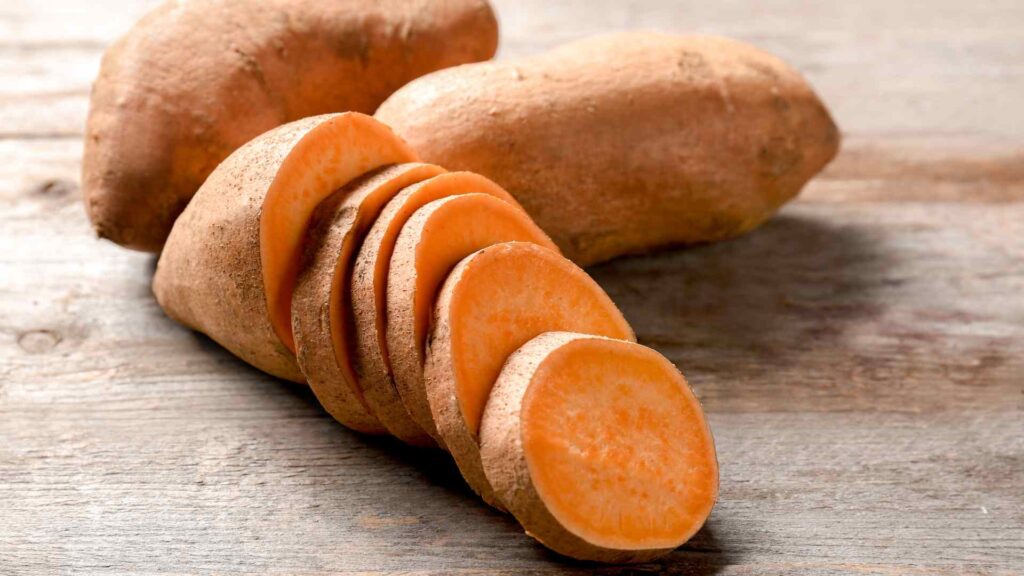
A raw sweet potato is dense and firm, especially when cut into cubes, rounds, sticks, or thick skin-on wedges. A determined dog can shear off a piece that is too large to chew or pass comfortably.
The smaller the dog and the larger or more angular the piece, the less room there is for error. Dental disease, swallowing disorders, prior obstruction, and gulping behavior add concern.
Choking signs require immediate action
Coughing, frantic gagging, repeated swallowing, drooling, pawing at the mouth, blue or gray gums, collapse, or inability to breathe is an emergency. Call an emergency clinic while leaving so staff can provide case-specific first-aid guidance.
Do not push the chunk down with bread, oil, or more food, and do not blindly sweep deep in the mouth. A frightened choking dog can bite and an unseen object can be forced farther.
Obstruction can appear later
A swallowed raw chunk may lodge in the esophagus, stomach outlet, or intestine. Repeated vomiting, inability to keep water down, appetite loss, abdominal pain or swelling, lethargy, or repeated unproductive retching needs urgent examination.
Do not assume a large dog can pass any cube or that chewing marks make it safe. Shape, size, location, and the dog’s anatomy matter.
Why cooking helps
Cooking softens cell structure and starch, making sweet potato easier to mash and portion. Boiling, steaming, or baking without seasoning can produce a fork-tender texture that is safer than a raw stick.
The Merck Veterinary Manual explains that some raw plant starch is resistant to digestive enzymes. It discusses raw potatoes rather than prescribing sweet potato, so the practical takeaway is better digestibility through appropriate cooking, not a universal treatment claim.
Safe preparation
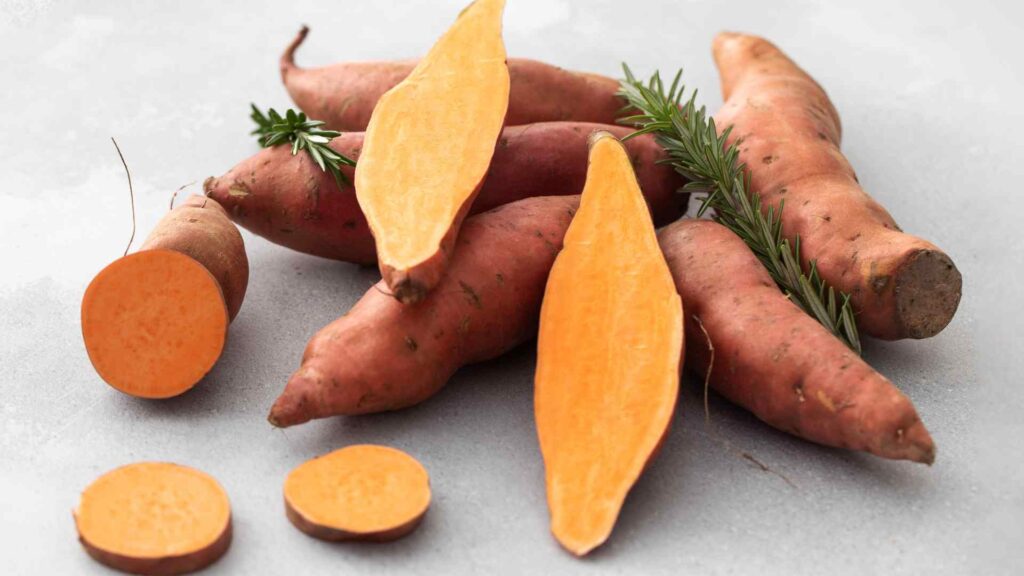
- Wash the intact root under running water before cutting.
- Discard moldy, rotten, leaking, badly damaged, or foul-smelling roots.
- Peel tough skin when preparing a small treat, then cut into even pieces.
- Boil, steam, or bake until every piece mashes easily with a fork.
- Cool fully and offer a small plain bite without butter, oil, salt, sugar, or spice.
Our cooked sweet potato guide covers portions and mixed dishes. Cooking does not turn the root into a complete meal or medicine.
The skin is not a toxin
Clean sweet potato skin is not established as poisonous, but raw skin is tough and fibrous. Peeling reduces chewing and obstruction concerns, especially for small dogs and fast eaters.
Our sweet potato skin guide distinguishes a little well-cooked skin from raw slabs, mold, and rich toppings. Do not offer peel ribbons as chews.
Do not confuse sweet potatoes with white potatoes
Sweet potatoes are Ipomoea batatas in the morning-glory family, while white potatoes are Solanum tuberosum in the nightshade family. They are botanically different foods.
Do not apply white-potato warnings about green tissue, sprouts, and glycoalkaloids to every ordinary sweet potato. Our potato guide covers raw, green, and sprouted white potatoes separately.
Vines and plant identity
The ASPCA lists correctly identified Ipomoea batatas sweet potato vine as non-toxic to dogs. That listing does not certify every ornamental called potato vine or morning glory.
Do not let dogs graze on an unknown landscape plant, seed pod, tuber, or treated vine. Photograph the whole plant, leaves, flowers, stem, label, and growing location for identification.
Garden chemicals change the answer
Homegrown roots and vines may carry fertilizer, pesticide, slug bait, compost, or contaminated soil. A correctly identified crop does not neutralize those products.
Save every garden-product label and report the application time, amount, and plant part eaten. Do not induce vomiting unless a veterinary professional instructs you after reviewing the chemical.
Mold and rot
Soft wet spots, leaking liquid, fuzzy growth, fermented odor, or extensive discoloration means the root belongs in secured trash. The FDA advises discarding food that looks or smells suspicious and identifies mold as spoilage.
Tremors, marked agitation, poor coordination, overheating, repeated vomiting, or seizures after eating moldy food is urgent. Do not cut around mold and feed the apparently clean portion to a dog.
Wash before peeling
Soil and microbes on the surface can move inward on the knife. Rinse under running water and scrub firm produce with a clean produce brush before cutting.
The FDA recommends washing produce under running water without soap or detergent. Dry with a clean towel and use clean boards and utensils.
Fries, chips, and air-fryer pieces
Sweet potato fries and chips are often salted and cooked with substantial oil, while restaurant versions may carry garlic, onion, chili, or dipping sauce. Their crisp shape can also be swallowed in sharp pieces.
A plain soft interior nibble is different from a basket raid. Save the menu or package and include sauce cups, wrappers, skewers, and foil in the inventory.
Casseroles and pie
Sweet potato casserole can contain butter, cream, sugar, marshmallows, pecans, raisins, alcohol flavoring, or nutmeg. Pie adds crust, fat, sugar, spice, and sometimes sugar substitutes.
Check for xylitol in sugar-free desserts and for macadamias, chocolate, grapes, or raisins in mixed sweets. “Vegetable” on the recipe does not make the finished dish a dog food.
Baby food and puree
Plain single-ingredient cooked puree may be physically easy to swallow, but labels can include onion, garlic, salt, lemon, dairy, or other vegetables. Read the current jar or pouch rather than relying on color.
Pouches, caps, spoons, and foil seals can be swallowed. Do not use sweet potato puree as a diarrhea or constipation dose without veterinary direction.
No vitamin or digestive therapy
Sweet potato contains nutrients, but a complete dog food already balances vitamins and minerals for the life stage. Extra root does not treat eye disease, immune problems, skin trouble, inflammation, or nutritional deficiency.
Fiber can alter stool but is not a diagnosis. Constipation, diarrhea, straining, blood, vomiting, or abdominal pain can require a different diet or medical treatment.
Purple, white, and orange varieties
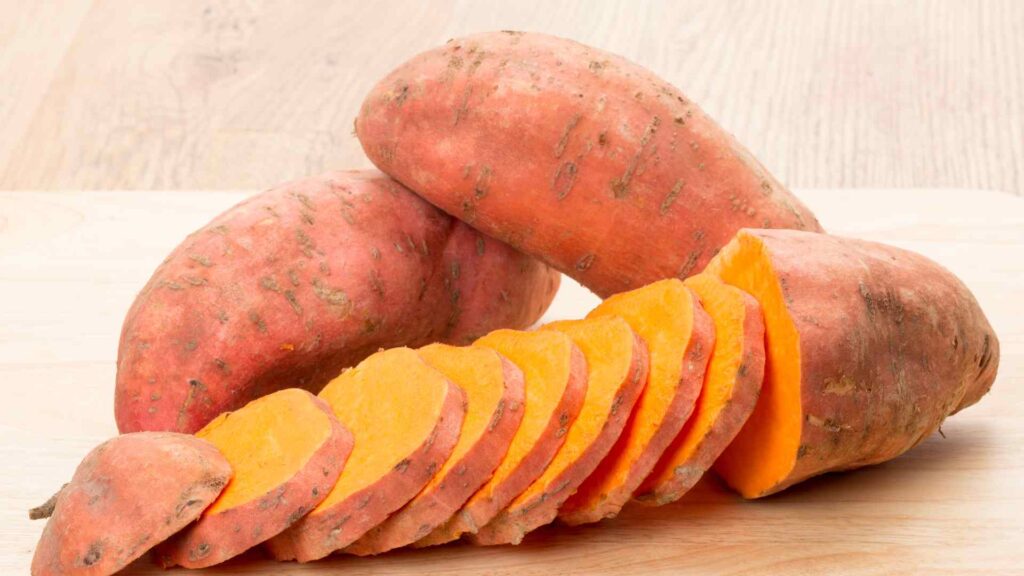
Sweet potatoes come in orange, purple, cream, and white-fleshed varieties, and some grocery stores label them as yams. Color does not remove the raw texture hazard or make a root medicinal.
True yams are botanically different and may need different preparation, so use the store label and source rather than guessing from skin color. Unknown tropical tubers should not be fed as sweet potato.
Frozen raw pieces are still hard
Freezing a raw cube does not cook it and can make the piece even harder on teeth. Do not offer frozen sticks as teething toys, dental chews, or heat-relief snacks.
A cracked tooth may cause drooling, blood, pawing at the mouth, chewing on one side, dropped food, or sudden reluctance to eat. Dental injury needs examination even when the dog still accepts soft food.
Knife, peeler, and produce-bag hazards
Kitchen raids can include produce stickers, elastic bands, twist ties, mesh bags, plastic film, peelers, knives, and cutting-board fragments. Keep the dog away while preparing roots and count every tool after an incident.
Sharp objects, missing blades, or torn plastic change the triage plan. Do not induce vomiting or feed bulky food to cushion a suspected sharp object.
Storage and the compost bin
Store intact roots in the conditions recommended by the grower or seller and inspect them before use. Keep discarded peel, moldy roots, foil, and food scraps in a secured container rather than an open compost pail.
A compost raid may include coffee grounds, grapes, onions, garlic, moldy bread, corn cobs, bones, and packaging. Inventory the whole bin instead of stopping at the visible sweet potato.
Cooked leftovers
Refrigerate cooked plain sweet potato promptly in a covered container and discard leftovers that smell sour, feel slimy, or show mold. Reheating spoiled food does not reliably make it suitable for a dog.
Cool a serving before offering it because dense mash can retain heat and burn the mouth. Never let a dog lick a hot baking dish or pressure-cooker insert.
Dogs that need individualized advice
Dogs with diabetes, obesity, chronic intestinal disease, prior obstruction, pancreatitis, food allergy, or a therapeutic diet should not receive an unplanned root supplement. Ask how the calories, carbohydrate, fiber, and texture fit the existing plan.
Puppies and toy breeds have less margin for a large chunk and less room for extras in a balanced diet. Senior dogs may add dental or swallowing limitations that are not obvious until a hard piece causes trouble.
Portions and diet displacement
There is no universal cube count because dog size, calorie needs, diet, and health vary. Start with one tiny piece of plain soft cooked root and stop if digestive upset develops.
The UC Davis School of Veterinary Medicine recommends keeping treats and extra foods below 10 percent of daily calories. The balanced diet should supply the other 90 percent or more.
After a raw-root raid
- Remove remaining chunks, peel, knives, bags, ties, produce stickers, and compost.
- Estimate the size and number swallowed, time, and whether the root was spoiled or chemically treated.
- Record the dog’s weight, chewing style, symptoms, medical history, and prior obstruction.
- Call promptly for choking, repeated vomiting, pain, large chunks, packaging, or an uncertain plant.
- Do not induce vomiting or give oil, bread, laxatives, salt, or bulky food unless directed.
Bottom line
Raw sweet potato is not a solanine story, but its hard chunks and tough skin are avoidable choking and obstruction hazards. Wash, peel when practical, cook until soft, skip spoiled roots and seasoned dishes, keep plant identity clear, and use small portions without vitamin or digestive-treatment claims.