Can Dogs Eat Duck? Cooked Meat, Raw Duck, Skin, Bones, and Fat
Dogs can eat plain fully cooked boneless duck meat in small portions. I would choose a lean piece with the skin removed, because duck can go from useful protein to a very rich meal once skin, fat, bones, glaze, and restaurant sauce join the plate.
The quick duck verdict for dogs
Plain fully cooked boneless duck can be an occasional treat for many healthy dogs. It provides high-quality protein plus iron, selenium, B vitamins, and other nutrients.
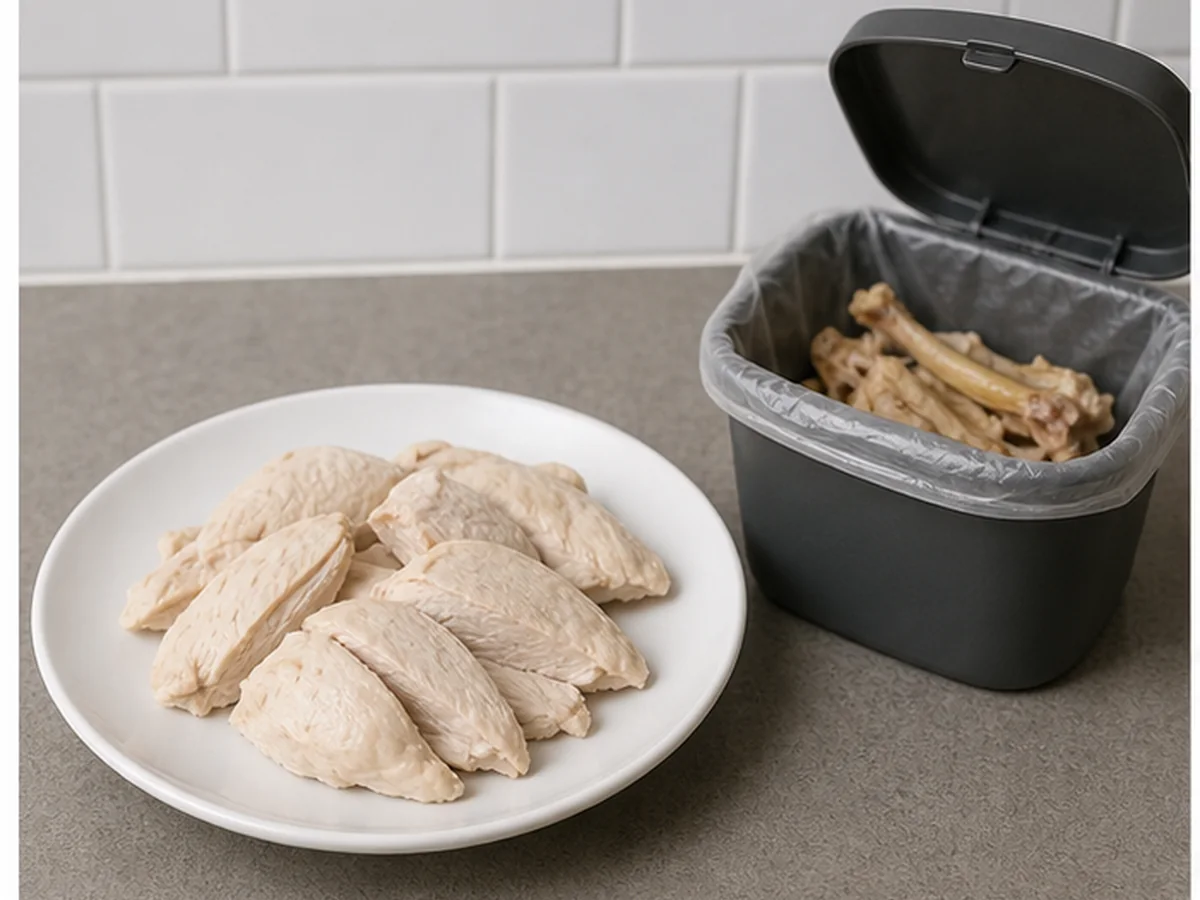
I cook duck thoroughly, remove every bone and most visible skin, skip seasoning, let it cool, and offer a dog-sized piece. Complete dog food should remain the nutritional foundation.
Duck also appears in complete commercial dog foods and limited-ingredient diets. A balanced duck-based food is nutritionally very different from a bowl of plain duck meat.
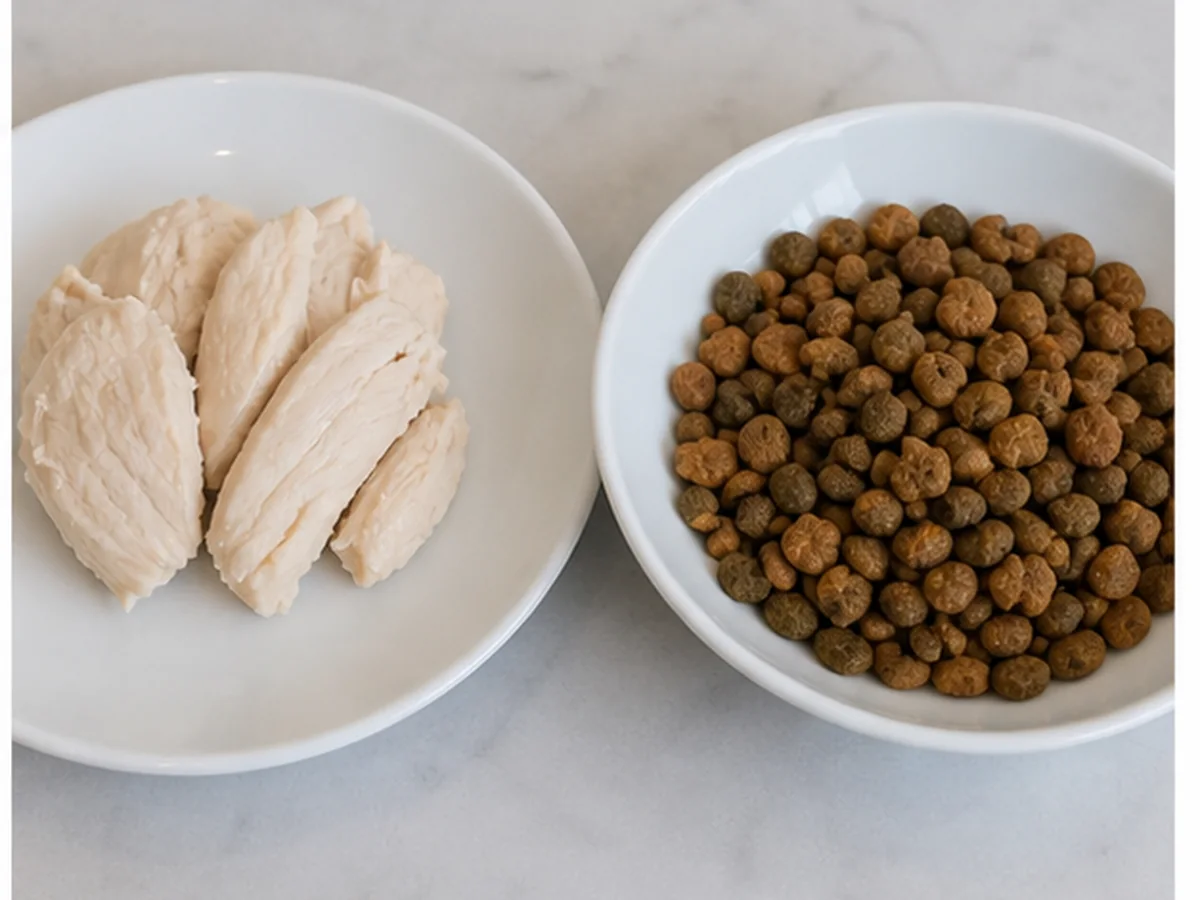
Plain cooked duck is the easiest version to share
Lean cooked duck can be a useful protein treat when a dog tolerates it well. One or two small pieces are enough to add variety without turning the treat into a second dinner.
Dogs do not need a whole leg or breast to benefit from tasting duck. The portion should fit the dog, not the serving size on the human plate.
If a dog is on a prescription diet for kidney, liver, gastrointestinal, allergy, or weight issues, I would check before adding duck regularly.
Duck skin is much fattier than the meat
Duck is known for rich skin and rendered fat. A tiny piece may cause no problem in a healthy dog, but a large skin binge can cause vomiting, diarrhea, abdominal pain, or pancreatitis in susceptible dogs.
Dogs with previous pancreatitis deserve particular caution. I would rather share plain lean meat than the crispy skin humans usually consider the best part.
Large amounts of duck skin also add calories quickly and can work against weight-management plans even when no acute illness occurs.
Rendered duck fat is not a useful topper
Duck fat is highly calorie-dense. A spoonful poured over kibble can add far more fat than a dog needs and can trigger gastrointestinal upset in sensitive dogs.
I would not use drippings or rendered duck fat as a routine flavor enhancer, especially in dogs with pancreatitis, hyperlipidemia, or obesity.
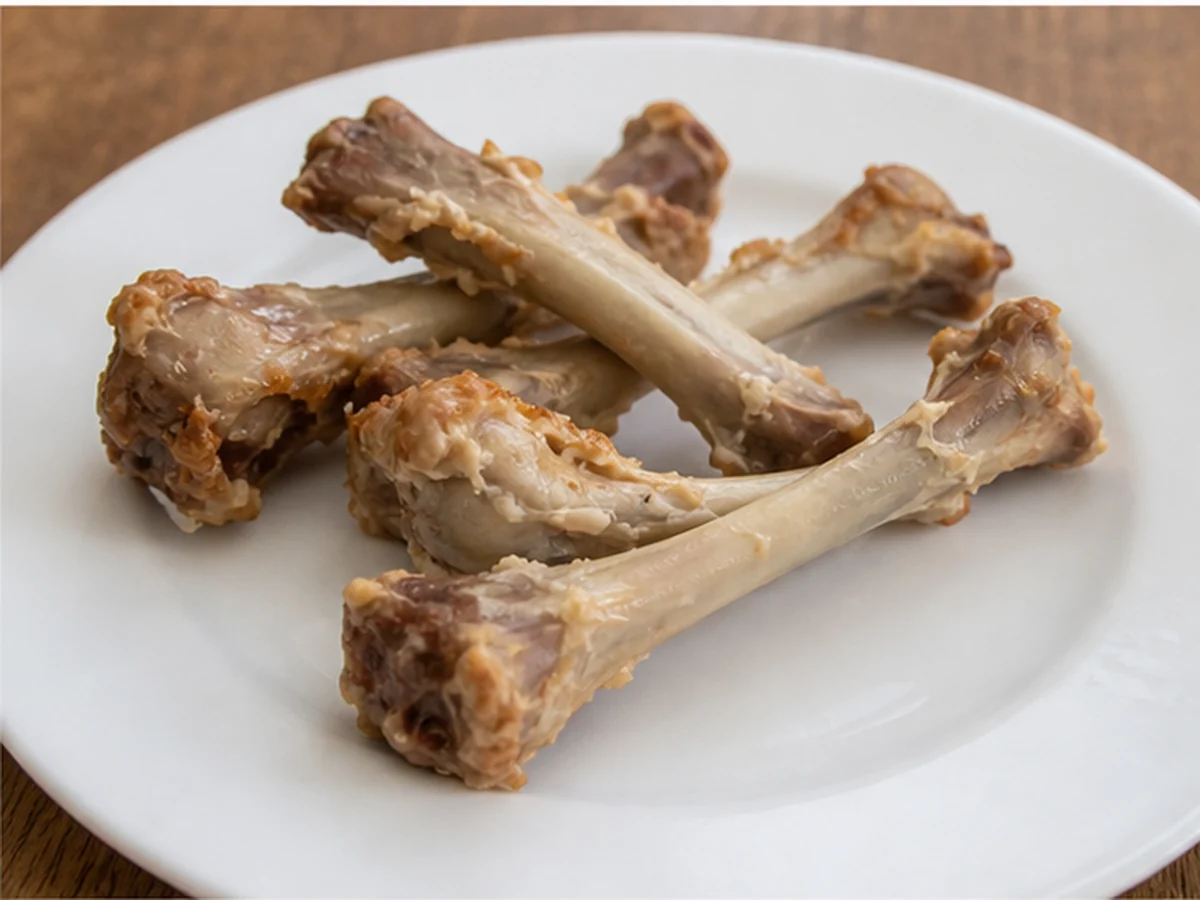
Cooked duck bones are not safe chews
Cooked poultry bones can become brittle and fracture into sharp pieces. They can cause choking, lodge in the esophagus, injure the stomach or intestines, or create an obstruction.
If cooked duck bones were swallowed, call your veterinarian for case-specific advice. I would not induce vomiting unless specifically directed because sharp fragments can cause additional injury.
Gagging, drooling, repeated swallowing, regurgitation, vomiting, abdominal pain, bloody or black stool, or breathing difficulty deserves urgent evaluation.
Raw duck adds food-safety concerns
Raw poultry can carry harmful bacteria and other pathogens and can contaminate bowls, counters, hands, floors, utensils, saliva, and stool. Cooking is a straightforward risk-reduction step.
A small accidental raw bite does not guarantee illness, but repeated vomiting, bloody diarrhea, fever, severe lethargy, dehydration, or abdominal pain deserves veterinary attention.
Puppies, seniors, pregnant dogs, immunocompromised dogs, and medically fragile dogs deserve more caution around raw poultry.
Freeze-dried raw duck still counts as raw
Freeze-drying and dehydration remove moisture but should not automatically be treated as equivalent to cooking. If a product is marketed as raw, I would still consider pathogen control a question unless the manufacturer describes an effective kill step.
I would read the label rather than assume dry texture means cooked poultry. Raw-food handling still matters.
Orange sauce and glaze change the meal
Duck is often served with sweet glaze, garlic, onion, wine sauce, hoisin, or salty Asian-style sauces. Onion and garlic can damage red blood cells in dogs after a sufficient dose.
I set aside the dog’s portion before seasoning rather than trying to rinse sauce off later. A plain bite and a lacquered restaurant duck leg are not the same exposure.
Sugar-heavy glaze and salty sauce also add unnecessary calories and sodium even when no classic toxin is present.
Hoisin and restaurant sauces can hide several problems
Restaurant duck can be served with hoisin, plum sauce, soy sauce, garlic sauce, scallions, sesame oil, chile, or sweet syrups. A mixed dish needs a full ingredient check.
Soy-based sauces can be very salty, while garlic and onion create allium concerns. I would not treat restaurant duck as plain poultry.
Smoked duck can be very salty
Smoked or cured duck can contain substantial sodium and may be seasoned with garlic, onion, sugar, or spice blends. One tiny taste may be low risk for many healthy dogs, but it is not a good routine treat.
Dogs with kidney disease, heart disease, high blood pressure, or sodium restrictions deserve additional caution. Plain fresh cooked duck is easier to control.
Duck sausage and confit are much richer
Duck sausage can contain added fat, salt, garlic, onion, preservatives, and spice blends. Duck confit is deliberately cooked and stored in substantial fat.
I would not use either as a routine dog treat. These foods are nutritionally very different from plain lean duck meat.
Duck can be useful in elimination diets
Duck is sometimes used as a novel or less-common protein in veterinary elimination diets for suspected food allergy. In that context, diet purity matters.
Random treats, flavored medications, chews, and table scraps can undermine the trial. Follow the prescribed diet closely.
A novel protein is not automatically hypoallergenic forever. Individual dogs can react to many proteins, including duck.
Commercial duck dog food is different from plain duck
A complete commercial duck-based food is formulated to supply the full nutrient profile a dog needs. Plain duck muscle meat is only one ingredient.
I would not assume a bowl of duck is nutritionally equivalent to complete duck-based dog food just because both use the same protein source.
Keep portions modest
Duck can be calorie-dense, especially dark meat with skin. Extras should generally remain a small share of daily calories unless your veterinarian gives a different plan.
A few bite-size pieces are plenty for many dogs. I would not turn a rich human duck entrée into a second meal simply because the dog is conducting excellent eye contact.
Puppies can have duck only as a small extra
Puppies need complete growth food with carefully balanced energy, calcium, phosphorus, protein, vitamins, and minerals. Plain duck should not displace that diet.
A tiny cooked boneless piece can be an occasional treat for a healthy puppy, but homemade duck-heavy diets are inappropriate without proper formulation during growth.
What to do if your dog ate raw duck
- Remove the remaining raw poultry.
- Estimate the amount eaten and the time.
- Save the package if one exists.
- Clean contaminated bowls and surfaces.
- Watch for vomiting, diarrhea, fever, lethargy, dehydration, or abdominal pain.
- Call promptly if significant illness develops or the dog is medically fragile.
What to do if your dog swallowed duck bones
Estimate the bone size, whether it was cooked or raw, and how many pieces were swallowed. Call for case-specific advice, especially after sharp cooked fragments.
Do not automatically induce vomiting or force bread. Follow the veterinary team’s instructions based on the actual foreign-body risk.
How I would serve duck on purpose
I would use plain fully cooked boneless meat, remove most visible skin and fat, cut it into small pieces, and skip salt, garlic, onion, glaze, butter, and sauce.
If duck is being used therapeutically as a diet-trial protein, I would follow the veterinarian’s plan rather than adding unrelated table foods.
Frequently asked questions
Can dogs eat duck breast?
Yes, a small amount of plain fully cooked boneless breast meat can be an occasional treat. Remove fatty skin and seasoning.
Can dogs eat duck skin?
I would limit it because duck skin is very fatty. A large amount can cause gastrointestinal upset and may trigger pancreatitis in susceptible dogs.
Can dogs eat raw duck?
I would choose cooked duck because raw poultry can carry pathogens and creates household cross-contamination risk.
Can dogs eat duck bones?
I would not feed cooked duck bones. They can splinter and cause choking, injury, or obstruction.
Bottom line
Plain fully cooked boneless duck meat can be an occasional dog treat. I would remove skin and excess fat, avoid cooked bones and raw duck, keep sauces and allium seasoning away, and keep portions modest because duck can be quite rich.