Can Cats Eat Pork Chops? Cooked Meat, Bones, Fat, and Seasoning
A healthy adult cat can usually eat a tiny piece of plain, fully cooked, boneless pork chop, but the kitchen version is rarely that simple. Raw meat, bones, fat caps, salt, brine, smoke, onion, garlic, rubs, sauces, frying oil, skewers, foil, hot pans, spoiled leftovers, and complete-diet displacement require separate decisions.
The cat-safe version is deliberately boring
Choose an unseasoned center section cooked to a safe temperature, remove every bone and visible pocket of fat, let it cool, and shred a piece smaller than a pea. Offer it once rather than turning the plate into a second dinner.
The complete cat pork guide covers other cuts and products, while a chop adds a prominent bone and edge fat. Product labels matter even when the butcher counter looks plain.
A tolerated taste does not make pork chop a balanced meal. Cats need carefully supplied taurine, vitamins, minerals, fatty acids, energy, and amino acids across the full diet.
Cook the meat, then verify the center
Color, grill marks, and clear juice are unreliable safety tests. Measure the thickest portion away from the bone with a clean food thermometer.
The USDA recommends cooking whole pork cuts to 145°F followed by a three-minute rest. A feline taste should still come from the plain fully cooked section after cooling.
Wash hands and separate raw-meat tools from cooked food. Do not put finished meat back on the raw chop plate.
Raw pork adds pathogens and parasites
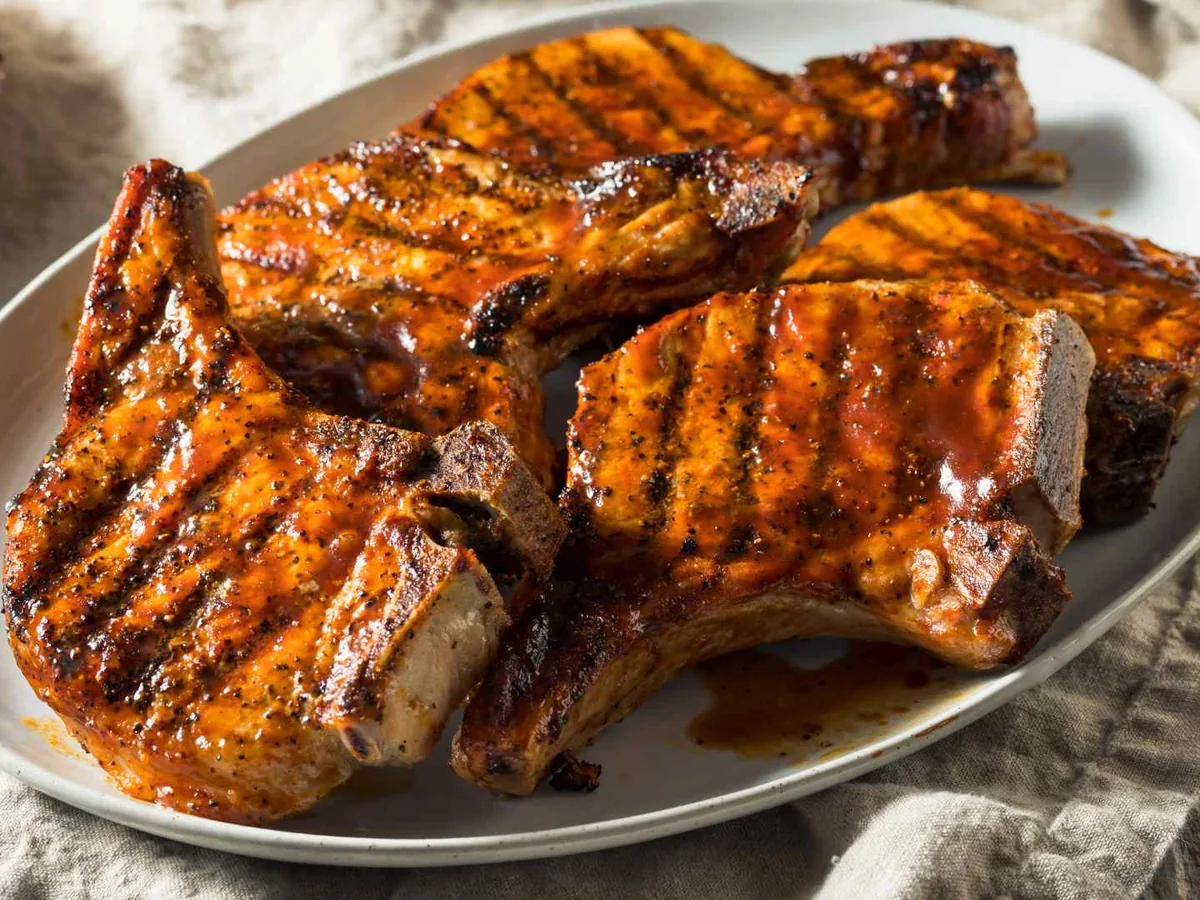
Raw chops can carry disease-causing bacteria even when they smell fresh, and freezing is not a universal kill step. A cat can also spread contamination through saliva, paws, dishes, and litter.
The CDC explains that Trichinella infection can follow raw or undercooked meat from infected animals. Commercial sourcing reduces some hazards but does not turn raw pork into a casual treat.
Kittens, seniors, pregnant animals, immunocompromised cats, and households with vulnerable people have extra reason to avoid raw feeding experiments. Call after raw access if illness develops.
Bones are not dental care
Cooked pork-chop bones can become brittle and splinter, while raw bones can fracture teeth, choke, lodge, obstruct, or carry microbes. Bone shape and bite force are unpredictable.
The cat chicken-bone guide explains many shared foreign-object principles, but a pork bone may be thicker and differently shaped. Never assume a bone is safe because it survived grilling.
Gagging, drooling, repeated swallowing, blood, retching, vomiting, pain, appetite loss, low stool, or a missing bone needs prompt veterinary care. Do not induce vomiting or feed bread to pad a sharp fragment.
Fat caps make a small bite calorie-heavy
A chop may carry a rind or thick white edge that is mostly fat. Rich intake can cause vomiting or diarrhea and adds substantial calories to a small cat.
Persistent vomiting, abdominal pain, food refusal, feverish behavior, or marked lethargy after a fatty raid needs assessment. Do not promise that every fatty bite causes pancreatitis, and do not dismiss ongoing illness as simple indulgence.
Trim fat before measuring the meat portion, not after the cat has swallowed it. Drippings and pan grease should cool in a secured container.
Salt may already be inside the chop
Enhanced, injected, pre-brined, smoked, cured, or seasoned pork can contain salt throughout the muscle. Rinsing the surface does not make it plain.
Large salt exposure can produce vomiting, unusual thirst, weakness, poor coordination, tremors, seizures, or behavior change. Leave water available and obtain professional guidance rather than forcing fluids.
Cats with kidney, heart, urinary, or blood-pressure disease may have strict sodium goals. Ask the treating veterinarian before sharing any prepared meat.
Onion and garlic survive recipe thinking
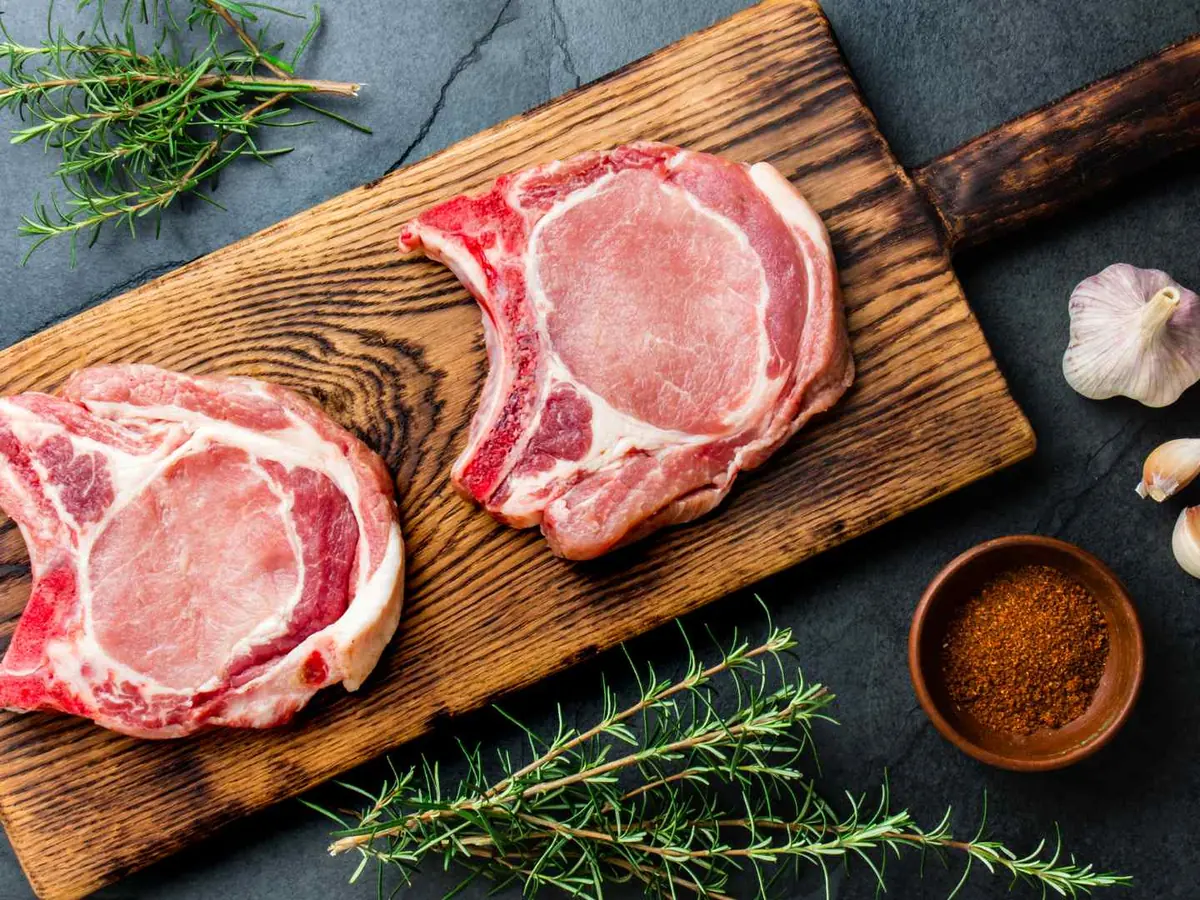
Rubs, marinades, gravy, barbecue sauce, pan sauce, stuffing, and seasoned butter commonly contain onion or garlic in fresh, cooked, or powdered form. Cooking does not neutralize Allium oxidative risk.
The Merck Veterinary Manual notes that cats are especially susceptible to Allium toxicosis. Weakness, pale or yellow gums, fast breathing, dark urine, or collapse can be delayed.
Call after known Allium exposure even when the cat initially looks normal. Save the rub jar, marinade packet, and full recipe.
Grilling adds char, skewers, and cleanup
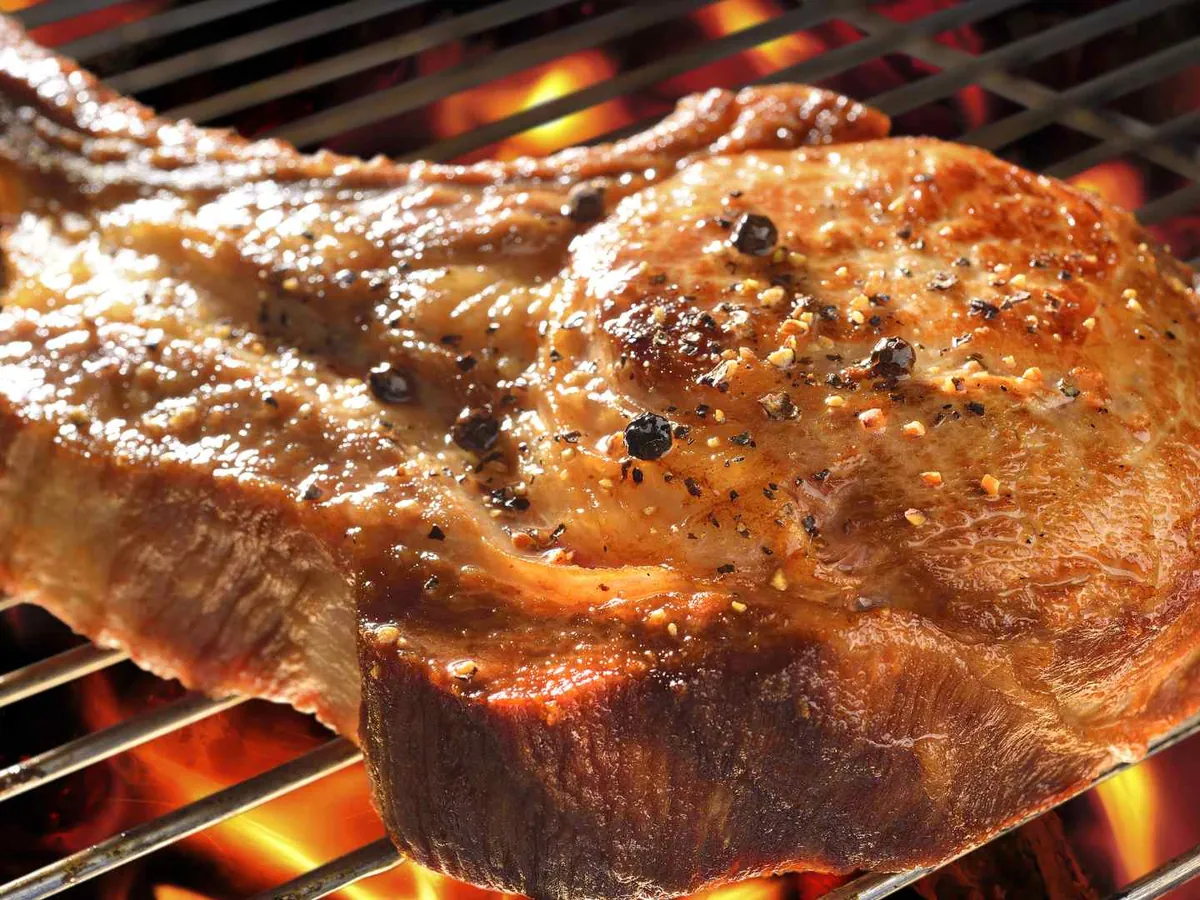
A grilled chop may carry salty rub, sugary glaze, charred fat, barbecue sauce, and brush bristles. The hot grate, thermometer, foil, and skewers create separate injuries.
Do not give heavily blackened scraps or let a cat lick the grease tray. A wire grill-brush bristle can migrate through tissue and demands immediate assessment if missing.
Cool coals, lighter fluid, matches, and ash should remain inaccessible. Smoke inhalation and paw burns are not food questions.
Frying and breading change the food
A breaded chop can include flour, egg, milk, salt, pepper, garlic, onion, cheese, and frying oil. Crisp coating may also hide sharp bone edges.
One dropped breading crumb may cause no illness, but a serving is unnecessarily rich and seasoned. Do not peel off the crust and assume the absorbed ingredients disappeared.
Hot oil burns require immediate veterinary advice. Do not cover damaged skin with butter, flour, ointment, or ice.
Sauces each need their own label
Barbecue, teriyaki, mustard, mushroom gravy, cream sauce, fruit glaze, and hot sauce vary by recipe. They may add Alliums, alcohol, salt, sugar, chili, dairy, grape ingredients, or sweeteners.
The cat bacon guide provides related context for salty smoky pork, but sauce still requires a line-by-line review. “Natural flavor” is not enough detail for a large exposure.
Set aside a plain cat piece before seasoning. Washing a sauced chop afterward cannot prove that cut surfaces are free of marinade.
Stuffed chops can conceal objects
Stuffing may contain onion, garlic, raisins, nuts, bread, cheese, sausage, mushrooms, spinach, herbs, or toothpicks. A neat meat exterior says nothing about the filling.
Kitchen twine, mesh, elastic netting, pop-up timers, absorbent pads, labels, and foam trays can retain raw juice and be swallowed. Count every item after a counter raid.
Never pull visible twine if an unseen length may be anchored. Prevent chewing and seek urgent veterinary direction.
Leftovers have a clock
Cooked pork should be refrigerated promptly in a shallow covered container and reheated only for human food safety, not to disguise spoilage. A cat-licked plate should not return to the communal refrigerator.
The FDA provides temperature and storage guidance for leftovers. Discard food left warm too long or showing slime, mold, leaking, or odd odor.
Spoiled gravy, meat, and stuffing can contain hazards that heating does not reliably remove. Preserve a sample only if it can be handled safely.
How much plain meat is reasonable
For an occasional taste, think in shreds rather than cubes or slices. The regular meal should remain the nutritional center, and all treats together should fit the veterinarian’s calorie plan.
Obesity, diabetes, digestive disease, food allergy trials, pancreatitis history, kidney disease, and prescription diets can make even plain meat a poor addition. Individual approval beats a universal tablespoon rule.
Do not use pork chop as the main ingredient in a homemade diet without formulation by a qualified veterinary nutrition professional. Muscle meat alone is incomplete.
A useful call from the kitchen
- Preparation: raw, grilled, baked, fried, smoked, stuffed, brined, marinated, sauced, or spoiled.
- Amount: estimate meat, fat, bone, grease, sauce, and time using package weights or remaining portions.
- Ingredients: report salt, onion, garlic, alcohol, sweeteners, chili, dairy, grape, and smoke products.
- Objects: locate bone pieces, skewers, twine, foil, pads, trays, knives, brush bristles, and wrappers.
- Cat: give weight, age, conditions, diet, medicines, symptoms, and whether raw juice contacted fur.
Thin chops and thick chops create different traps
A thin boneless chop cooks quickly but is often marinated to prevent dryness, while a thick bone-in chop can remain undercooked near the center. Neither appearance alone proves a plain safe portion.
Butterflied chops can hide filling in a fold, and restaurant cuts may be basted repeatedly during cooking. Ask how the meat was prepared before salvaging a center shred.
Pork allergies require a controlled process
Itching, ear disease, vomiting, or diarrhea cannot be assigned to pork from one chaotic seasoned meal. Food allergy diagnosis requires a strict veterinary elimination-and-challenge plan.
Do not test bacon, ham, pork chop, and sausage as separate home trials because salt, smoke, fat, preservatives, and spices confound the result. Keep an exact diet record if the veterinarian is investigating reactions.
Facial swelling, hives, sudden vomiting, breathing trouble, or collapse after eating needs urgent care. That immediate pattern is different from chronic itch.
Medication hiding needs approval
A tiny plain shred may seem convenient for a pill, but some medicines must stay whole, avoid food, or follow a precise meal schedule. Ask the prescribing clinic before using pork as the delivery vehicle.
A cat that eats the meat and spits out the tablet has received calories without treatment. Confirm the dose was swallowed before considering any replacement dose.
Frequently asked questions
Can kittens eat pork chops?
Kittens need complete growth food, and raw meat, bones, fat, salt, and seasoning are poor uses of limited stomach space. Ask before offering any plain cooked shred.
Can cats chew pork-chop bones?
No. Raw and cooked bones can fracture teeth, choke, lodge, splinter, or obstruct, and raw bones add microbial contamination.
Can cats eat grilled pork chops?
Only a minuscule boneless center piece that was fully cooked, plain, cool, and not smoke-heavy is a possible taste. Most grilled chops are seasoned and fatty.
What if my cat ate a seasoned chop?
Save the recipe and call with amount, time, cat weight, and symptoms, especially for onion, garlic, heavy salt, alcohol, missing bone, sticks, or wrappers.
Bottom line
Plain fully cooked boneless pork can be an occasional tiny taste, but a pork chop arrives with a bone, fat edge, raw-handling history, and usually seasoning. Remove every complication before sharing, and treat missing bones, Alliums, raw exposure, severe signs, or foreign objects as reasons to call.