Dog Ate Onion Powder? Concentrated Allium Exposure and What to Do
If your dog ate onion powder or a food containing a meaningful amount, call your veterinarian or an animal poison service for dose-specific advice. Powdered onion is concentrated, easy to hide in seasoning, and absolutely not made safer by the fact that nobody can see an onion slice.
The quick onion-powder verdict for dogs
Onion powder belongs to the same allium risk category as fresh onion, cooked onion, garlic, leeks, shallots, and chives. After a sufficient exposure, alliums can cause oxidative damage to canine red blood cells and lead to hemolytic anemia.
The important difference is concentration. Removing water allows a small spoonful of dried powder to represent much more onion material than the same volume of chopped fresh onion.
I would not use one universal teaspoon rule at home because the exact product, amount, dog weight, repeated exposures, and other alliums in the recipe all matter. Save the label and calculate the real exposure with professional help.
Why powder deserves more caution than one visible onion scrap
Fresh onion contains a lot of water, while onion powder is dehydrated. That makes the powder much more concentrated by weight and volume.
A dog licking one plate with a faint seasoning residue is different from eating a tablespoon of dry mix or a bowl of food heavily seasoned with onion powder. I care about the actual amount and concentration, not the fact that both situations involve the same spice.
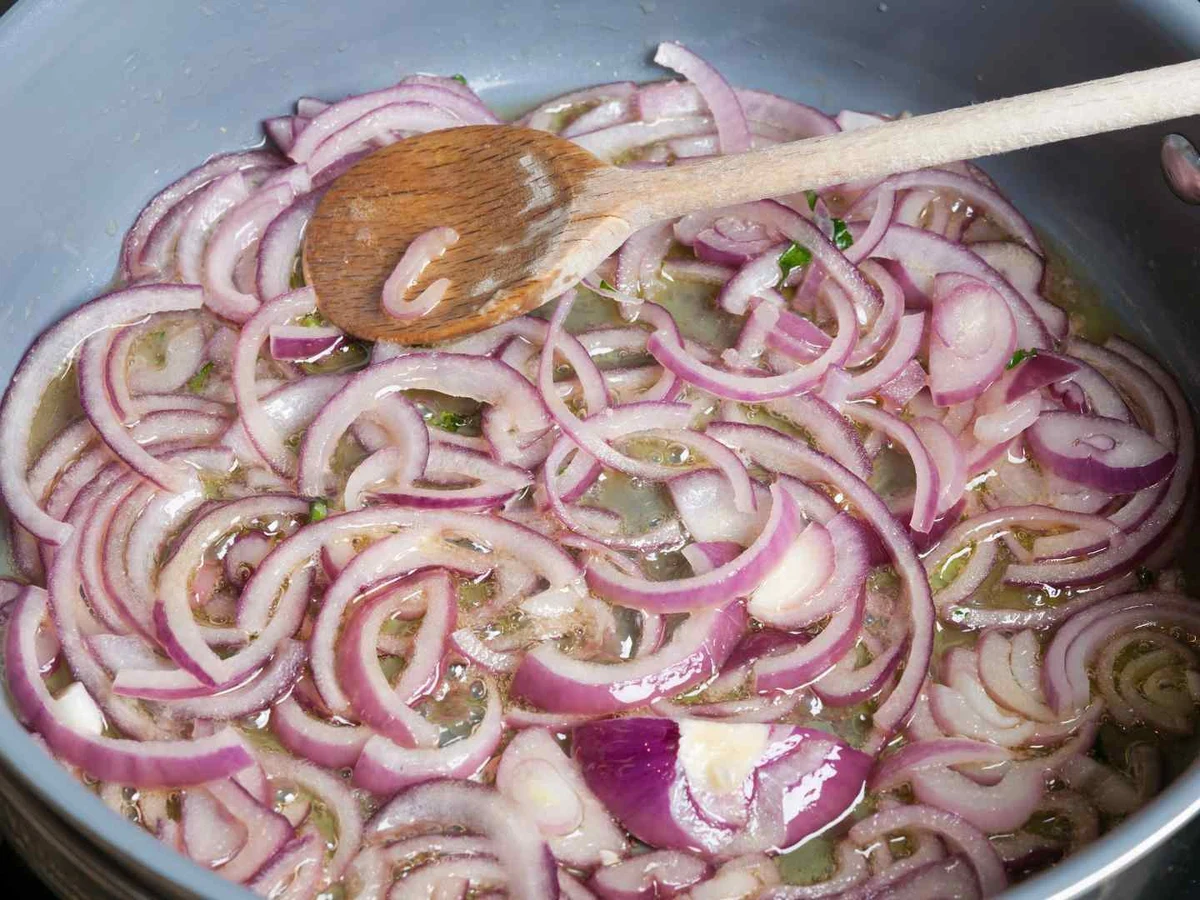
Powder can also spread evenly through a recipe, so every bite may contain some onion even when no chunk is visible. That is especially relevant in gravy, soup, meat rubs, casserole, stuffing, and snack foods.
Onion powder can damage red blood cells
Allium compounds can cause oxidative injury to red blood cells. Damaged cells may be removed from circulation faster than the body can replace them, leading to anemia after a sufficient dose.
That process can take time, which means a dog may look completely normal soon after the meal. Immediate normal behavior does not prove the dose was harmless.
Dogs with existing anemia, chronic illness, or repeated allium exposure may have less room for additional red-blood-cell damage. Report relevant medical history when you call.
Cooking does not neutralize the allium risk
Onion powder remains onion after it is baked into meatloaf, simmered in soup, dissolved in gravy, or mixed into stuffing. Heating does not reliably eliminate the compounds responsible for red-blood-cell injury.
This is why I do not treat cooked seasoned food as safe simply because no fresh onion is visible. Ingredient lists matter more than appearance.
Seasoning packets can contain several alliums at once
Soup mix, ranch seasoning, taco seasoning, gravy packets, bouillon, barbecue rubs, chips, flavored crackers, frozen meals, and sauce mixes may contain onion powder and garlic powder together.
Some products also contain dried chives, leek powder, shallot powder, or vague vegetable seasoning. I would report every allium ingredient rather than focusing only on the first one listed.
If the dog ate a whole seasoning packet, save the package and note the packet weight. “He ate ranch powder” is less useful than the exact product and amount.
Bouillon, broth, and gravy are common hidden sources
Commercial broth, bouillon cubes, soup base, canned gravy, and gravy packets frequently use onion or garlic powder for flavor. The finished liquid may contain no visible plant pieces at all.
If a dog drinks a bowl of broth or gravy, check the ingredient list before deciding the exposure was only salt and fat. Alliums can be the more important toxicology question.
Gravy can also add a heavy fat load, which matters in dogs with pancreatitis or fat-sensitive gastrointestinal disease. One food can create more than one problem.
Snack foods can contain onion powder too
Potato chips, flavored popcorn, pretzels, crackers, cheese snacks, jerky, deli meat, and savory snack mixes may use onion powder. A tiny stolen chip and an entire family-size bag are very different exposures.
These foods also add sodium and fat, so large raids can cause vomiting, diarrhea, thirst, or pancreatitis even when the allium dose is not the only concern.
Repeated small exposures can add up
A dog that gets onion-seasoned leftovers day after day may accumulate repeated exposure. The relevant history may therefore span several meals rather than one obvious raid.
Tell the veterinary team what the dog ate over the previous several days if onion powder has been a recurring ingredient. Do not report only the most recent serving.
I would never use food containing onion powder as a routine topper just because the dog seemed fine after the first meal.
Early symptoms can look like ordinary stomach upset
Vomiting, diarrhea, drooling, abdominal discomfort, or reduced appetite may appear before anemia-related signs. Those symptoms are not specific, but they matter after a known allium exposure.
A dog may also have no early gastrointestinal symptoms at all. That is another reason I would not use immediate normal behavior as a safety test.
Anemia-related signs can be delayed
Weakness, unusual tiredness, pale gums, rapid breathing, increased heart rate, dark or reddish urine, poor exercise tolerance, or collapse can occur as red-blood-cell damage becomes clinically important.
Those signs may take time to develop. If you already know the dose could be meaningful, I would call before waiting for the dog to look anemic.
Pale gums are not the only sign to watch for
Owners often focus on gum color, but anemia can also show up as weakness, rapid breathing, fast heart rate, dark urine, or reluctance to exercise. A dog may simply seem unusually tired.
If the dog appears weak, collapses, has breathing difficulty, or develops very dark urine after a known allium exposure, seek urgent veterinary care.
What to do right now
- Take away the food, spice container, or seasoning packet.
- Save the package, recipe, or ingredient label.
- Estimate the maximum amount eaten and the time.
- Record the dog’s current weight.
- Identify every other allium, including garlic, shallot, leek, and chive.
- Tell the veterinary team about repeated exposures over the previous several days.
- Call for professional advice after a meaningful, repeated, or uncertain exposure.
Do not automatically induce vomiting
Whether vomiting is appropriate depends on the timing, amount, symptoms, dog, and what else was swallowed. Do not use salt, mustard, oil, fingers, or another improvised method.
If a veterinarian specifically directs hydrogen peroxide for an appropriate dog, follow the exact instructions provided. More peroxide is not more effective medicine.
What veterinary care may involve
Depending on the dose and timing, veterinary care may involve decontamination, physical examination, red-blood-cell monitoring, bloodwork, urine assessment, supportive care, or follow-up testing.
The exact plan varies because a recent known exposure in a normal dog is different from a dog already showing anemia several days later.
How I prevent onion-powder exposure
I check seasoning packets, broth, gravy, deli meat, jerky, sauces, and savory leftovers before sharing any human food. If onion powder appears, the dog does not get that food.
For intentional treats, plain cooked meat or a dog-specific product is easier than reverse-engineering a seasoning blend after dinner.
Frequently asked questions
Is onion powder worse than fresh onion?
It is more concentrated by weight and volume because water has been removed, so a small amount of powder can represent substantial onion material.
Can dogs eat food seasoned with onion powder?
I would not intentionally feed it. Meaningful or repeated allium exposure can damage red blood cells.
How soon do symptoms appear?
Gastrointestinal signs may occur earlier, while anemia-related signs can be delayed for days. Follow the monitoring plan provided by the veterinary team.
What if my dog only licked seasoned food?
A trace residue is different from a meaningful dose, but the exact product and dog size matter. Check the recipe and call if the amount is uncertain.
Bottom line
Onion powder is concentrated allium material and should not be intentionally fed to dogs. Save the seasoning label, estimate the exposure honestly, include every other allium in the recipe, account for repeated meals, and get professional advice rather than waiting for delayed anemia signs.